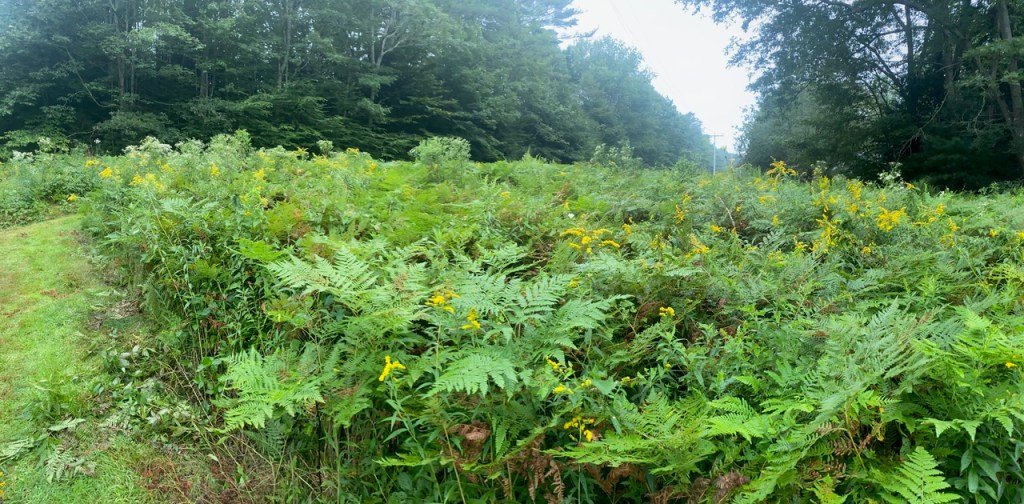
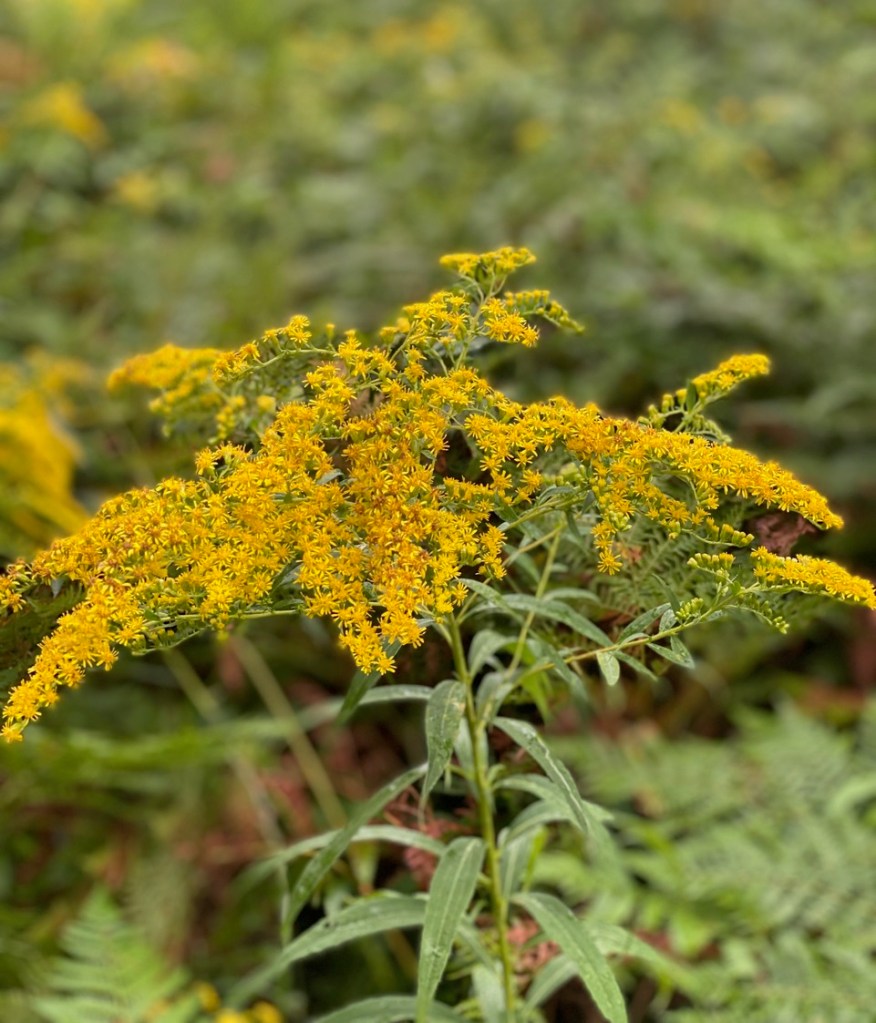
I’m walking the grass loop around our housing development. Under the power line toward the community garden, I pass through what is now a shoulder-high host of Queen Anne’s Lace, golden rod, milk weed, bracken, and many other plants I can’t name. The flies swarm. The sweet songs of the cardinals and tufted titmouses (titmice?) have given way to the screeching of blue jays and crows. Monarch butterflies flit from flower to flower. The air smells ripe. Shadows crawl like the incoming tide over the landscape. Summer is ending.
And I feel myself coming alive. Beginning again.
The reason is simple. For seventy-five years—as a student, as a teacher—the golden rod, the lengthening shadows, the Monarchs, have meant the beginning of another school year. More than New Year’s Eve, more than the first warm day of the year, this is the time when, at some deep cellular level, I can feel myself waking up, ready to start anew.
It’s a good feeling. At my age, it’s easier to focus on endings than beginnings. I now celebrate—if that’s the right word—more birthdays of the dead than of the living: my grandparents, my parents, my daughter, my first wife, close friends. Ended are my long hikes, long distant driving, lifting anything over forty pounds, staying up after midnight, jumping into bed with my wife after a sexy movie (jumping anywhere, for that matter), five-course meals, Cuban cigars, Laphroaig Scotch… the list grows longer each year.
But as T.S. Eliot wrote, “In the end is my beginning.” (Hey, I’m an old English lit teacher, I remember stuff like that.) You can’t begin something until something else ends. School can’t start until summer ends (Yeah, I know, there’s summer school, but I’m trying to make an analogy. Don’t confuse me with technicalities.) It took the end of a disastrous year of studying forestry in college for me to begin my studies in English (which is why I’m quoting T.S. Eliot and not The Journal of Forestry.) It took the end of an unhappy 20-year marriage for me to begin a happy going-on-forty-year one. It took the end of a career in public education for me to go back to school for an MFA, write a couple of books, a bunch of essays, and going on nine years’ worth of blog posts.
So, what will I begin this year? Well, Mary Lee and I have a couple of trips planned (knock on wood: last year, we had three planned and they were all canceled). I will scrape and repaint my front door and clean out the garage.
But the biggest change I want to make is with The Geriatric Pilgrim.
When I began these blogs, I was fascinated by the idea of pilgrimage: how a pilgrimage differs from a vacation, or from going on a retreat, or from study programs (what I called “edu-cations”). Besides traveling to retreat houses and other spiritual sites in the United States, Canada, the British Isles, Israel, Turkey, and Africa, I collected pages of definitions of pilgrimage and of common characteristics of pilgrimages. I read a raft of books about various pilgrimages people had made.
Along the way, I became intrigued by my fascination with pilgrims and pilgrimages. What was in it for me?
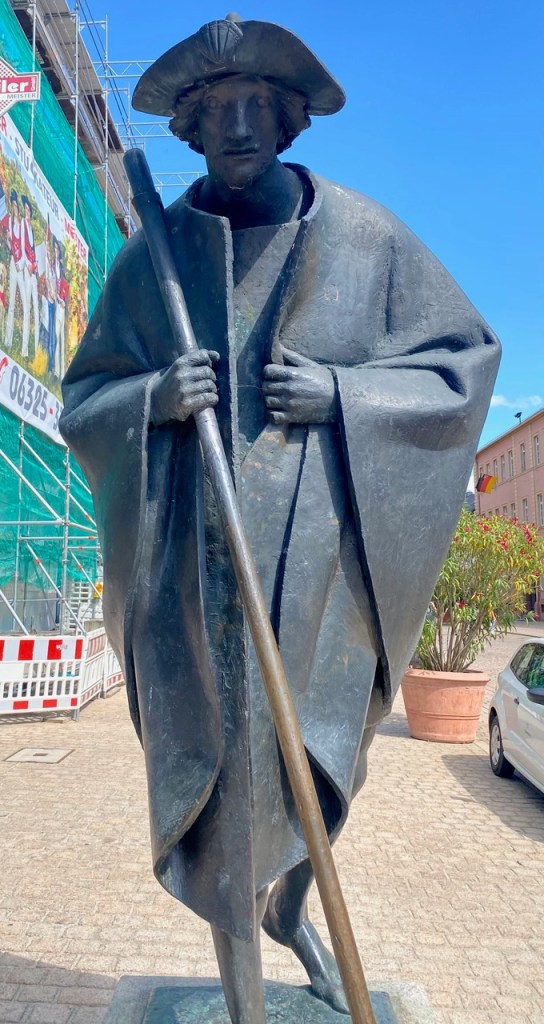
Stature of a “Jakobspilger,” or St. James’s pilgrim: Speyer, Germany
Well, probably the main thing at the time was the idea that pilgrims are often searching for a source of healing. As you know if you’ve read these blogs, I was looking for healing after the death of my eighteen-year-old daughter from a rare cancer. And I found writing about the various pilgrimages Mary Lee and I had made even more healing than the pilgrimages themselves.
Gradually, I began to realize that pilgrimage is a frame of mind—an attitude of curiosity, detachment, wonder. It’s “traveling light,” as one writer says, of risk, of living in liminal space—leaving one location but not yet arriving at another—of exploration, the end of which, to quote T.S. Eliot again, “Will be to arrive where we started/And know the place for the first time.”
Since COVID arrived, with all its restrictions on travel, followed by my 80th birthday, with its expanded waistline and diminished abilities, my blogs have focused more on applying the lessons of pilgrimage to my current life of walks in the neighboring woods, planting peas, tomatoes, and pumpkins in our community garden, and of exploring the twelve steps of my Al Anon program. This, too, has been healing.
But now I find myself no longer as interested in finding new ways to describe my pilgrimage, as I am in describing and exploring in more depth the landscape through which I’m traveling, a landscape that is always changing, sometimes in ways that please me—autumn color is just around the corner, the grandchildren are growing—sometimes in ways that piss me off or frighten me—the start of my favorite woods walk has been clear-cut, I’m finding it difficult to sing without coughing.
Writing about these joys and sorrows, I find I’m writing more poetry. I’ve just finished an on-line workshop for poets, and one of the highlights of my week is another on-line group of poets from all over the country, where we share our favorite poetry as well as poems we’ve written. I’m now subjecting my longtime writing group here in town to my poems.
So, I’m going to be posting more poetry here in these blogs as well as other experiments—prose poems, flash fiction and nonfiction—trying to look more closely at the physical and emotional landscapes through which I’m now traveling.
The way I see it, my pilgrimage continues, but the lens through which I’m seeing it and the voice in which I’m describing it is changing.
I’m excited to see where this journey will take me.
And hoping you’ll continue to join me.
So, let part of my life end, and another begin.
As Quakers say, when one door closes another opens.
As New Englanders know, each year has six seasons: the usual spring, summer, autumn, winter, plus mud season—between winter and spring—and stick season—between autumn and winter.
You know about our autumns and winters. These are the seasons in all those lovely photographs of New England. You know, the flaming foliage ones, mountains ablaze in orange, yellow, and red, and the snowy ones, white trees bowing as skiers whiz past. But in between—usually it’s the entire month of November but it could be December as well—the leaves have left, the snow hasn’t arrived, and the trees become stick figures. “Bare ruin’d choirs, where late the sweet birds sang,” to quote Mr. Shakespeare.
Stick season has been getting a lot of press these days, thanks to a young singer named Noah Kahan, whose song “Stick Season” about the pain of lost love—“And I love Vermont, but it’s the season of the sticks/ And I saw your mom, she forgot that I existed…”—was a viral hit in 2022. (And as synchronicity would have it, as I was planning this blog, he sang it on Saturday Night Live, December 2nd. Check it out on YouTube.)
For years, Shakespeare and Kahan described the way I felt about this time of year. As readers of this blog and my book, The Geriatric Pilgrim: Tales from the Journey, know, my daughter Laurie entered Eastern Maine Medical Center in November of 1988 and died there on December 23rd. For those two months, I lived at a Ronald McDonald house about a mile away and walked back and forth to the hospital twice a day along the Penobscot River, where the skeletal maples, elms, birches, and oaks mocked any hope for Laurie’s recovery.
Over the next 30 years, each stick season was the backdrop for my anger, sorrow, withdrawal, guilt, and shame, exacerbated by a holiday season, which now starts about November 1, with its Hallmark images of healthy happy families gathered round a perfectly shaped Christmas tree. Throw in the Christian season of Advent—four weeks of paradoxical readings about Christ the child and Christ the judge, sin and grace, justice and mercy, comfort and challenge—and I came to dread this time of year.
But about five years ago, thanks to my Al Anon program, I was able to separate my shame, guilt, and anger from my grief. I saw that because of growing up in a family riddled with alcoholism, those noxious emotions were there long before Laurie died. And I realized that I didn’t have to hang on to them to grieve the sorrow and emptiness that one must accept when they lose a loved one. That I could feel sad without feeling angry.
At the same time—and I’m sure it was no coincidence—as I walked the woods behind our house, I began to appreciate the stark beauty of stick season. Without all the foliage, the sky is larger, and sometimes it’s a November blue unlike at any other time of the year. The wind is bracing. The flies are gone. Unlike in mud season, the paths are still dry. Even the sticks themselves—the tree branches—have a stark beauty, like Japanese calligraphy.
I started to see the departed leaves as images of my departing shame, guilt, and anger.
Which helped me see Advent as a time for letting the spirit blow away what the Bible often calls our “iniquities,” but what I think of as my “survival mechanisms”: those behaviors I developed as a kid to survive family disfunction, but which have become injurious not only to my health but to those around me.
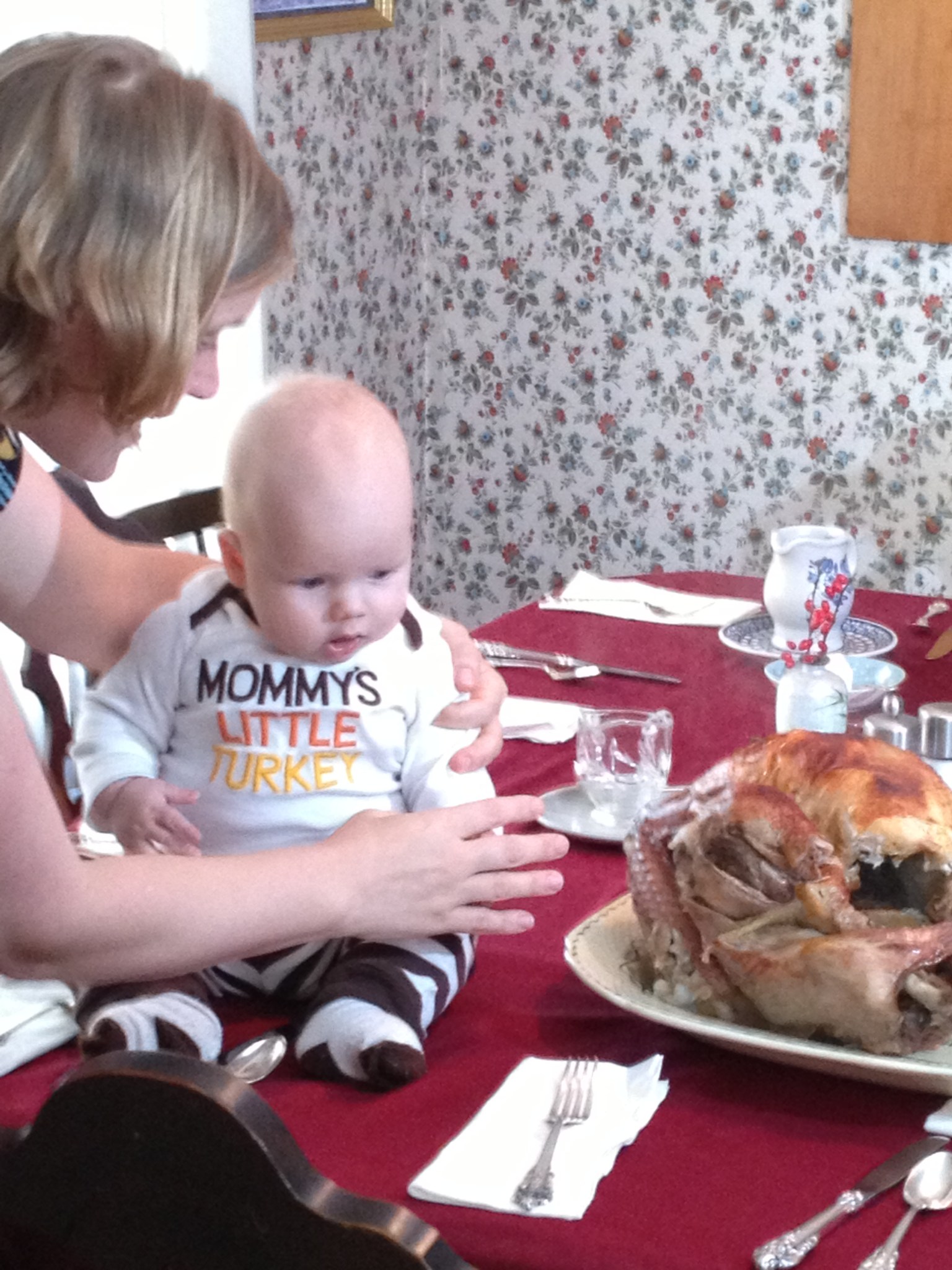
These days I think of stick season as a time to simplify my life. Which has been especially easy this year. After 37 years of hosting a Thanksgiving for anywhere from ten to 24 people, Mary Lee and I turned over the apron to her younger son, who, along with his fiancé, did a fantastic job feeding and making us all feel comfortable.
Last week, Mary Lee retired after 22 years as the ordained Deacon at our Episcopal Church. For 22 years, churchy stuff has filled not only our Sundays, but other days of the week, as I have also been an active member of St. Paul’s. Now, as is our diocesan policy, we will worship elsewhere for a while. We will listen for other callings to where—as Aristotle said—the needs of the world and our talents cross.
Sadly, but I guess appropriately, our cat Zeke has used up his 9th life (I didn’t think he’d make it to 2023), leaving our house pet-less for the first time in our marriage.
I have given up driving 30 miles once a week to play in my old-time music jams. Mary Lee and I have decided we no longer enjoy going out for dinner once a week.
So, I suppose, I am in the stick season of my life. If so, it’s not bad.
Let’s talk about Advent again. One thing I’ve always had trouble with is this idea that not only are we awaiting the celebration of the birth of Jesus, but we are supposed to be awaiting the Second Coming of Christ, when, according to some scripture passages, Christ will come to judge us and send some of us to hell and some of us to heaven.
Sorry, I can’t buy the judgment thing. My experience is that I’m surrounded by Grace, if I can just (“just’? Ha!) open my eyes to it. So that when Jesus tells his disciples to “Keep awake!”—which he does a lot—I think he’s talking about opening our eyes to what’s already there, not what’s going to suddenly appear descending from a cloud.
Sort of like seeing the sky that’s always there, but only fully visible during stick season.
(Or the water, for that matter)
So, for me, the Second Coming is an invitation to awaken into a new consciousness, a new appreciation, a new seeing, of life, the universe, and everything.
I watched a YouTube interview with Noah Kahan, in which he said that his hit song represented a new musical path for him. And as blogger Mitch Teemley wrote recently about Advent, the word serves as the root of our word “adventure,” which, of course, I like because that makes me think of “pilgrimage.” “In short,” as Mitch wrote about Advent and I would write about pilgrimage, it is “an experience that can change a person forever. If they let it.”
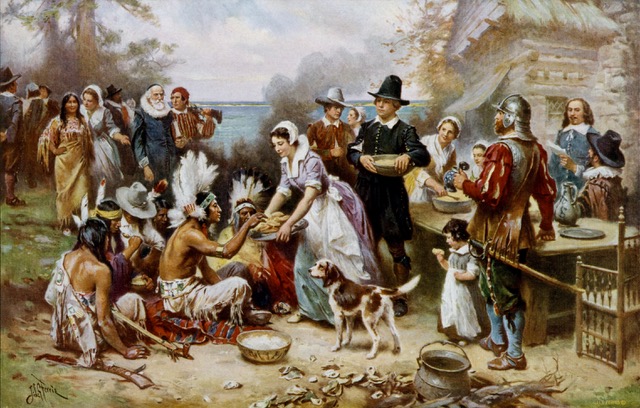
The First Thanksgiving, 1621—J.L.G. Ferris/The Foundation Press, Inc./Library of Congress
#
The first time I ever heard about “pilgrims” was as a kid learning about some people by that name who sailed to America to have Thanksgiving dinner. Later, I learned it was a little more complicated than that—that these people were actually “Separatists” who had broken from the Church of England and come to this country by way of Holland in search of religious freedom. But they thought of themselves as pilgrims (the first child born in the Plymouth Colony was named “Peregrine,” which means pilgrim), travelers on a journey to find a home where they could worship the God of their understanding. The name stuck.
My sister tells me that she, my brother, and I are the descendants of John and Priscilla Alden and George and Mary Soule, couples who came over on the Mayflower, which may account for why I think of myself as a pilgrim and why Thanksgiving is my favorite holiday of the year. It’s a day to be with family and to give thanks.
This year, however, besides counting blessings, I’ve also been thinking a lot about luck.
Last spring, when I happened to mention to my family doctor during a routine follow-up to an earlier procedure that I was getting more and more out of breath, he told me to get a stress test and get it soon. Which I did and which led to an arterial catheterization which led to by-pass surgery. Now, I feel great. I have more energy than I’ve had in years.
I want to thank God for my good fortune, feel that I’ve been blessed. Except: as anyone who’s read this blog knows, the pivotal point in my life was the death of my eighteen-year-old daughter in 1988. Laurie didn’t smoke, didn’t drink, didn’t even eat meat. Still, she was the victim of Primitive Neuroectodermal Tumor, a rare and virulent cancer that when it strikes, usually attacks much younger children.
So how can I thank God for my life, while letting God off the hook for Laurie’s death?
Since my surgery in July, two men whom I’d known fairly well dropped dead from the same type of blocked left main artery that I had. Both men were active; both seemed healthy; neither was overweight; both died while exercising. Why am I still alive and they’re not?
I’m reminded of the evening of September 11, 2001, when our church held a meeting for all those who wanted to respond to the bombings of the twin towers and of the pentagon. At one point, a woman—let’s call her Agnes—rose and said that her son had been working that day in the South Tower, but that he was safe. “I want to take this opportunity to thank God for protecting my son four times.” Agnes said. “God showed him the way down the stairs. He moved him out of the way of fallen debris twice. He provided my boy with a private boat to offer him a ride across the river to Hoboken. I’m so grateful!”
I was happy for the woman. I was sure her son was a great guy. But I asked myself then and I ask myself now: why did God save him and let 7,000 other people die?
So although I want to thank God for my being able to be sitting here tapping out this blog instead of moldering in an urn under the snow in our family’s cemetery plot, I have to think that I was lucky, just as my daughter was unlucky enough to carry the wrong combination of inherited DNA to make her susceptible to the cancer than killed her.
Does this mean I’m not grateful this Thanksgiving? That I don’t think my Higher Power affects my life? That I’m not blessed?
Absolutely not.
As I think about how “unlucky” I was when Laurie died, and how “lucky” I am now, I find a common thread. In both instances I’ve seen, as I usually don’t, just how precious, how holy life is. I’ve never enjoyed the autumn foliage as much as I have this year. I don’t even mind (much) standing in line at the grocery checkout line.
I’m also aware, even though it’s hard to articulate, of a growing sense that this life is always being renewed, even reborn. That what I, as a Christian, call resurrection didn’t just happen once to one person, but happens to all of us many times. Someone said to me the other day that I looked like a new man. Well, in some ways, I am. I have a new heart.
Getting that new heart was at times painful; still, it was nothing like thirty years ago, when Laurie’s death broke me open. But although that hurt in ways I hope I’ll never have to feel again, her death also opened me to receive love and joy that I’d never experienced before in my closed off, child-of-alcoholic, New England male life. And it’s this experience that I’m guessing we’ve all had sometime in our lives—where from somewhere we get the strength not only to carry on but also to laugh and sing when by rights we ought to give up and die—that I give thanks for.
Which I think is the difference between luck and Grace. Luck depends on circumstances. Grace, on the other hand, is there for everyone all the time.
So I’m looking forward to Thanksgiving. This, despite sorrowful memories of my father, one of my grandmothers, and my mother-in-law all dying during the week of Thanksgiving, and a painful recollection of a Thanksgiving at the Ronald McDonald House after which Laurie’s two stepbrothers saw her for the last time. Or maybe those deaths actually help make the celebration more joyous. That when Mary Lee’s children and their families and her sister and sometimes her family come, we are surrounded by what St. Paul calls “Clouds of Witness.”
That these loved ones died, that my daughter-in-law is about to undergo surgery for cancer, and that one of my grandchildren is emotionally scarred from having been abused by her pre-school teacher is probably a matter of bad luck. That for the most part our families have the health and the means to come to our house for Thanksgiving and that Mary Lee and I feel well enough and are financially secure enough to host them is probably a matter of good luck. But that we are able to celebrate, to laugh, to cry, to love together is, I believe, a matter of Grace.
When I was finishing this blog, Mary Lee sent me a daily reading for November 22, 2019 (the anniversary of John F. Kennedy’s assassination, appropriately enough) from a website called gratefulness.org.
Grief and gratitude are kindred souls, each pointing to the beauty of what is transient and given to us by grace.—Patricia Campbell Carlson
I spent months living in dread of turning 70, because then I would be officially “old”—over the hill, past my prime, debilitated, enfeebled, ad infinitum. Well, four months shy of turning 76, I can honestly say being 70 isn’t bad, not bad at all.
Now, I’ve been lucky. No chronic disease to live with, no financial burdens. Mary Lee is well, and her sons and their wives have no major problems other than the common difficulties in raising a family and holding a job these days. The grandchildren are (usually) a delight.
My 70s, of course, have brought about physical changes that are pretty depressing. It seems as if every shower I find a new mole or lipoma to worry about. The hair in my ears grows faster than the hair on my head. My waist is expanding. I’m longer in the tooth and shorter in the leg. (For years I taught T.S. Eliot’s “Love Song of J. Alfred Prufrock” and never understood the line, “I shall wear the bottoms of my trousers rolled.”) I can recall the lyrics to almost every popular song from 1957-65, but I can’t remember the names of the two women who’ve lived across the street for five years. I spend a half-hour a day hunting for something.
Over the last five years, I’ve become more aware of Newton’s Law of Inertia: an object at rest stays at rest and an object in motion stays in motion. It takes me twenty minutes of exercise when I get up in the morning for me to be able to move without hurting. Probably because of the exercise, however, my chronic back pain is less than it has been in years. Beginning a new piece of writing is like hiking through mudflats in hip boots, yet the ensuing drafts are more fun than they used to be. I like to walk, but now the first ten minutes or so, my lungs burn and I have trouble getting enough breath. Then, they clear out and I’m good to go, which often means walking too far because I don’t feel like stopping (it’s not like I have a job or anything to get to). Consequently, I’m stiffer and sorer when I get up the next day to do those exercises.
A bigger problem is that I don’t seem to be able to stop talking after I’ve run out of things to say. My father-in-law used to speak of being in his “anecdotage.” I understand. I have all these great stories that I know you’re just dying to hear, stories that will amuse, educate, and inspire you. So why are your eyes glazing over?
My tastes have changed. I eat less meat than I used to and more chocolate. I’ve grown fond of oatmeal, kale, and certain kinds of seaweed, and less interested in lettuce, potatoes—especially fries—and baked beans. Not always, but usually—and I’m still having trouble believing this—I’d rather have salmon than lobster, tuna steak than fried clams.
Two years ago, when we bought a car with satellite radio, I couldn’t wait to find the 50’s and 60’s music channels. That lasted about a month (If, for my sins, I go to Hell, “Itsy Bitsy Yellow Polka Dot Bikini” will play nonstop.) I tried “Elvis Radio” for about four hours, and “The Beatles Channel” for maybe two. I listened to a blue-grass station for a while, and then several country and western ones. Now, I’m almost always listening to a jazz or classical station. It’s not that I’ve necessarily grown more sophisticated—I play a banjo for heaven’s sake—the music just seems fresher and more varied.
Ever since my family bought its first television in 1953, I’ve watched televised sports, but now I can’t watch anything on the tube except for a championship game featuring some New England team. I’ve had it with the incessant number of commercials advertising products I don’t understand at a volume twice as loud as the programing. It was bad enough when sports became huge businesses, but now they’ve become politicized as well. I’m sorry, I watch sports to forget about what’s happening to this country. I’ll sit in the stands at a local college or high school game, if you don’t mind.
Something else I never expected: I’m learning to accept, even value, my increasing powerlessness. I’m not talking now only of my physical condition. Five years ago, I entered a 12-step program. Step One states, “We admitted we were powerless over alcohol and that our lives had become unmanageable.” Everyone I’ve ever talked to in the program says that this is the hardest step of all. Admitting powerlessness runs counter to everything I, and I think most Americans grew up learning.
Like most of you, I expect, I was raised to be self-sufficient—“master of my fate… captain of my soul,” to quote one of my high school reading assignments . As an adult, I loved hear Frank Sinatra or Elvis sing,
For what is a man, what has he got?
If not himself, then he has naught
To say the things he truly feels
and not the words of one who kneels.
The record shows I took the blows
and did it my way.
But when I began reading about adult children of alcoholics, I learned how many of us were raised to be masters of not only our own fate but also the fate of the rest of our families. For example, I somehow always knew as a child that I was responsible for making sure that Christmas was a happy time of year, especially for my parents, neither of whom growing up had had happy holidays. I took that sense of responsibility for making others happy with me when I left home and started my own families, so that for seventy years, my Christmases were never as merry as I thought they should be, and it was my fault.
This burden of responsibility became even more oppressive after my daughter died on December 23, 1988. All parents feel guilt when their child dies, but my background as a child of alcoholism magnified it. I’ve written in these blogs several times about feeling my body chemistry change after Thanksgiving and the weight of the next weeks grow heavier and heavier.
Perhaps because of my physical diminishments, however, I’m finding that I have no choice but realize my increasing powerlessness in all facets of life. As my mother said to me when she was about the age I am now, “I used to think life was a case of mind over matter; now I find that what I mind doesn’t matter.”
Yet when I’ve been able to admit my powerlessness, I’ve experienced a wonderful sense of freedom. I can say “no” to causes and activities in which I used to feel I ought to participate, but that I had neither the skills nor the real interest in doing. The last few Thanksgivings, hosting twenty people all younger than I, I finally started putting some of them to work.
And this November I asked myself if my body chemistry was about to change, or was I just opening the same dog-eared horror story of how my daughter died. Laurie loved Christmas. She certainly never wanted me moping about or yelling at motorists on the highway. What would happen, I wondered, if I closed this book and took each day for what it was (or wasn’t).
After the holidays, I’m now trying to view the rest of the year not as something to master, but as something to accept. I’ve got a long way to go. You don’t unlearn something you’ve been doing for 70 years in five years. But when I can let go of this idea that the world depends upon me to keep it turning, I can see that everything I have—my health, my family— everything I am—including being a grieving parent— is gift.
Yes, I shed some tears on December 23rd. I also had a wonderful holiday season. I hope you did, too.
I look at the faded and folded white lined paper, at Laurie’s tiny, circular handwriting: “This sandwich would win the approval of Henri Matisse, and fans of rainbows as well.” Suddenly I hear her in the kitchen, opening the refrigerator, taking out containers, opening the vegetable tray. Rustle of cellophane, clink of glass, thud of food hitting the counter.
“Dad, where’s the vinegar?”
I realize she’s never been in this house. “In the bottom cupboard, behind the second door over from the fridge. Do you want some help?”
“Nope, I’m fine.”
I know she’s wearing an over-sized tee shirt she’s tie-dyed, one like she did for me. I hear her singing to herself, probably something by Suzanne Vega, or Tracy Chapman: “Don’t you know they’re talkin’ about a revolution. It sounds like a whisper.”
“Peace-Nik!” I yell.
“Flower power lives!” she yells back. “Where’s the red onion?”
“Under the cupboard on the counter by the window. In that basket.”
I hear chopping sounds, then the rasp of vegetables against a grater. I jump at the whirring and rattling of our blender, then jump again when Laurie cries, “Yikes!” and the blender stops
I stand. “What’s wrong?”
“Nothing.” She laughs. “The top came off the blender. I’ve just got this dressing all over the counter and all over me. I’ll clean it up.”
I smile and sit back down at my desk. “No problem. But this seems like a lot of work for a sandwich.”
“Da-a-ad! This just isn’t any sandwich. It’s a work of art.”
And for a minute, I see her in the doorway, dressed as I imagined, blue-cheese sauce splattered on her arms and a dab of it on her nose. She looks at me, one eye-brow raised, her forehead furrowed in what I think of as a combination of amusement, satisfaction, and frustration. My daughter, the artist. Whether she’s painting a landscape, playing the piano, embroidering, wood-burning, or cooking, she throws herself into it.
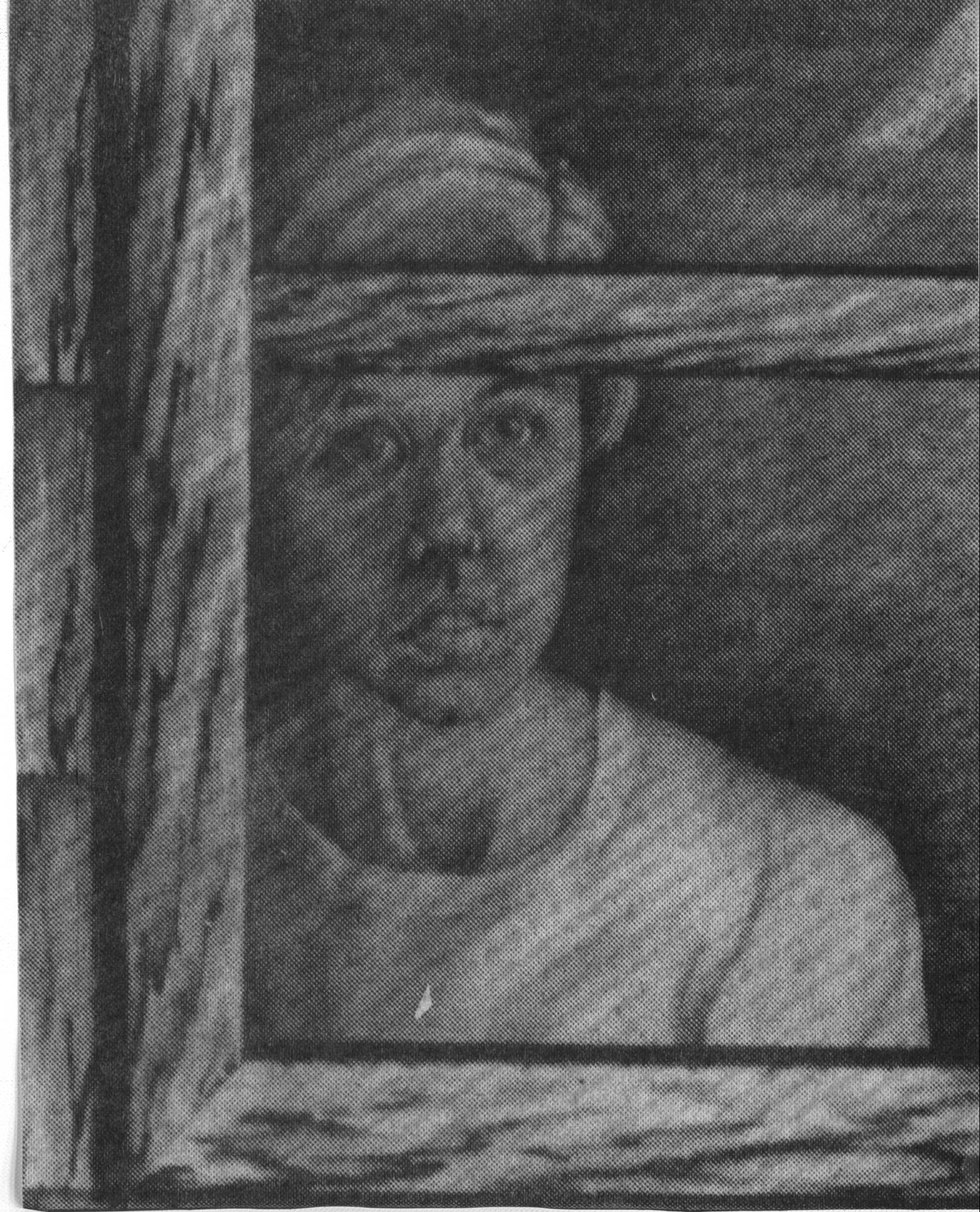
And then I see the bright red bandanna around her head, which she wore during the chemotherapy treatments, and my vision of my daughter fades. I’m staring at her last self-portrait, at her sad eyes gazing wistfully out through a window at the world. In the kitchen, my wife is pouring herself a cup of coffee.
Today is Laurie’s forth-eighth birthday, and my only child has been dead almost thirty years. It’s a bittersweet day, a sandwich of emotions: a layer of sorrow, a layer of rage. Chop up some shame, some guilt, and some regret. Mix in some “if onlys,” and a few “what ifs.” Season that mixture for a while, let the sharpness mellow. Top it with a generous mixture of happy memories, on-going love, and the knowledge that you helped create someone beautiful and loving and courageous beyond measure, someone who touched all who knew her, inspired many, made a difference for the better in this world—all by the age of eighteen.
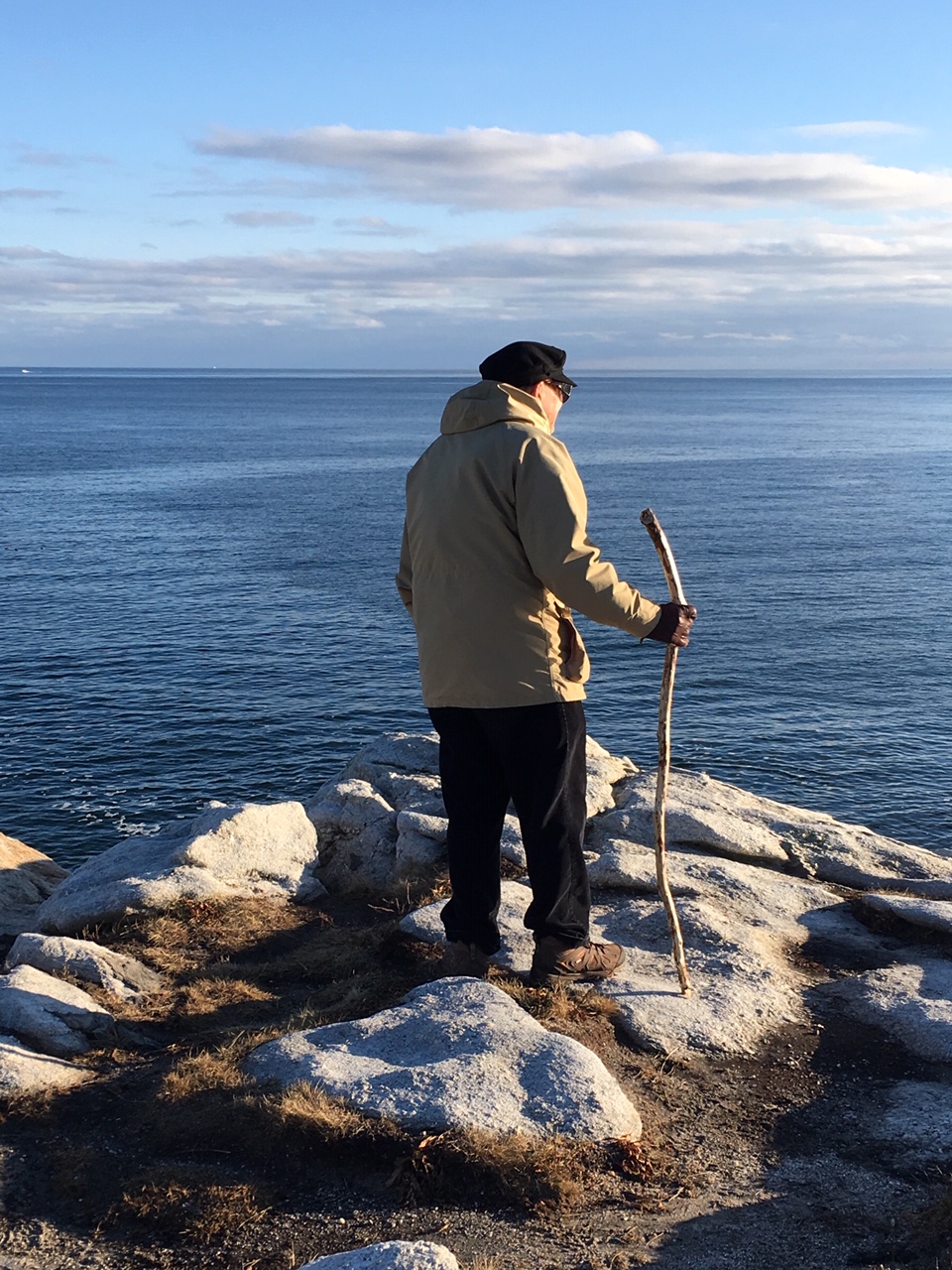
I’m still not sure how to celebrate her birthday, figure out how to hold both the knowledge that she is gone with the awareness that she’s always with me. Today, I will buy some flowers and take them to her memorial stone in our family cemetery. Laurie’s step-mother and I will walk along the ocean, not on some sandy beach crowded with oiled brown bodies and the smell of grease, but a rocky shore, where waves hiss and crash on weathered stones and the seaweed smells of damp musk, and I can feel the wind in my face, drying my tears as I pray: “Watch over thy Child, O Lord, as her days increase; bless and guide her wherever she may be ….”
When we come home, I will follow the recipe for blue cheese sandwiches that Laurie copied for us from the MOOSEWOOD COOKBOOK a year or so before she died. Ordinarily, I hate to cook, but for this one time all year I will prepare a meal instead of simply opening a can of soup or a package of risotto. I’ll shred and chop and sauté and be the one covered in blue cheese sauce. I’ll skin my knuckles on the grater.
But hey, as Laurie says, this is not just any sandwich.
#
(Note: I wrote this essay on my daughter’s birthday, August 9, in 2003. It has since appeared in the magazine Alimentum: The Literature of Food, but I think it’s appropriate to republish it this week. I have changed the age Laurie would be in 2018; otherwise, my conflicted responses to her birthday are just as true now as they were fifteen years ago.)
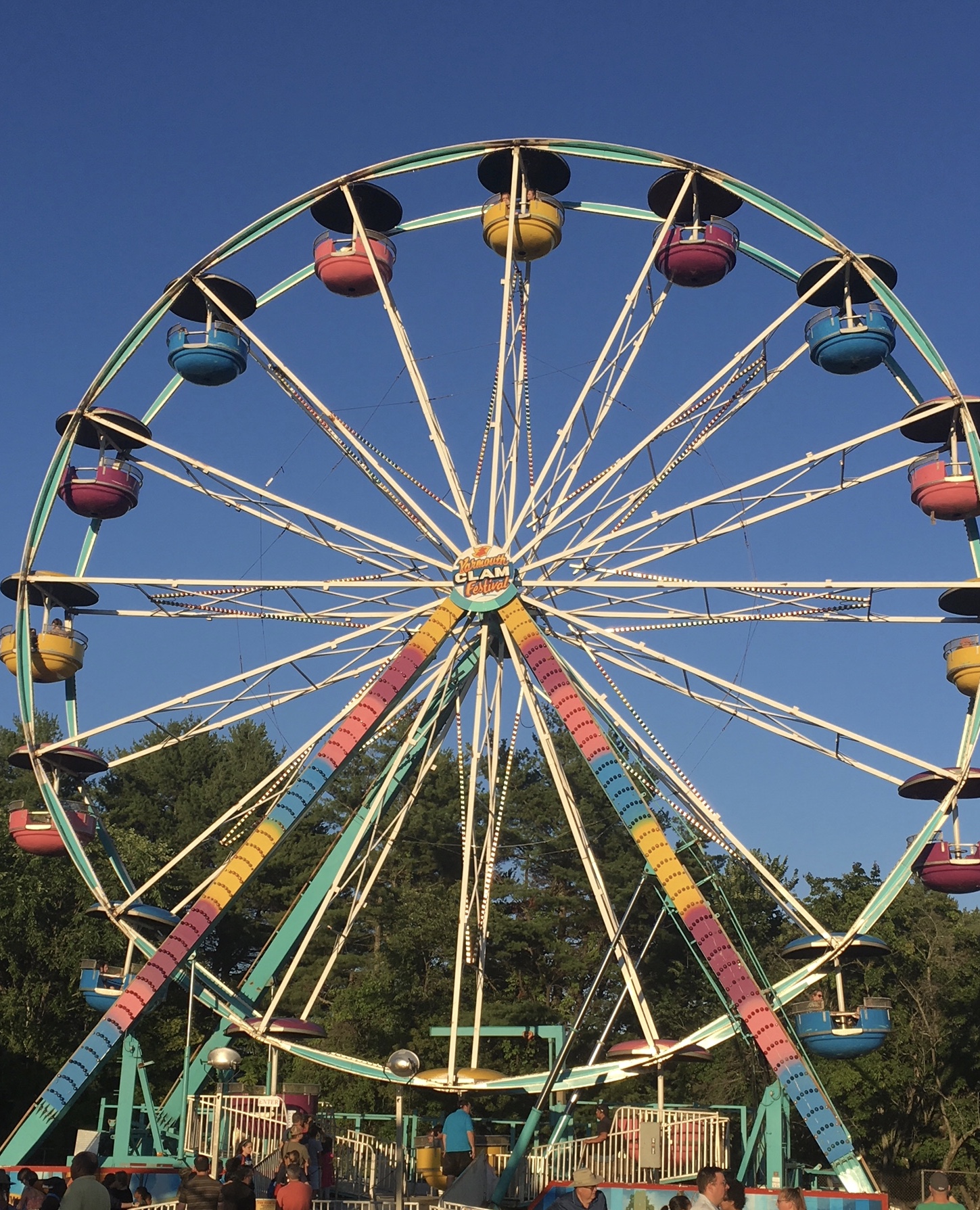
An out-of-key calliope brays and a tinny voice cuts through the night: “Round and round she goes, and where she stops, nobody knows!” Neon lights blaze from the food booths, their greasy smells mingling with those of horse manure and engine oil. The ground under my feet shakes from the vibration of motors turning rides like “The Thriller” and “The Dragon Wagon.” Mary Lee and I tiptoe around a mud puddle, buy a bottle of water, and sit on a bench in front of the Big Eli Wheel, or, as I used the call it when I was growing up, the Ferris Wheel.
Off and on for the past seventy years, I’ve been making a pilgrimage to some version of this carnival. These days, Smokey’s Greater Shows is part of Yarmouth Maine’s Clam Festival, a three-day celebration featuring a parade, artists and artisans, music, games, and clams fixed in just about every possible way. Compared to the downhome atmosphere that surrounds it, the carnival seems likes a drunken rhinestone cowboy who refuses to leave the block party. Still, I’ve always found an energy here absent from the tents up the street selling carved driftwood and Wicked Good Pickles.
In the early 1950’s, when the trucks first rolled through town—red and yellow letters along their sides and pictures of parrots and snakes and tigers or deformed men and mysterious women with almond shaped eyes, I’d stand straddling my bicycle on the sidewalk in front of faded white houses and rust-red stores, trying to get my breath, feeling the noise of the revved engines and ground gears, a hot rush of air tickling my crew cut, stinging my eyes, and pulling me along to the local baseball field where the carnival would set up for another July weekend.
My favorite days were Wednesdays and Thursdays before the carnival actually opened. I loved to watch the heavy-bellied men in brown fedoras setting up the Ferris Wheel, their eyes peering through the smoke of their cigarettes. Some men had mustaches, and some had tattoos of hearts or crosses or eagles—adornments I never saw on my father, or anybody else for that matter, in those Eisenhower days. The summer I was eleven or twelve, a carnie who my father said was “drunker than a skunk” climbed the Ferris wheel in pursuit of someone who’d been taunting him, slipped, and fell to his death. The Portland Press Herald ran a front-page picture of a semicircle of workers, their faces stained by shadows. Which confirmed what I already knew: these men were dangerous; and therefore, cool as hell.
When I was sixteen, the Ferris Wheel became new all over again when I rode it with the girl from Massachusetts I’d met that night: her leg against mine, her head resting against my arm across the back of the bench seat, the two of us alone in the night sky looking down on the world. This is how it will be, I thought, when I’m rich and famous—this feeling of rising out of this hick town and having everyone below gape up in admiration.
Almost sixty years later, I look up at the Big Eli Wheel. Metal and neon lights and florescent seats turn around and around, people ascending and descending, screaming and laughing, I think of how much of my life I’ve spent trying to leave the ordinary behind, rise above the overdeveloped shame and guilt that comes from growing up in an alcoholic family. In college, I loved climbing mountains and the god-like feeling I had when I reached the summits. After my daughter died, and I became interested in theology and spirituality, I discovered the word “transcendence,” a word meaning being in a state above or beyond the ordinary. I took up various forms of meditation, striving for “peak experiences” that would lift me from the pain of her death.
But the problem with thinking of transcendence as being at the top of a carnival ride is that the Ferris Wheel always returns to earth—that the gorgeous chick from Massachusetts says she’s sorry but she’s going steady with some guy back in Worchester. I find myself on a Wheel of Fortune on which my ego rises and falls, depending upon circumstances.
I’ve spent years on this wheel: one moment glorying in clouds of respect, love, and praise, convinced I’m a great teacher, a great writer, a great lover; and the next minute mired in depression, confusion, anger, feeling like an abysmal failure at everything I’ve ever done. Of knowing that God has anointed me with special favor; and then convinced that God is some kind of super sadist, playing with me the way a seven-year-old toys with an ant.
#
The water bottle is empty, but I’m still contemplating The Big Eli Wheel. It rests on a turquoise, pink, yellow, and purple frame, pastel colored cabs with caps and room for four, like painted mushrooms, rising and falling. Spokes fan out from the center of the wheel.
More and more these days, I’m finding the best way for me to achieve serenity is not to try to rise above feelings like shame and guilt but to go more deeply into them, try to find their core, their center. And I’m wondering if, instead of being at the top of the wheel closer to the heavens, the God of My Not Understanding isn’t really at the center, anchoring me as I spin on Fortune’s wheel between heaven and earth, the spiritual and the profane, success and failure.
I watch two women in their early twenties, I’d guess, with dyed red hair walk by, and from the other direction, two guys with shaved heads and tattoos of screaming eagles, hearts and crosses. One guy says something and both women giggle. Everyone stops. They talk and giggle some more and then walk off together.
Mary Lee takes my hand. We stroll past a teen-aged couple with matching high school jackets, the carnival lights sparkling off their braces as they grin at each another. I see parents buying candy and going on rides with their children. A woman about our age laughs and waves to a little girl who’s probably her granddaughter riding the merry-go-round. A middle-aged couple in jeans comes towards toward us. They’re also holding hands. The man says, “Doctors say holding hands lowers blood pressure by fourteen per cent.” We all laugh.
And I know what’s holding my life together, in spite of all of its ups and downs: the same thing that centers my faith: what I’m looking for even more than transcendence.
Leaving the carnival, I look back at the Big Eli Wheel, circling between the pastel sky and the muddy ground strewn with popcorn and soggy napkins. The spokes radiating out from the center blaze in the setting sunlight.











 The Geriatric Pilgrim: Traveling the Landscape of Faith and Grief