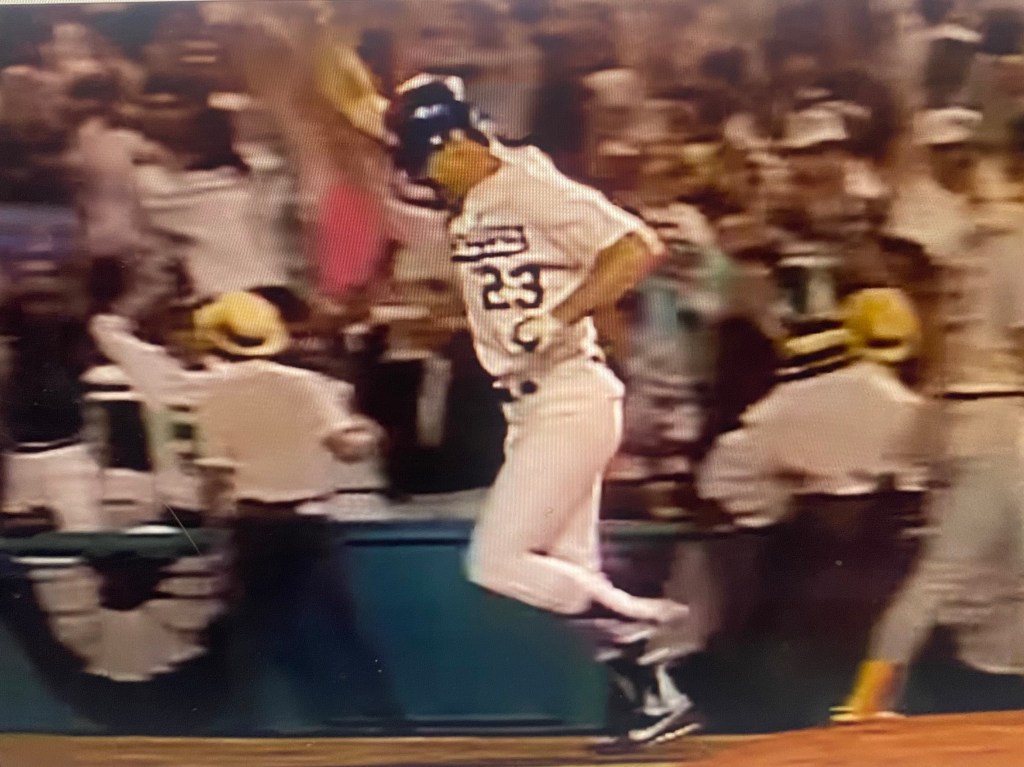
Watching Kirk Gibson Hit the Game Winning Home Run in the 1988 World Series

~

The first thing I hear when I turn on the 

old motel room’s boxy television 

sounds like an ocean’s roar: the huge crowd at 

a World Series game on their feet, cheering. 

Bottom of the ninth. The Dodgers trail the 

Athletics 4 to 3. Two outs. Dodgers 

have a man on first. The excitement is 

for Kirk Gibson, their star, who’s coming from

the dugout to pinch hit. The announcer 

says no one thought Gibson could play because 

of a severely strained hamstring in one 

leg and a bad knee in the other. He 

hobbles to the plate like a wounded duck.

Pitching for Oakland, Dennis Eckersley. 

Tall, slender, like some snake, he undulates,

and uncoils to throw two strikes past Gibson, 

whose every movement appears to hurt. 

Then Gibson somehow hits a couple of 

foul balls, sandwiched between Eckersley’s three

balls outside the strike zone. Count is three and 

two. Next pitch. Gibson reaches over the

plate and casually swipes at the ball. 

It soars over the right field fence. Gibson 

limps around the bases, pumping his fist 

to the deafening roar of the crowd while

announcers hail his gritty performance.

~

I hear my daughter’s quiet voice behind

me. I thought she was asleep. I turn to 

see her lying on the bed: her sunken 

eyes, scarlet bandanna, matching socks. Face 

white with pain. Thin fingers clench. Voice soft yet

determined as she talks to my wife: “I

 know this cancer might—probably will—kill 

me, but hopefully not for years. I need 

to make the most of the time I’ve got left.”

~

I look back at the TV as tiny

men jump up and down like sand fleas, patting 

one another on the back. Talking heads 

babble about courage. The crowd roars. I 

am drowning in a tsunami of rage. 

~ ~
Coming Upon a Clear-cut in the Woods 

~

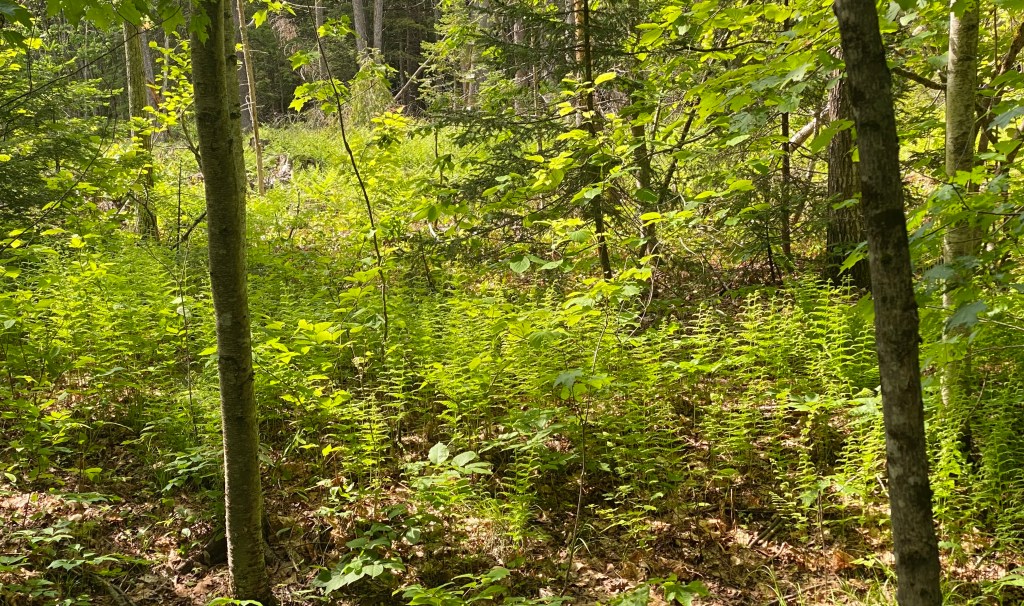
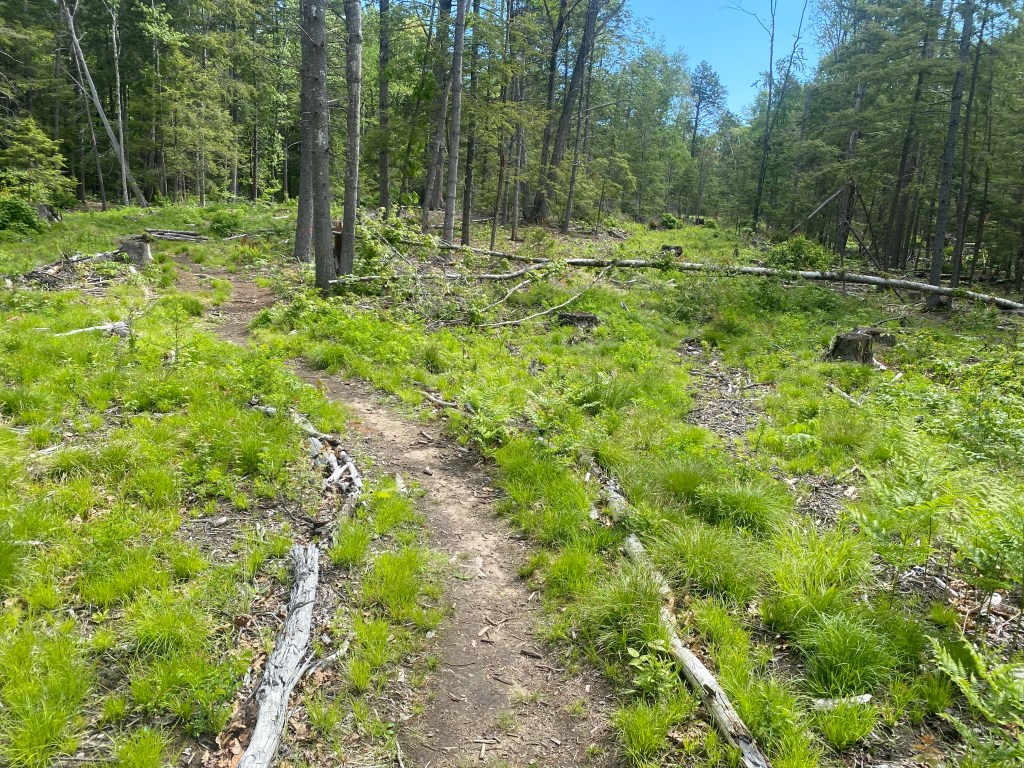
Two years ago, seeing the slash piles, stumps, 

wood chips, witch grass, and some scrawny hemlocks,

as if Death had been through here with his scythe,

I remembered how it feels to have your 

landscape destroyed: saw once again my child’s

remaining wisps of hair, her spindly legs, 

felt again the shock, denial, anger, 

my familiar depression descending.

~ 

The other day, I wandered through the same

 clear-cut and sensed my shock replaced by awe.

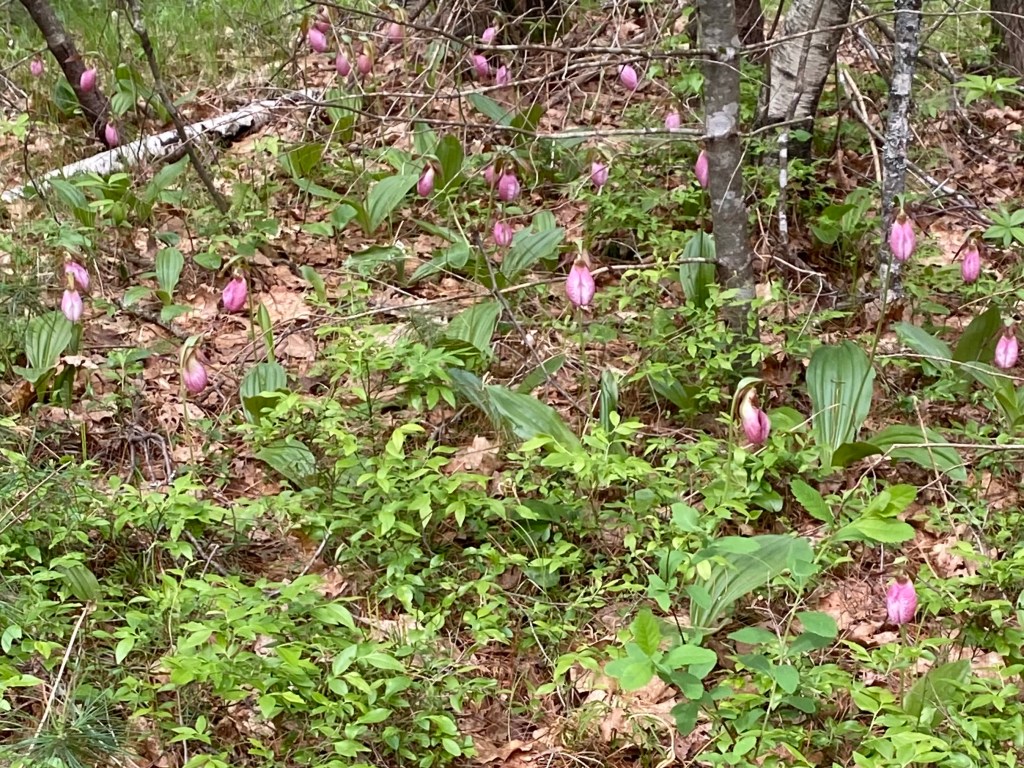
Bracken broke through slash, starflowers hugged stumps,

Pink lady slippers danced on decayed leaves,

huckleberry, aspen, maple promised

me that even death is deciduous.

~ ~

Empty Coffee Cups and Overflowing Ashtrays

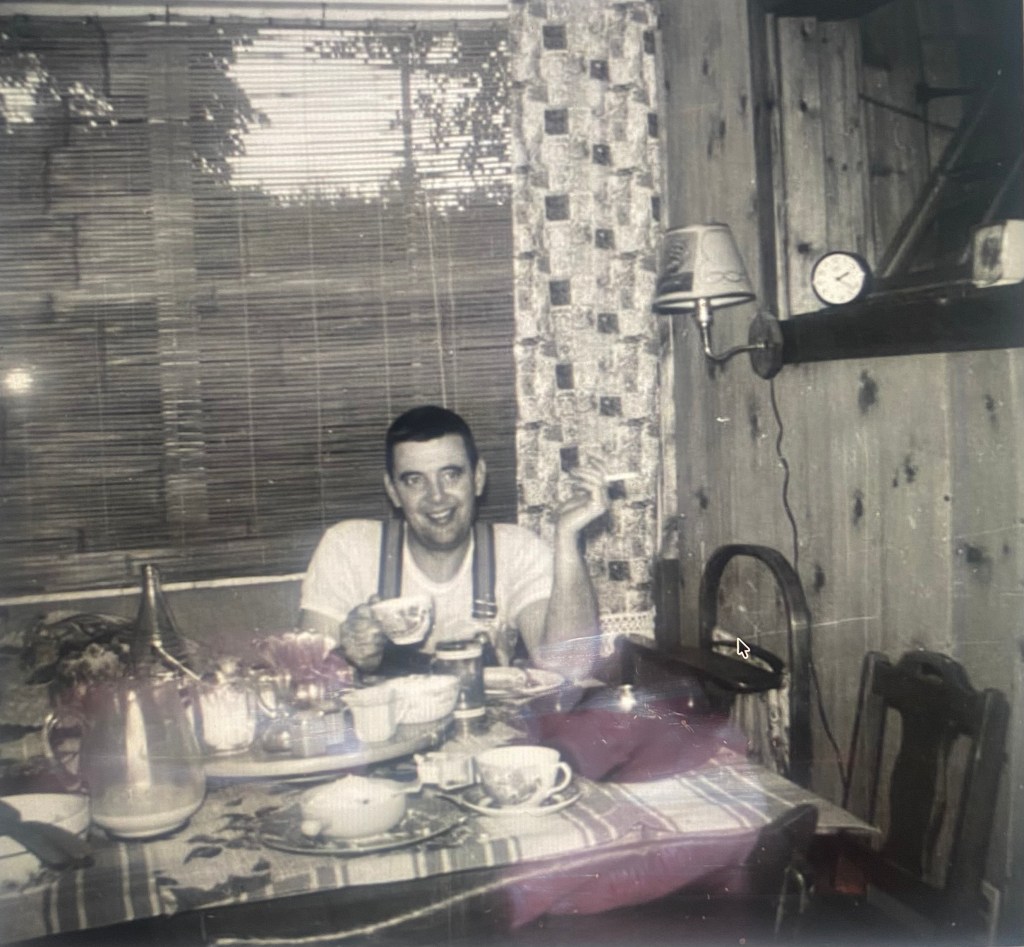
Dad with his coffee and cigarette

Sipping decaf latte with oat milk

at my local coffee shop, watching

the interplay of light and shadow

on granite-colored walls, I recall

growing up with empty coffee cups

 and overflowing ashtrays

in the kitchen, the dining room,

the living room, the bathroom:

flowered cups with curved handles 

tipped over in saucers, stained by years of use, 

and ashtrays mounded with 

Camel, Kent, and Pall Mall butts,

curtesy of my parents and my grandmother,

who often used her saucer as an ash tray—

cigarette smoke and the smell of old coffee

wafting through the house, like 

the resentments and repressed anger

passed down by generations of depression and alcoholism,

not to mention the shame and worry about money

and what would the neighbors think—

a miasma so pervasive I never noticed,

any more than I noticed a house empty

of spontaneity, security, and joy.

So why wouldn’t I start to smoke and drink coffee

and wallow in anger and shame,

until emphysema and heartburn and divorce

said, “Had enough?”

And here I am,

an old man, parents and grandmother

long gone, drinking my latte and 

checking my iPhone (another addiction,

even the size of the cigarette pack 

I once carried in that pocket),

working my 12-Step program,

and practicing gratitude for the life I have.

This too is grief.

◊

Coach Bale

°°

In those days, 

while I went to church each Sunday, my religion was basketball.

I worshipped Fridays in the high school gym, my saints the Eagles’ starting five. 

°

As aspirant, I tacked a round Quaker Oats box on a wall 

and rolled a pair of socks into a ball. 

°

And when I received a rubber Voit and Dad put up a hoop,

I loved the feeling of release, the sense of my soul’s rising from the driveway, 

the “swish” that said, “My son, I am well pleased.”

°

My god became eighth-grade coach Bale, who baptized 

me with sweat, shame, and submission.  

°

Lap after lap, disciples ran around the gym until we thought we’d puke. 

We heaved leather ten-pound balls, ran three-man weaves, learned to pivot

and set picks, while Coach Bale, arms across his barrel chest, thundered, 

“Move, you sissies! Move!”

°

The joy when learning I’d made the team

soon switched to fear when Coach Bale turned his wrath on me: 

“Hey, kid, you waddle like a wounded duck. Run!”

°

I started to jump rope at home, do sit-ups, push-ups, chin-ups, 

but nothing seemed to rectify my offenses.

“I said go here after you pass the ball,

not there, dummy! Clean out your ears!” 

I added running to my day, lost ten pounds. 

°

And lo, I made the starting five.

Sometimes I starred; sometimes I stunk.

If I scored early, blocked a shot, no one could stop me; 

if I threw the ball away or dribbled off my foot, 

fear of Coach Bale’s wrath multiplied my sins.

°

 Still, by the season’s end, he’d stopped his yelling at me; 

but neither did I hear his praise—no blessing for having worked my ass off.

Which made me want to work the harder.

°

The next four years—from freshman ball to junior squad to bench warmer to starting five— 

it was Coach Bale and not my high school coaches

who inspired me to dive for loose balls, outjump other guys.

Although I still played inconsistently, my passion helped our team to win.

°

After a game, when asked to sign a program, 

I realized I’d become the saint I used to glorify. 

And when a junior high kid told me Coach Bale had used me 

as an example of how hard work leads to success, 

I knew the blessing I’d so craved had been bestowed.

°

I also knew I didn’t give a shit.

The years of sweat and shame and anger had defiled the sport I’d once so loved. 

After our final game, I filched a pack of my father’s cigarettes,

and taught myself to blow smoke rings.

°

Four years later, home from college, I ran into Coach Bale.

Shorter than I remembered, his jowls hung like uncooked dough.

His handshake weak, his clothes reeked of cigarettes and alcohol.

He slurred his words as he preached his gospel of sweat and tears.

I said I needed to be somewhere else.

°

Oh, how powerless our gods become when we have lost our faith! 

°°°

Duende

◊◊

Duende:…[T]he “bitter root” of human existence, what Lorca referred to as “the pain that has no explanation” … and the source of much great art.—Christopher Maurer

◊

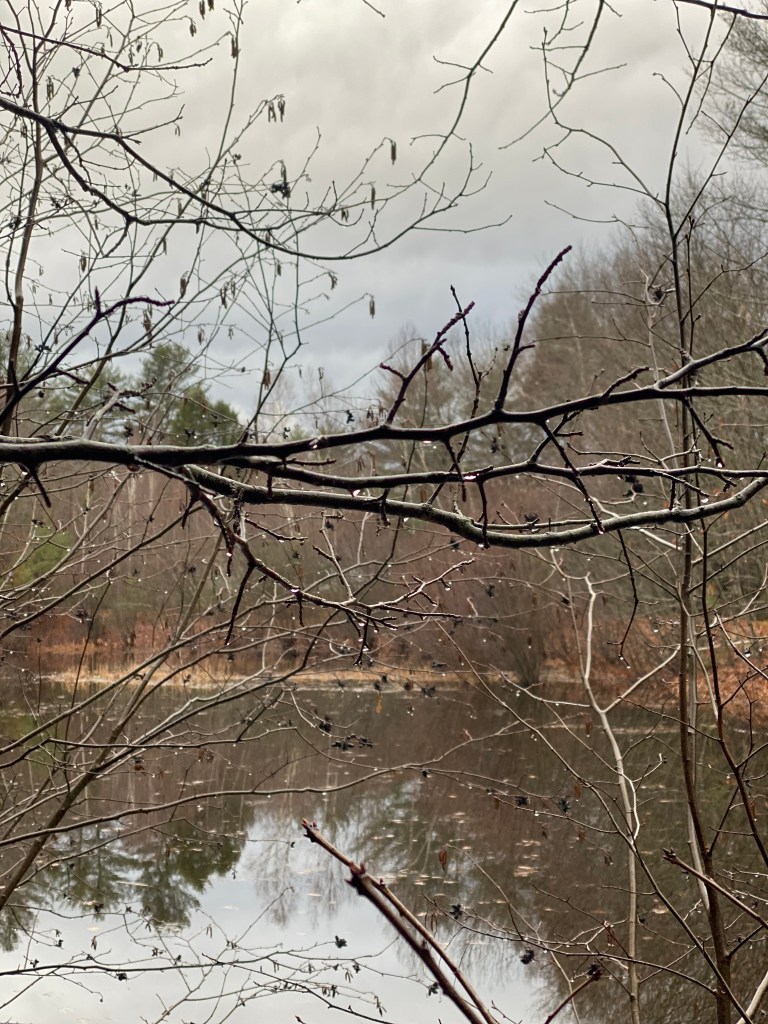
After the rain, the trees are weeping,

tears glistening in the setting sun. 

And suddenly

◊

I feel the fierce force flowing through my veins 

along with the red cells and white cells and platelets, 

to and from the heart (the center of grief, I heard somewhere). 

◊

I wail once more my family’s demise:

 my father’s frightened eyes, my mother’s waxy hands,

  my daughter’s last labored breaths.

´◊

I recoil as if for the first time at

old failures, sins, embarrassments, what-ifs

 that float before me like dead fish.

◊

I watch my friends diminish—

cancer, Parkinson’s, heart problems, Alzheimer’s—

I shave an old man’s face.

◊

This week, I’ll pray, write a poem, plant flowers in the family cemetery, meet friends,

take grandchildren for ice cream, work in my garden, make love to my wife, 

tenacity momentarily victorious. 

◊

Still, coursing through my triumphs like a deep and dark river,

demolishing and nourishing as it surges to the sea, 

Duende.

◊◊

Querencia

~

…from the Spanish verb “querer,” to want, desire, love; an emotional inclination toward a location; a home ground, a favorite place.—Wikipedia.

~

“A querencia is a place the bull naturally wants to go to in the ring… In this place he feels that he has his back against the wall and in his querencia he is inestimably more dangerous and almost impossible to kill.” Ernest Hemingway, Death in the Afternoon.

~

Or man-cave or refuge or sanctuary or study or simply the room at the end of the hall where I hang out wrapping it around me like a favorite bathrobe or suit of armor depending…

where I 

gaze at pictures of my wife ML looking radiant in her new clerical collar despite her son’s having left to live on the West Coast… my daughter Laurie’s watercolor she painted before her cancer diagnosis of a blue hand reaching up thru brown rocks toward bright flower petals … my brother sister & me skunk as a drunk before I sobered up … ML’s boys, Laurie & me swimming on Mount Desert Island when I thought we could blend our families… grandchildren sitting in my lap, playing by the river, hiking in the woods when we did…a panorama of Banjo Camp North where I named my banjo Joy… Jerry, Marty, & I—6’2” then— the Fish Factory Trio, singing “The Old Dope Pedler” at a high school variety show in 1961… four views of the Desert House of Prayer outside Tucson, Arizona where ML & I danced in the desert under a full moon Easter morning in 2001… a lioness sunning herself on a rock on the Serengeti Plains in 2018…

keep mementos such as a contestant pin from the 1961 L&M State Basketball Championship…three vintage baseball caps of my favorite teams… the skin of a rattlesnake I killed in Idaho in 1962…diaries going back to 1963…autographed books by heroes, mentors, friends and former students … cards from grandchildren… three bowls of rocks from my travels…rocks from those travels too big for bowls… a felt fedora covered in pins from airports around the world… a turkey feather from a walk in the woods… four clam shells from walks on the beach… a letter holder my father made for my mother when they were in high school… a wooden platter I remember him carving in the evenings after he’d come out of the Army & was working as an apprentice carpenter & we didn’t have a TV… my grandmother’s desk… 

lose and find myself in books of non-fiction, fiction, poetry…books about travel, Maine, writing, spirituality… five banjos…one guitar…one harmonica…one mouth-harp… one Vietnamese flute… ten songbooks… two file cabinets of old writing… two coffee cups of pens…my current diary… a yellow legal pad of paper… a computer … 

look out the window at a world of uncertainty for my country & my own life & those I love holding my favorite pen like Excalibur my diary like a shield enthroned in my ergonomic office chair feeling inestimably more dangerous & almost impossible to kill…

~ ~

To Friends who Tell me I Need to Lighten Up

What can I say? I like clouds in my sky.

~ ~

Thank you for your concern 

about my mental health, 

but I’d rather embrace 

my grief and fear

as if they were gassy grandparents 

who keep my school photographs 

on their refrigerator

to show my yearly growth

than banish the old farts 

to the basement 

and have them pound 

the floor under me 

with a broom handle.

~

Don’t get me wrong, friends, 

I do count my blessings, 

I am grateful for health, family, friends.

And I don’t pretend to understand 

what it’s like trying to stay afloat

in the black seas of chronic depression.

But happiness, I’ve discovered, 

can become complacency, 

which can be a stagnant pond 

swarming with blackflies.

~

I find more blessings to count, 

more for which to be grateful, 

after having been broken open 

by the deaths, destruction, decay around me, 

some of which I’ve caused, 

some of which I haven’t deserved, 

and some of which is just life.

~

Without looking at my grief, 

I’m not able to recognize my joy. 

And I don’t mean glancing at loss 

the way I rubberneck 

at an accident on the highway.

I mean reentering the suffering, 

scrutinizing the fears, 

which means talking 

and writing about them.

~

My urge to create begins in loss, 

my gratitude begins in fear, 

my compassion begins in pain, 

and my joy begins in sorrow.

~

All of which, I guess, is to say:

I’d rather be whole than happy.

~ ~

First Friend


Behold, I give unto you power to tread on serpents and scorpions, and over all the power of the enemy: and nothing shall by any means hurt you. —Luke 10:19

Staring at my 3 a.m. fears—A burning planet, a demented president-elect, disease, death—I think of you for the first time in years: first friend, neighbor, bodyguard, mentor, and, although three years older than I, my classmate from fifth through seventh grade.

Thick black hair and an Elvis sneer, Kirk Douglas dimple in your chin, sleeves rolled up as far as they’d go to show those growing muscles, your dark eyes often flashed anger at the world, but also amusement and compassion for the pudgy, awkward kid who worshipped the ground under your motorcycle boots.

Buddy Fitts, Freddy Gallant, Bucky Lapoint—none of the playground bullies—dared trip me, twist my arm, scrub my face with snow, because they knew they’d have to fight you first. And you were tough: sauntering up Bridge Street coatless in a ten-degree storm, snow clinging to your hair like chainmail on the Black Knight, carving your name on your veiny forearm with a Gillette Blue Blade.

In class, you never raised hell, never passed in a paper, just sat in the back seat looking cool until you turned sixteen and could legally split the joint. You cut CAROL into your upper arm and went to work in the cotton mill.

Playing basketball, fumbling with the buttons on Daisey’s sweater, I hardly knew you’d left. Never saw you much afterwards. Heard you and Lapoint started a paving business.

Home from college, I once walked by your house. You hadn’t grown since grade school but your tattoo was cool—a tiger’s head spanning your boney back as you banged away on a rusty Chevy. We grunted greetings. I forgot you.

At our 50th high school reunion, your cousin Roland said you lived in Tennessee, belonged to some Pentecostal church that prays with poisonous snakes to show God’s power over evil.

This dark morning, my friend, I think of how you protected me, wish you were here to keep me safe from the serpents slithering around me.

# #

Welcome, November

#

As readers of this blog know, my daughter Laurie died at the age of 18 from a rare cancer. In November, seven months after the cancer was first diagnosed, she went into Eastern Maine Medical Center. Living 120 miles away, I took a leave of absence from my teaching job and moved into a Ronald McDonald House where I spent the next two months with my daughter until she died on December 23.

Since then, each November as the days grow darker and colder, I can feel my body chemistry change. I’ve coped in many ways, but the most helpful has been through writing. It’s no accident that the first Geriatric Pilgrim blog appeared in November 2015.

#

Sonnet for November

Novembers, I would drive my daughter past

Men in blaze-orange caps, crouched on a hill,

Their 30-30’s sighted, set to kill

Most anything, just so the gun would blast.

My heart began to flutter, then beat fast

As we drove by them—silent, savage, still—

And I could feel the air around us chill.

I’d think, how long, dear God, will this month last?

But I’ve since learned of other ways to die,

And russet hills now fill with memories:

Her gentle, kind, abbreviated life.

These days, I treasure the November sky

Which broadens once the leaves drop from the trees.

November wind is clean, a whetted knife.

#

Darkness

Now darkness begins:

light dimming after lunch,

long shadows on the lawn.

I curse the old lady

crossing the street

in front of my car,

lose gloves,

feel the familiar kick

to the heart. 

You’d think after all these years

I’d be over it,

but it’s always different…

this darkness…

Gone the murky numbness,

the black rages,

no more the dim corridors

of “if only” and “what if,”

lit up by Johnny Walker.

Now, who knows what waits 

in the darkness ?

Another old friend’s Christmas card

to bring me tears?

More recurrent dreams of stumbling

through stony landscapes?

Another season of bingeing bad TV?

Still, the waning light 

is clean and clear,

the view scoured of chewed leaves, 

dead flowers, black flies.

And sometimes, just sometimes,

Love enfolds my fears,

and I hear Laurie whisper, 

“Dad, let the thoughts go.

Let darkness begin.”

This is Not Just Any Sandwich

IMG_3648

#

I look at the faded and folded white lined paper, at Laurie’s tiny, circular handwriting: “This sandwich would win the approval of Henri Matisse, and fans of rainbows as well.” Suddenly I hear her in the kitchen, opening the refrigerator, taking out containers, opening the vegetable tray. Rustle of cellophane, clink of glass, thud of food hitting the counter.

“Dad, where’s the vinegar?”

I realize she’s never been in this house. “In the bottom cupboard, behind the second door over from the fridge. Do you want some help?”

“Nope, I’m fine.”

I know she’s wearing an over-sized tee shirt she’s tie-dyed, one like she did for me. I hear her singing to herself, probably something by Suzanne Vega, or Tracy Chapman: “Don’t you know they’re talkin’ about a revolution. It sounds like a whisper.”

“Peace-Nik!” I yell.

“Flower power lives!” she yells back. “Where’s the red onion?”

“Under the cupboard on the counter by the window. In that basket.”

I hear chopping sounds, then the rasp of vegetables against a grater. I jump at the whirring and rattling of our blender, then jump again when Laurie cries, “Yikes!” and the blender stops

I stand. “What’s wrong?”

“Nothing.” She laughs. “The top came off the blender. I’ve just got this dressing all over the counter and all over me. I’ll clean it up.”

I smile and sit back down at my desk. “No problem. But this seems like a lot of work for a sandwich.”

“Da-a-ad! This just isn’t any sandwich. It’s a work of art.”

And for a minute, I see her in the doorway, dressed as I imagined, blue-cheese sauce splattered on her arms and a dab of it on her nose. She looks at me, one eye-brow raised, her forehead furrowed in what I think of as a combination of amusement, satisfaction, and frustration. My daughter, the artist. Whether she’s painting a landscape, playing the piano, embroidering, wood-burning, or cooking, she throws herself into it.

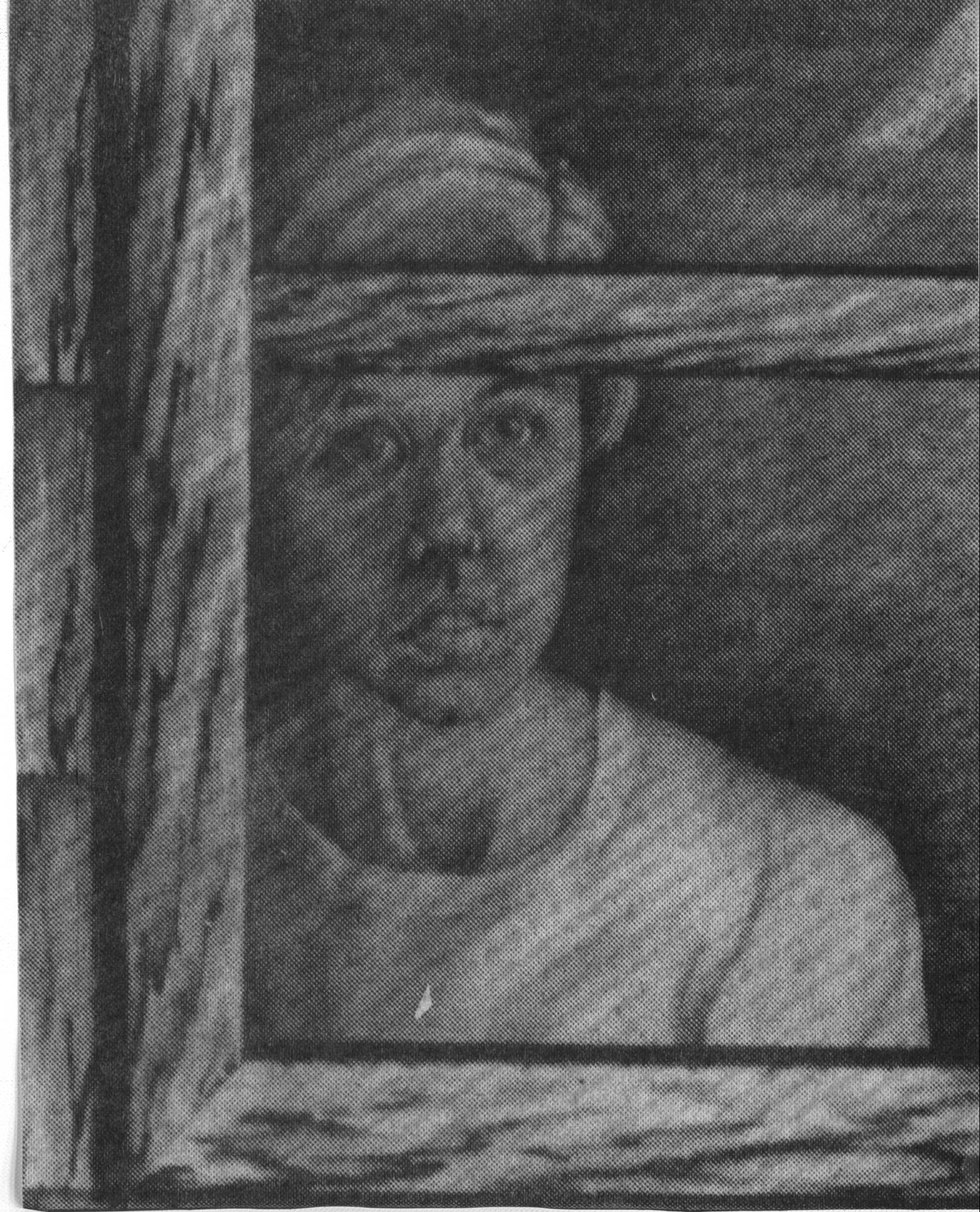
And then I see the bright red bandanna around her head, which she wore during the chemotherapy treatments, and my vision of my daughter fades. I’m staring at her last self-portrait, at her sad eyes gazing wistfully out through a window at the world. In the kitchen, my wife is pouring herself a cup of coffee.

Laurie

Today is Laurie’s forth-eighth birthday, and my only child has been dead almost thirty years. It’s a bittersweet day, a sandwich of emotions: a layer of sorrow, a layer of rage. Chop up some shame, some guilt, and some regret. Mix in some “if onlys,” and a few “what ifs.” Season that mixture for a while, let the sharpness mellow. Top it with a generous mixture of happy memories, on-going love, and the knowledge that you helped create someone beautiful and loving and courageous beyond measure, someone who touched all who knew her, inspired many, made a difference for the better in this world—all by the age of eighteen.

I’m still not sure how to celebrate her birthday, figure out how to hold both the knowledge that she is gone with the awareness that she’s always with me. Today, I will buy some flowers and take them to her memorial stone in our family cemetery. Laurie’s step-mother and I will walk along the ocean, not on some sandy beach crowded with oiled brown bodies and the smell of grease, but a rocky shore, where waves hiss and crash on weathered stones and the seaweed smells of damp musk, and I can feel the wind in my face, drying my tears as I pray: “Watch over thy Child, O Lord, as her days increase; bless and guide her wherever she may be ….”

IMG_2088

When we come home, I will follow the recipe for blue cheese sandwiches that Laurie copied for us from the MOOSEWOOD COOKBOOK a year or so before she died. Ordinarily, I hate to cook, but for this one time all year I will prepare a meal instead of simply opening a can of soup or a package of risotto. I’ll shred and chop and sauté and be the one covered in blue cheese sauce. I’ll skin my knuckles on the grater.

But hey, as Laurie says, this is not just any sandwich.

#

(Note: I wrote this essay on my daughter’s birthday, August 9, in 2003. It has since appeared in the magazine Alimentum: The Literature of Food, but I think it’s appropriate to republish it this week. I have changed the age Laurie would be in 2018; otherwise, my conflicted responses to her birthday are just as true now as they were fifteen years ago.)

#