°°
We assemble around the Legion’s log cabin by the WWII cannon: boy scouts, girl scouts, cub scouts, brownies, veterans of three wars, the women’s auxiliary, the fire department, the police chief, local town officials and state representatives, and the junior high school band in which I play trombone in the only white shirt and dark blue pants I have, and a blue and white garrison cap, which is all the school budget can afford to give us, and which makes me look like I work at the drugstore’s soda fountain.
°
At 9:00 a.m. we set off down Main Street, the drums—da da dumdumdum, da da dumdumdum, dumdum, dumdum, dadadadadada dumdum—introducing a ragged version of “Stars and Stripes Forever.” But our band director, Mrs. Marston, smiles and says hey, it’s 9:00 in the morning and we’ll get it right next time.
°
First stop is North Yarmouth Academy, where, standing beneath the flagpole with an airplane at the top, the headmaster remembers NYA grad, Somebody Fogg, shot down in the Pacific during WWII. Charlie Marston, the mailman and husband of our band director, plays Taps, while across the street, behind a horse chestnut tree, Stan Haskell from the Canal Bank plays the echo.
°
Then we march down Main Street, playing “The Washington Post March,” which sounds pretty good to me, but when we get to the “Armed Forces Medley,” it’s hard for us to get our breath because we’re going uphill on Route 88 and by the time we get to Riverside Cemetery, we kind of peter out, but I figure there’s no one there to hear us except for dead people, so it’s okay.
°
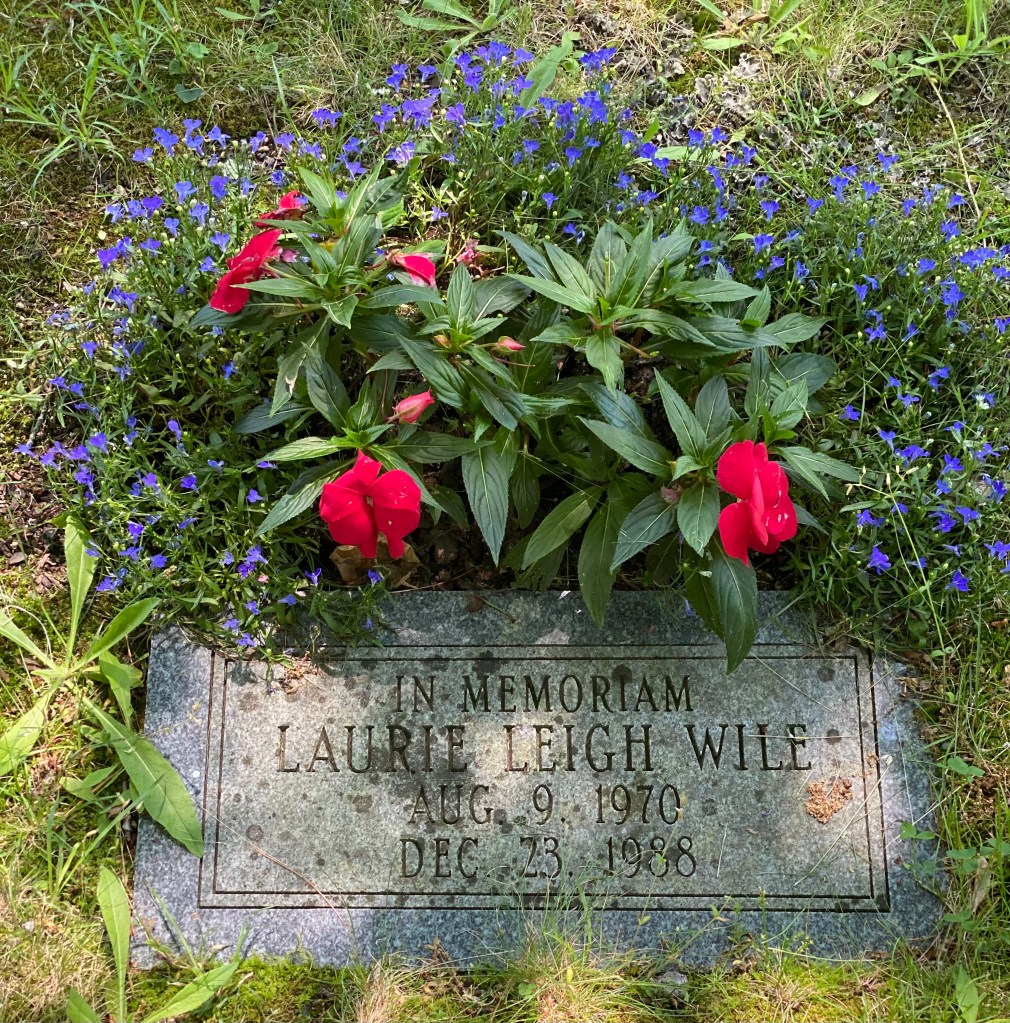
Standing by a tall marble monument in a sea of American flags, my minister and next-door neighbor, Scottie Campbell, says a few words I can’t hear (and even if I could, I couldn’t because I’m blowing dandelion puffballs at Merry Barker.) Then Taps again, Charlie by Scottie and Stan behind another tree, before we walk over to the Catholic cemetery, segregated behind a stone wall, and a cherubic priest, whose name I don’t know because my family doesn’t associate with, in the words of my grandmother, “that element,” prays a confusing prayer that has all these “Amen’s” in it. (Doesn’t Amen mean the prayer is over and we can leave?) More Taps, Stan staying behind a tree in our side of the cemetery.
°
Down 88, we try again to get “Stars & Stripes Forever” right and Mrs. Marston smiles this time so we must have. Along Main Street, my parents are standing at the corner with my brother and sister waving and my father with his hand over his heart as we play “Washington Post” which sounds even better than it did the first time.
°
Back at the log cabin, we break for cokes and cookies, and Jerry and Ernie and I get in a burping contest and I belch coke on my white shirt.
°
We reform and head uptown, under the Route One overpass, across the railroad tracks, past Hilton’s gas station and Benny the Jew’s junk yard and the Five & Dime and Handy Andy’s, up the hill past the Old Meeting House, playing the “The Stars & Stripes Forever,” which is what it’s beginning to feel like. Mrs. Marston doesn’t look happy but her face is red and wet, so maybe she’s just tired.
°
We march (sort of) into the Baptist Cemetery, where the really old gravestones are, and where Pastor Storms, standing beside a thin marble stone honoring somebody who was in the Civil War named Blanchard, just like the last name of a kid in my class, prays for what seems like forever, and Charlie’s trumpet cracks, and Stan’s echo comes from behind the Old Meeting House, I guess, but by then, I don’t really care because I’m tired, too. So, I lean back against one of the old gravestones, grateful to those who have died for giving me a place to rest my butt.
°°°