
Ruminations on his 83rd Birthday

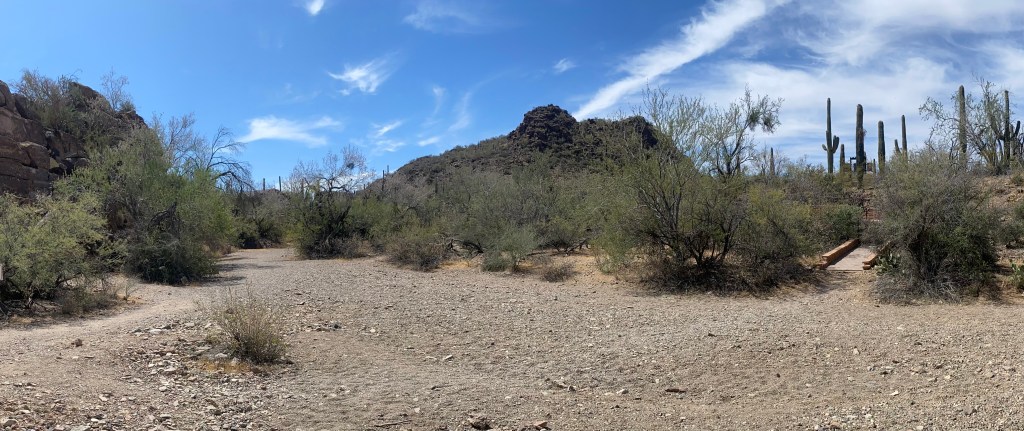
Picture Rocks Wash, Arizona. On the right, stairs lead to the Stations of the Cross. On the left are the petroglyphs.

~

His life these days is like walking a trail,

maybe that wash* in Arizona when 

he was on retreat, when on one side of 

him were the Stations of the Cross and on

the other side the picture rocks that give 

the wash its name: 1500-year-old 

petroglyphs by the Hohokam farming

people of the Sonoran Desert.

~

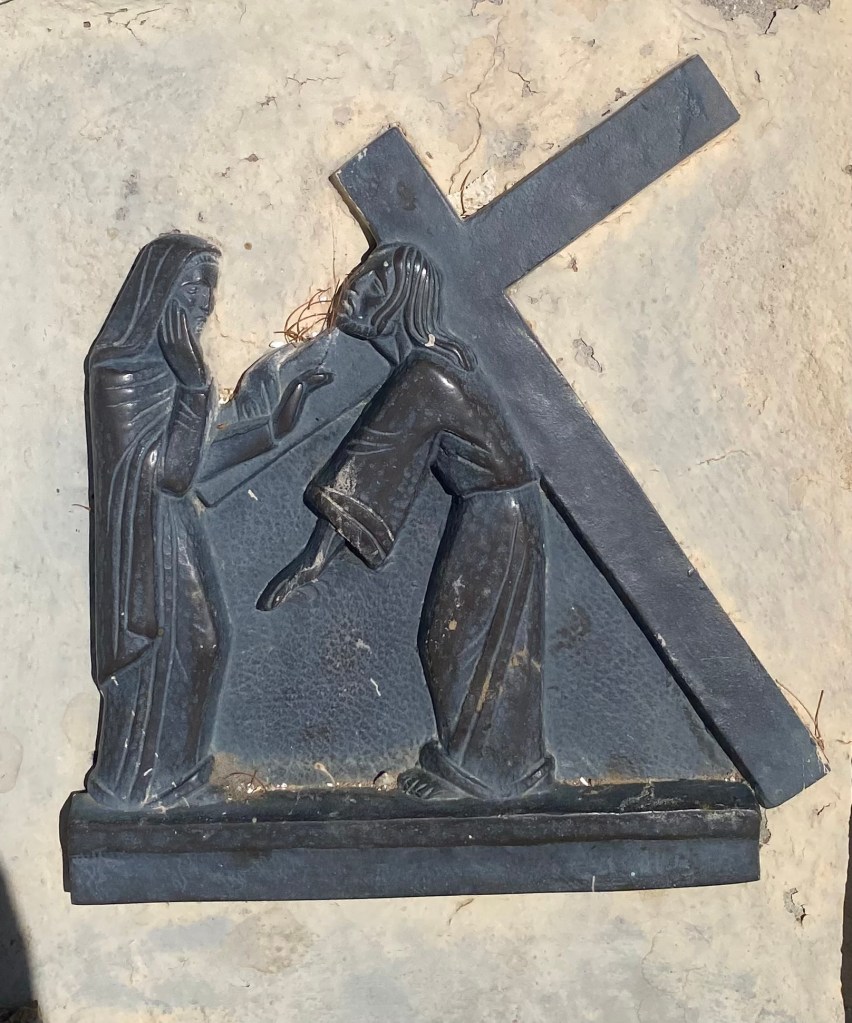
On one side, 14 etchings in metal

depict Jesus’s progression to his

death: scourging and the crown of thorns, falling 

under the cross’s weight, piercing, thirst, and 

humiliation, abandonment by 

friends, followers, even God, death. And 

he thinks of the violence and cruelty

of the empire in which he lives against

the materially poor and the sick

and the marginalized, his feeling that 

God has abandoned the country he loves,

his own pains in places he never knew

he had; indignities; lashings of fear; 

the cross he carries of his family’s

disease; the piercing loss of his daughter.

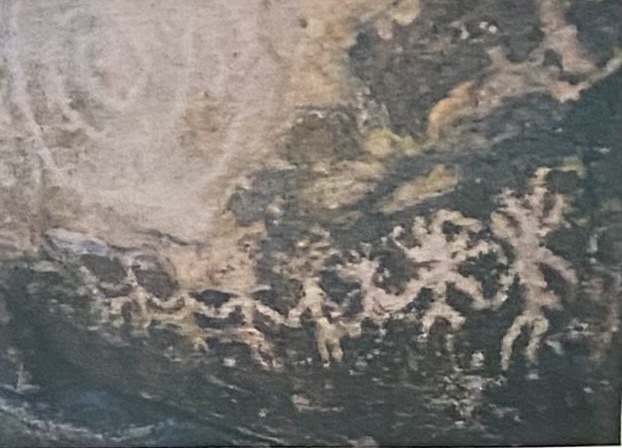
On the other side, petroglyphs show the 

the sun’s progression during the summer 

solstice: swirls and spirals and strange designs, 

images of dancing people, deer and 

antelope, alien-looking creatures

(you don’t suppose…), and something that looks like 

a picture of an atom, but which might

depict life’s interconnected circle.

He thinks of the kind and kinds of people 

he’s met in traveling from coast to coast,

this country’s mountains, deserts, and rivers, 

of the smell of the dirt in his garden,

dancing with his wife, watching grandchildren

grow up, his church men’s group, his circle of 

friends, his joy in writing a good poem.

He recalls walking between the two sides

of the wash, hearing what might have been a 

cacophony or what might have been a 

choir of quails, doves, finches, cactus wrens, 

flickers, thrashers, cardinals, fly catchers, 

pyrrhuloxia, verdins…and he hears

the sounds of his life: voices of parents 

who, despite their own horrible childhoods, 

made of themselves a living sacrifice

for their children, echoes of the friends he’s 

lost, and of the friends he still has, some of 

them going back to childhood, the teachers 

he disappointed and the teachers who

were there when he needed them, the students 

he failed, and those he inspired, the sounds 

of the tortured last breaths of his daughter, 

and the glorious voice of the woman 

he loves as she reads the Sunday Gospel. 

~

He remembers the Arizona sky

which canopied both sides of the wash,

feeling the paradox that is his life 

enfolded by Something—The Holy Spirit, 

The Tao, The Great Spirit, Jesus, Buddha,

Jehovah, Allah, Brahmin, The God of 

My Not Understanding—he doesn’t care

about names, he’s grateful to be here and

eager to see what’s around that next bend.

~~

*a wash is a dry, low, sandy riverbed that only carries water during rare rain events. It’s often called an arroyo.

Empty Coffee Cups and Overflowing Ashtrays

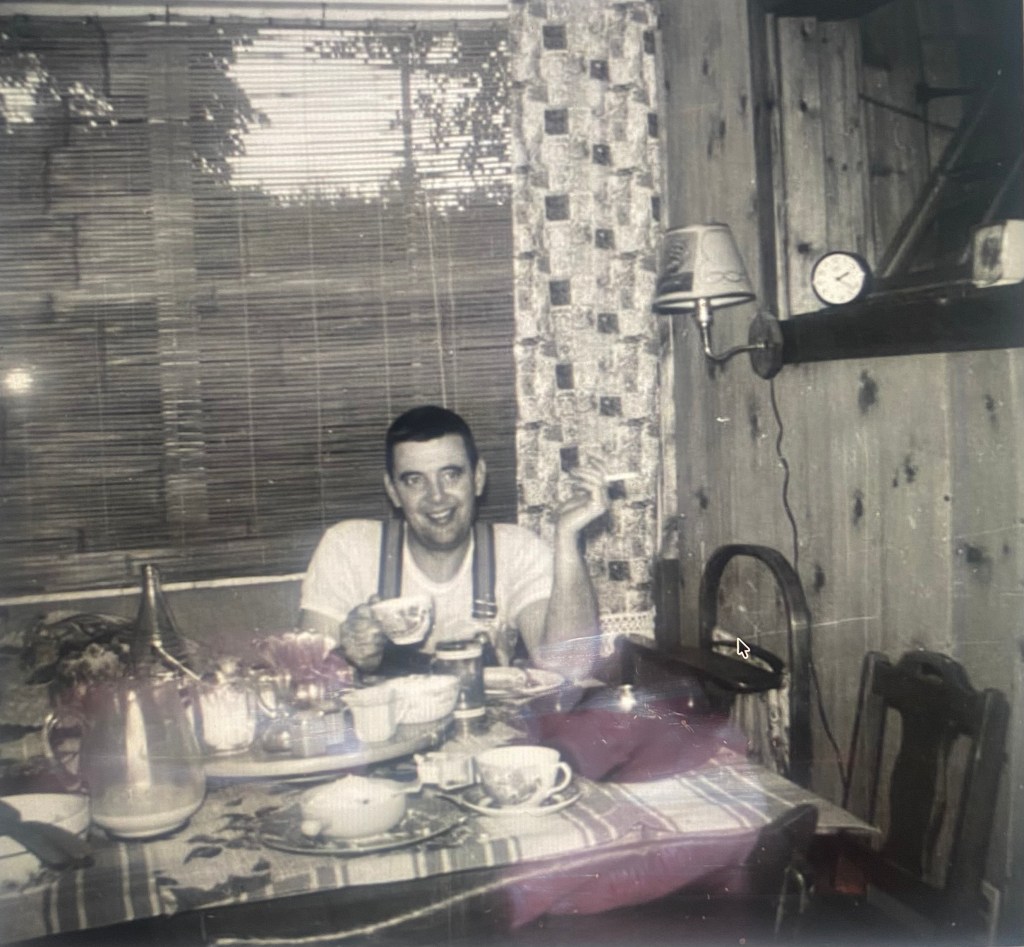
Dad with his coffee and cigarette

Sipping decaf latte with oat milk

at my local coffee shop, watching

the interplay of light and shadow

on granite-colored walls, I recall

growing up with empty coffee cups

 and overflowing ashtrays

in the kitchen, the dining room,

the living room, the bathroom:

flowered cups with curved handles 

tipped over in saucers, stained by years of use, 

and ashtrays mounded with 

Camel, Kent, and Pall Mall butts,

curtesy of my parents and my grandmother,

who often used her saucer as an ash tray—

cigarette smoke and the smell of old coffee

wafting through the house, like 

the resentments and repressed anger

passed down by generations of depression and alcoholism,

not to mention the shame and worry about money

and what would the neighbors think—

a miasma so pervasive I never noticed,

any more than I noticed a house empty

of spontaneity, security, and joy.

So why wouldn’t I start to smoke and drink coffee

and wallow in anger and shame,

until emphysema and heartburn and divorce

said, “Had enough?”

And here I am,

an old man, parents and grandmother

long gone, drinking my latte and 

checking my iPhone (another addiction,

even the size of the cigarette pack 

I once carried in that pocket),

working my 12-Step program,

and practicing gratitude for the life I have.

This too is grief.

Coach Bale

°°

In those days, 

while I went to church each Sunday, my religion was basketball.

I worshipped Fridays in the high school gym, my saints the Eagles’ starting five. 

°

As aspirant, I tacked a round Quaker Oats box on a wall 

and rolled a pair of socks into a ball. 

°

And when I received a rubber Voit and Dad put up a hoop,

I loved the feeling of release, the sense of my soul’s rising from the driveway, 

the “swish” that said, “My son, I am well pleased.”

°

My god became eighth-grade coach Bale, who baptized 

me with sweat, shame, and submission.  

°

Lap after lap, disciples ran around the gym until we thought we’d puke. 

We heaved leather ten-pound balls, ran three-man weaves, learned to pivot

and set picks, while Coach Bale, arms across his barrel chest, thundered, 

“Move, you sissies! Move!”

°

The joy when learning I’d made the team

soon switched to fear when Coach Bale turned his wrath on me: 

“Hey, kid, you waddle like a wounded duck. Run!”

°

I started to jump rope at home, do sit-ups, push-ups, chin-ups, 

but nothing seemed to rectify my offenses.

“I said go here after you pass the ball,

not there, dummy! Clean out your ears!” 

I added running to my day, lost ten pounds. 

°

And lo, I made the starting five.

Sometimes I starred; sometimes I stunk.

If I scored early, blocked a shot, no one could stop me; 

if I threw the ball away or dribbled off my foot, 

fear of Coach Bale’s wrath multiplied my sins.

°

 Still, by the season’s end, he’d stopped his yelling at me; 

but neither did I hear his praise—no blessing for having worked my ass off.

Which made me want to work the harder.

°

The next four years—from freshman ball to junior squad to bench warmer to starting five— 

it was Coach Bale and not my high school coaches

who inspired me to dive for loose balls, outjump other guys.

Although I still played inconsistently, my passion helped our team to win.

°

After a game, when asked to sign a program, 

I realized I’d become the saint I used to glorify. 

And when a junior high kid told me Coach Bale had used me 

as an example of how hard work leads to success, 

I knew the blessing I’d so craved had been bestowed.

°

I also knew I didn’t give a shit.

The years of sweat and shame and anger had defiled the sport I’d once so loved. 

After our final game, I filched a pack of my father’s cigarettes,

and taught myself to blow smoke rings.

°

Four years later, home from college, I ran into Coach Bale.

Shorter than I remembered, his jowls hung like uncooked dough.

His handshake weak, his clothes reeked of cigarettes and alcohol.

He slurred his words as he preached his gospel of sweat and tears.

I said I needed to be somewhere else.

°

Oh, how powerless our gods become when we have lost our faith! 

°°°

The Highways

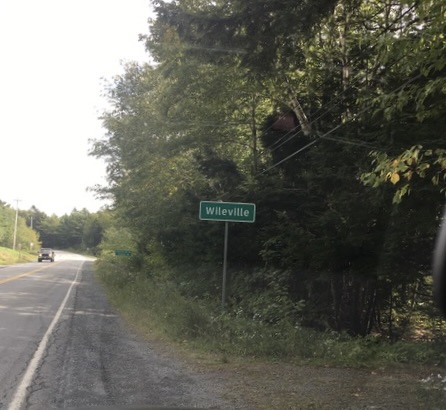
Nova Scotia highway

~

‘Be not afraid.’ Those words don’t say ‘Have no fear.’ Instead, they say I don’t need to be my fear.—Parker Palmer

~

So much to fear,

so I fled to the caverns

and sat in the gathering darkness

 around my tiny fire.

I heard the earth, consumed 

by fire and poison, cry out in agony.

Insane voices screamed threats.

The air reeked of corruption.

Gunshots echoed in the canyons.

Grieving parents wept.

I felt my strength ebbing as

I sensed the valley of the shadow below.

How I longed for the sky to light up 

and a voice from the heavens 

thunder, “Be Not Afraid!”

and an angel descend to

sheathe me in unconquerable courage.

But in the silence amidst the tumult 

and the suffering, an old friend 

I’ve never met said, 

“‘Be not afraid’ doesn’t mean ‘Have no fear,’ 

but rather, ‘do not be your fear.’”

I raised my eyes and looked back at my journey,

not only at the deep crevices of death

and quicksands of despair,

but at hilltops of hope,

ponds of trust,

forests of generosity,

fields of strength,

oceans of love,

and saw fear was but part of the landscape.

Therefore, I have risen from the ashes,

left the caverns,

and resumed the journey,

resolving to live on the highways

and not in the hollows,

cherishing each rock on the road.

The sun has not yet set.

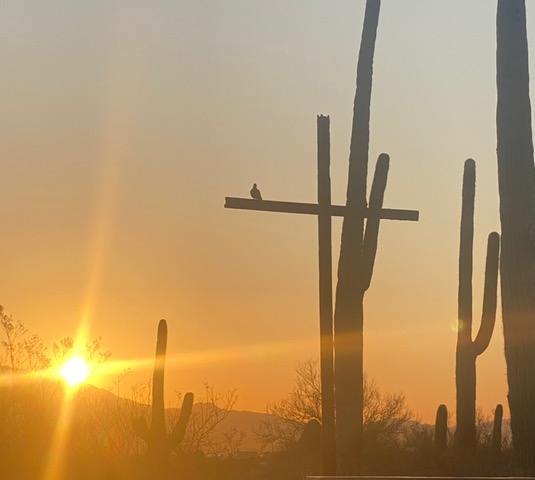
Arizona sunrise

~ ~

Mid-December’s Black Ice

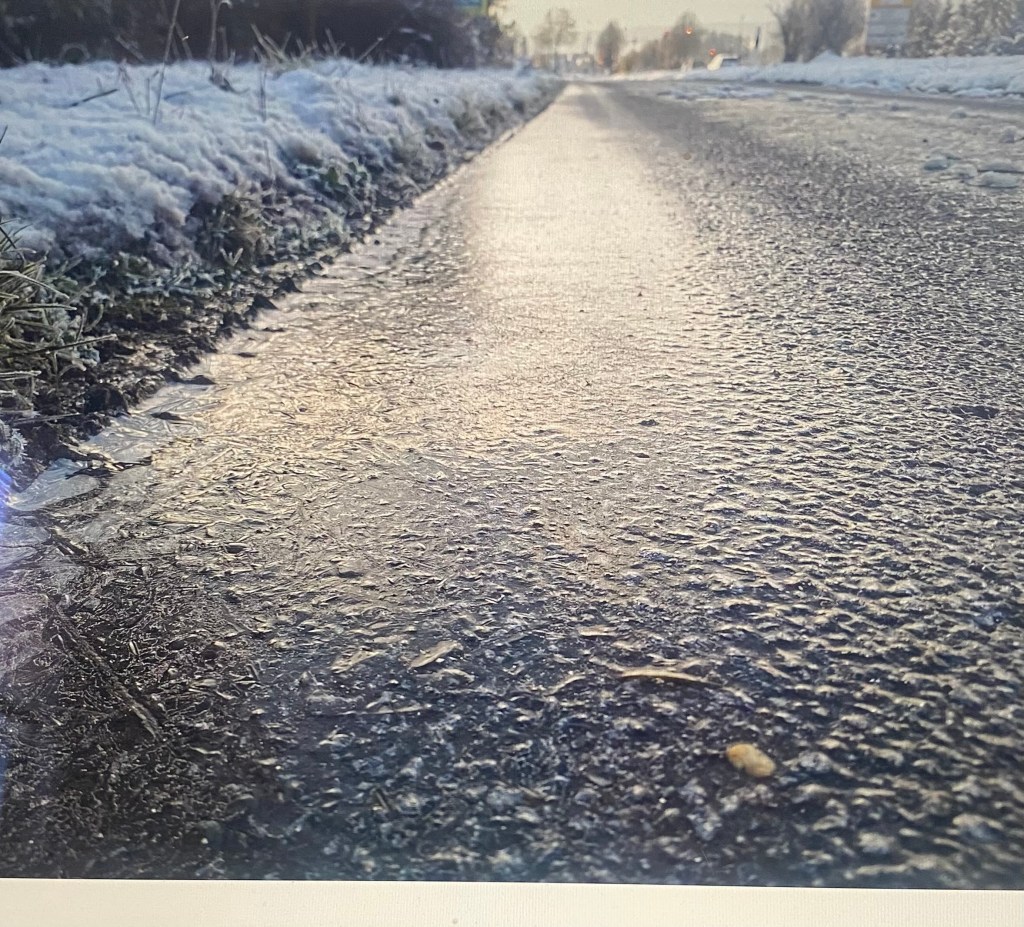
Photo from Wikipedia (but it could have been in front of my house)

Yesterday’s snow became rain

before the temperature dropped

back into the teens, so that

this morning, sunshine glistens 

on the icy road over 

which I walk—an eighty-year-

old man trying to find his 

way during this season of 

Joy to the World, while he grieves

the anniversary of 

 his child’s death, and ponders what’s 

next with curiosity 

glazed with fear, poking along 

flat-footed, carefully pick-

ing his way, concentrating 

on not falling, focused on 

keeping that icy balance. 

Broomstick Season

~

The trees that can have given up their leaves—

the reds and golds you see in magazines,

(though dry and chewed and rotting with black mold)—

standing outlined against the sky: broom sticks

whose branches seem about to sweep the clouds.

~

Hard not to recall those who died this month:

a grandmother, father, mother-in-law,

Thanksgivings when their absence filled our plates.

The Ronald McDonald House Thanksgiving

of turkey, fear, anxiety, and tears,

as my wife and her sons saw my daughter

for what we all knew would be the last time.

~

Well into the November of my life,

I mourn the green and teeming dreams I had,

The gaudy colored leaves of happiness,

chewed by anger and blackened by misdeeds.

Now naked of ambition, strength, shame, guilt,

but rooted in the rocky soil of Grace,

supported by my friends and families,

I raise my bony, brittle arms to sweep

away remorse, and cry in gratitude:

Thank you, thank you, and thank you, for it all.

~ ~

Duende

◊◊

Duende:…[T]he “bitter root” of human existence, what Lorca referred to as “the pain that has no explanation” … and the source of much great art.—Christopher Maurer

After the rain, the trees are weeping,

tears glistening in the setting sun. 

And suddenly

I feel the fierce force flowing through my veins 

along with the red cells and white cells and platelets, 

to and from the heart (the center of grief, I heard somewhere). 

I wail once more my family’s demise:

 my father’s frightened eyes, my mother’s waxy hands,

  my daughter’s last labored breaths.

´◊

I recoil as if for the first time at

old failures, sins, embarrassments, what-ifs

 that float before me like dead fish.

I watch my friends diminish—

cancer, Parkinson’s, heart problems, Alzheimer’s—

I shave an old man’s face.

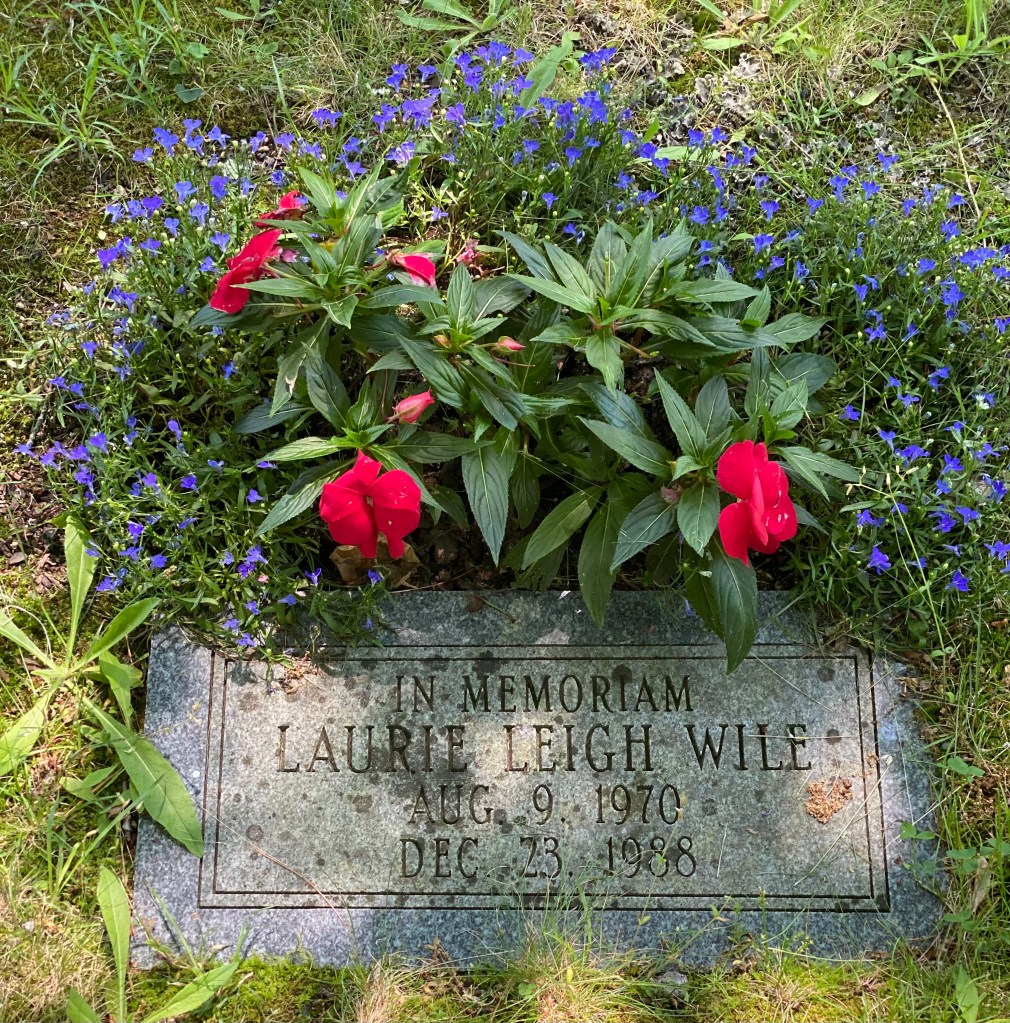
This week, I’ll pray, write a poem, plant flowers in the family cemetery, meet friends,

take grandchildren for ice cream, work in my garden, make love to my wife, 

tenacity momentarily victorious. 

Still, coursing through my triumphs like a deep and dark river,

demolishing and nourishing as it surges to the sea, 

Duende.

◊◊

Nevertheless

Watercolor by Laurie L. Wile

~ ~

I’ve always known I’d never get

whatever it is I wanted.

No way, I’ve felt, do I deserve 

my desires—I’m just not worthy.

Nevertheless, my life’s been good.

~

(Of course, I’ve never known just what

I’ve wanted until somebody

told me just what I ought to want,

good co-dependent that I am.

Nevertheless, my life’s been good.)

~

There’s so much that I’ve never done,

and much that I’ve done I failed at;

places I never went to, and

places I never really saw.

Nevertheless, my life’s been good.

~

Often, I’ve been a hollow man,

trying to stuff his emptiness

with all manner of addictions

(the list’s banal, embarrassing).

Nevertheless, my life’s been good.

~

The faces of the people that

I’ve ignored, hurt, disappointed,

abandoned, disdained, or abused

haunt me in the wee small hours. 

Nevertheless, my life’s been good.

~

Now diminished by old age to

a funhouse mirror of myself,

I sense Death looking at his watch,

impatient, counting down the time.

Nevertheless, my life’s been good.

Through all of it, I have been loved.

~ ~

The Old Lesson

~

71 years old,

lungs aflame,

lower back throbbing,

I rest on my hiking poles

halfway up 

still another hill 

at an iron gate

amid gorse and nettles, 

trying to pick 

out the path rising 

through a herd

of cows grazing on 

gangrenous grass between me 

and another gate 

and the trail that 

winds through woods

to tonight’s B&B

and the joy of a hot bath.

~

The gate clangs as 

I trudge into the herd,

which parts before me 

like the red sea

except for one

brown and white cow,

legs tucked beneath her,

who stares at me 

impassively,

before lifting her haunches, 

and dropping a steamy 

pile on the path

already strewn with

“chips,” “dung,” 

“flaps,” “muffins,” 

“patties,” “pies” —

choose your euphemism.

            ~

The pasture’s a mine field.

 I zig, zag, circle, 

back-track, hop—

marching thirty yards

to advance ten.

Fog mists my glasses.

Sweat soaks my shirt.

The air smells of decay.

At this rate,

I’ll still be 

hiking after dark.

Panic attacks like

a squad of minges.

            ~

Then, like an aging general 

roused from his nap

to lead me once more 

into battle against 

my old foe, Avoidance, 

comes the prayer: 

            ~

God, grant me the serenity

to accept those things

I cannot change …

            ~

I keep to the path, 

hear the squish,

feel my boots slide, 

raise my eyes 

to silver clouds

billowing over a line

of ancient trees,

glimpse red sandstone,

            ~

the courage to change

the things I can …

            ~

squish, slog, slide,

watch a brown hare

scamper to a stone wall

adorning the hill

like a necklace,

            ~

And the wisdom

to know the difference. 

            ~

Now at the gate

to freedom,

I bow to the sky,

having learned 

yet again

that to get to joy

you often have

to walk through shit.

            ~          

(after David Whyte’s The Old Interior Angel)

Joy

#

Oh, there were early inklings: 

the feel of my bat sending the ball over the left-field fence, 

speeding in a convertible over the one-lane wooden bridge at 60 m.p.h. 

watching the sun set behind Wyoming’s Grand Tetons—

strange times when I somehow escaped the carefully cultivated confines of my mind. 

But with no idea what those moments meant, I forgot them. 

Only after the Great Loss, 

And years of slogging 

through missing keys and sleepless nights, 

of being terrified strife would strike again, 

of sarcasm, swearing, pounding the walls, 

of regrets for what I had and hadn’t done, 

of downcast eyes and hunched shoulders, 

of tears during saccharine movies

and sobbing on anniversaries,

came the song: 

Buddy Holly on the car radio after a really bad day.

First humming along, then softly singing, 

then louder, louder, until at the top of my lungs: 

“It’s so easy to fall in love!”

Broken open,

releasing embarrassment, lethargy, fear, anger, guilt, shame, and sorrow.

Later, I realized how foolish I must have looked to other motorists. 

But I didn’t care. There was no going back.

No retreat. No surrender. 

No forgetting such a gift.

##