
Ruminations on his 83rd Birthday

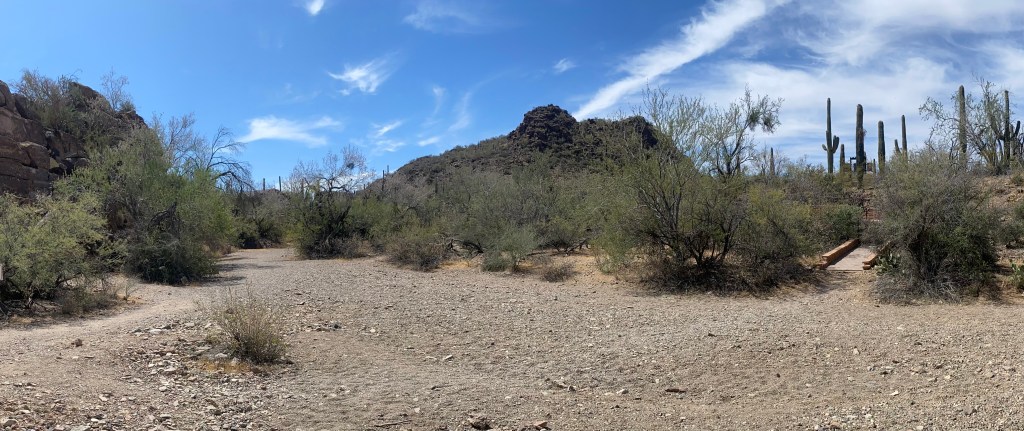
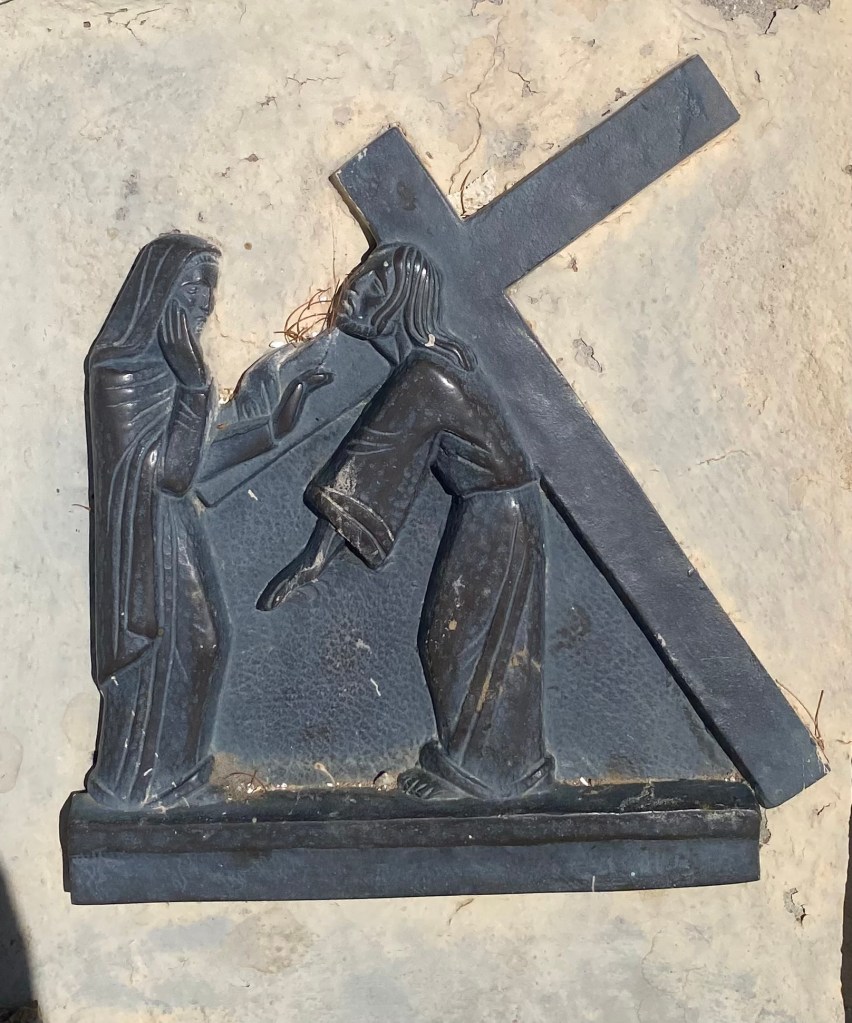
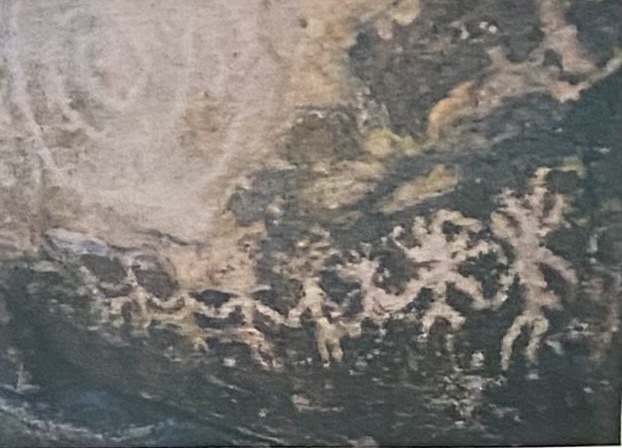
Picture Rocks Wash, Arizona. On the right, stairs lead to the Stations of the Cross. On the left are the petroglyphs.

~

His life these days is like walking a trail,

maybe that wash* in Arizona when 

he was on retreat, when on one side of 

him were the Stations of the Cross and on

the other side the picture rocks that give 

the wash its name: 1500-year-old 

petroglyphs by the Hohokam farming

people of the Sonoran Desert.

~

On one side, 14 etchings in metal

depict Jesus’s progression to his

death: scourging and the crown of thorns, falling 

under the cross’s weight, piercing, thirst, and 

humiliation, abandonment by 

friends, followers, even God, death. And 

he thinks of the violence and cruelty

of the empire in which he lives against

the materially poor and the sick

and the marginalized, his feeling that 

God has abandoned the country he loves,

his own pains in places he never knew

he had; indignities; lashings of fear; 

the cross he carries of his family’s

disease; the piercing loss of his daughter.

On the other side, petroglyphs show the 

the sun’s progression during the summer 

solstice: swirls and spirals and strange designs, 

images of dancing people, deer and 

antelope, alien-looking creatures

(you don’t suppose…), and something that looks like 

a picture of an atom, but which might

depict life’s interconnected circle.

He thinks of the kind and kinds of people 

he’s met in traveling from coast to coast,

this country’s mountains, deserts, and rivers, 

of the smell of the dirt in his garden,

dancing with his wife, watching grandchildren

grow up, his church men’s group, his circle of 

friends, his joy in writing a good poem.

He recalls walking between the two sides

of the wash, hearing what might have been a 

cacophony or what might have been a 

choir of quails, doves, finches, cactus wrens, 

flickers, thrashers, cardinals, fly catchers, 

pyrrhuloxia, verdins…and he hears

the sounds of his life: voices of parents 

who, despite their own horrible childhoods, 

made of themselves a living sacrifice

for their children, echoes of the friends he’s 

lost, and of the friends he still has, some of 

them going back to childhood, the teachers 

he disappointed and the teachers who

were there when he needed them, the students 

he failed, and those he inspired, the sounds 

of the tortured last breaths of his daughter, 

and the glorious voice of the woman 

he loves as she reads the Sunday Gospel. 

~

He remembers the Arizona sky

which canopied both sides of the wash,

feeling the paradox that is his life 

enfolded by Something—The Holy Spirit, 

The Tao, The Great Spirit, Jesus, Buddha,

Jehovah, Allah, Brahmin, The God of 

My Not Understanding—he doesn’t care

about names, he’s grateful to be here and

eager to see what’s around that next bend.

~~

*a wash is a dry, low, sandy riverbed that only carries water during rare rain events. It’s often called an arroyo.

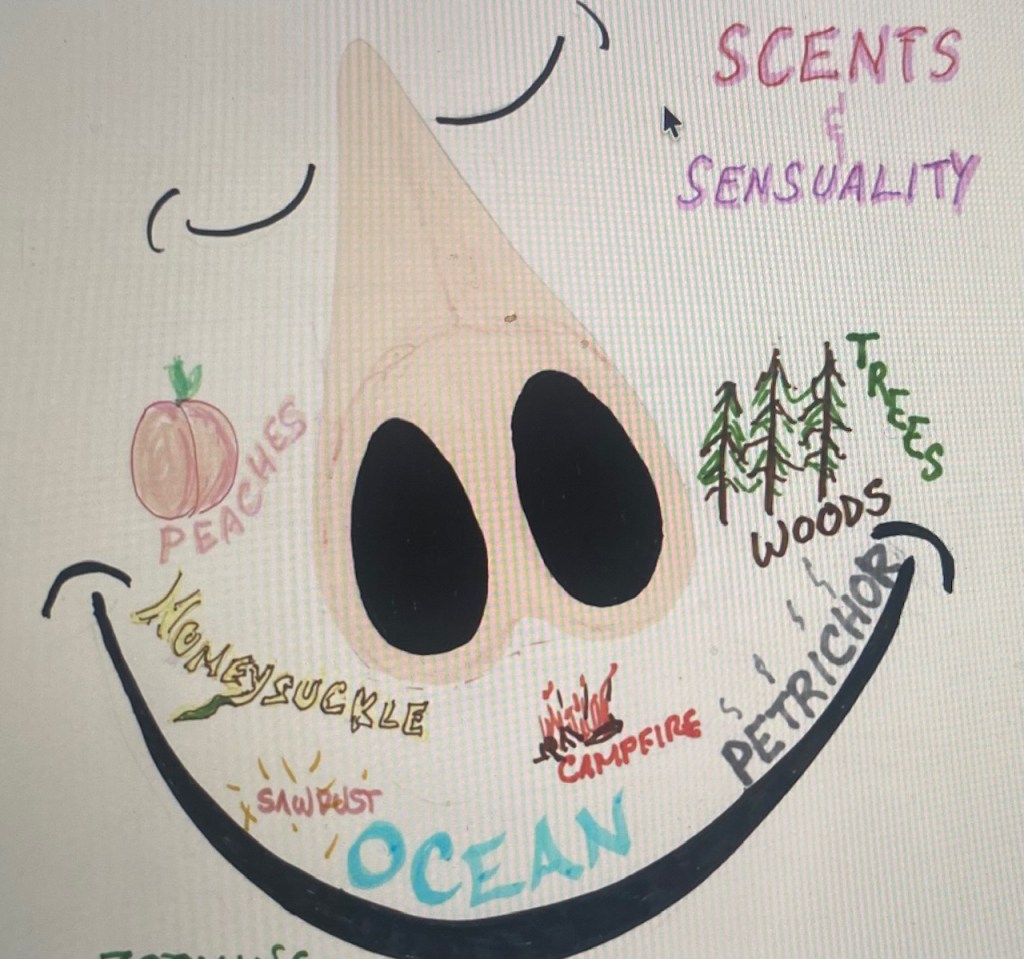
Life Smells

Illustration by Lisa Keppeler. Used with her kind permission.

~

It’s September, 2019 and ten weeks after my heart surgery and I’m taking my first walk in the woods since then and the first thing I notice is the fecund smell of fallen leaves and pine needles and dying trees…

and the scents of hay and cows and horses in my great-grandfather’s barn, and the waft of fried onions and potatoes in Nanny and Grampy Lufkin’s house, and the whiff of perfume and cigarettes in Nanny Cleaves’s apartment, and the aroma of Mom’s fresh baked bread on Saturday mornings…

and a few years later: the earthy odors of the market garden where I worked summers, the pungence of wet towels, dirty socks and jockstraps in the locker-room beneath the gym where I spent so much time… 

and the fragrances of my Aqua Velva, and her White Shoulders blending in the back seat of the family Ford …

and later still: the salt smack of ocean breeze thru the spruce trees around our camp in the early days of marriage when love was new and life’s possibilities seemed endless…

and because autumn is when things die, memory sniffs the acrid smoke from the Old Town Paper Company as I drift, bitter and aimless, across the university campus, no longer the high school bigshot and no idea who the hell I am or where I’m going…

 and then the dank reek of the dregs of the pipe tobacco I used to smoke during the last years of that first marriage…

and the stench of shit and disinfectant in the hospital where my daughter lay dying, when I learned how life and love can also waste away and die… 

and thoughts of shit spark smells of steaming cow flaps in Scottish pastures through which Mary Lee and I hike, and aromas of shawarma, spices, and pita bread mingled with the dust of pilgrims in the Old City of Jerusalem, and the sweet scent of apple tea in Turkey and animal musk on the Serengeti and incense wafting up from the altar into the stony steeple of Iona Abbey—reminders that I not only didn’t die, but flourished—

and the smell of Mary Lee lying beside me in the morning, and the fresh, slightly sweet scent of our newborn grandchild, and before I know it, going into the school building to pick up that grandchild where the fragrance of chalk and cleaners and young bodies take me back to my years as a public-school teacher—intimations that love is stronger than death…

and although I’m surrounded by the smells of dead and dying vegetation and the lingering sickly scent of Mupirocin with which I swabbed my nose prior to and after heart surgery, the decay upon which I walk and which I smell teems with the bouquet of resurrection.

~

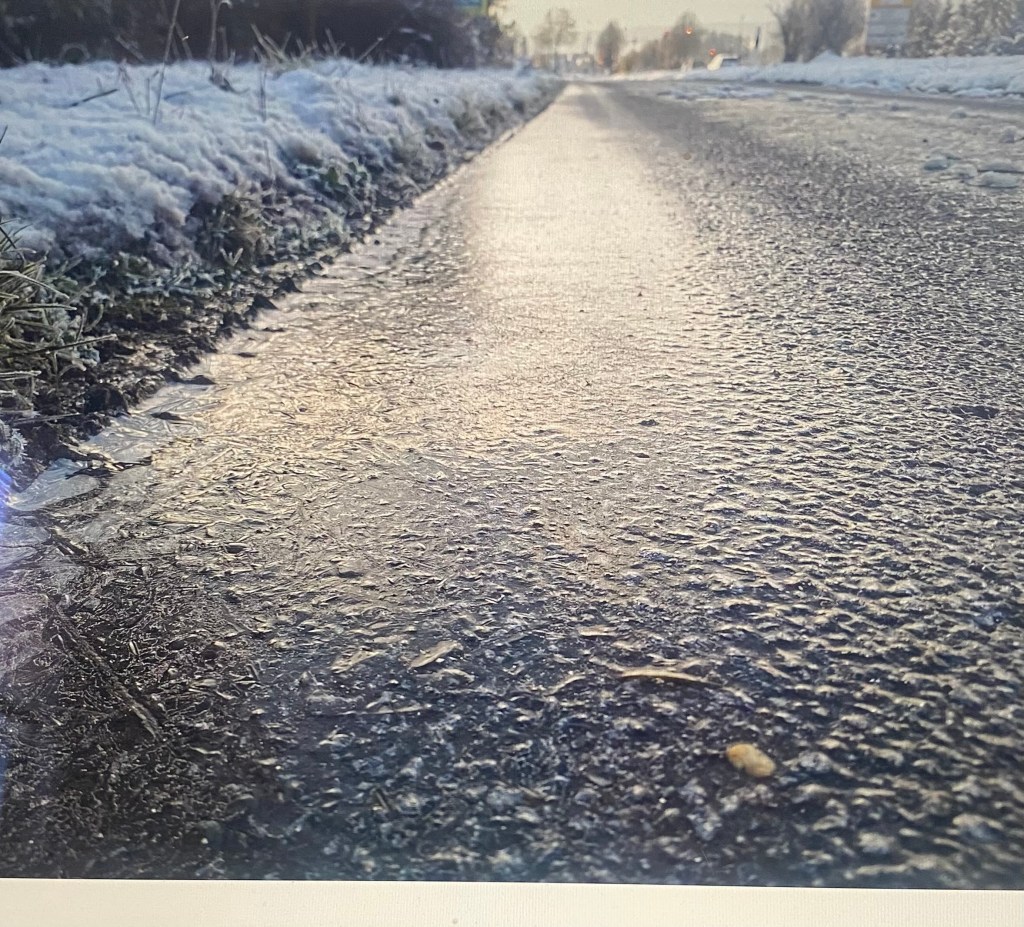
Mid-December’s Black Ice

Photo from Wikipedia (but it could have been in front of my house)

Yesterday’s snow became rain

before the temperature dropped

back into the teens, so that

this morning, sunshine glistens 

on the icy road over 

which I walk—an eighty-year-

old man trying to find his 

way during this season of 

Joy to the World, while he grieves

the anniversary of 

 his child’s death, and ponders what’s 

next with curiosity 

glazed with fear, poking along 

flat-footed, carefully pick-

ing his way, concentrating 

on not falling, focused on 

keeping that icy balance. 

Broomstick Season

~

The trees that can have given up their leaves—

the reds and golds you see in magazines,

(though dry and chewed and rotting with black mold)—

standing outlined against the sky: broom sticks

whose branches seem about to sweep the clouds.

~

Hard not to recall those who died this month:

a grandmother, father, mother-in-law,

Thanksgivings when their absence filled our plates.

The Ronald McDonald House Thanksgiving

of turkey, fear, anxiety, and tears,

as my wife and her sons saw my daughter

for what we all knew would be the last time.

~

Well into the November of my life,

I mourn the green and teeming dreams I had,

The gaudy colored leaves of happiness,

chewed by anger and blackened by misdeeds.

Now naked of ambition, strength, shame, guilt,

but rooted in the rocky soil of Grace,

supported by my friends and families,

I raise my bony, brittle arms to sweep

away remorse, and cry in gratitude:

Thank you, thank you, and thank you, for it all.

~ ~

Duende

◊◊

Duende:…[T]he “bitter root” of human existence, what Lorca referred to as “the pain that has no explanation” … and the source of much great art.—Christopher Maurer

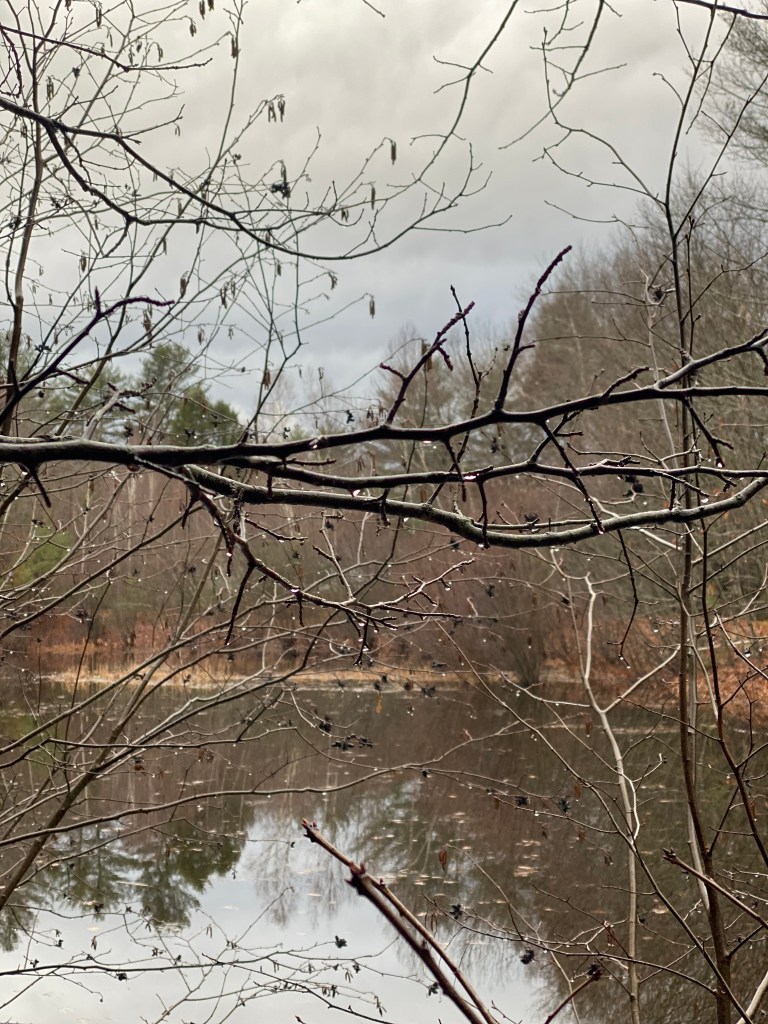
After the rain, the trees are weeping,

tears glistening in the setting sun. 

And suddenly

I feel the fierce force flowing through my veins 

along with the red cells and white cells and platelets, 

to and from the heart (the center of grief, I heard somewhere). 

I wail once more my family’s demise:

 my father’s frightened eyes, my mother’s waxy hands,

  my daughter’s last labored breaths.

´◊

I recoil as if for the first time at

old failures, sins, embarrassments, what-ifs

 that float before me like dead fish.

I watch my friends diminish—

cancer, Parkinson’s, heart problems, Alzheimer’s—

I shave an old man’s face.

This week, I’ll pray, write a poem, plant flowers in the family cemetery, meet friends,

take grandchildren for ice cream, work in my garden, make love to my wife, 

tenacity momentarily victorious. 

Still, coursing through my triumphs like a deep and dark river,

demolishing and nourishing as it surges to the sea, 

Duende.

◊◊

Somehow

Somehow, my parents from broken homes gave me a whole one.

Somehow, I met the right teachers at the right time.

Somehow, I fell into a vocation I loved instead of a job I endured.

Somehow, I survived my child’s death. 

Somehow, I stopped trying to drown my problems in cheap scotch.

Somehow, I learned to listen.

Somehow, I discovered joy.

Somehow, I no longer feel ashamed of being human.

Somehow, I’ve kept going even when I feel I’m walking in a circular trench.

Somehow, I’m still alive.

Somehow, I’ve not only survived, but grown.

Somehow, I remain hopeful.

Somehow, I believe, is another name for Grace.

Joy

#

Oh, there were early inklings: 

the feel of my bat sending the ball over the left-field fence, 

speeding in a convertible over the one-lane wooden bridge at 60 m.p.h. 

watching the sun set behind Wyoming’s Grand Tetons—

strange times when I somehow escaped the carefully cultivated confines of my mind. 

But with no idea what those moments meant, I forgot them. 

Only after the Great Loss, 

And years of slogging 

through missing keys and sleepless nights, 

of being terrified strife would strike again, 

of sarcasm, swearing, pounding the walls, 

of regrets for what I had and hadn’t done, 

of downcast eyes and hunched shoulders, 

of tears during saccharine movies

and sobbing on anniversaries,

came the song: 

Buddy Holly on the car radio after a really bad day.

First humming along, then softly singing, 

then louder, louder, until at the top of my lungs: 

“It’s so easy to fall in love!”

Broken open,

releasing embarrassment, lethargy, fear, anger, guilt, shame, and sorrow.

Later, I realized how foolish I must have looked to other motorists. 

But I didn’t care. There was no going back.

No retreat. No surrender. 

No forgetting such a gift.

##

On Hope: an Admonition

#

Stop confusing it with expectation.

You’re going to be disappointed,

resentful, angry, pissed off at God

because the cancer didn’t disappear,

you didn’t get that new job you wanted,

Hurricane Hattie flooded your basement.

#

(Write this down: Don’t hope for anything

you can see, hear, touch, smell, or taste.)

#

And even if you do get to come home

from the hospital a day early,

or the car coming right at you swerves

away at the last saving second,

or your friend’s stock tip pays off enough

to finance an Aruba vacation,

please, please, please don’t proclaim to the world

how God in His goodness answered your prayers.

You’re only setting yourself up for

future resentment, not to mention

guilt and shame for having somehow displeased

His Royal Holy Hood.

#

Instead, divest, dismantle, ditch, doff, dump

expectations, anticipations, wishes.

Take a deep breath, and go for a walk

along that path you’ve been walking all

your life. Don’t worry about what’s ahead

Here be dragons, right?—

but have a seat on this old tree stump.

Take more deep breaths, turn, look back

at all those times when, despite all your

mistakes, your blindness to injustice,

your embracing each Seven Deadly Sin

as if your happiness depended on it

while breaking all Ten Commandments

like you were making a hash omelet,

times when, despite your screwed-up family,

the hereditary overbite,

hip dysplasia, and weak heart,

times when despite the ugly divorce,

your daughter’s even uglier death,

all those goddamn operations,

the loss of lung capacity and libido,

you love the woman you wake up next to,

you sing to Sirius FM’s ‘Fifties Gold,’

you savor your morning hot chocolate,

you look forward to lunch with old classmates,

you feed the birds, play the banjo, plant

a garden, enjoy Wordle and Brit Box,

worshiping in silence, dabbling in poetry,

watching the grandchildren grow up.

#

Hope is not about getting what you want,

it’s about seeing what you already have,

the force that makes life worth living,

that same power that is pushing new growth

from this dead tree stump you’re sitting on.

#

Now, go get those dragons!

Welcome, November

#

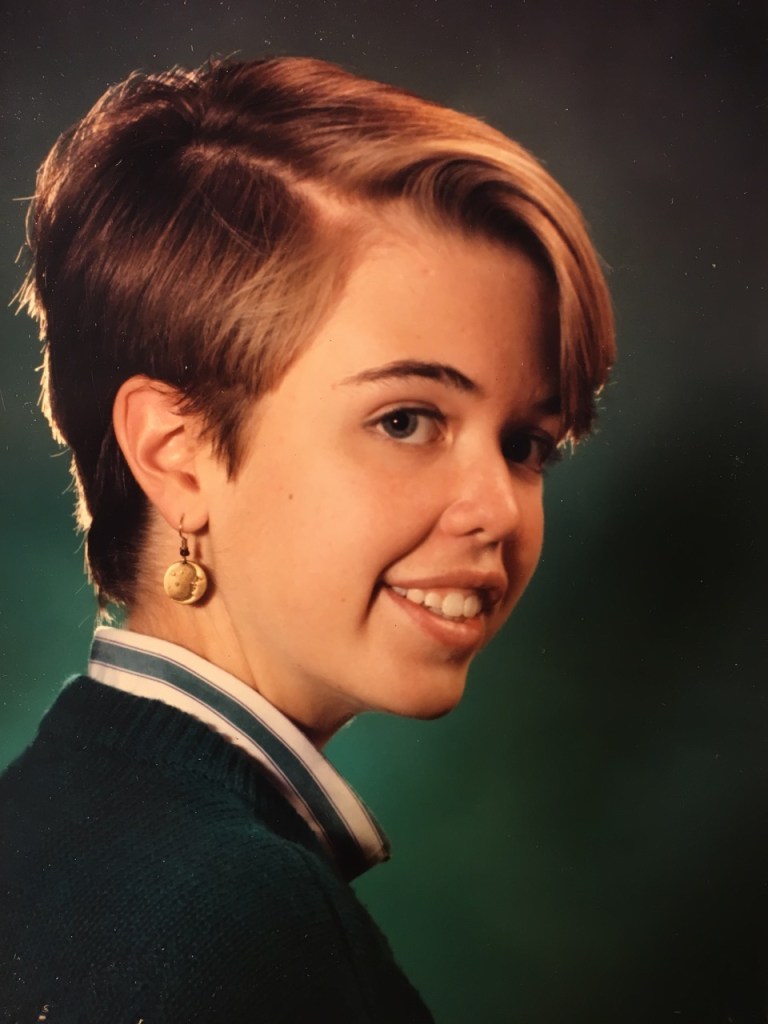
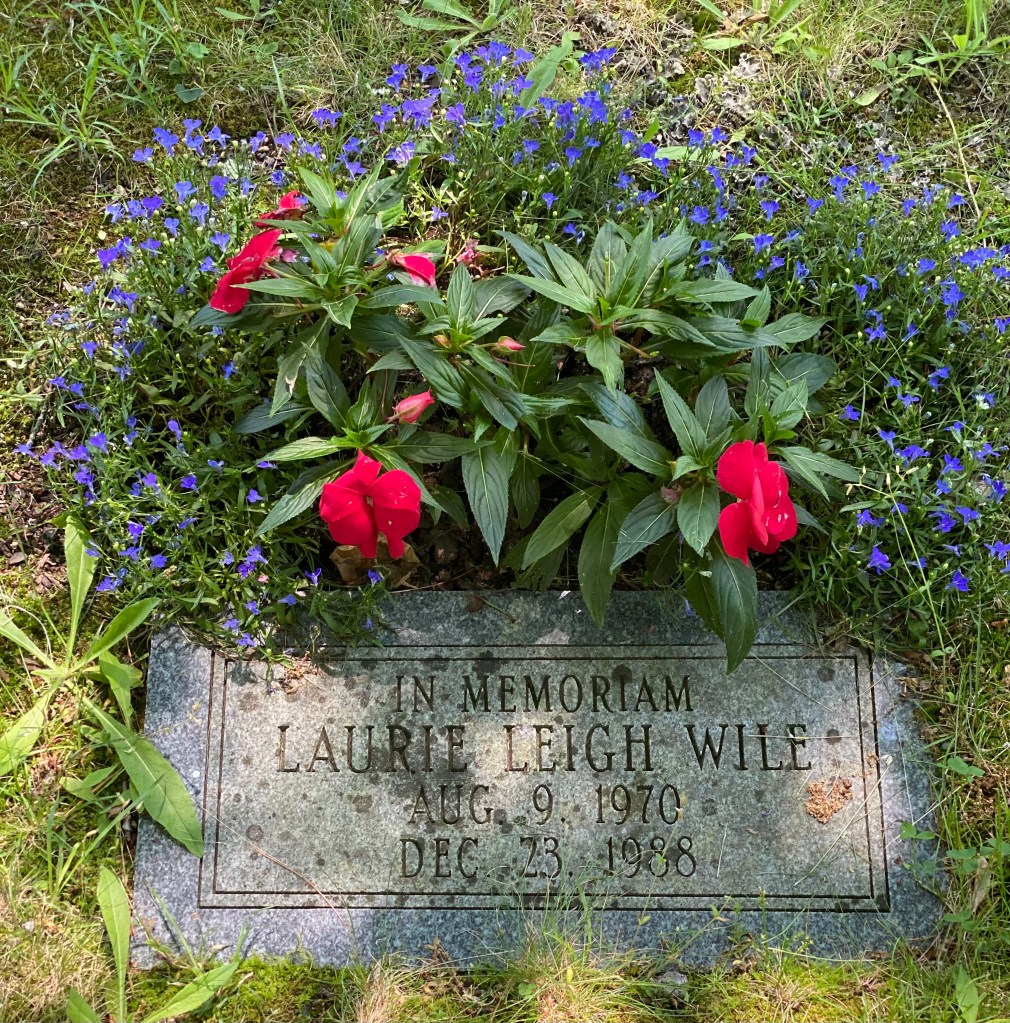
As readers of this blog know, my daughter Laurie died at the age of 18 from a rare cancer. In November, seven months after the cancer was first diagnosed, she went into Eastern Maine Medical Center. Living 120 miles away, I took a leave of absence from my teaching job and moved into a Ronald McDonald House where I spent the next two months with my daughter until she died on December 23.

Since then, each November as the days grow darker and colder, I can feel my body chemistry change. I’ve coped in many ways, but the most helpful has been through writing. It’s no accident that the first Geriatric Pilgrim blog appeared in November 2015.

#

Sonnet for November

Novembers, I would drive my daughter past

Men in blaze-orange caps, crouched on a hill,

Their 30-30’s sighted, set to kill

Most anything, just so the gun would blast.

My heart began to flutter, then beat fast

As we drove by them—silent, savage, still—

And I could feel the air around us chill.

I’d think, how long, dear God, will this month last?

But I’ve since learned of other ways to die,

And russet hills now fill with memories:

Her gentle, kind, abbreviated life.

These days, I treasure the November sky

Which broadens once the leaves drop from the trees.

November wind is clean, a whetted knife.

#

Darkness

Now darkness begins:

light dimming after lunch,

long shadows on the lawn.

I curse the old lady

crossing the street

in front of my car,

lose gloves,

feel the familiar kick

to the heart. 

You’d think after all these years

I’d be over it,

but it’s always different…

this darkness…

Gone the murky numbness,

the black rages,

no more the dim corridors

of “if only” and “what if,”

lit up by Johnny Walker.

Now, who knows what waits 

in the darkness ?

Another old friend’s Christmas card

to bring me tears?

More recurrent dreams of stumbling

through stony landscapes?

Another season of bingeing bad TV?

Still, the waning light 

is clean and clear,

the view scoured of chewed leaves, 

dead flowers, black flies.

And sometimes, just sometimes,

Love enfolds my fears,

and I hear Laurie whisper, 

“Dad, let the thoughts go.

Let darkness begin.”

Beginning Again

#

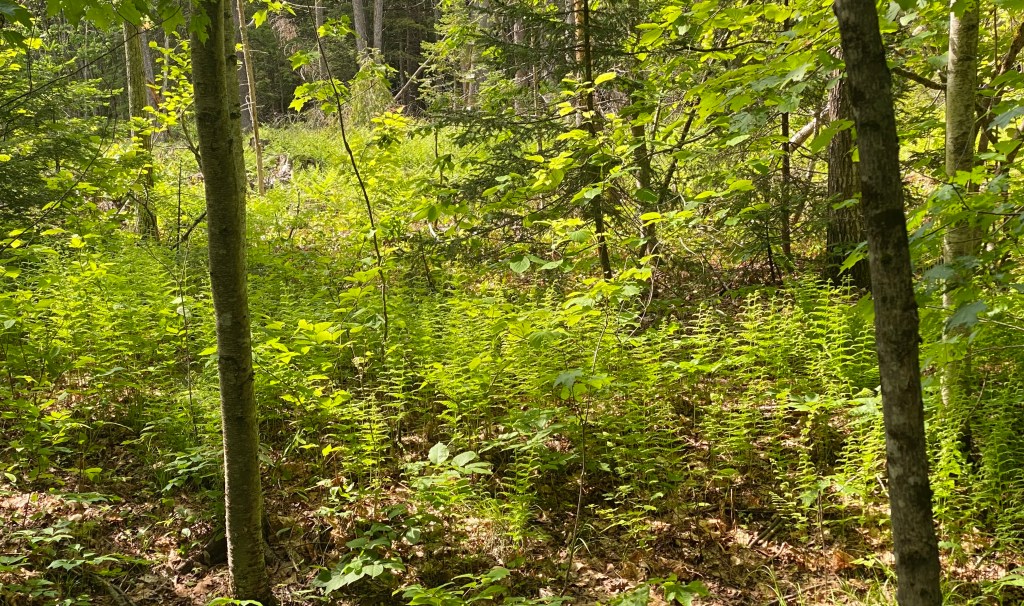
I’m walking the grass loop around our housing development. Under the power line toward the community garden, I pass through what is now a shoulder-high host of Queen Anne’s Lace, golden rod, milk weed, bracken, and many other plants I can’t name. The flies swarm. The sweet songs of the cardinals and tufted titmouses (titmice?) have given way to the screeching of blue jays and crows. Monarch butterflies flit from flower to flower. The air smells ripe. Shadows crawl like the incoming tide over the landscape. Summer is ending.

And I feel myself coming alive. Beginning again.

The reason is simple. For seventy-five years—as a student, as a teacher—the golden rod, the lengthening shadows, the Monarchs, have meant the beginning of another school year. More than New Year’s Eve, more than the first warm day of the year, this is the time when, at some deep cellular level, I can feel myself waking up, ready to start anew.

It’s a good feeling. At my age, it’s easier to focus on endings than beginnings. I now celebrate—if that’s the right word—more birthdays of the dead than of the living: my grandparents, my parents, my daughter, my first wife, close friends. Ended are my long hikes, long distant driving, lifting anything over forty pounds, staying up after midnight, jumping into bed with my wife after a sexy movie (jumping anywhere, for that matter), five-course meals, Cuban cigars, Laphroaig Scotch… the list grows longer each year.

But as T.S. Eliot wrote, “In the end is my beginning.” (Hey, I’m an old English lit teacher, I remember stuff like that.) You can’t begin something until something else ends. School can’t start until summer ends (Yeah, I know, there’s summer school, but I’m trying to make an analogy. Don’t confuse me with technicalities.) It took the end of a disastrous year of studying forestry in college for me to begin my studies in English (which is why I’m quoting T.S. Eliot and not The Journal of Forestry.) It took the end of an unhappy 20-year marriage for me to begin a happy going-on-forty-year one. It took the end of a career in public education for me to go back to school for an MFA, write a couple of books, a bunch of essays, and going on nine years’ worth of blog posts.

So, what will I begin this year? Well, Mary Lee and I have a couple of trips planned (knock on wood: last year, we had three planned and they were all canceled). I will scrape and repaint my front door and clean out the garage. 

But the biggest change I want to make is with The Geriatric Pilgrim

When I began these blogs, I was fascinated by the idea of pilgrimage: how a pilgrimage differs from a vacation, or from going on a retreat, or from study programs (what I called “edu-cations”). Besides traveling to retreat houses and other spiritual sites in the United States, Canada, the British Isles, Israel, Turkey, and Africa, I collected pages of definitions of pilgrimage and of common characteristics of pilgrimages. I read a raft of books about various pilgrimages people had made.

Along the way, I became intrigued by my fascination with pilgrims and pilgrimages. What was in it for me?

Stature of a “Jakobspilger,” or St. James’s pilgrim: Speyer, Germany

Well, probably the main thing at the time was the idea that pilgrims are often searching for a source of healing. As you know if you’ve read these blogs, I was looking for healing after the death of my eighteen-year-old daughter from a rare cancer. And I found writing about the various pilgrimages Mary Lee and I had made even more healing than the pilgrimages themselves.

Gradually, I began to realize that pilgrimage is a frame of mind—an attitude of curiosity, detachment, wonder. It’s “traveling light,” as one writer says, of risk, of living in liminal space—leaving one location but not yet arriving at another—of exploration, the end of which, to quote T.S. Eliot again, “Will be to arrive where we started/And know the place for the first time.”

Since COVID arrived, with all its restrictions on travel, followed by my 80th birthday, with its expanded waistline and diminished abilities, my blogs have focused more on applying the lessons of pilgrimage to my current life of walks in the neighboring woods, planting peas, tomatoes, and pumpkins in our community garden, and of exploring the twelve steps of my Al Anon program. This, too, has been healing.

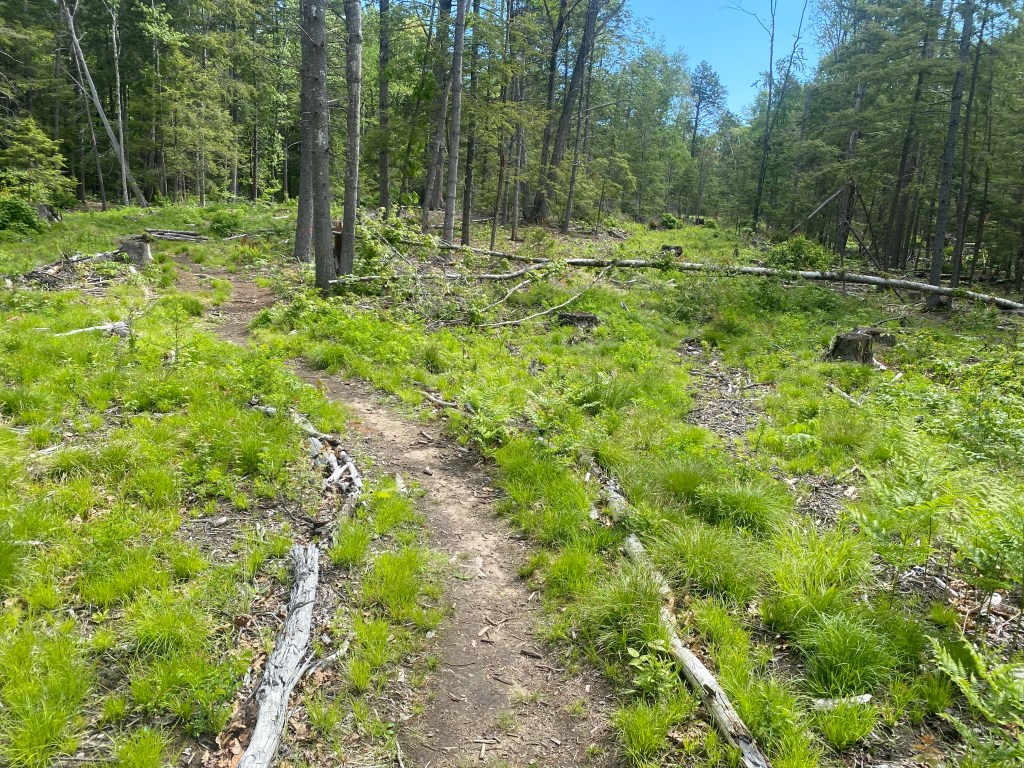
 But now I find myself no longer as interested in finding new ways to describe my pilgrimage, as I am in describing and exploring in more depth the landscape through which I’m traveling, a landscape that is always changing, sometimes in ways that please me—autumn color is just around the corner, the grandchildren are growing—sometimes in ways that piss me off or frighten me—the start of my favorite woods walk has been clear-cut, I’m finding it difficult to sing without coughing.

Writing about these joys and sorrows, I find I’m writing more poetry. I’ve just finished an on-line workshop for poets, and one of the highlights of my week is another on-line group of poets from all over the country, where we share our favorite poetry as well as poems we’ve written. I’m now subjecting my longtime writing group here in town to my poems.

So, I’m going to be posting more poetry here in these blogs as well as other experiments—prose poems, flash fiction and nonfiction—trying to look more closely at the physical and emotional landscapes through which I’m now traveling.

The way I see it, my pilgrimage continues, but the lens through which I’m seeing it and the voice in which I’m describing it is changing.

I’m excited to see where this journey will take me. 

And hoping you’ll continue to join me.

So, let part of my life end, and another begin.

As Quakers say, when one door closes another opens.

For all my losses, I’ve also had wins;

let part of my life end and another begin.

Sure, it’s tempting to focus on what has been,

but I don’t want only to go through the motions.

Let part of my life end and another begin,

as one door closes and another opens.

# #