Ruminations on his 83rd Birthday

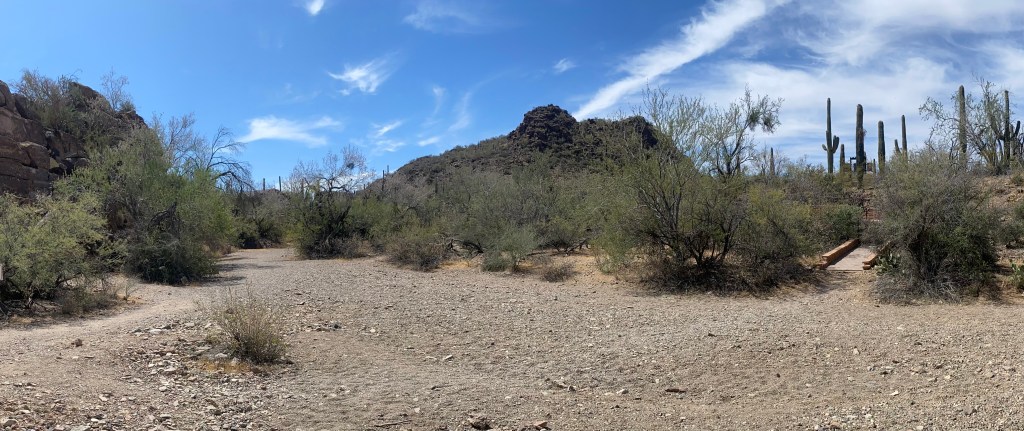
Picture Rocks Wash, Arizona. On the right, stairs lead to the Stations of the Cross. On the left are the petroglyphs.

~

His life these days is like walking a trail,

maybe that wash* in Arizona when 

he was on retreat, when on one side of 

him were the Stations of the Cross and on

the other side the picture rocks that give 

the wash its name: 1500-year-old 

petroglyphs by the Hohokam farming

people of the Sonoran Desert.

~

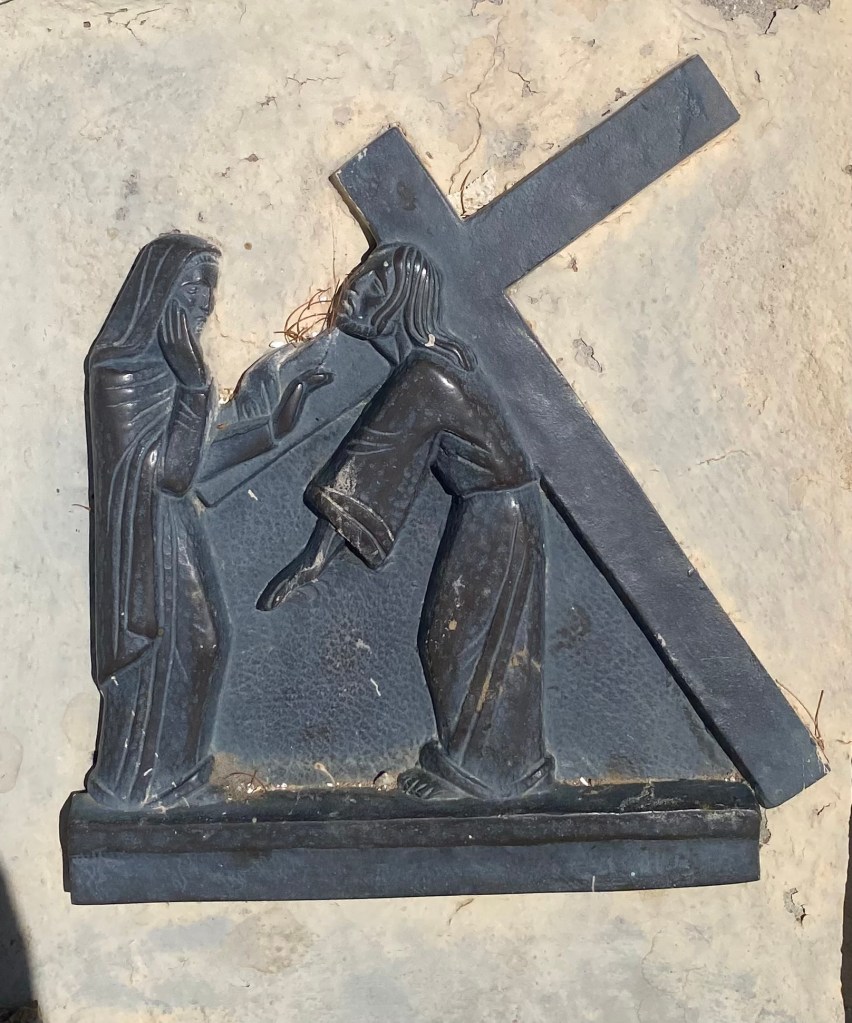
On one side, 14 etchings in metal

depict Jesus’s progression to his

death: scourging and the crown of thorns, falling 

under the cross’s weight, piercing, thirst, and 

humiliation, abandonment by 

friends, followers, even God, death. And 

he thinks of the violence and cruelty

of the empire in which he lives against

the materially poor and the sick

and the marginalized, his feeling that 

God has abandoned the country he loves,

his own pains in places he never knew

he had; indignities; lashings of fear; 

the cross he carries of his family’s

disease; the piercing loss of his daughter.
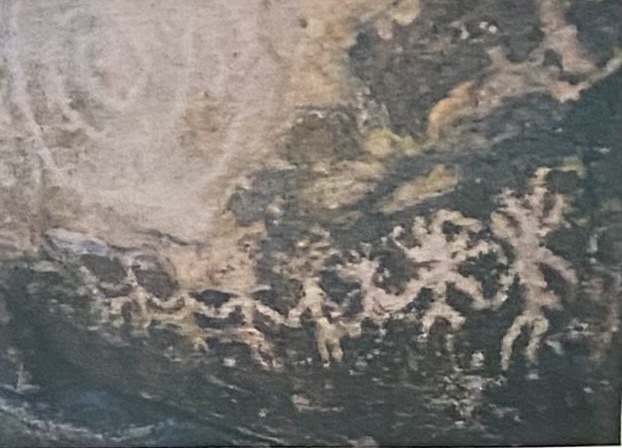
On the other side, petroglyphs show the 

the sun’s progression during the summer 

solstice: swirls and spirals and strange designs, 

images of dancing people, deer and 

antelope, alien-looking creatures

(you don’t suppose…), and something that looks like 

a picture of an atom, but which might

depict life’s interconnected circle.

He thinks of the kind and kinds of people 

he’s met in traveling from coast to coast,

this country’s mountains, deserts, and rivers, 

of the smell of the dirt in his garden,

dancing with his wife, watching grandchildren

grow up, his church men’s group, his circle of 

friends, his joy in writing a good poem.
He recalls walking between the two sides

of the wash, hearing what might have been a 

cacophony or what might have been a 

choir of quails, doves, finches, cactus wrens, 

flickers, thrashers, cardinals, fly catchers, 

pyrrhuloxia, verdins…and he hears

the sounds of his life: voices of parents 

who, despite their own horrible childhoods, 

made of themselves a living sacrifice

for their children, echoes of the friends he’s 

lost, and of the friends he still has, some of 

them going back to childhood, the teachers 

he disappointed and the teachers who

were there when he needed them, the students 

he failed, and those he inspired, the sounds 

of the tortured last breaths of his daughter, 

and the glorious voice of the woman 

he loves as she reads the Sunday Gospel. 

~

He remembers the Arizona sky

which canopied both sides of the wash,

feeling the paradox that is his life 

enfolded by Something—The Holy Spirit, 

The Tao, The Great Spirit, Jesus, Buddha,

Jehovah, Allah, Brahmin, The God of 

My Not Understanding—he doesn’t care

about names, he’s grateful to be here and

eager to see what’s around that next bend.

~~

*a wash is a dry, low, sandy riverbed that only carries water during rare rain events. It’s often called an arroyo.
Beginning Again

#

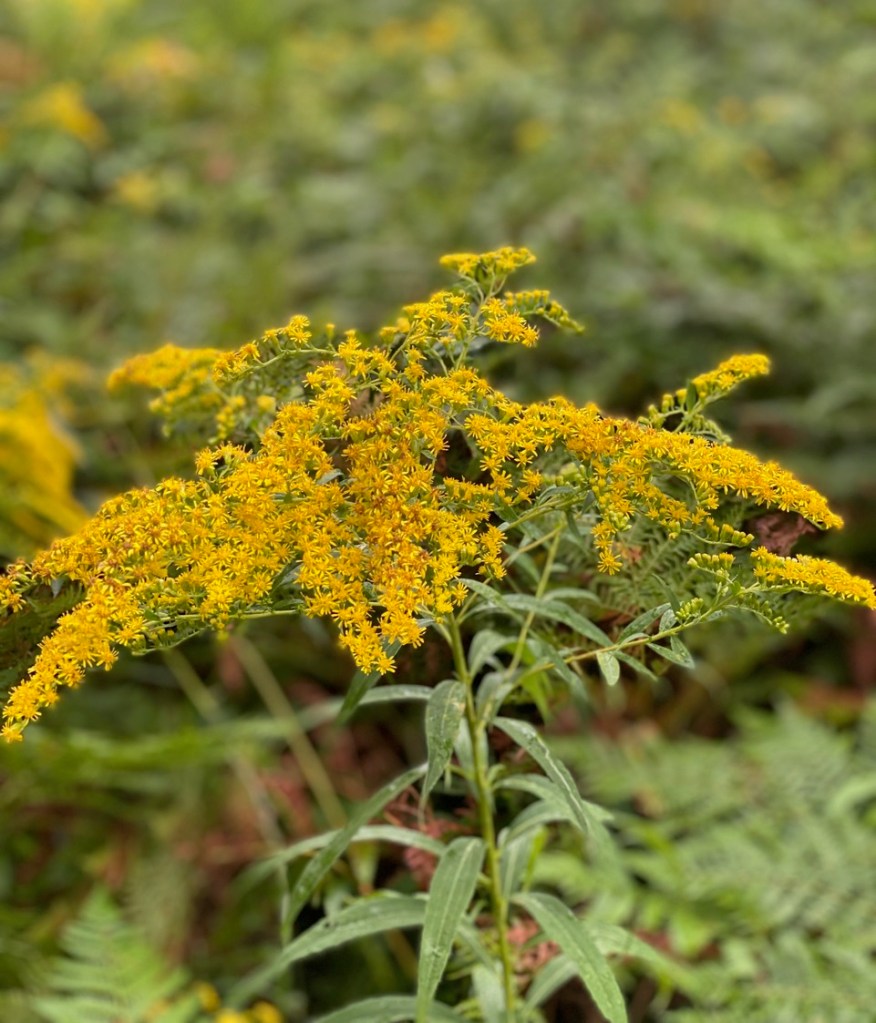
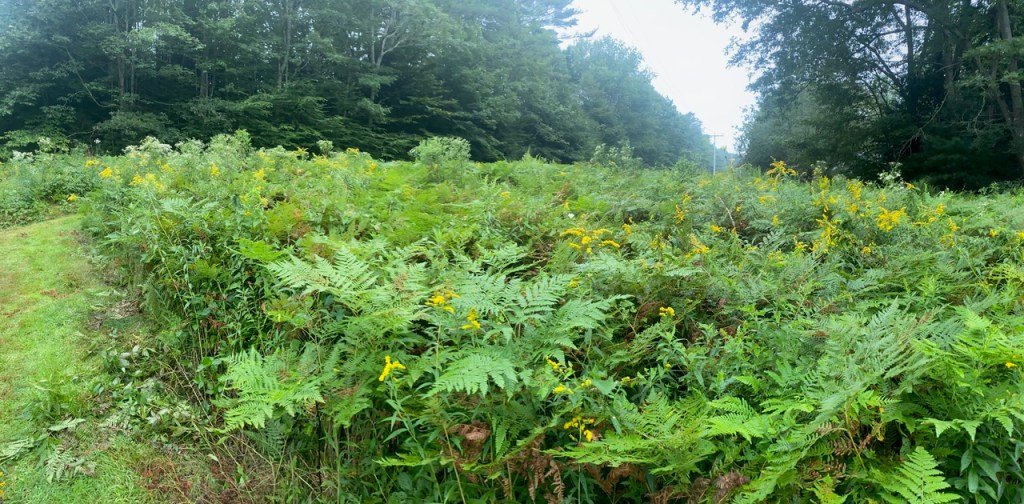
I’m walking the grass loop around our housing development. Under the power line toward the community garden, I pass through what is now a shoulder-high host of Queen Anne’s Lace, golden rod, milk weed, bracken, and many other plants I can’t name. The flies swarm. The sweet songs of the cardinals and tufted titmouses (titmice?) have given way to the screeching of blue jays and crows. Monarch butterflies flit from flower to flower. The air smells ripe. Shadows crawl like the incoming tide over the landscape. Summer is ending.

And I feel myself coming alive. Beginning again.

The reason is simple. For seventy-five years—as a student, as a teacher—the golden rod, the lengthening shadows, the Monarchs, have meant the beginning of another school year. More than New Year’s Eve, more than the first warm day of the year, this is the time when, at some deep cellular level, I can feel myself waking up, ready to start anew.

It’s a good feeling. At my age, it’s easier to focus on endings than beginnings. I now celebrate—if that’s the right word—more birthdays of the dead than of the living: my grandparents, my parents, my daughter, my first wife, close friends. Ended are my long hikes, long distant driving, lifting anything over forty pounds, staying up after midnight, jumping into bed with my wife after a sexy movie (jumping anywhere, for that matter), five-course meals, Cuban cigars, Laphroaig Scotch… the list grows longer each year.

But as T.S. Eliot wrote, “In the end is my beginning.” (Hey, I’m an old English lit teacher, I remember stuff like that.) You can’t begin something until something else ends. School can’t start until summer ends (Yeah, I know, there’s summer school, but I’m trying to make an analogy. Don’t confuse me with technicalities.) It took the end of a disastrous year of studying forestry in college for me to begin my studies in English (which is why I’m quoting T.S. Eliot and not The Journal of Forestry.) It took the end of an unhappy 20-year marriage for me to begin a happy going-on-forty-year one. It took the end of a career in public education for me to go back to school for an MFA, write a couple of books, a bunch of essays, and going on nine years’ worth of blog posts.

So, what will I begin this year? Well, Mary Lee and I have a couple of trips planned (knock on wood: last year, we had three planned and they were all canceled). I will scrape and repaint my front door and clean out the garage. 

But the biggest change I want to make is with The Geriatric Pilgrim

When I began these blogs, I was fascinated by the idea of pilgrimage: how a pilgrimage differs from a vacation, or from going on a retreat, or from study programs (what I called “edu-cations”). Besides traveling to retreat houses and other spiritual sites in the United States, Canada, the British Isles, Israel, Turkey, and Africa, I collected pages of definitions of pilgrimage and of common characteristics of pilgrimages. I read a raft of books about various pilgrimages people had made.

Along the way, I became intrigued by my fascination with pilgrims and pilgrimages. What was in it for me?

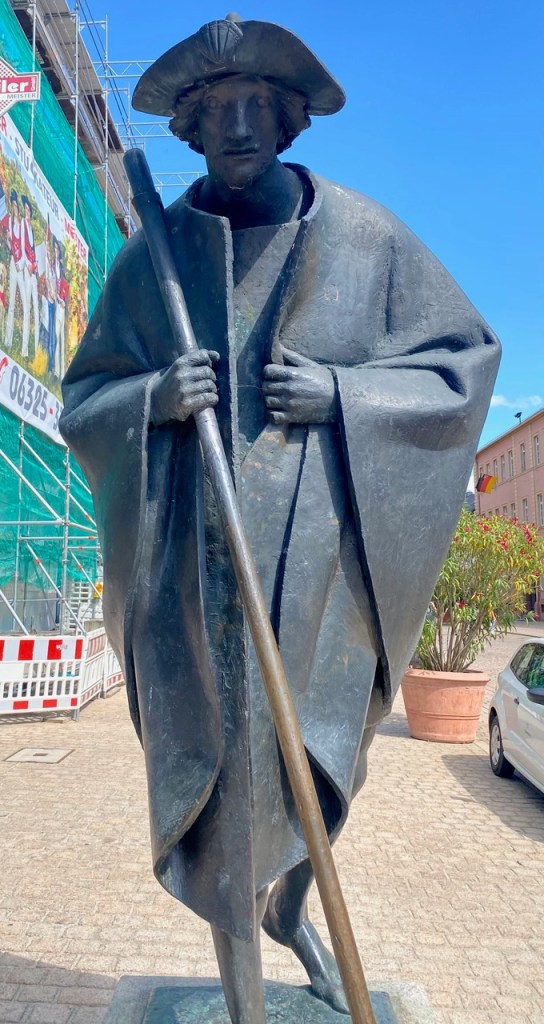
Stature of a “Jakobspilger,” or St. James’s pilgrim: Speyer, Germany

Well, probably the main thing at the time was the idea that pilgrims are often searching for a source of healing. As you know if you’ve read these blogs, I was looking for healing after the death of my eighteen-year-old daughter from a rare cancer. And I found writing about the various pilgrimages Mary Lee and I had made even more healing than the pilgrimages themselves.

Gradually, I began to realize that pilgrimage is a frame of mind—an attitude of curiosity, detachment, wonder. It’s “traveling light,” as one writer says, of risk, of living in liminal space—leaving one location but not yet arriving at another—of exploration, the end of which, to quote T.S. Eliot again, “Will be to arrive where we started/And know the place for the first time.”

Since COVID arrived, with all its restrictions on travel, followed by my 80th birthday, with its expanded waistline and diminished abilities, my blogs have focused more on applying the lessons of pilgrimage to my current life of walks in the neighboring woods, planting peas, tomatoes, and pumpkins in our community garden, and of exploring the twelve steps of my Al Anon program. This, too, has been healing.

 But now I find myself no longer as interested in finding new ways to describe my pilgrimage, as I am in describing and exploring in more depth the landscape through which I’m traveling, a landscape that is always changing, sometimes in ways that please me—autumn color is just around the corner, the grandchildren are growing—sometimes in ways that piss me off or frighten me—the start of my favorite woods walk has been clear-cut, I’m finding it difficult to sing without coughing.

Writing about these joys and sorrows, I find I’m writing more poetry. I’ve just finished an on-line workshop for poets, and one of the highlights of my week is another on-line group of poets from all over the country, where we share our favorite poetry as well as poems we’ve written. I’m now subjecting my longtime writing group here in town to my poems.

So, I’m going to be posting more poetry here in these blogs as well as other experiments—prose poems, flash fiction and nonfiction—trying to look more closely at the physical and emotional landscapes through which I’m now traveling.

The way I see it, my pilgrimage continues, but the lens through which I’m seeing it and the voice in which I’m describing it is changing.

I’m excited to see where this journey will take me. 

And hoping you’ll continue to join me.

So, let part of my life end, and another begin.

As Quakers say, when one door closes another opens.

For all my losses, I’ve also had wins;

let part of my life end and another begin.

Sure, it’s tempting to focus on what has been,

but I don’t want only to go through the motions.

Let part of my life end and another begin,

as one door closes and another opens.

# #

This is Not Just Any Sandwich

IMG_3648

#

I look at the faded and folded white lined paper, at Laurie’s tiny, circular handwriting: “This sandwich would win the approval of Henri Matisse, and fans of rainbows as well.” Suddenly I hear her in the kitchen, opening the refrigerator, taking out containers, opening the vegetable tray. Rustle of cellophane, clink of glass, thud of food hitting the counter.

“Dad, where’s the vinegar?”

I realize she’s never been in this house. “In the bottom cupboard, behind the second door over from the fridge. Do you want some help?”

“Nope, I’m fine.”

I know she’s wearing an over-sized tee shirt she’s tie-dyed, one like she did for me. I hear her singing to herself, probably something by Suzanne Vega, or Tracy Chapman: “Don’t you know they’re talkin’ about a revolution. It sounds like a whisper.”

“Peace-Nik!” I yell.

“Flower power lives!” she yells back. “Where’s the red onion?”

“Under the cupboard on the counter by the window. In that basket.”

I hear chopping sounds, then the rasp of vegetables against a grater. I jump at the whirring and rattling of our blender, then jump again when Laurie cries, “Yikes!” and the blender stops

I stand. “What’s wrong?”

“Nothing.” She laughs. “The top came off the blender. I’ve just got this dressing all over the counter and all over me. I’ll clean it up.”

I smile and sit back down at my desk. “No problem. But this seems like a lot of work for a sandwich.”

“Da-a-ad! This just isn’t any sandwich. It’s a work of art.”

And for a minute, I see her in the doorway, dressed as I imagined, blue-cheese sauce splattered on her arms and a dab of it on her nose. She looks at me, one eye-brow raised, her forehead furrowed in what I think of as a combination of amusement, satisfaction, and frustration. My daughter, the artist. Whether she’s painting a landscape, playing the piano, embroidering, wood-burning, or cooking, she throws herself into it.

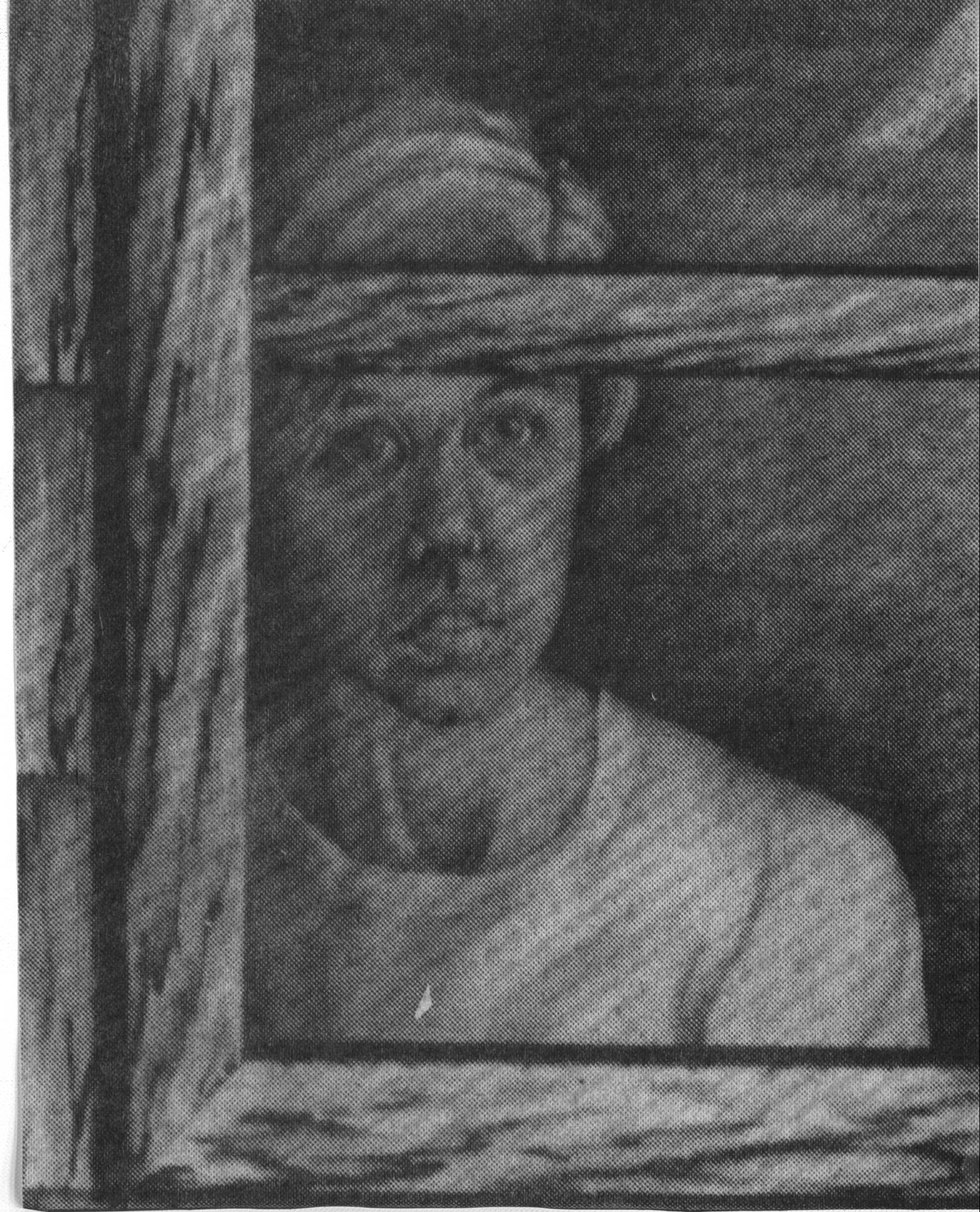
And then I see the bright red bandanna around her head, which she wore during the chemotherapy treatments, and my vision of my daughter fades. I’m staring at her last self-portrait, at her sad eyes gazing wistfully out through a window at the world. In the kitchen, my wife is pouring herself a cup of coffee.

Laurie

Today is Laurie’s forth-eighth birthday, and my only child has been dead almost thirty years. It’s a bittersweet day, a sandwich of emotions: a layer of sorrow, a layer of rage. Chop up some shame, some guilt, and some regret. Mix in some “if onlys,” and a few “what ifs.” Season that mixture for a while, let the sharpness mellow. Top it with a generous mixture of happy memories, on-going love, and the knowledge that you helped create someone beautiful and loving and courageous beyond measure, someone who touched all who knew her, inspired many, made a difference for the better in this world—all by the age of eighteen.

I’m still not sure how to celebrate her birthday, figure out how to hold both the knowledge that she is gone with the awareness that she’s always with me. Today, I will buy some flowers and take them to her memorial stone in our family cemetery. Laurie’s step-mother and I will walk along the ocean, not on some sandy beach crowded with oiled brown bodies and the smell of grease, but a rocky shore, where waves hiss and crash on weathered stones and the seaweed smells of damp musk, and I can feel the wind in my face, drying my tears as I pray: “Watch over thy Child, O Lord, as her days increase; bless and guide her wherever she may be ….”

IMG_2088

When we come home, I will follow the recipe for blue cheese sandwiches that Laurie copied for us from the MOOSEWOOD COOKBOOK a year or so before she died. Ordinarily, I hate to cook, but for this one time all year I will prepare a meal instead of simply opening a can of soup or a package of risotto. I’ll shred and chop and sauté and be the one covered in blue cheese sauce. I’ll skin my knuckles on the grater.

But hey, as Laurie says, this is not just any sandwich.

#

(Note: I wrote this essay on my daughter’s birthday, August 9, in 2003. It has since appeared in the magazine Alimentum: The Literature of Food, but I think it’s appropriate to republish it this week. I have changed the age Laurie would be in 2018; otherwise, my conflicted responses to her birthday are just as true now as they were fifteen years ago.)

#