To Kale, With Love

◊

Okay, you’re lacking in taste and you’re tough,

and yes, you stick between my teeth, but you’re

right for me, I know. You bolster my bones

and bring down my cholesterol. You shield

me from cancer and enhance digestion.

I can take you just about anywhere:

in soups or in salads or scrambled eggs,

smoothies, sandwiches, or as crispy chips.

Despite drought or flood, heat waves or cold snaps,

I can depend on you until snow falls.

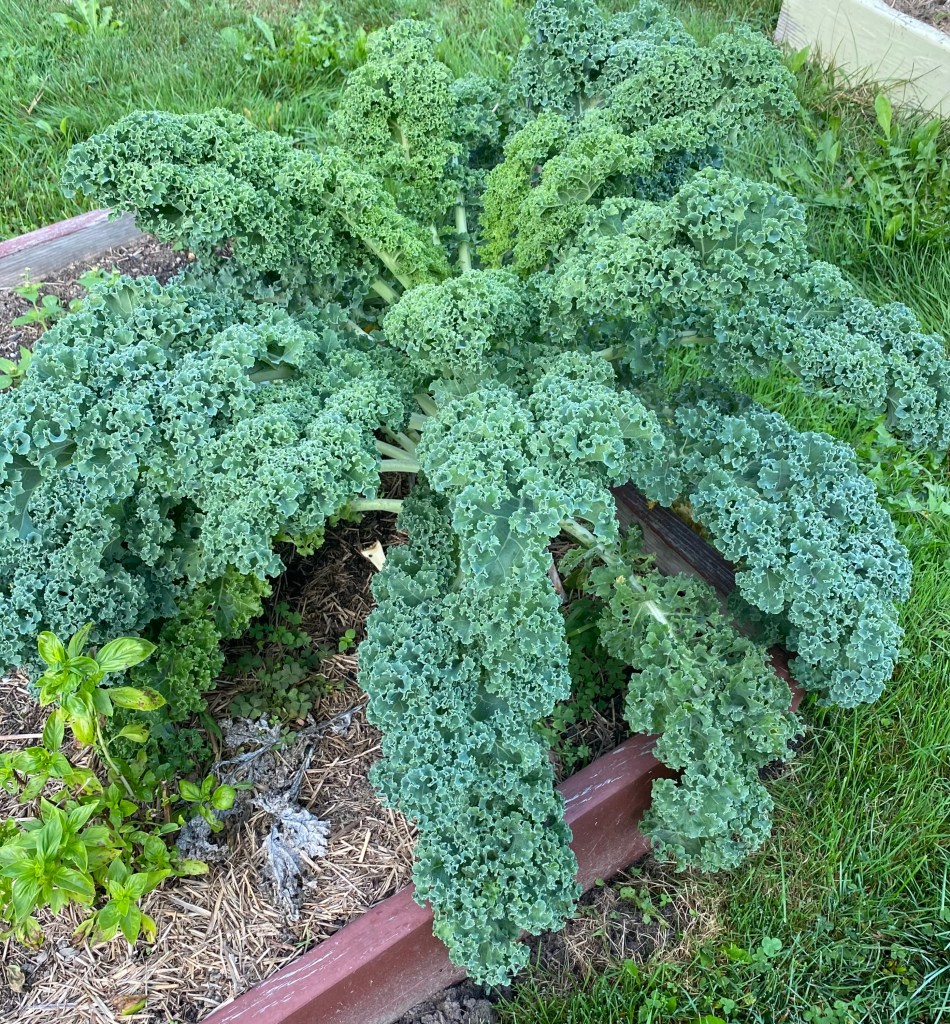
Your leaves, cascading like a sea-foam green

chemise, lure me to your sumptuous bed.

You may need massaging to be your best,

but hell, the same can be said about me.

◊

80 is not 70

~

Over coffee the other day, I was talking with a younger friend (most of my friends these days are younger) and said, “Let me tell you: 80 is not 70.”  Like so many of my pronouncements, it sounded good at the time, but when Chuck asked me what I meant, I found myself sinking into the mudflats of my own brilliance.

What did I mean?

When I came home, I found a blog I wrote nearly eight years ago, called “Since 70” [link] in which I talked about my pilgrimage as a septuagenarian: living with my “diminishments”—both physical and mental—struggling with inertia, my changing tastes in food, entertainment, and music, and most of all, my increased awareness of my powerlessness to control people and events.

Well, the diminishments have increased: I’m living with chronic emphysema, my balance is shot, and my skin shreds like tissue paper. I no longer struggle with inertia; I’ve given in to it. To lower my carb intake, I’m eating yogurt instead of muffins, cauliflower rice instead of potatoes, and just about every kind of nut raised on this planet. Technology grows more confusing. I listen to more classical music. I’m still working on acceptance.

None of which is surprising (depressing but not surprising); what surprised me as I read my blog was my impatience with my 70’s self. Several times I thought, “Oh, for crying out loud, Rick, get to the point!” And I realized that one reason 80 is not 70 is that I’m now clearer about what is essential and what is not. I have some 50 hats hanging in my garage; I usually wear one of four. I have five banjos; I play one. I have ten kinds of tea; I drink three.

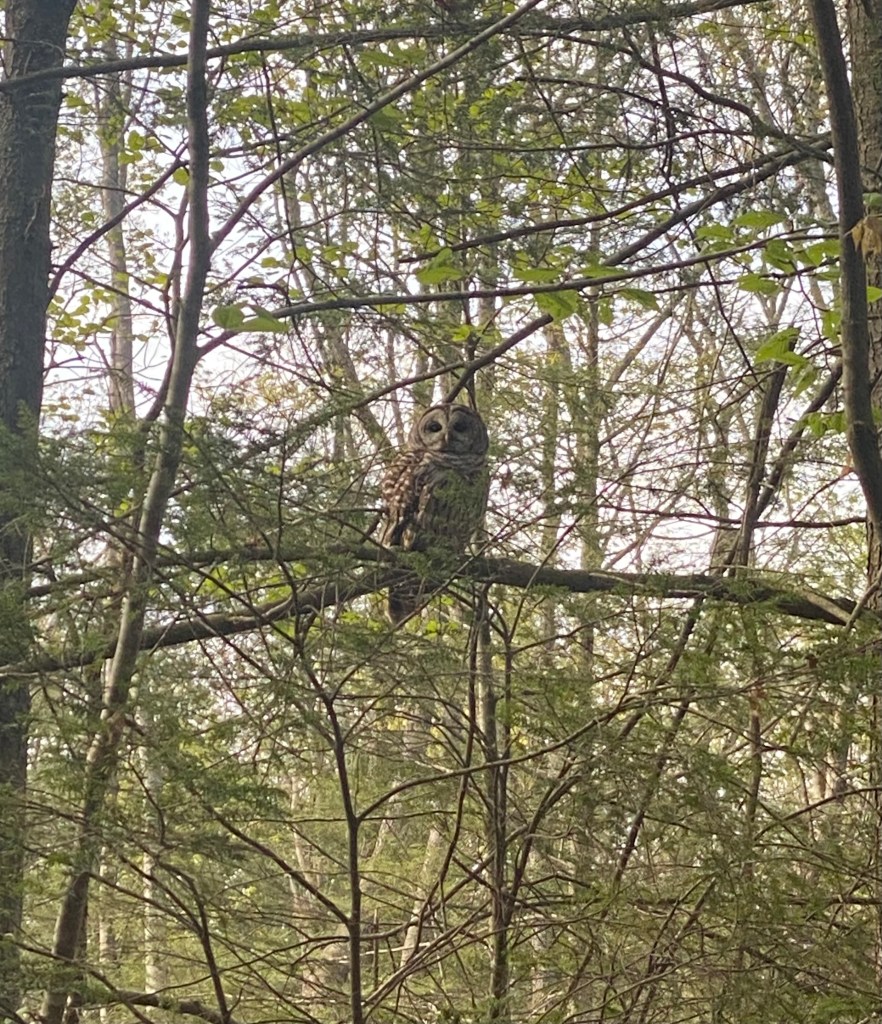
I don’t know if there’s a connection or not, but life as I know it is more intense. The highs are higher and lows are lower and there are more of both. Recently, when I was walking through the woods and looked up to see a barred owl, my heart hiccuped with joy. An email that afternoon notifying us that a new 100-unit development is probably going up in those woods plunged me into despair. (A lot of the news these days does this to me.)

One of the reasons I’ve had trouble in the past finding what’s essential is because, as my first wife used to say, “Rick, you think too much.” Until I got into my 80’s, I could stand for twenty minutes staring into my closet trying to decide what to wear. I had to set a timer when I played Scrabble or Mary Lee wouldn’t play. Most of the time, though, I was thinking about what people thought of me. When I was with someone, I never really saw them; I saw only the me I thought I saw in their eyes. As for listening, forget it; I was planning what I was going to say next. These days—thank you, Jesus or Al Anon or Father Time—by paying less attention to who I think you think I am, I’ve become more interested in you. I’ve become a better listener.

I find I’m now curious, a word that was never part of my vocabulary. Quantum physics fascinates me. So does the leaf caught in a spider web outside my window. So does my death. As a result, I think, I am far less resentful about what I don’t have and far more appreciative of what I do have.

I spent a lot of my 70s reliving life in a small Maine town during the 1950s, and I’m sure I’ll continue to write about those years. But these days, what’s more important is being here. Right now. Not this decade, not this year, not this week, or even today, but this moment in the day that I’m sitting here alternatively typing on my computer and looking out the window. Maybe that’s why I’m reading and writing more poetry: it’s more immediate, more concerned with moments than memories.

So yes, Chuck, 80 is not 70. Life is not better—for many of us, it can be more painful, lonely, and frightening. But, for me at least, it’s also more interesting, more authentic.

And I’m more grateful for it.

~

In the Dark Woods

~

Sometimes, thanks to luck or Grace or the stars’ 

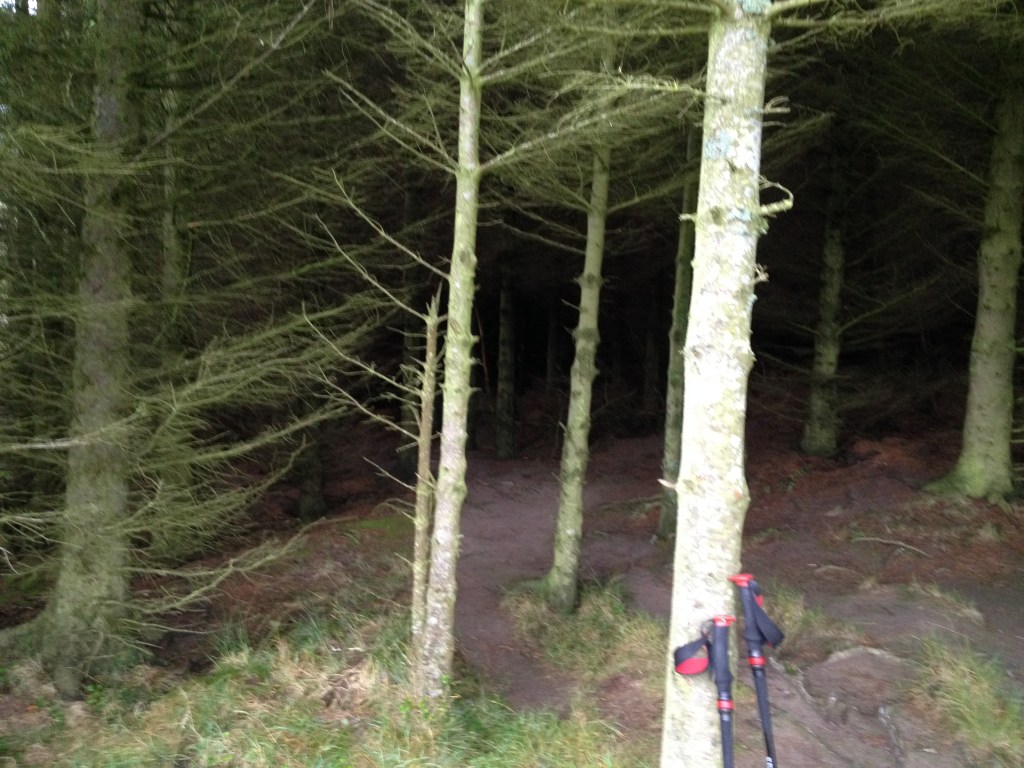
alignment, as you trudge through the dark woods

of life, defeated by the demons which

have scared and scarred you, stumbling over roots, 

clambering up crags, whacking your way through 

the pucker brush, slapping at blackflies, lost,

angry, afraid—you come to a clearing. 

Breezes blow away the bugs and sunbeams 

light a path of pine needles to a log

cabin and a porch and a rocking chair 

facing a blue bay dotted with islands,

and you sit and breathe the salt air, rocking,

loosening, loosing yourself in the light

dancing on the water, breathing, gazing,

feeling enfolded by you don’t know what

or for how long, until the journey calls.

Then, for a while at least, the trail is smooth.

Views get wider, demons get smaller.

You’re grateful to be on the road once more.

~


To my Daughter on her 56th Birthday

~

This year, I find myself remembering

the night I spent in the waiting room

 (I wish now I’d been with your mother but 

those were much different times) finally 

hearing a phone ring, then the call from

across the hall, “Congratulations, 

Mr. Wile, you’re the father of a giant 

economy size baby girl!” 

Still, I wasn’t allowed in to see you 

until late that afternoon, after I’d 

wandered the village streets dazed, aware only

of the sun on the water and white boats

in the harbor. (Did I eat? I don’t remember.)

~

Until your mother and I walked down 

the hall to the nursery, where you lay 

with two other newborns, as big as both 

of them together. I stood before

the nursery window, paralyzed 

with awe. It all was too intense—

the waiting, the news, the village green, 

the blue water, white boats, my love for you.

~

Only later, all these years later, after

the arguments, the divorce, your anger 

at me, our reconciliation, your

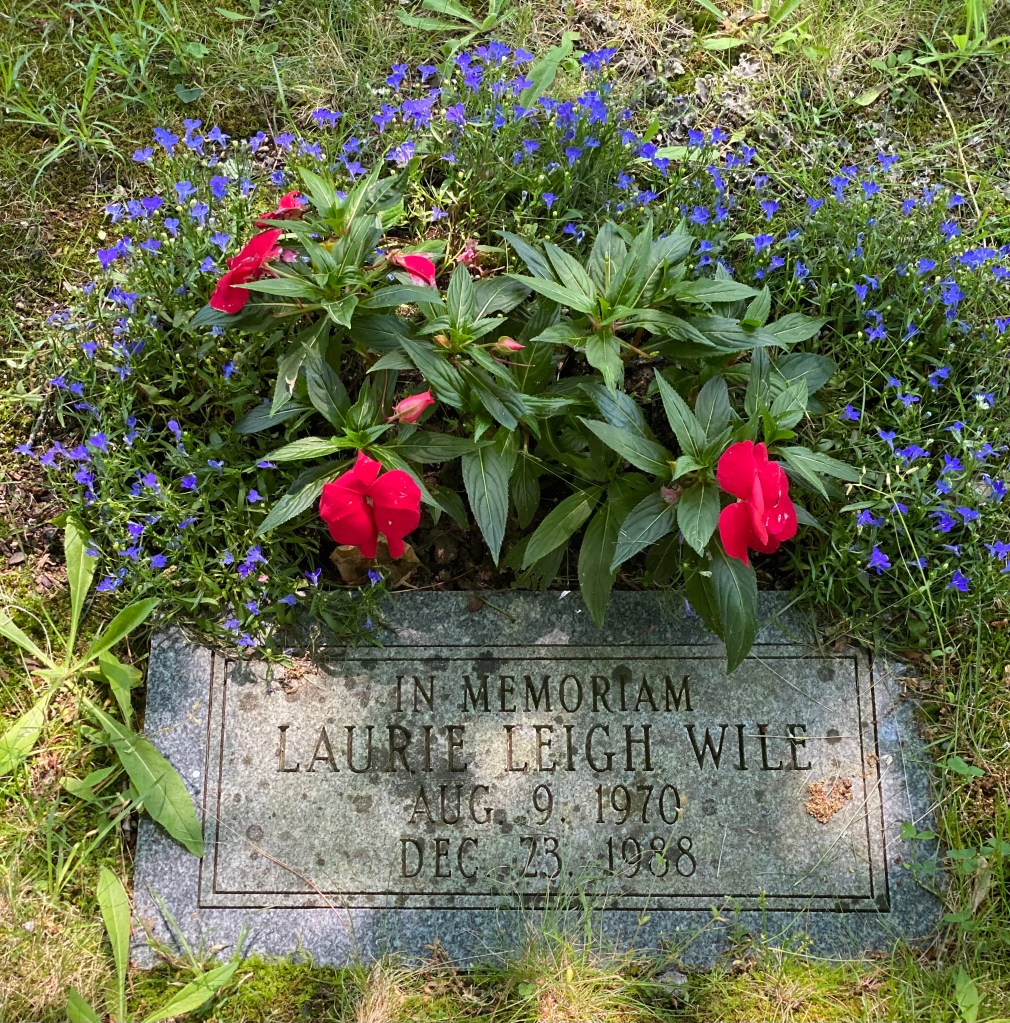
shortened life, my prolonged anger at God,

my reconciliation, can I fully,

finally say how grateful I am for

the miracle that was—and remains—you.

~

Pneuma

~

Leaves sway seductively

In a silky blue sky.

The air is clear,

the breeze an energy drink.

To a background of bird songs,

I wave to the crew mowing lawns,

breathing easily

as I walk the neighborhood,

recalling ten days ago

when emphysema rattled my lungs

and my ribs ached from coughing.

Holed up at home, I watched

through the window as

smoke from Canadian wildfires

stained the sky nicotine yellow,

the same color as the mucus

coming up in my throat,

consequence of years

spent fighting fires

in the American Rockies.

And although I can’t undo

the damage from those years

of wood smoke punctuated

by cigarette breaks,

I can take advantage

of this moment and

breathe in the grace 

that smells today of ocean.

~

This Year’s Garden

~

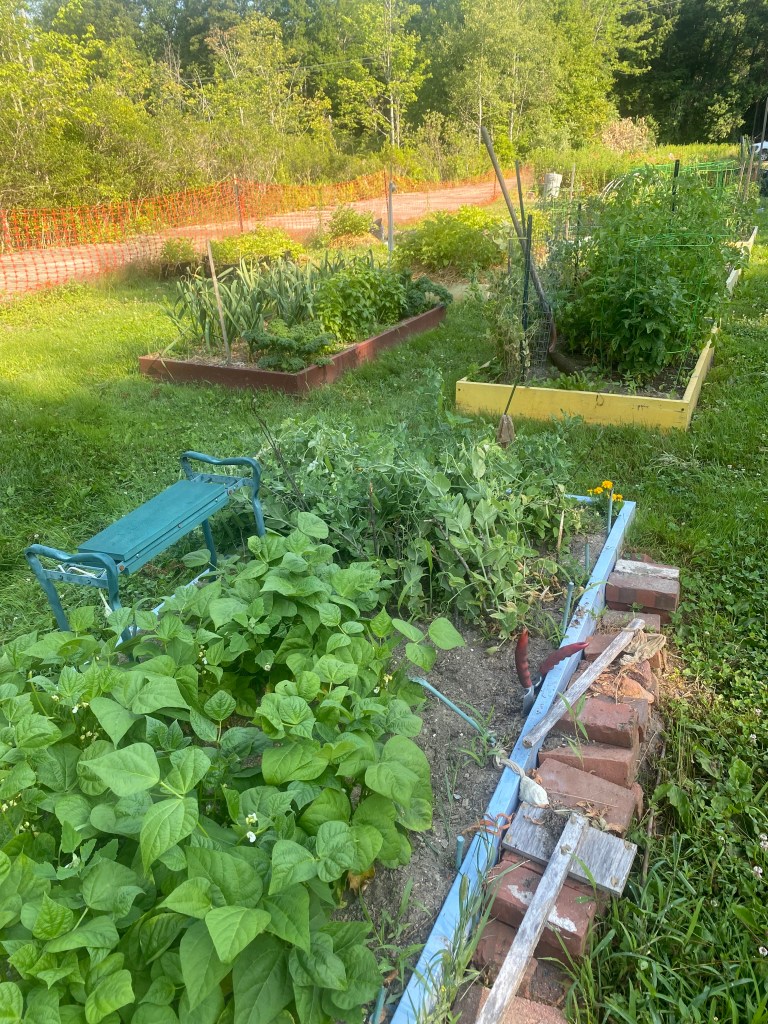
This year’s garden is smaller than last year’s garden

which was smaller than my garden the year before

as I become less able to kneel dig lift.

Still I’m grateful to be able to garden at all.

For seventy years, gardens have been my teachers

admonishing me to plan prepare plant

water weed and wait 

for a power greater than myself

to provide the needed sun and rain

bees and worms.

To trust that in the liminality 

between planting and emerging

when nothing seems to be going on

new life is exploding.

So much happens beneath the surface.

To accept that not every seed will sprout

nor every seedling survive 

nor every plant produce

and that weeds are always with us.

To live in the faith

because it’s been true for 70 years

and why should this year be any different

that the harvest will come.

To be thankful 

to share 

and then lie fallow

resting in readiness …

~ ~

Ruminations on his 83rd Birthday

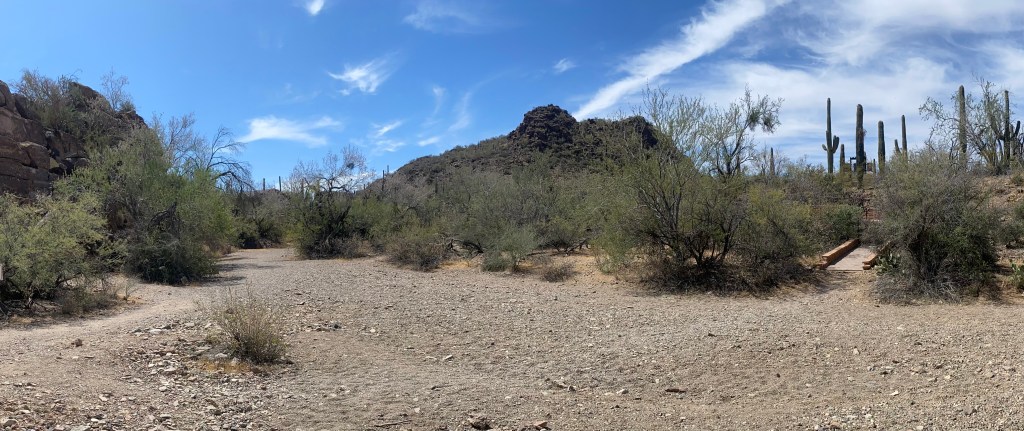
Picture Rocks Wash, Arizona. On the right, stairs lead to the Stations of the Cross. On the left are the petroglyphs.

~

His life these days is like walking a trail,

maybe that wash* in Arizona when 

he was on retreat, when on one side of 

him were the Stations of the Cross and on

the other side the picture rocks that give 

the wash its name: 1500-year-old 

petroglyphs by the Hohokam farming

people of the Sonoran Desert.

~

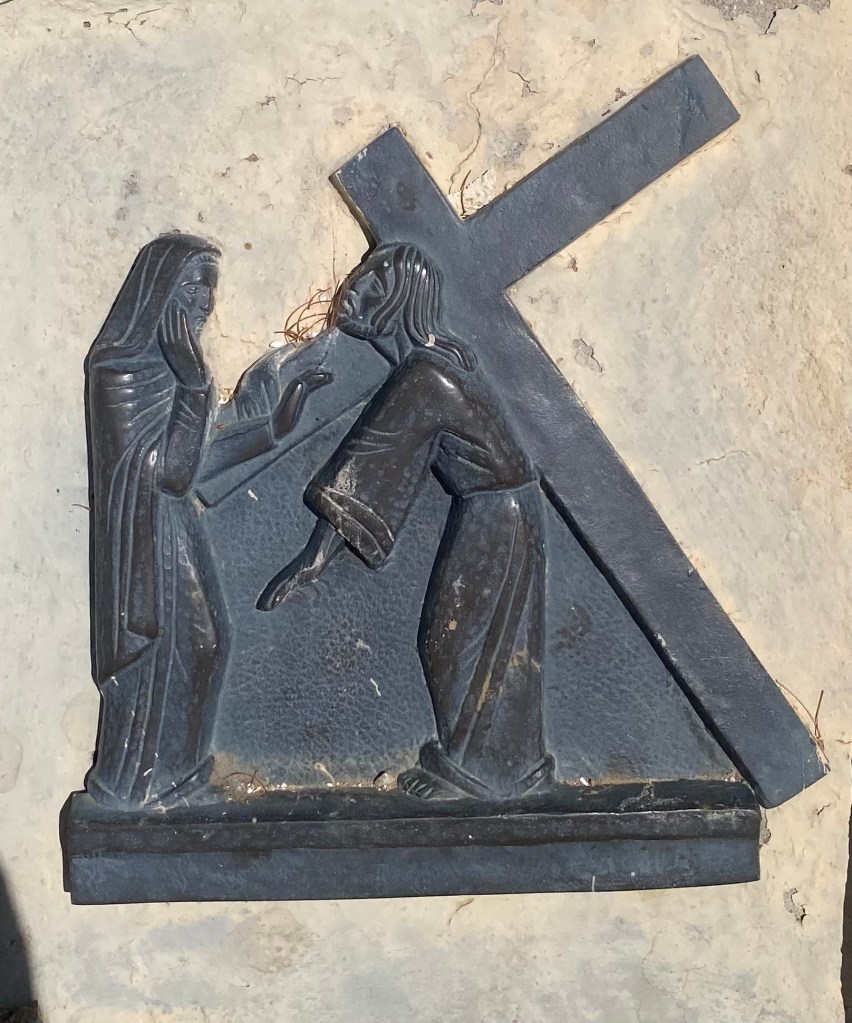
On one side, 14 etchings in metal

depict Jesus’s progression to his

death: scourging and the crown of thorns, falling 

under the cross’s weight, piercing, thirst, and 

humiliation, abandonment by 

friends, followers, even God, death. And 

he thinks of the violence and cruelty

of the empire in which he lives against

the materially poor and the sick

and the marginalized, his feeling that 

God has abandoned the country he loves,

his own pains in places he never knew

he had; indignities; lashings of fear; 

the cross he carries of his family’s

disease; the piercing loss of his daughter.

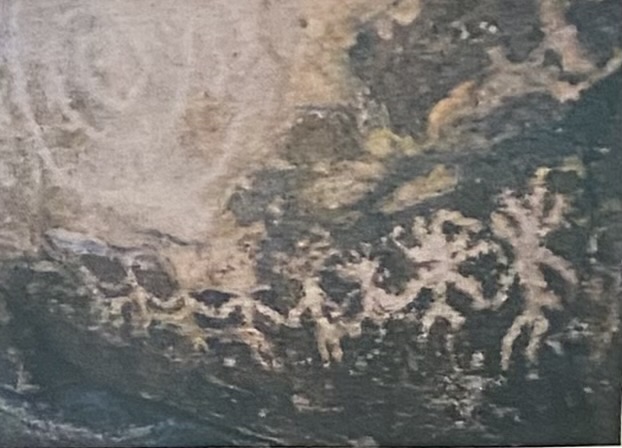
On the other side, petroglyphs show the 

the sun’s progression during the summer 

solstice: swirls and spirals and strange designs, 

images of dancing people, deer and 

antelope, alien-looking creatures

(you don’t suppose…), and something that looks like 

a picture of an atom, but which might

depict life’s interconnected circle.

He thinks of the kind and kinds of people 

he’s met in traveling from coast to coast,

this country’s mountains, deserts, and rivers, 

of the smell of the dirt in his garden,

dancing with his wife, watching grandchildren

grow up, his church men’s group, his circle of 

friends, his joy in writing a good poem.

He recalls walking between the two sides

of the wash, hearing what might have been a 

cacophony or what might have been a 

choir of quails, doves, finches, cactus wrens, 

flickers, thrashers, cardinals, fly catchers, 

pyrrhuloxia, verdins…and he hears

the sounds of his life: voices of parents 

who, despite their own horrible childhoods, 

made of themselves a living sacrifice

for their children, echoes of the friends he’s 

lost, and of the friends he still has, some of 

them going back to childhood, the teachers 

he disappointed and the teachers who

were there when he needed them, the students 

he failed, and those he inspired, the sounds 

of the tortured last breaths of his daughter, 

and the glorious voice of the woman 

he loves as she reads the Sunday Gospel. 

~

He remembers the Arizona sky

which canopied both sides of the wash,

feeling the paradox that is his life 

enfolded by Something—The Holy Spirit, 

The Tao, The Great Spirit, Jesus, Buddha,

Jehovah, Allah, Brahmin, The God of 

My Not Understanding—he doesn’t care

about names, he’s grateful to be here and

eager to see what’s around that next bend.

~~

*a wash is a dry, low, sandy riverbed that only carries water during rare rain events. It’s often called an arroyo.

Empty Coffee Cups and Overflowing Ashtrays

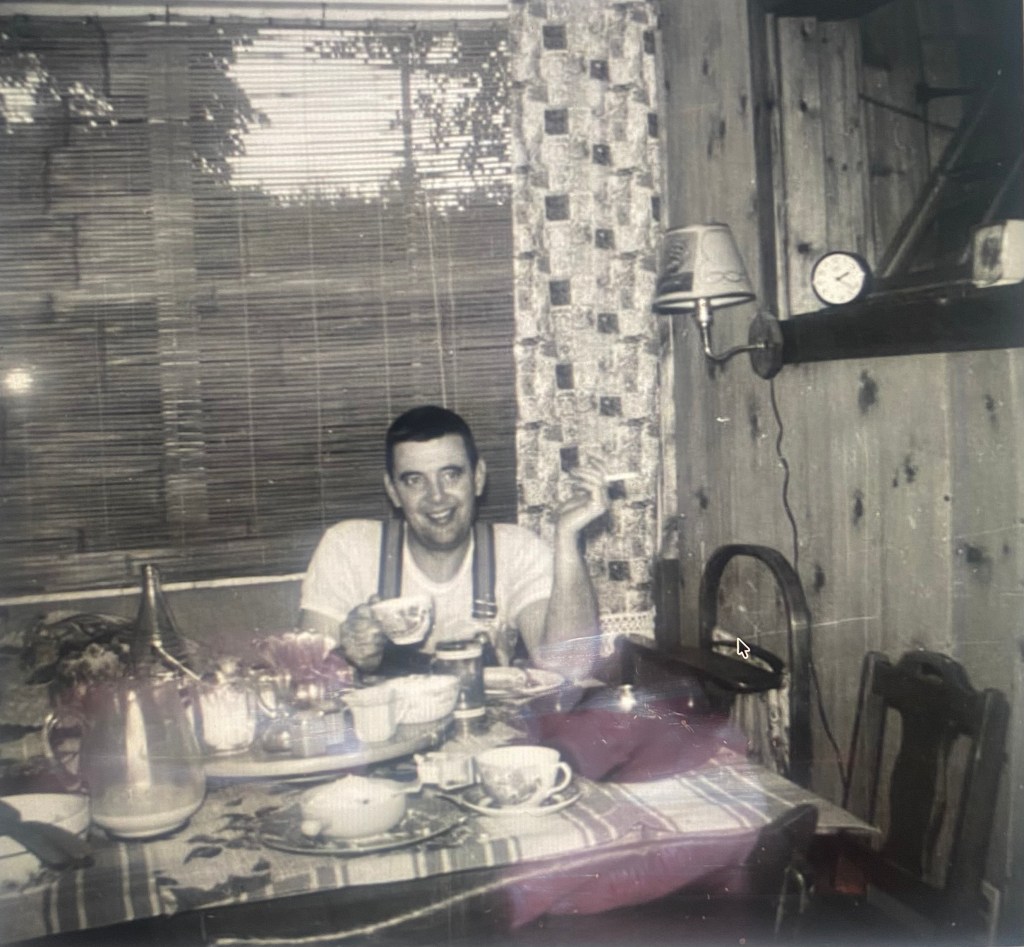
Dad with his coffee and cigarette

Sipping decaf latte with oat milk

at my local coffee shop, watching

the interplay of light and shadow

on granite-colored walls, I recall

growing up with empty coffee cups

 and overflowing ashtrays

in the kitchen, the dining room,

the living room, the bathroom:

flowered cups with curved handles 

tipped over in saucers, stained by years of use, 

and ashtrays mounded with 

Camel, Kent, and Pall Mall butts,

curtesy of my parents and my grandmother,

who often used her saucer as an ash tray—

cigarette smoke and the smell of old coffee

wafting through the house, like 

the resentments and repressed anger

passed down by generations of depression and alcoholism,

not to mention the shame and worry about money

and what would the neighbors think—

a miasma so pervasive I never noticed,

any more than I noticed a house empty

of spontaneity, security, and joy.

So why wouldn’t I start to smoke and drink coffee

and wallow in anger and shame,

until emphysema and heartburn and divorce

said, “Had enough?”

And here I am,

an old man, parents and grandmother

long gone, drinking my latte and 

checking my iPhone (another addiction,

even the size of the cigarette pack 

I once carried in that pocket),

working my 12-Step program,

and practicing gratitude for the life I have.

This too is grief.

◊

Life Smells

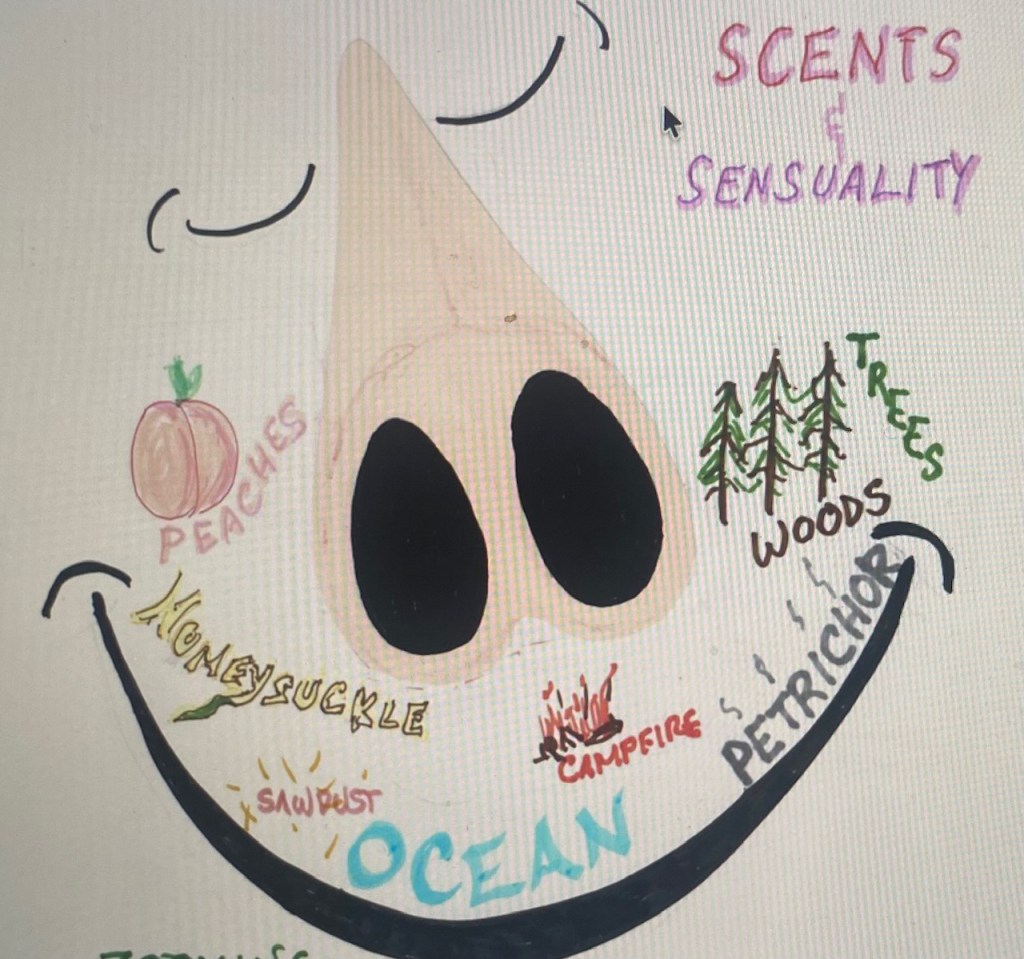
Illustration by Lisa Keppeler. Used with her kind permission.

~

It’s September, 2019 and ten weeks after my heart surgery and I’m taking my first walk in the woods since then and the first thing I notice is the fecund smell of fallen leaves and pine needles and dying trees…

and the scents of hay and cows and horses in my great-grandfather’s barn, and the waft of fried onions and potatoes in Nanny and Grampy Lufkin’s house, and the whiff of perfume and cigarettes in Nanny Cleaves’s apartment, and the aroma of Mom’s fresh baked bread on Saturday mornings…

and a few years later: the earthy odors of the market garden where I worked summers, the pungence of wet towels, dirty socks and jockstraps in the locker-room beneath the gym where I spent so much time… 

and the fragrances of my Aqua Velva, and her White Shoulders blending in the back seat of the family Ford …

and later still: the salt smack of ocean breeze thru the spruce trees around our camp in the early days of marriage when love was new and life’s possibilities seemed endless…

and because autumn is when things die, memory sniffs the acrid smoke from the Old Town Paper Company as I drift, bitter and aimless, across the university campus, no longer the high school bigshot and no idea who the hell I am or where I’m going…

 and then the dank reek of the dregs of the pipe tobacco I used to smoke during the last years of that first marriage…

and the stench of shit and disinfectant in the hospital where my daughter lay dying, when I learned how life and love can also waste away and die… 

and thoughts of shit spark smells of steaming cow flaps in Scottish pastures through which Mary Lee and I hike, and aromas of shawarma, spices, and pita bread mingled with the dust of pilgrims in the Old City of Jerusalem, and the sweet scent of apple tea in Turkey and animal musk on the Serengeti and incense wafting up from the altar into the stony steeple of Iona Abbey—reminders that I not only didn’t die, but flourished—

and the smell of Mary Lee lying beside me in the morning, and the fresh, slightly sweet scent of our newborn grandchild, and before I know it, going into the school building to pick up that grandchild where the fragrance of chalk and cleaners and young bodies take me back to my years as a public-school teacher—intimations that love is stronger than death…

and although I’m surrounded by the smells of dead and dying vegetation and the lingering sickly scent of Mupirocin with which I swabbed my nose prior to and after heart surgery, the decay upon which I walk and which I smell teems with the bouquet of resurrection.
~

The Highways

Nova Scotia highway

~

‘Be not afraid.’ Those words don’t say ‘Have no fear.’ Instead, they say I don’t need to be my fear.—Parker Palmer

~

So much to fear,

so I fled to the caverns

and sat in the gathering darkness

 around my tiny fire.

I heard the earth, consumed 

by fire and poison, cry out in agony.

Insane voices screamed threats.

The air reeked of corruption.

Gunshots echoed in the canyons.

Grieving parents wept.

I felt my strength ebbing as

I sensed the valley of the shadow below.

How I longed for the sky to light up 

and a voice from the heavens 

thunder, “Be Not Afraid!”

and an angel descend to

sheathe me in unconquerable courage.

But in the silence amidst the tumult 

and the suffering, an old friend 

I’ve never met said, 

“‘Be not afraid’ doesn’t mean ‘Have no fear,’ 

but rather, ‘do not be your fear.’”

I raised my eyes and looked back at my journey,

not only at the deep crevices of death

and quicksands of despair,

but at hilltops of hope,

ponds of trust,

forests of generosity,

fields of strength,

oceans of love,

and saw fear was but part of the landscape.

Therefore, I have risen from the ashes,

left the caverns,

and resumed the journey,

resolving to live on the highways

and not in the hollows,

cherishing each rock on the road.

The sun has not yet set.

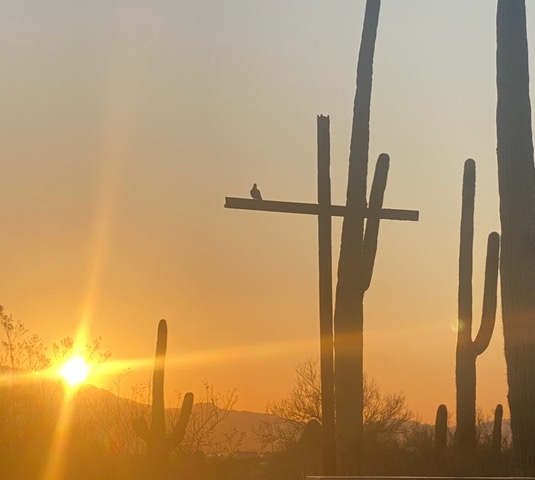
Arizona sunrise

~ ~