
Duende

◊◊

Duende:…[T]he “bitter root” of human existence, what Lorca referred to as “the pain that has no explanation” … and the source of much great art.—Christopher Maurer

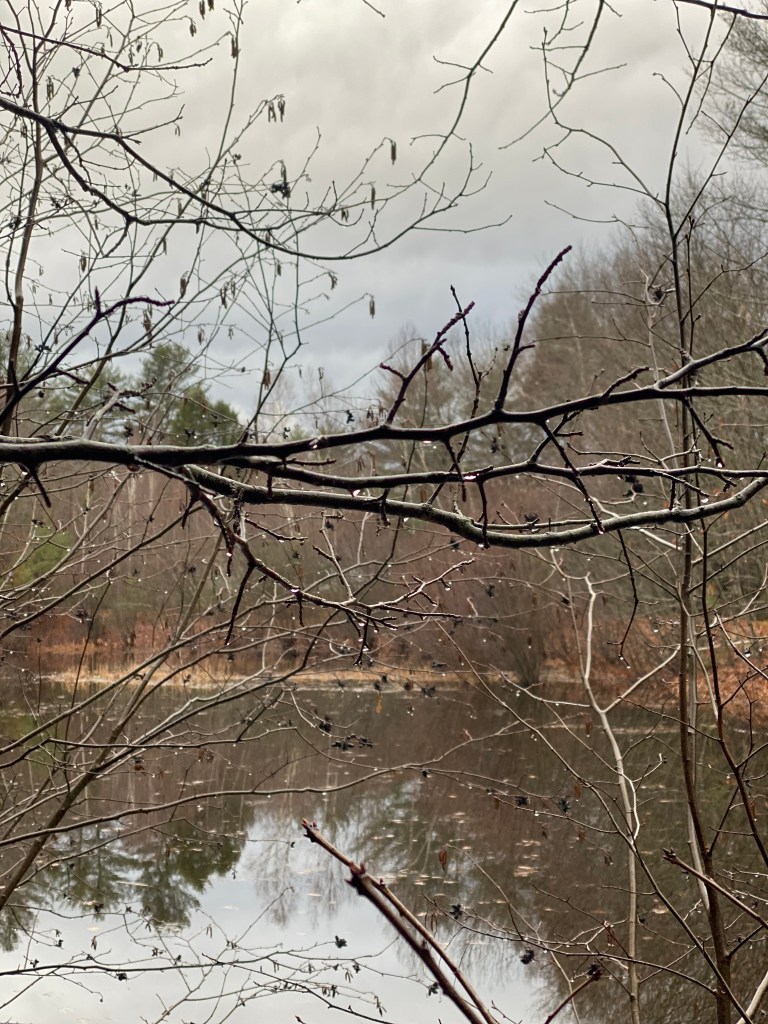
After the rain, the trees are weeping,

tears glistening in the setting sun. 

And suddenly

I feel the fierce force flowing through my veins 

along with the red cells and white cells and platelets, 

to and from the heart (the center of grief, I heard somewhere). 

I wail once more my family’s demise:

 my father’s frightened eyes, my mother’s waxy hands,

  my daughter’s last labored breaths.

´◊

I recoil as if for the first time at

old failures, sins, embarrassments, what-ifs

 that float before me like dead fish.

I watch my friends diminish—

cancer, Parkinson’s, heart problems, Alzheimer’s—

I shave an old man’s face.

This week, I’ll pray, write a poem, plant flowers in the family cemetery, meet friends,

take grandchildren for ice cream, work in my garden, make love to my wife, 

tenacity momentarily victorious. 

Still, coursing through my triumphs like a deep and dark river,

demolishing and nourishing as it surges to the sea, 

Duende.

◊◊

Querencia

~

…from the Spanish verb “querer,” to want, desire, love; an emotional inclination toward a location; a home ground, a favorite place.—Wikipedia.

~

“A querencia is a place the bull naturally wants to go to in the ring… In this place he feels that he has his back against the wall and in his querencia he is inestimably more dangerous and almost impossible to kill.” Ernest Hemingway, Death in the Afternoon.

~

Or man-cave or refuge or sanctuary or study or simply the room at the end of the hall where I hang out wrapping it around me like a favorite bathrobe or suit of armor depending…

where I 

gaze at pictures of my wife ML looking radiant in her new clerical collar despite her son’s having left to live on the West Coast… my daughter Laurie’s watercolor she painted before her cancer diagnosis of a blue hand reaching up thru brown rocks toward bright flower petals … my brother sister & me skunk as a drunk before I sobered up … ML’s boys, Laurie & me swimming on Mount Desert Island when I thought we could blend our families… grandchildren sitting in my lap, playing by the river, hiking in the woods when we did…a panorama of Banjo Camp North where I named my banjo Joy… Jerry, Marty, & I—6’2” then— the Fish Factory Trio, singing “The Old Dope Pedler” at a high school variety show in 1961… four views of the Desert House of Prayer outside Tucson, Arizona where ML & I danced in the desert under a full moon Easter morning in 2001… a lioness sunning herself on a rock on the Serengeti Plains in 2018…

keep mementos such as a contestant pin from the 1961 L&M State Basketball Championship…three vintage baseball caps of my favorite teams… the skin of a rattlesnake I killed in Idaho in 1962…diaries going back to 1963…autographed books by heroes, mentors, friends and former students … cards from grandchildren… three bowls of rocks from my travels…rocks from those travels too big for bowls… a felt fedora covered in pins from airports around the world… a turkey feather from a walk in the woods… four clam shells from walks on the beach… a letter holder my father made for my mother when they were in high school… a wooden platter I remember him carving in the evenings after he’d come out of the Army & was working as an apprentice carpenter & we didn’t have a TV… my grandmother’s desk… 

lose and find myself in books of non-fiction, fiction, poetry…books about travel, Maine, writing, spirituality… five banjos…one guitar…one harmonica…one mouth-harp… one Vietnamese flute… ten songbooks… two file cabinets of old writing… two coffee cups of pens…my current diary… a yellow legal pad of paper… a computer … 

look out the window at a world of uncertainty for my country & my own life & those I love holding my favorite pen like Excalibur my diary like a shield enthroned in my ergonomic office chair feeling inestimably more dangerous & almost impossible to kill…

~ ~

To Friends who Tell me I Need to Lighten Up

What can I say? I like clouds in my sky.

~ ~

Thank you for your concern 

about my mental health, 

but I’d rather embrace 

my grief and fear

as if they were gassy grandparents 

who keep my school photographs 

on their refrigerator

to show my yearly growth

than banish the old farts 

to the basement 

and have them pound 

the floor under me 

with a broom handle.

~

Don’t get me wrong, friends, 

I do count my blessings, 

I am grateful for health, family, friends.

And I don’t pretend to understand 

what it’s like trying to stay afloat

in the black seas of chronic depression.

But happiness, I’ve discovered, 

can become complacency, 

which can be a stagnant pond 

swarming with blackflies.

~

I find more blessings to count, 

more for which to be grateful, 

after having been broken open 

by the deaths, destruction, decay around me, 

some of which I’ve caused, 

some of which I haven’t deserved, 

and some of which is just life.

~

Without looking at my grief, 

I’m not able to recognize my joy. 

And I don’t mean glancing at loss 

the way I rubberneck 

at an accident on the highway.

I mean reentering the suffering, 

scrutinizing the fears, 

which means talking 

and writing about them.

~

My urge to create begins in loss, 

my gratitude begins in fear, 

my compassion begins in pain, 

and my joy begins in sorrow.

~

All of which, I guess, is to say:

I’d rather be whole than happy.

~ ~

First Friend


Behold, I give unto you power to tread on serpents and scorpions, and over all the power of the enemy: and nothing shall by any means hurt you. —Luke 10:19

Staring at my 3 a.m. fears—A burning planet, a demented president-elect, disease, death—I think of you for the first time in years: first friend, neighbor, bodyguard, mentor, and, although three years older than I, my classmate from fifth through seventh grade.

Thick black hair and an Elvis sneer, Kirk Douglas dimple in your chin, sleeves rolled up as far as they’d go to show those growing muscles, your dark eyes often flashed anger at the world, but also amusement and compassion for the pudgy, awkward kid who worshipped the ground under your motorcycle boots.

Buddy Fitts, Freddy Gallant, Bucky Lapoint—none of the playground bullies—dared trip me, twist my arm, scrub my face with snow, because they knew they’d have to fight you first. And you were tough: sauntering up Bridge Street coatless in a ten-degree storm, snow clinging to your hair like chainmail on the Black Knight, carving your name on your veiny forearm with a Gillette Blue Blade.

In class, you never raised hell, never passed in a paper, just sat in the back seat looking cool until you turned sixteen and could legally split the joint. You cut CAROL into your upper arm and went to work in the cotton mill.

Playing basketball, fumbling with the buttons on Daisey’s sweater, I hardly knew you’d left. Never saw you much afterwards. Heard you and Lapoint started a paving business.

Home from college, I once walked by your house. You hadn’t grown since grade school but your tattoo was cool—a tiger’s head spanning your boney back as you banged away on a rusty Chevy. We grunted greetings. I forgot you.

At our 50th high school reunion, your cousin Roland said you lived in Tennessee, belonged to some Pentecostal church that prays with poisonous snakes to show God’s power over evil.

This dark morning, my friend, I think of how you protected me, wish you were here to keep me safe from the serpents slithering around me.

# #

Welcome, November

#

As readers of this blog know, my daughter Laurie died at the age of 18 from a rare cancer. In November, seven months after the cancer was first diagnosed, she went into Eastern Maine Medical Center. Living 120 miles away, I took a leave of absence from my teaching job and moved into a Ronald McDonald House where I spent the next two months with my daughter until she died on December 23.

Since then, each November as the days grow darker and colder, I can feel my body chemistry change. I’ve coped in many ways, but the most helpful has been through writing. It’s no accident that the first Geriatric Pilgrim blog appeared in November 2015.

#

Sonnet for November

Novembers, I would drive my daughter past

Men in blaze-orange caps, crouched on a hill,

Their 30-30’s sighted, set to kill

Most anything, just so the gun would blast.

My heart began to flutter, then beat fast

As we drove by them—silent, savage, still—

And I could feel the air around us chill.

I’d think, how long, dear God, will this month last?

But I’ve since learned of other ways to die,

And russet hills now fill with memories:

Her gentle, kind, abbreviated life.

These days, I treasure the November sky

Which broadens once the leaves drop from the trees.

November wind is clean, a whetted knife.

#

Darkness

Now darkness begins:

light dimming after lunch,

long shadows on the lawn.

I curse the old lady

crossing the street

in front of my car,

lose gloves,

feel the familiar kick

to the heart. 

You’d think after all these years

I’d be over it,

but it’s always different…

this darkness…

Gone the murky numbness,

the black rages,

no more the dim corridors

of “if only” and “what if,”

lit up by Johnny Walker.

Now, who knows what waits 

in the darkness ?

Another old friend’s Christmas card

to bring me tears?

More recurrent dreams of stumbling

through stony landscapes?

Another season of bingeing bad TV?

Still, the waning light 

is clean and clear,

the view scoured of chewed leaves, 

dead flowers, black flies.

And sometimes, just sometimes,

Love enfolds my fears,

and I hear Laurie whisper, 

“Dad, let the thoughts go.

Let darkness begin.”

This is Not Just Any Sandwich

IMG_3648

#

I look at the faded and folded white lined paper, at Laurie’s tiny, circular handwriting: “This sandwich would win the approval of Henri Matisse, and fans of rainbows as well.” Suddenly I hear her in the kitchen, opening the refrigerator, taking out containers, opening the vegetable tray. Rustle of cellophane, clink of glass, thud of food hitting the counter.

“Dad, where’s the vinegar?”

I realize she’s never been in this house. “In the bottom cupboard, behind the second door over from the fridge. Do you want some help?”

“Nope, I’m fine.”

I know she’s wearing an over-sized tee shirt she’s tie-dyed, one like she did for me. I hear her singing to herself, probably something by Suzanne Vega, or Tracy Chapman: “Don’t you know they’re talkin’ about a revolution. It sounds like a whisper.”

“Peace-Nik!” I yell.

“Flower power lives!” she yells back. “Where’s the red onion?”

“Under the cupboard on the counter by the window. In that basket.”

I hear chopping sounds, then the rasp of vegetables against a grater. I jump at the whirring and rattling of our blender, then jump again when Laurie cries, “Yikes!” and the blender stops

I stand. “What’s wrong?”

“Nothing.” She laughs. “The top came off the blender. I’ve just got this dressing all over the counter and all over me. I’ll clean it up.”

I smile and sit back down at my desk. “No problem. But this seems like a lot of work for a sandwich.”

“Da-a-ad! This just isn’t any sandwich. It’s a work of art.”

And for a minute, I see her in the doorway, dressed as I imagined, blue-cheese sauce splattered on her arms and a dab of it on her nose. She looks at me, one eye-brow raised, her forehead furrowed in what I think of as a combination of amusement, satisfaction, and frustration. My daughter, the artist. Whether she’s painting a landscape, playing the piano, embroidering, wood-burning, or cooking, she throws herself into it.

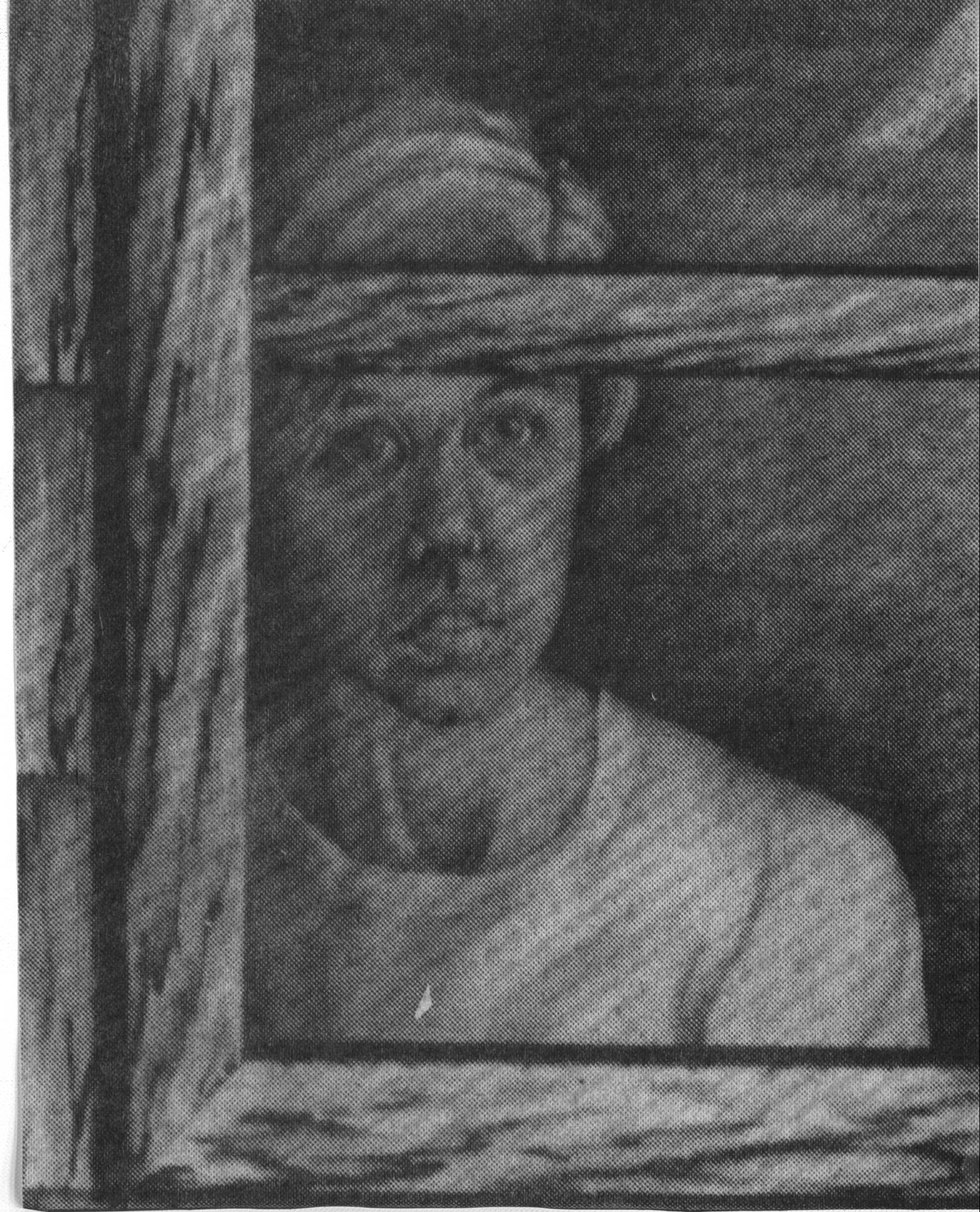
And then I see the bright red bandanna around her head, which she wore during the chemotherapy treatments, and my vision of my daughter fades. I’m staring at her last self-portrait, at her sad eyes gazing wistfully out through a window at the world. In the kitchen, my wife is pouring herself a cup of coffee.

Laurie

Today is Laurie’s forth-eighth birthday, and my only child has been dead almost thirty years. It’s a bittersweet day, a sandwich of emotions: a layer of sorrow, a layer of rage. Chop up some shame, some guilt, and some regret. Mix in some “if onlys,” and a few “what ifs.” Season that mixture for a while, let the sharpness mellow. Top it with a generous mixture of happy memories, on-going love, and the knowledge that you helped create someone beautiful and loving and courageous beyond measure, someone who touched all who knew her, inspired many, made a difference for the better in this world—all by the age of eighteen.

I’m still not sure how to celebrate her birthday, figure out how to hold both the knowledge that she is gone with the awareness that she’s always with me. Today, I will buy some flowers and take them to her memorial stone in our family cemetery. Laurie’s step-mother and I will walk along the ocean, not on some sandy beach crowded with oiled brown bodies and the smell of grease, but a rocky shore, where waves hiss and crash on weathered stones and the seaweed smells of damp musk, and I can feel the wind in my face, drying my tears as I pray: “Watch over thy Child, O Lord, as her days increase; bless and guide her wherever she may be ….”

IMG_2088

When we come home, I will follow the recipe for blue cheese sandwiches that Laurie copied for us from the MOOSEWOOD COOKBOOK a year or so before she died. Ordinarily, I hate to cook, but for this one time all year I will prepare a meal instead of simply opening a can of soup or a package of risotto. I’ll shred and chop and sauté and be the one covered in blue cheese sauce. I’ll skin my knuckles on the grater.

But hey, as Laurie says, this is not just any sandwich.

#

(Note: I wrote this essay on my daughter’s birthday, August 9, in 2003. It has since appeared in the magazine Alimentum: The Literature of Food, but I think it’s appropriate to republish it this week. I have changed the age Laurie would be in 2018; otherwise, my conflicted responses to her birthday are just as true now as they were fifteen years ago.)

#


Scars

fullsizeoutput_1373

#

For fifty years, I’ve been facilitating writing groups of various kinds. Participants have ranged in age from fourteen to eighty. They’ve been students, white-collar professionals, blue-collar workers, unemployed, and homeless. Over that time, I’ve begged, borrowed, or stolen certain writing prompts that always seem to work, no matter who’s there. For example, when a group meets for the first time, and I want to avoid the standard introductions and at the same time establish an atmosphere of trust, I’ll have us (since I always write, too) write about our scars.

#

Almost everyone begins by at least mentioning physical scars. Men, especially, seem proud of them. The other night, I was watching a Netflix series called Longmire, in which Sheriff Longmire has been stabbed and his female deputy Vic is helping him bandage the wound.

“You’ve got a lot of scars,” Vic says. “How many do you have?’

“Oh, I don’t know.”

“Come on. All men know how many scars they have.”

Silence. Then, “Twelve…thirteen now.”

Perhaps it’s a sign of the times that women are becoming less reticent about their physical scars. Last October’s Cosmopolitan magazine ran a series of photographs of women proudly showing their mastectomy scars. Photographer Ami Barwell said in the press release, “These photographs show that, despite what they’ve been through, these women are empowered. They are strong, happy, and sexy.”

Scars are part of growing up, and in many cultures children are intentionally scarred when they reach puberty as part of sacred rituals to celebrate their becoming adults. Richard Rohr, whom I often reference in my blogs, wonders if the popularity of tattoos and body piercings these days isn’t a secular substitute for what young men and women once gained through circumcision, scarification, shaving of heads, and knocking out of teeth.

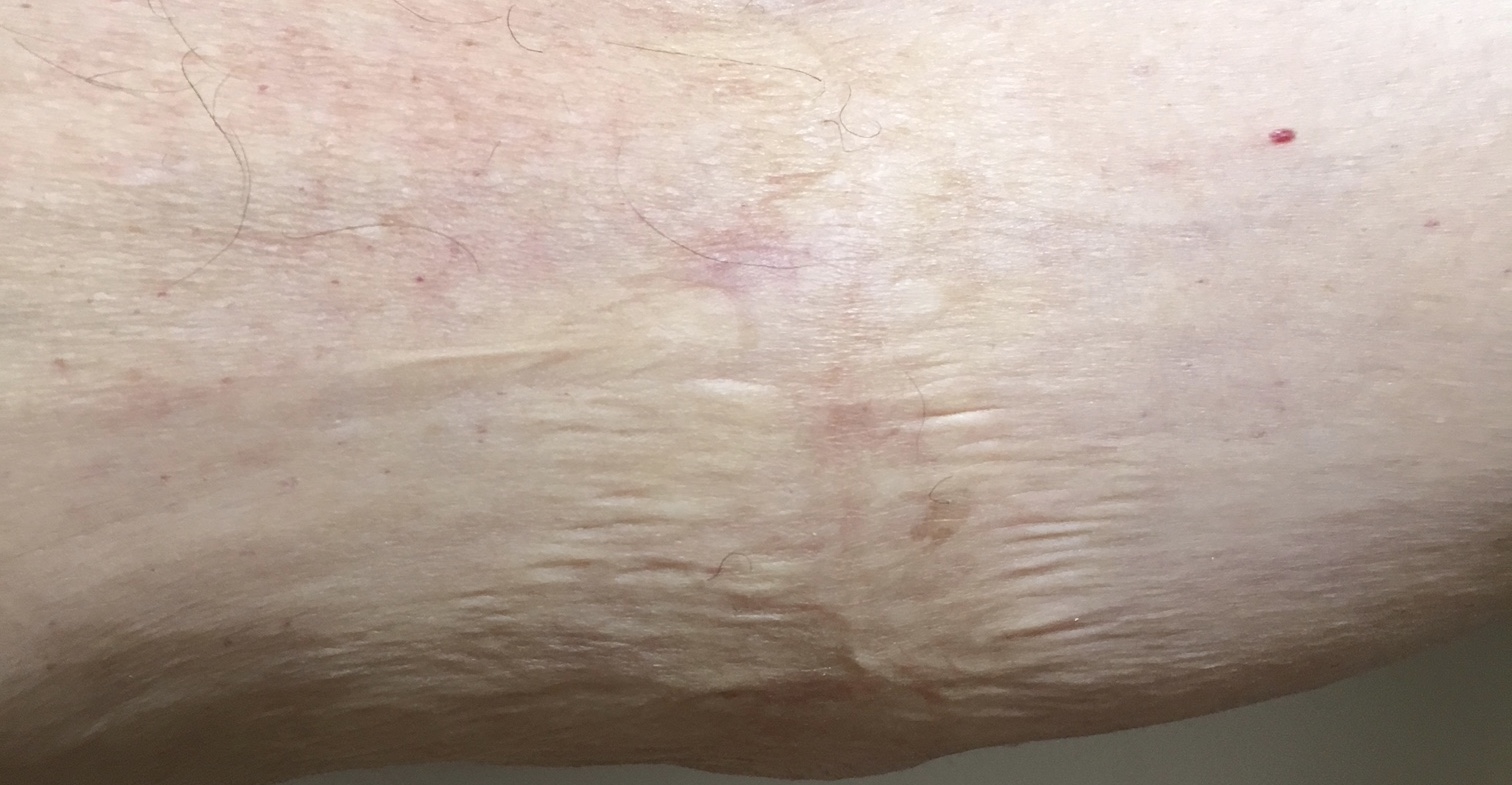
Our scars tell a story of our lives. My most unusual scar is the one on the inside of my right elbow that looks like a burn. I like to show it to people to see if they can guess what caused it. Most can’t, because the scar tells not only of my past but also of an era long ago and far away. When I was four years old, I was in the cellar with my mother one day while she was doing the weekly laundry in our wringer washing machine. Fascinated by the rotation of the rollers, I stuck my hand up to touch them. The next thing I knew, I was screaming as the wringers went round and round on my arm— the first of what we in my twelve-step program call our “goddamned learning experiences.”

wringer washer

As I moved into something resembling adulthood, I scarred the back of my head when I fell down some school steps onto a broken bottle. I garnered several knife scars from working in a market garden cutting lettuce, spinach, and beet greens, and a black scar when my friend Jerry and I were sword fighting with pencils in a high school chemistry class. (The lead is still in my hand.) Recent X-rays of my scarred lungs remind me of the years in college I worked fighting forest fires, inhaling wood smoke for hours until I could take a break, get away from the smoke, and light up a cigarette.

As an adult, I have a two-inch scar on my back from a fusion of L-2 and L-3 vertebrae, which kept me out of Viet Nam. I have two hernia scars (I’ll spare you a photograph), and two longer scars from bi-lateral hip replacement that I’ve always thought of as resulting from the time after my daughter died, when, like Jacob, in the Old Testament, I wrestled with angels.

#

But if we’re proud of our physical scars, we tend, I think, to hide our emotional ones. I’ve spent seventy years hiding the scars of shame, rejection, and fears of confrontation and failure caused by growing up in an alcoholic family. And the death of my eighteen-year-old daughter Laurie has left a scar that feels more like an amputation, one that, even after thirty years, gets ripped open every time I visit someone in the hospital or read in the newspaper about the death of a young person. (That scar has been ripped open a lot lately.)

For some reason, our physical scars, which almost always are signs that we’ve failed at something, make us proud, while our emotional scars, which often aren’t the result of anything we’ve done, but have had done to us, make us ashamed. Maybe it’s because our physical scars say: “I can take it. I’m not a victim. I’ve survived,” while our emotional scars say, “I should be stronger, more in control.” When Laurie died, I felt weak and powerless. I did not go to her funeral. I refused to run her obituary in the local newspaper. I had recurring dreams about old high school basketball teammates making fun of me for being uncoordinated and slow. In other words, I was ashamed of myself, not because of anything specific that I’d done or not done, but because of who I thought I was: a loser.

#

As I reach the seventy-sixth year of my earthly pilgrimage, one of my goals is to become as proud of my emotional scars as I am of my physical ones. This Easter has helped. As a practicing Christian, I believe in resurrection. But this year, I realized that even the risen Christ carried the scars of his death. In fact, in one of the most famous of these stories, his disciple Thomas will not believe that Jesus is risen until, as Thomas says, “I see the mark of the nails in his hand, and put my finger in the mark of nails and my hand in his side…” Only when Thomas is able to do so does he cry, “My Lord and my God!”

It’s Jesus’s scars that show his disciples who he is; I need to realize it’s my scars—physical and emotional—that reveal not only who I am, but also the ways in which I’ve become resurrected.

Or, as Bill, living in the local homeless shelter after losing his construction career because he’d broken his back and become addicted to pain killers, but who, nonetheless, was trying to put his life back together by taking on on-line course in computers, wrote for one of my writing groups,

“Scars are the ledger of life. The reminders of when we lacked experience. Wounds are due to ignorance and inattention, apathy, and sometimes poor coincidence. Some we hide from others, some from ourselves. Some are shared with only a few. Some we display proudly. You would think scars are grievous things. In truth they are wondrous. Scars are badges of life’s ills and trepidations…healed.”

Version 2

# #