…from the Spanish verb “querer,” to want, desire, love; an emotional inclination toward a location; a home ground, a favorite place.—Wikipedia.
~
“A querencia is a place the bull naturally wants to go to in the ring… In this place he feels that he has his back against the wall and in his querencia he is inestimably more dangerous and almost impossible to kill.” Ernest Hemingway, Death in the Afternoon.
~
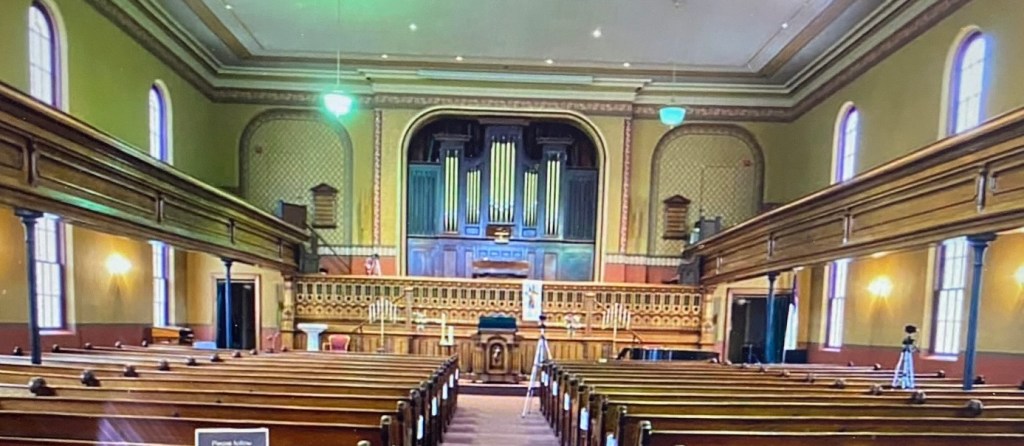
Or man-cave or refuge or sanctuary or study or simply the room at the end of the hall where I hang out wrapping it around me like a favorite bathrobe or suit of armor depending…
where I
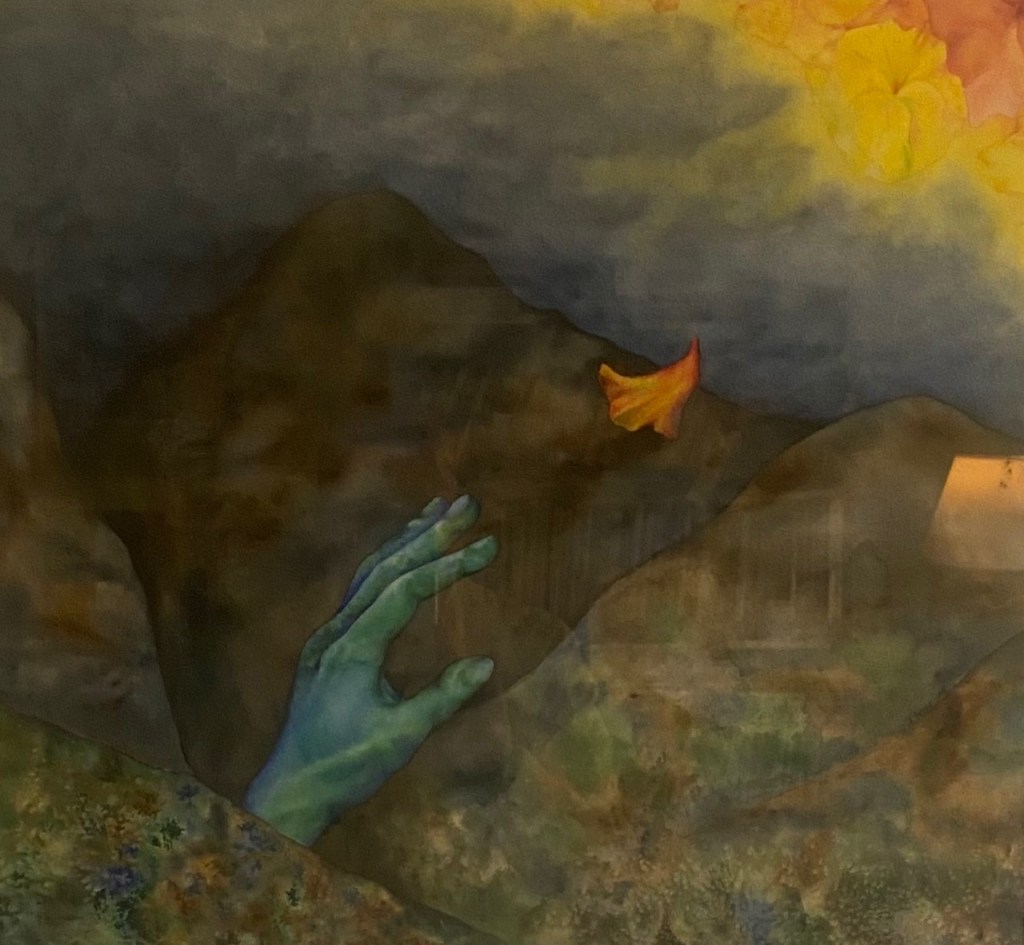
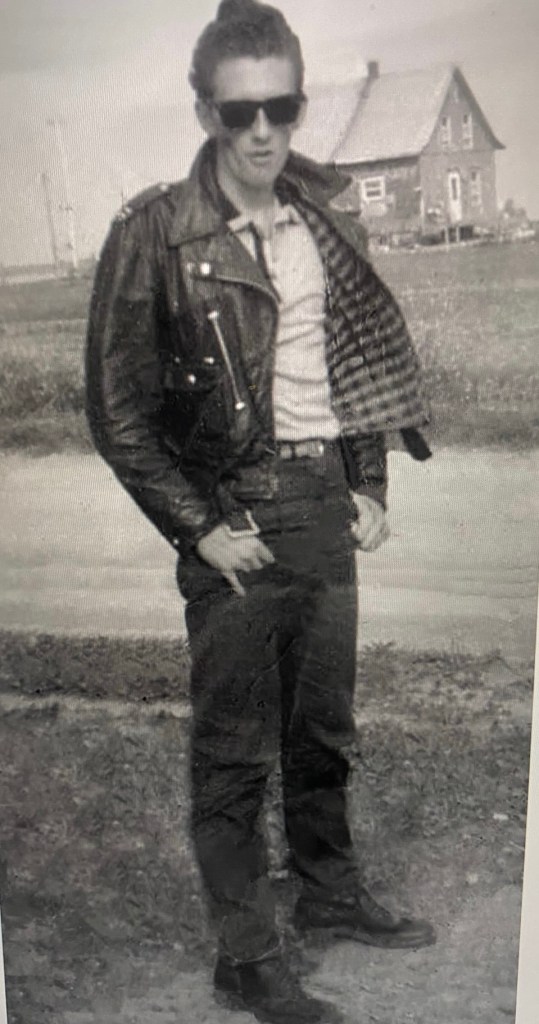
gaze at pictures of my wife ML looking radiant in her new clerical collar despite her son’s having left to live on the West Coast… my daughter Laurie’s watercolor she painted before her cancer diagnosis of a blue hand reaching up thru brown rocks toward bright flower petals … my brother sister & me skunk as a drunk before I sobered up … ML’s boys, Laurie & me swimming on Mount Desert Island when I thought we could blend our families… grandchildren sitting in my lap, playing by the river, hiking in the woods when we did…a panorama of Banjo Camp North where I named my banjo Joy… Jerry, Marty, & I—6’2” then— the Fish Factory Trio, singing “The Old Dope Pedler” at a high school variety show in 1961… four views of the Desert House of Prayer outside Tucson, Arizona where ML & I danced in the desert under a full moon Easter morning in 2001… a lioness sunning herself on a rock on the Serengeti Plains in 2018…
keep mementos such as a contestant pin from the 1961 L&M State Basketball Championship…three vintage baseball caps of my favorite teams… the skin of a rattlesnake I killed in Idaho in 1962…diaries going back to 1963…autographed books by heroes, mentors, friends and former students … cards from grandchildren… three bowls of rocks from my travels…rocks from those travels too big for bowls… a felt fedora covered in pins from airports around the world… a turkey feather from a walk in the woods… four clam shells from walks on the beach… a letter holder my father made for my mother when they were in high school… a wooden platter I remember him carving in the evenings after he’d come out of the Army & was working as an apprentice carpenter & we didn’t have a TV… my grandmother’s desk…
lose and find myself in books of non-fiction, fiction, poetry…books about travel, Maine, writing, spirituality… five banjos…one guitar…one harmonica…one mouth-harp… one Vietnamese flute… ten songbooks… two file cabinets of old writing… two coffee cups of pens…my current diary… a yellow legal pad of paper… a computer …
look out the window at a world of uncertainty for my country & my own life & those I love holding my favorite pen like Excalibur my diary like a shield enthroned in my ergonomic office chair feeling inestimably more dangerous & almost impossible to kill…
As readers of this blog know, my daughter Laurie died at the age of 18 from a rare cancer. In November, seven months after the cancer was first diagnosed, she went into Eastern Maine Medical Center. Living 120 miles away, I took a leave of absence from my teaching job and moved into a Ronald McDonald House where I spent the next two months with my daughter until she died on December 23.
Since then, each November as the days grow darker and colder, I can feel my body chemistry change. I’ve coped in many ways, but the most helpful has been through writing. It’s no accident that the first Geriatric Pilgrim blog appeared in November 2015.
#
Sonnet for November
Novembers, I would drive my daughter past
Men in blaze-orange caps, crouched on a hill,
Their 30-30’s sighted, set to kill
Most anything, just so the gun would blast.
My heart began to flutter, then beat fast
As we drove by them—silent, savage, still—
And I could feel the air around us chill.
I’d think, how long, dear God, will this month last?
But I’ve since learned of other ways to die,
And russet hills now fill with memories:
Her gentle, kind, abbreviated life.
These days, I treasure the November sky
Which broadens once the leaves drop from the trees.
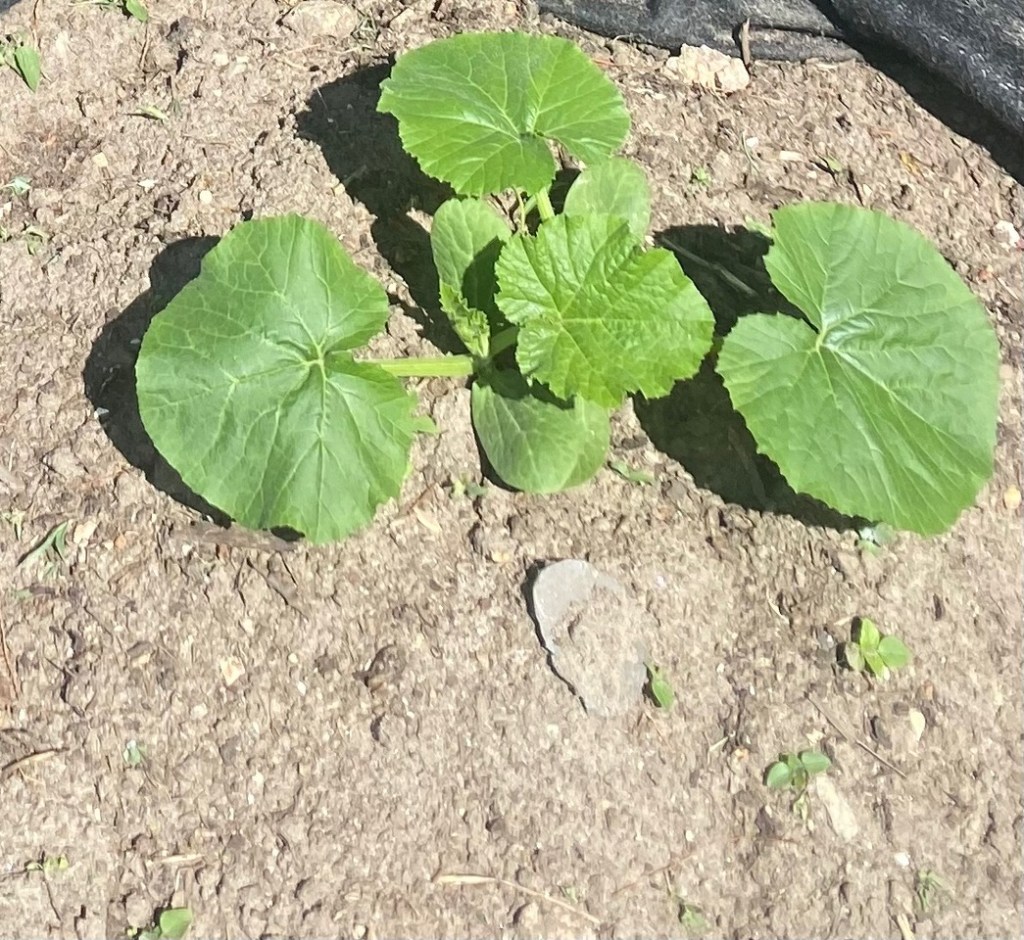
It’s 4:30 in the afternoon and the temperature is still over 80°. A breeze blows from the southwest, making the air feel even hotter. Black flies swarm around my floppy hat as I crawl through the dirt, weeding pumpkin plants. Every few minutes I need to lean back and stretch my aching back. My hand is cramping.
And I’m as happy as a clam at high tide.
From the swamp on the other side of the road by our community garden, sparrows and cardinals chirp and whistle. I listen and drop back to my hands and knees to pull up small bunches of crab grass, pigweed, and plantain. I’ll let the milkweed grow for the butterflies which should be here soon.
I’m not entirely sure I know why I enjoy weeding. I never used to. When I was in high school, working summers in a market garden, weeding was the worst job there was. I’d start out bending over, then drop to my hands and knees, then to my elbows, then to one side, and the next thing I knew I’d be asleep.
But now, far less agile and able than I was at seventeen, there’s something satisfying about seeing a weedless garden. Unlike grandparenting or writing or even playing my banjo—all things I enjoy—I can see immediate results. I really don’t have a lot of control over how many pumpkins I’ll get this fall. That’s up to how much rain and sun we get and whether animals chew things up. But I can control the weeds.
At least if I get them early. Once weeds take root, they take over, sending roots deep into the soil, so that when I pull the weed, the root remains, sending up new weeds, sometimes the next day, and I don’t have the strength anymore to wrestle them out of the ground. Then, my self-satisfaction turns to self-deprecation: Why didn’t you get those damn things earlier? You’re a failure as a gardener, just as you’re a failure at everything else.
So not only is it important to weed the landscape in which I move, I need to weed the landscape in which I think—those weedy thoughts that clutter the garden of my mind.
While I have a lot of trouble with many parts of the Bible, I’m continually drawn to the parables of Jesus, and in two them, Jesus talks about weeds. In the Parable of the Sower, a farmer is sowing seeds. Some seeds fall on rocky soil, some on weedy soil, and some on good soil. The first seeds don’t grow on rock, the second seeds come up but are choked by thorns, while in the good soil, the seeds produce abundantly.
As Jesus explains, the sower represents someone sowing the word of God. Some who listen are like those who hear the word joyously but can’t take it in and grow from it because they “have no root,” as one of the gospels puts it. Then there are those who hear the word, grow a bit, but then “the cares of the world and the deceitfulness of riches and the desires for other things enter in and choke the word, and it proves unfruitful.”
That me. How many times have I choked on “cares” and “desires for other things”! The Old Farmer’s Almanac lists 13 common weeds in Maine. I can easily come up with at least that many cares and desires that have choked my ability to become like those in the parable who “hear the word and accept it and bear fruit, thirtyfold and sixtyfold and a hundredfold”: from my sense that nothing I do is ever good enough to my judgmentalism of myself and others to my need for control and an even greater need for the approval of others to my passive-aggressive sarcasm to my perfectionism to…
I think that’s why, for me, any kind of spiritual growth has involved subtraction rather than addition. Whether it’s through meditation, Feldenkrais exercises, or working the 12-steps, I’m weeding rather than planting—trying to remove what 12-steppers call “defects of character.”
But, as 12-steppers know, we can’t do this ourselves. Step Six says, “Were entirely ready to have God remove all these defects in character,” and Step Seven says, “Humbly asked God to remove our shortcomings.”
Which gets me to the other parable Jesus tells, the parable of the wheat and the weeds.
In this story, a man plants wheat seed in his field. That night, while everyone is asleep, the man’s enemy plants weeds among the wheat (which, I guess did happen in those days). Later, when the wheat grows, so do the weeds. Then the man’s servants come to him and say, “Do you want us to go and pull up the weeds?” He answers, “No, because when you pull up the weeds, you might also pull up the wheat. Let the weeds and the wheat grow together until the harvest time. At the harvest time I will tell the workers first, to gather the weeds and tie them together to be burned, and then to gather the wheat and bring it to my barn.”
I like the parable. What I don’t like is the interpretation of it attributed to Jesus. The man who planted the good seed in the field is supposed to be Jesus, and the field is the world. The good seed are the people in God’s kingdom, and the weeds are the people who belong to the “Evil One.” The enemy who planted the bad seed is the devil. The harvest is the end of time, and the workers who gather are God’s angels. At the end of time, Jesus will send his angels, and they will find the people who cause sin and all those who do evil, take those people out of his kingdom and throw them into the place of fire. Then the “good” people will be taken into the kingdom of God.
This interpretation of separating “good” people from “bad” and condemning those bad folk to eternal hell fire not only seems contrary to Jesus’s other teaching about loving your enemy and his compassion for tax collectors, prostitutes, and other sinners, but also—it seems to me—cultivates self-righteous and judgmental behavior about who’s “good” and who’s “bad,” which, as I’ve already said, are some of the weeds in my interior garden.
So, for me, what the parable promises is that at some point—possibly at my death, possibly in some afterlife— those weeds that I struggle with, that I’ve let get out of control for the past 80 years, will be removed, and that what remains will be something pure and shining like wheat in the sun. (Or pumpkins in the field.)
In the meantime, I’m trying to pull out the newer weeds, asking myself the following questions:
—What seeds have I planted for the future?
—What recent weeds—complacency, smugness, procrastination, and the like—have taken hold and need to be pulled out for these seeds to grow and produce?
Now weeds I’m happy to send to “the place of fire.”
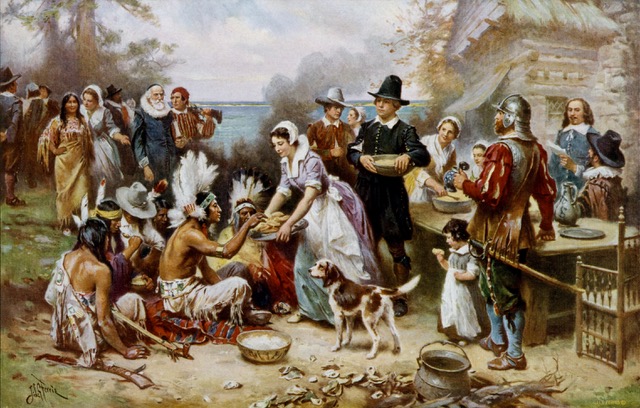
The First Thanksgiving, 1621—J.L.G. Ferris/The Foundation Press, Inc./Library of Congress
#
The first time I ever heard about “pilgrims” was as a kid learning about some people by that name who sailed to America to have Thanksgiving dinner. Later, I learned it was a little more complicated than that—that these people were actually “Separatists” who had broken from the Church of England and come to this country by way of Holland in search of religious freedom. But they thought of themselves as pilgrims (the first child born in the Plymouth Colony was named “Peregrine,” which means pilgrim), travelers on a journey to find a home where they could worship the God of their understanding. The name stuck.
My sister tells me that she, my brother, and I are the descendants of John and Priscilla Alden and George and Mary Soule, couples who came over on the Mayflower, which may account for why I think of myself as a pilgrim and why Thanksgiving is my favorite holiday of the year. It’s a day to be with family and to give thanks.
This year, however, besides counting blessings, I’ve also been thinking a lot about luck.
Last spring, when I happened to mention to my family doctor during a routine follow-up to an earlier procedure that I was getting more and more out of breath, he told me to get a stress test and get it soon. Which I did and which led to an arterial catheterization which led to by-pass surgery. Now, I feel great. I have more energy than I’ve had in years.
I want to thank God for my good fortune, feel that I’ve been blessed. Except: as anyone who’s read this blog knows, the pivotal point in my life was the death of my eighteen-year-old daughter in 1988. Laurie didn’t smoke, didn’t drink, didn’t even eat meat. Still, she was the victim of Primitive Neuroectodermal Tumor, a rare and virulent cancer that when it strikes, usually attacks much younger children.
So how can I thank God for my life, while letting God off the hook for Laurie’s death?
Since my surgery in July, two men whom I’d known fairly well dropped dead from the same type of blocked left main artery that I had. Both men were active; both seemed healthy; neither was overweight; both died while exercising. Why am I still alive and they’re not?
I’m reminded of the evening of September 11, 2001, when our church held a meeting for all those who wanted to respond to the bombings of the twin towers and of the pentagon. At one point, a woman—let’s call her Agnes—rose and said that her son had been working that day in the South Tower, but that he was safe. “I want to take this opportunity to thank God for protecting my son four times.” Agnes said. “God showed him the way down the stairs. He moved him out of the way of fallen debris twice. He provided my boy with a private boat to offer him a ride across the river to Hoboken. I’m so grateful!”
I was happy for the woman. I was sure her son was a great guy. But I asked myself then and I ask myself now: why did God save him and let 7,000 other people die?
So although I want to thank God for my being able to be sitting here tapping out this blog instead of moldering in an urn under the snow in our family’s cemetery plot, I have to think that I was lucky, just as my daughter was unlucky enough to carry the wrong combination of inherited DNA to make her susceptible to the cancer than killed her.
Does this mean I’m not grateful this Thanksgiving? That I don’t think my Higher Power affects my life? That I’m not blessed?
Absolutely not.
As I think about how “unlucky” I was when Laurie died, and how “lucky” I am now, I find a common thread. In both instances I’ve seen, as I usually don’t, just how precious, how holy life is. I’ve never enjoyed the autumn foliage as much as I have this year. I don’t even mind (much) standing in line at the grocery checkout line.
I’m also aware, even though it’s hard to articulate, of a growing sense that this life is always being renewed, even reborn. That what I, as a Christian, call resurrection didn’t just happen once to one person, but happens to all of us many times. Someone said to me the other day that I looked like a new man. Well, in some ways, I am. I have a new heart.
Getting that new heart was at times painful; still, it was nothing like thirty years ago, when Laurie’s death broke me open. But although that hurt in ways I hope I’ll never have to feel again, her death also opened me to receive love and joy that I’d never experienced before in my closed off, child-of-alcoholic, New England male life. And it’s this experience that I’m guessing we’ve all had sometime in our lives—where from somewhere we get the strength not only to carry on but also to laugh and sing when by rights we ought to give up and die—that I give thanks for.
Which I think is the difference between luck and Grace. Luck depends on circumstances. Grace, on the other hand, is there for everyone all the time.
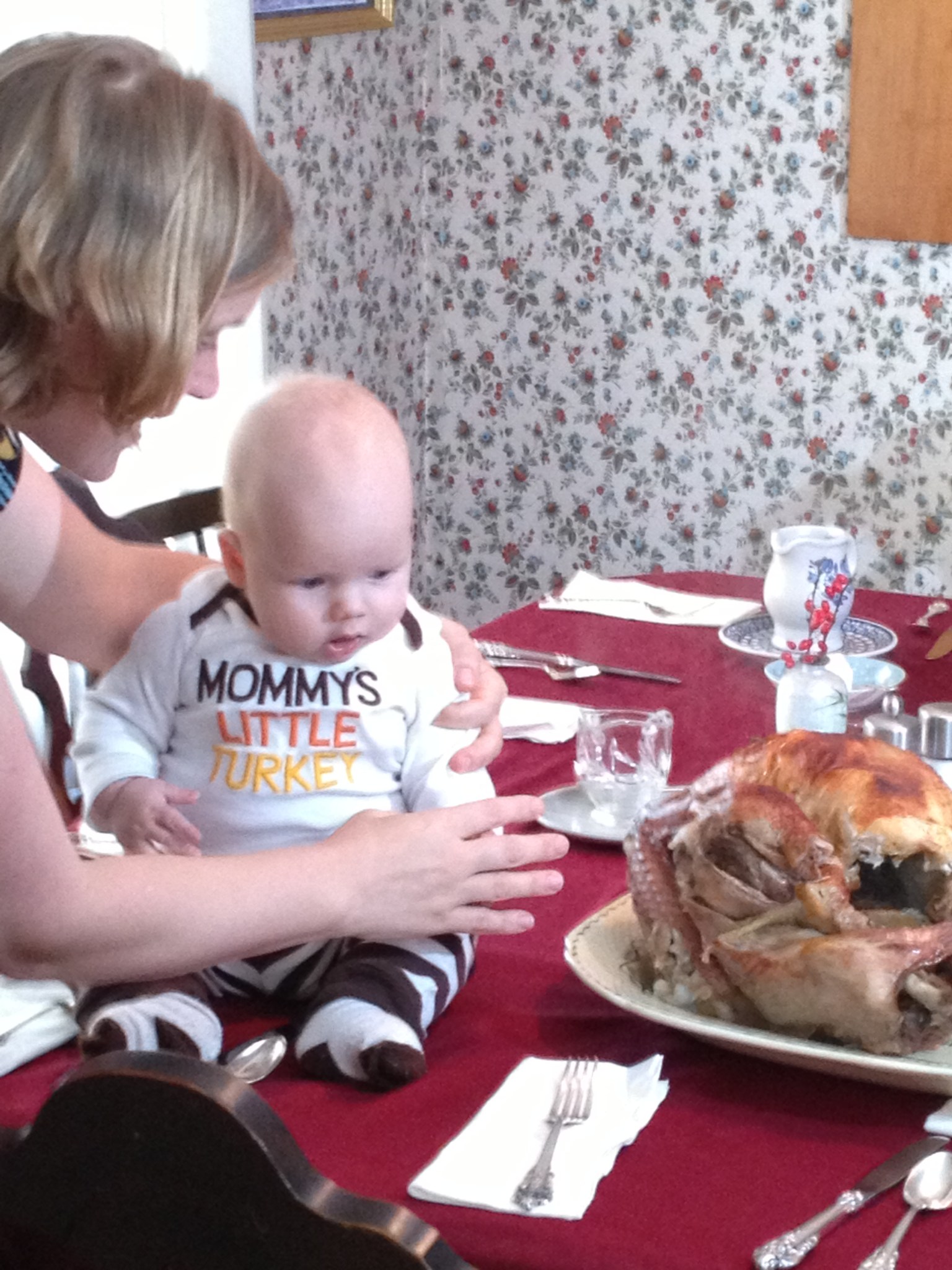
So I’m looking forward to Thanksgiving. This, despite sorrowful memories of my father, one of my grandmothers, and my mother-in-law all dying during the week of Thanksgiving, and a painful recollection of a Thanksgiving at the Ronald McDonald House after which Laurie’s two stepbrothers saw her for the last time. Or maybe those deaths actually help make the celebration more joyous. That when Mary Lee’s children and their families and her sister and sometimes her family come, we are surrounded by what St. Paul calls “Clouds of Witness.”
That these loved ones died, that my daughter-in-law is about to undergo surgery for cancer, and that one of my grandchildren is emotionally scarred from having been abused by her pre-school teacher is probably a matter of bad luck. That for the most part our families have the health and the means to come to our house for Thanksgiving and that Mary Lee and I feel well enough and are financially secure enough to host them is probably a matter of good luck. But that we are able to celebrate, to laugh, to cry, to love together is, I believe, a matter of Grace.
When I was finishing this blog, Mary Lee sent me a daily reading for November 22, 2019 (the anniversary of John F. Kennedy’s assassination, appropriately enough) from a website called gratefulness.org.
Grief and gratitude are kindred souls, each pointing to the beauty of what is transient and given to us by grace.—Patricia Campbell Carlson








 The Geriatric Pilgrim: Traveling the Landscape of Faith and Grief