Family Triptych

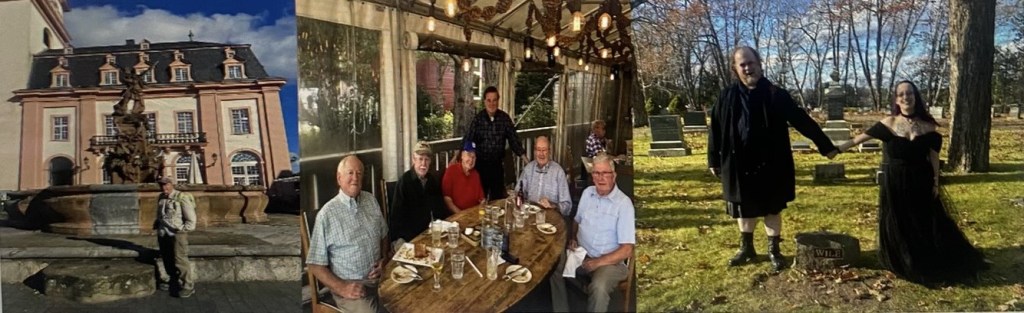
Weilburg

Traveling 3500 miles to a town in Germany

smaller than the one in Maine where I live—

no tours, no souvenir shops, 

no one speaking English except back at the hotel, 

I stand by Neptune’s Fountain 

in Market Square beneath the God of the Sea 

thrusting his trident into the head of some leviathan, 

my lungs still burning from climbing the hill to get here, 

trying to imagine 25-year-old Johann Frederich Weil 

wandering the square 

before leaving for Halifax, Nova Scotia, 

lured by the British Government’s offer 

of free passage, free land, & a year of free rations, 

knowing from Ancestry.com 

his descendants will anglicize the name & populate places 

like Wile’s Lake, Wileville, & Wiles Road, 

until the turn of the 20th Century 

when Lyman & Lester Wile 

leave Canada for a shoe factory 

in Marlboro, Massachusetts 

where Lyman will marry Edith Conrey 

& sire my father who 

because his mother left Lyman when Dad was 4 years old

(apparently because of spousal abuse) 

didn’t give a shit about his father or his family. 

Then Johann dissolves—

if he was ever here in the first place—

into the salmon & cream-colored two-story buildings, 

round-arched arcades, & a matching-colored four-story Italianate castle 

as my wife and I join the half-dozen folks in leather & wool 

sipping beer & coffee at outdoor tables by a small restaurant. 

Still, walking back to the hotel 

looking down the hill 

at the Lahn River, a small waterfall, an old stone bridge, 

I think of the hill I grew up on, the bridge below my house 

over a similar river by a similar waterfall, 

& I feel a weird calm, 

connected by currents beyond my ken.

The Royal River Grill

Walking into a restaurant 

with large windows looking out on the harbor 

& soft lights meant to look like candles, 

I see Buzz & Chuck & Ted sitting at a long oak table. 

A shiver of both anxiety & eagerness 

& the next thing I know it’s 1953, 

when this building was the site of the Stinson Sardine packing plant 

& I’m ten years old & in fourth grade 

& I’m going to my first meeting of Mike’nBuzzie’s Gang 

at Mike’s house just up the hill from here, 

because earlier that afternoon 

when it had been my turn to stay after school 

to erase blackboards, 

as soon as Mrs. Croudis left for the teachers’ room, 

Buzzie’s brother Craig ran into the classroom. 

“We’re getting a gang together 

for an apple fight with the uptown kids! 

Big meeting at Mike’s house! Let’s go!”

Dropping the eraser, I ran out the door—

the first time in my life I’d ever disobeyed one of my teachers. 

But for the first time in my life I didn’t care. 

A timid kid, raised in a family 

where a miasma of alcoholic anger & anxiety 

hung over us like the fumes 

from the neighboring paper company,

I’d lie awake mornings before school 

afraid of the day ahead, 

of having my arm twisted or my face washed with dirty snow 

by sixth graders like Mike’nBuzzie,

and now they want me to join them! 

Never mind that the apple fight with the uptown kids never happened, 

or that Mike now has Parkinson’s & stays home 

& that Buzz & Chuck & Ted & I, and later, Allie & John, 

have little in common these days 

except our L.L. Bean khakis & plaid shirts. 

I laugh & reminisce. 

At home. 

Still part of the gang.

The Cemetery

Under gnarled & broken maple trees, 

I walk around my family cemetery plot, 

taking pictures of the wedding—

of the bride, who stands 5 feet 

& maybe weighs 100 pounds, 

her upper chest tattooed with angels, 

her dyed magenta hair, & flowing black gown, 

& the groom, my stepson, 

probably 6’4” & 270, 

black lipstick & kilt, red-haired & bearded, 

standing in front of the family stone, 

originally part of the cellar of my mother’s grandfather’s house, 

while my second wife, 

an ordained Deacon in the Episcopal Church, 

performs the ceremony. 

My stepson’s two daughters stand as ring bearers 

near the memorial stone for my daughter, 

who died at 18. 

My wife’s ex-husband & his wife 

stand between my grandmother’s granite stone 

& the memorial stone for Nanny’s ex-husband. 

Not far from my great-grandfather & great-grandmother’s marble stone, 

my stepson’s nonbinary stepson from his first marriage 

& their partner also take pictures. 

The bride’s parents view the proceedings 

in front of my mother’s bronze marker 

between my father’s & my stepfather’s bronze markers 

while my second wife’s sister, her daughter & son-in-law 

watch both the wedding and a grandson 

climbing the near-by gravestones 

of my barber, my favorite teacher, 

a classmate killed in Viet Nam,  

& my little league baseball coach—

all of whom, I imagine, 

rolling over in horror at this spectacle 

of everyone dressed in black, 

everyone smiling, 

one big happy family.

#
How are You?

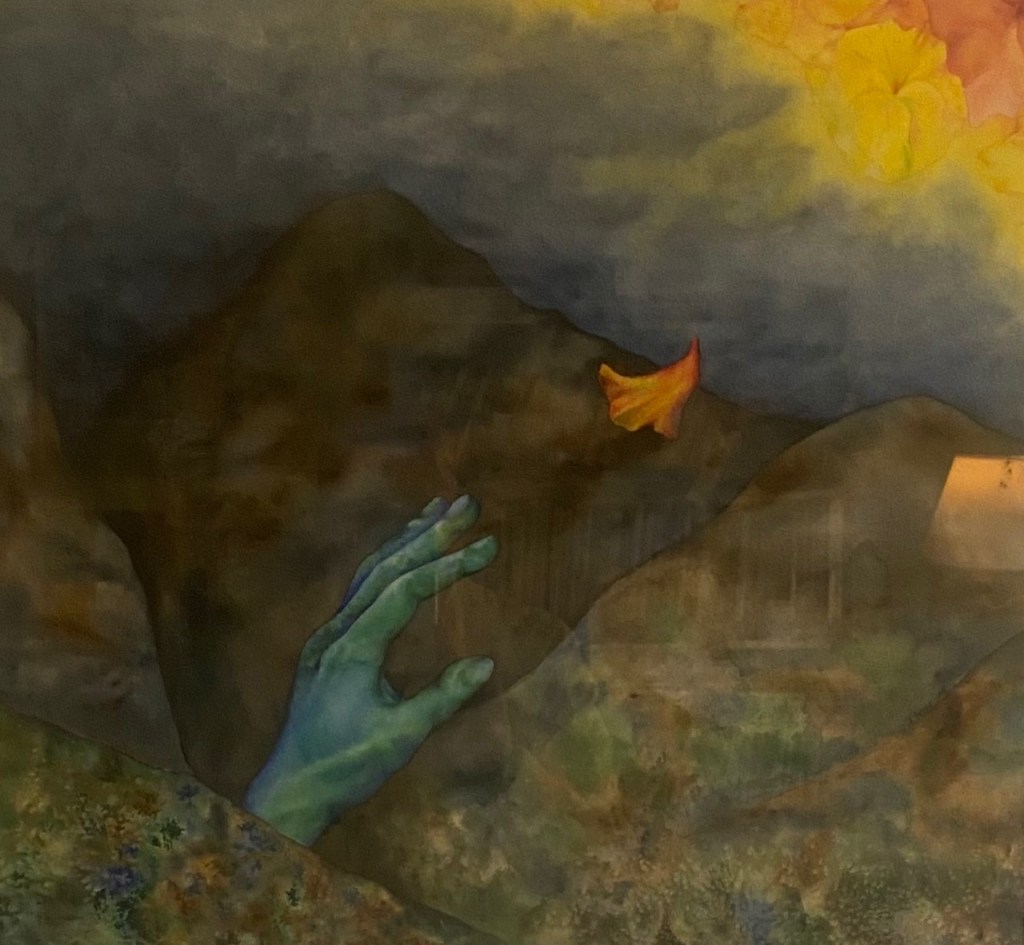
Watercolor by Laurie L. Wile

#

Well, despite the more or less constant pain in my lower back

and the burn of bursitis in both hips,

and not withstanding my apprehension about that new smell in the garage

and the housing development going in where I like to walk in the woods, 

and despite the fear that my grandchildren will live in a Fourth Reich

while this world turns to burnt toast,

and regardless of worrying about having a stroke which will paralyze the left side of my 

body so that I drool down one side of my mouth and lose control of my bowels,

and in spite of my nagging fear that there’s really nothing but darkness after death,

and the even greater fear that I will be reincarnated and have to learn all those goddamned

            things I’ve had to learn all over again,

I would say I’m grateful to be here. 

Thank you for asking.

Wild Willy


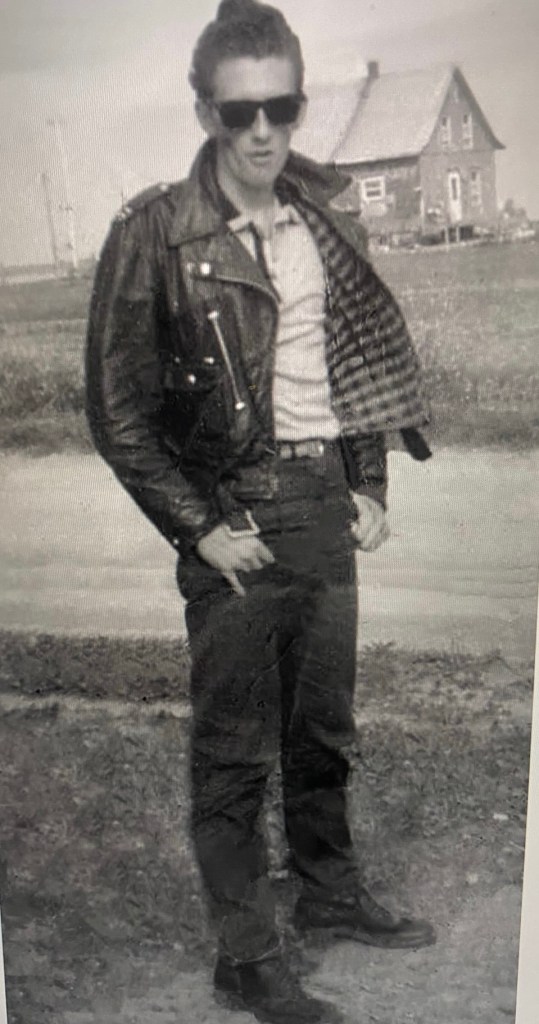
Phone curtesy of Wikipedia Commons

                        1.

Around the time this log cabin 

sold moccasins I’d see

Wild Willy Crockett 

on the corner 

with Pea Soup, Spider, and the Goose.

Taller than the others,

he stood with knees rigid, 

pigeon-toed, gazing 

up and down the street,

searching for someone with a car,

a summer chick on the make,

or Crazy Benny,

who’d buy him beer.

Balanced on a line 

between cool and caricature:

the shiny D.A.

French-inhaling Camels,

rocking with Dee Dee Dinah, 

whose tits stuck out 

of her sweater like oil funnels,

chugging three beers before the game 

and coming off the bench 

to score six straight points,

graduating high school with his pants

on backwards.

            2.

Now the log cabin 

sells organic and new-age produce, 

and Willy Crockett stands 

at the corner of tofu and prunes.

Fifty pounds heavier, 

still tall.

Wears a toupee 

that looks like roadkill,

carries a cell phone 

clipped to an alligator belt.

Assistant manager 

at the local hardware store, 

divorced from Dee Dee, 

He tells me he belongs 

to the Church of the New Kingdom.

Says the old days are long gone

—Praise the Lord!

Toes pointed in, 

he cradles his yellow basket 

of flax oil and sulfur supplement,

gazes at displays 

of crystal pyramids,

Himalayan incense,

and Navajo dreamcatchers,

still searching…

My One, Unfolding Life

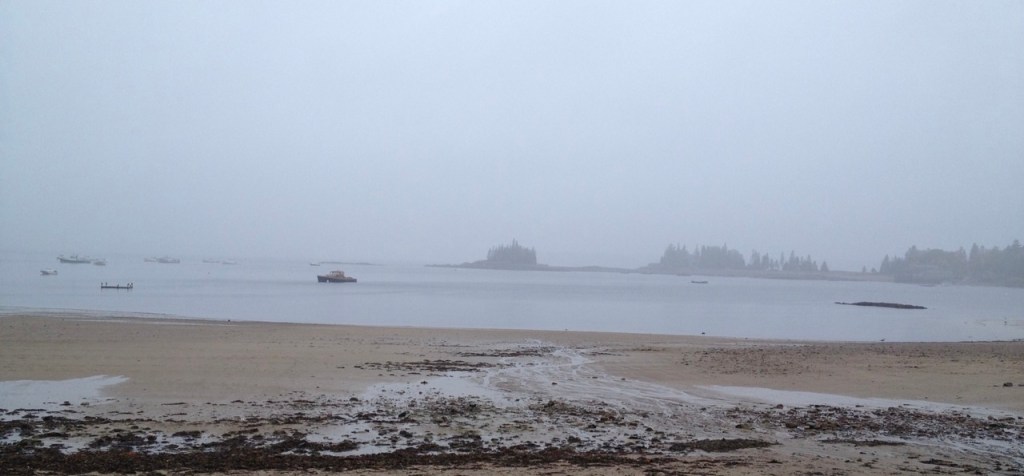
The beach just down the hill from where I used to live in my “other life.”

#

6:45 a.m. Driving up the turnpike from Brunswick to Bangor, headed down east to Mount Desert Island, I’m apprehensive. I’m returning to what I’ve always called my “other life”: different marriage, different house, different job, different hobbies, different self. A self, quite frankly, I’ve never liked very much.

But I’ve received an invitation to attend the 50th high school reunion of the Mount Desert Island Class of 1974. For many of these students, I was their English teacher as well as senior class advisor. And while I have, at best, mixed feelings about this other life, I enjoyed teaching at MDIHS and have continued to be in contact with some of these former students. I’d really like to see them.

My name tag at the reunion.

The reunion is tomorrow, but besides an invitation to the reunion, I’ve been asked to talk about my book, The Geriatric Pilgrim: Tales from the Journey at a gathering—which I figure will mostly be former students— in Bar Harbor a few hours from now. So, while I watch the leaves change color as I drive north, I try to figure out what I’m going to say. 

I know I’ll start by saying the most important thing I learned in writing The Geriatric Pilgrim was that the physical pilgrimages Mary Lee and I made to places like Iona, Big Sur and the redwoods, Nova Scotia, Israel, Africa, and Turkey have shown me that any journey—including the one we make as we age (and these former students are now all pushing 70. Good God!)—can be a pilgrimage. Especially if looked at with curiosity and openness, as explorations to discover new facets of ourselves, seeking surprises rather than security, looking for evidence of and trusting in a power greater than ourselves. 

Then, I think, Okay, if any journey can be a pilgrimage, that means this trip back into my other life is a pilgrimage. How?

When Mary Lee (who is sitting beside me, looking at a map of Maine—she loves those big unfolding maps that take up half the front seat) have gone on a pilgrimage, we often talk about what new insights we’re bringing back with us which we can use in the future. So, what lessons did I learn during the seventeen years I spent at MDIHS that have stayed with me? 

Well, I’ve always said that those years were the best teaching years of my life. I’ve taught in other schools, some with more impressive teachers, some with smarter students, some with better sports programs, a wider variety of extracurricular activities, more opportunities for materially or intellectually challenged students. But what made MDIHS different was that, despite the annual arguments about the budget and the tensions about dress codes and what was being taught, the parents, the school board, the administration, the faculty, and the students all agreed on one thing: MDIHS was a good school. And because we all thought it was a good school, it was—winning national awards for excellence.

MDIHS in the early years. My room was the closest on the end.

 Making a pit stop at the rest area outside of Bangor, I realize how I frame the reality of my life determines how I see that reality, which in turn determines how I live that reality. Thinking we had a good school, I went to work each day excited and proud to be there (okay, not every day, but I can honestly say, most days) which made me work harder, which made me a better teacher and the students better students. Fifty years later, when I can think of my aging not as a problem, but as an opportunity for growth, I’m less anxious about what I can no longer do and more curious about finding new things I can do, more grateful for those things, which makes me more pleasant to be around.

Back in the car, however, turning on to Route 1A and heading for the coast, I ask: if MDIHS was such a great place to teach, why did I leave, and in the middle of the school year? What’s the lesson there?

It probably begins with that guy I used to be—the one I’ve never liked. Come to think of it, he didn’t like himself either. Despite the accolades (one state evaluator said my Advanced Placement English class rivaled the one at Phillips Exeter), I was not a happy camper. I’d created this persona—loud sports coats, matching ties and pocket handkerchiefs, green ink corrections symbols and sarcastic comments in the margins of papers, pictures of sixty-four famous authors glaring down from the walls—which began to feel like a body bag. 

Soon after waking up one morning gasping for breath as if someone had their hands around my throat, I resigned. In the middle of the school year. Moved out of my house, divorced my wife, married another woman, and moved 120 miles away to teach not AP seniors but freshman juvenile delinquents (one of whom as far as I know is still in prison for murder).

And I think the reason I’ve never liked that guy in my other life is that I’ve always thought he was a fraud. But thinking about it, I honestly liked my job, and I wanted to honor my profession by looking and acting my best. I recall reading in David Whyte’s book, Work as a Pilgrimage of Identity, something to the effect that the things which once served us can imprison us if we remain with them too long. 

Which, as I think about it, is also true as I age. I can’t hold onto those activities, that self-image, those beliefs that once sustained me. When I think about making a new pilgrimage, I can’t plan—or I shouldn’t, anyway or I’m going to be disappointed, either that or die—to hike the Appalachian Trail or climb Mount Katahdin, but I can continue the journey toward what I might, for lack of a better word, call my true self. A journey, I realize, that began when I left Mount Desert Island, maybe even before.

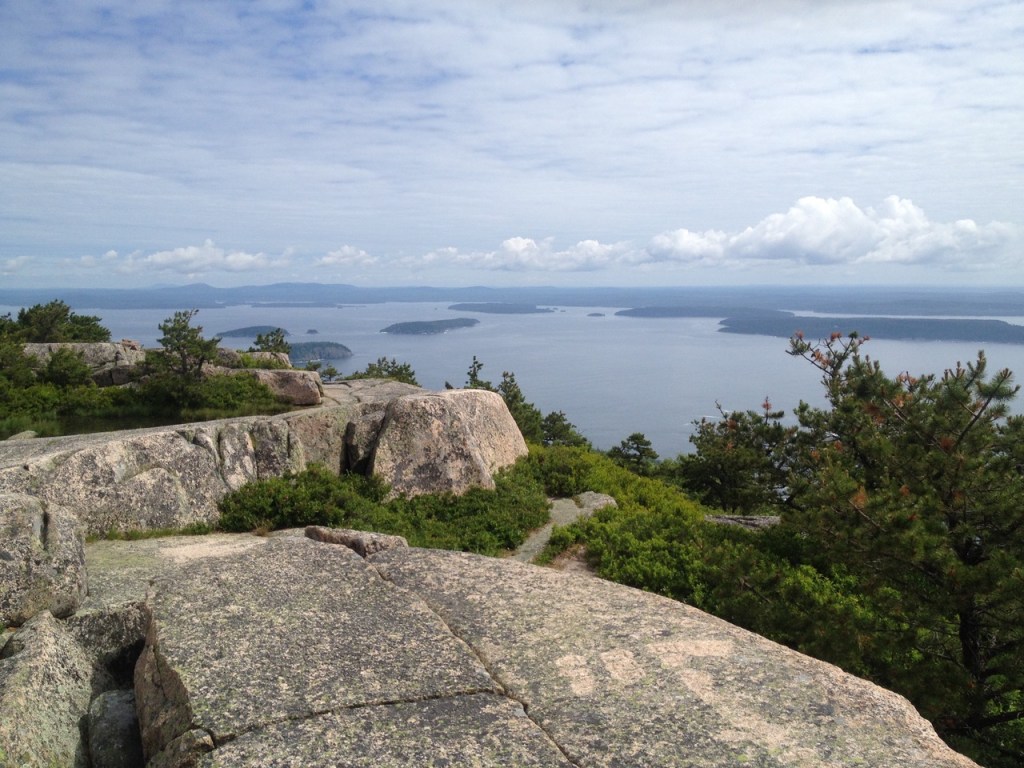
Speaking of which, I can now see MDI on the horizon, its rocky silhouette reminding me that this is one of the most beautiful places on earth. I remember, especially in those days when most of the tourists went home after Labor Day, how many afternoons and weekends I spent walking the trails and beaches there. And I realize that those walks were the beginning of what I call —somewhat euphemistically perhaps—my spiritual journey. Sitting on the top of one of the mountains, looking out over the neighboring islands, I experienced not only the inchoate presence of a Higher Power, but also a vague sense that everything belongs.

I needed help interpreting these experiences. Which led me to religion. When I first began teaching on the island, I hadn’t been in a church since I was married in one, and by the time I left seventeen years later, I was not only a member of a church but a member of the Board of Deacons. I sang in the church choir. I advised a church youth group. 

It dawns on me that without Mount Desert Island, there’d be no Geriatric Pilgrim.

I also see that I have no “other lives,” only this one—one that has been unfolding, like one of Mary Lee’s maps, from the beginning until now and will keep unfolding (I’m guessing; I’m curious to find out) after my earthly death. 

Wow! Now, if I can just remember to talk about some of this an hour from now…

# #

Beginning Again

#

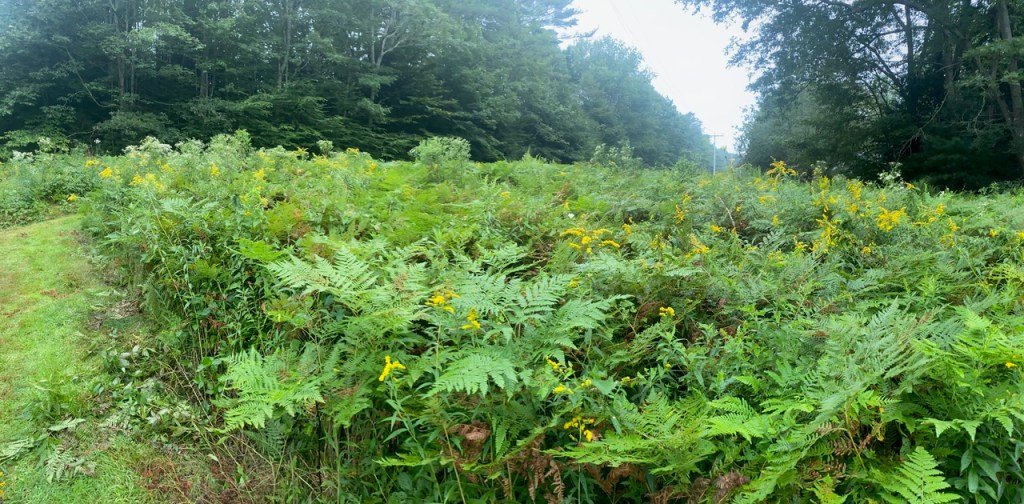
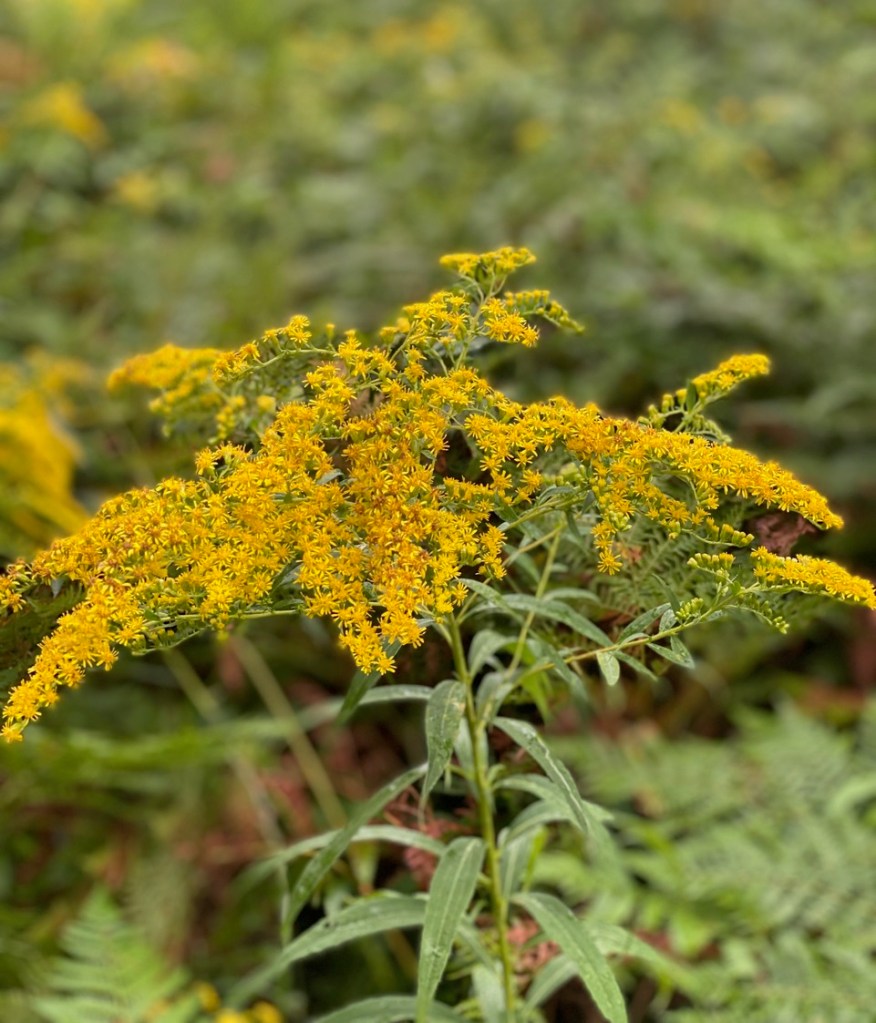
I’m walking the grass loop around our housing development. Under the power line toward the community garden, I pass through what is now a shoulder-high host of Queen Anne’s Lace, golden rod, milk weed, bracken, and many other plants I can’t name. The flies swarm. The sweet songs of the cardinals and tufted titmouses (titmice?) have given way to the screeching of blue jays and crows. Monarch butterflies flit from flower to flower. The air smells ripe. Shadows crawl like the incoming tide over the landscape. Summer is ending.

And I feel myself coming alive. Beginning again.

The reason is simple. For seventy-five years—as a student, as a teacher—the golden rod, the lengthening shadows, the Monarchs, have meant the beginning of another school year. More than New Year’s Eve, more than the first warm day of the year, this is the time when, at some deep cellular level, I can feel myself waking up, ready to start anew.

It’s a good feeling. At my age, it’s easier to focus on endings than beginnings. I now celebrate—if that’s the right word—more birthdays of the dead than of the living: my grandparents, my parents, my daughter, my first wife, close friends. Ended are my long hikes, long distant driving, lifting anything over forty pounds, staying up after midnight, jumping into bed with my wife after a sexy movie (jumping anywhere, for that matter), five-course meals, Cuban cigars, Laphroaig Scotch… the list grows longer each year.

But as T.S. Eliot wrote, “In the end is my beginning.” (Hey, I’m an old English lit teacher, I remember stuff like that.) You can’t begin something until something else ends. School can’t start until summer ends (Yeah, I know, there’s summer school, but I’m trying to make an analogy. Don’t confuse me with technicalities.) It took the end of a disastrous year of studying forestry in college for me to begin my studies in English (which is why I’m quoting T.S. Eliot and not The Journal of Forestry.) It took the end of an unhappy 20-year marriage for me to begin a happy going-on-forty-year one. It took the end of a career in public education for me to go back to school for an MFA, write a couple of books, a bunch of essays, and going on nine years’ worth of blog posts.

So, what will I begin this year? Well, Mary Lee and I have a couple of trips planned (knock on wood: last year, we had three planned and they were all canceled). I will scrape and repaint my front door and clean out the garage. 

But the biggest change I want to make is with The Geriatric Pilgrim

When I began these blogs, I was fascinated by the idea of pilgrimage: how a pilgrimage differs from a vacation, or from going on a retreat, or from study programs (what I called “edu-cations”). Besides traveling to retreat houses and other spiritual sites in the United States, Canada, the British Isles, Israel, Turkey, and Africa, I collected pages of definitions of pilgrimage and of common characteristics of pilgrimages. I read a raft of books about various pilgrimages people had made.

Along the way, I became intrigued by my fascination with pilgrims and pilgrimages. What was in it for me?

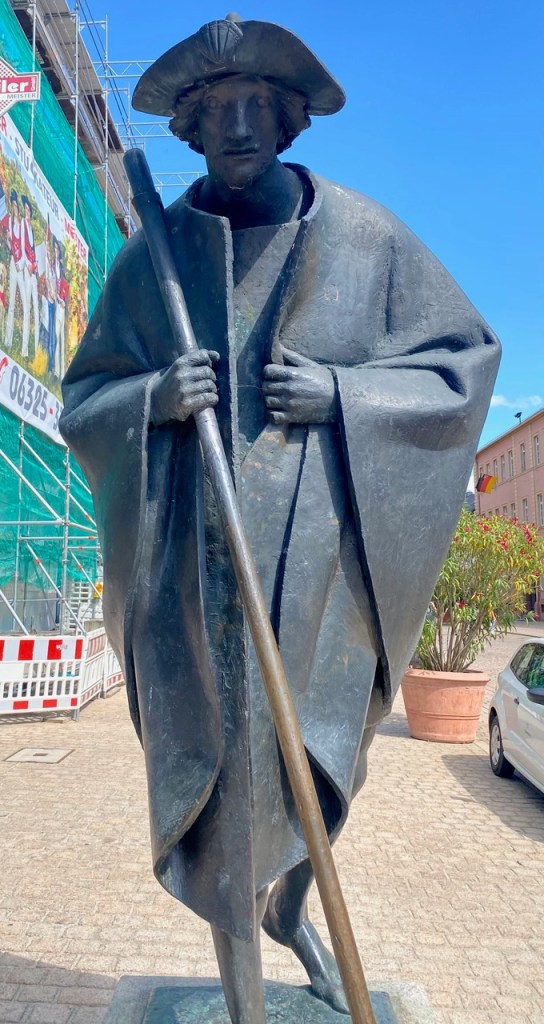
Stature of a “Jakobspilger,” or St. James’s pilgrim: Speyer, Germany

Well, probably the main thing at the time was the idea that pilgrims are often searching for a source of healing. As you know if you’ve read these blogs, I was looking for healing after the death of my eighteen-year-old daughter from a rare cancer. And I found writing about the various pilgrimages Mary Lee and I had made even more healing than the pilgrimages themselves.

Gradually, I began to realize that pilgrimage is a frame of mind—an attitude of curiosity, detachment, wonder. It’s “traveling light,” as one writer says, of risk, of living in liminal space—leaving one location but not yet arriving at another—of exploration, the end of which, to quote T.S. Eliot again, “Will be to arrive where we started/And know the place for the first time.”

Since COVID arrived, with all its restrictions on travel, followed by my 80th birthday, with its expanded waistline and diminished abilities, my blogs have focused more on applying the lessons of pilgrimage to my current life of walks in the neighboring woods, planting peas, tomatoes, and pumpkins in our community garden, and of exploring the twelve steps of my Al Anon program. This, too, has been healing.

 But now I find myself no longer as interested in finding new ways to describe my pilgrimage, as I am in describing and exploring in more depth the landscape through which I’m traveling, a landscape that is always changing, sometimes in ways that please me—autumn color is just around the corner, the grandchildren are growing—sometimes in ways that piss me off or frighten me—the start of my favorite woods walk has been clear-cut, I’m finding it difficult to sing without coughing.

Writing about these joys and sorrows, I find I’m writing more poetry. I’ve just finished an on-line workshop for poets, and one of the highlights of my week is another on-line group of poets from all over the country, where we share our favorite poetry as well as poems we’ve written. I’m now subjecting my longtime writing group here in town to my poems.

So, I’m going to be posting more poetry here in these blogs as well as other experiments—prose poems, flash fiction and nonfiction—trying to look more closely at the physical and emotional landscapes through which I’m now traveling.

The way I see it, my pilgrimage continues, but the lens through which I’m seeing it and the voice in which I’m describing it is changing.

I’m excited to see where this journey will take me. 

And hoping you’ll continue to join me.

So, let part of my life end, and another begin.

As Quakers say, when one door closes another opens.

For all my losses, I’ve also had wins;

let part of my life end and another begin.

Sure, it’s tempting to focus on what has been,

but I don’t want only to go through the motions.

Let part of my life end and another begin,

as one door closes and another opens.

# #

Playing with Fire

#

The only hope or else despair…

To be redeemed from fire by fire.

            —T.S. Eliot

#

I’m aware of how old I am when I recall that one of my chores when I was kid was to lug old newspapers, magazines, cards and letters, anything paper, out to the old oil barrel in the back yard and burn them. No curbside pickup in those days. (Hell, our town didn’t even have curbs.) It was not a job I liked. Sometimes, I burned myself; sometimes my fingers went numb in the cold; sometimes it took me two or three or more kitchen matches to get a fire started, depending on the wind, which sometimes blew acrid smoke in my eyes. 

In those days, fire was a physical force to be endured, and I was more than a little afraid of it. 

Sunday School didn’t help. Mrs. Raines warned that if I wasn’t good and didn’t do my chores, I might go to Hell, which was a place of fire and brimstone (I didn’t know what brimstone was, but I was pretty sure it burned)—words I often recall when I think of the fires around me these days: the ecocide of our planet, the continued threat of nuclear annihilation, riots on our streets, countless false messiahs fanning the flames of our differences.

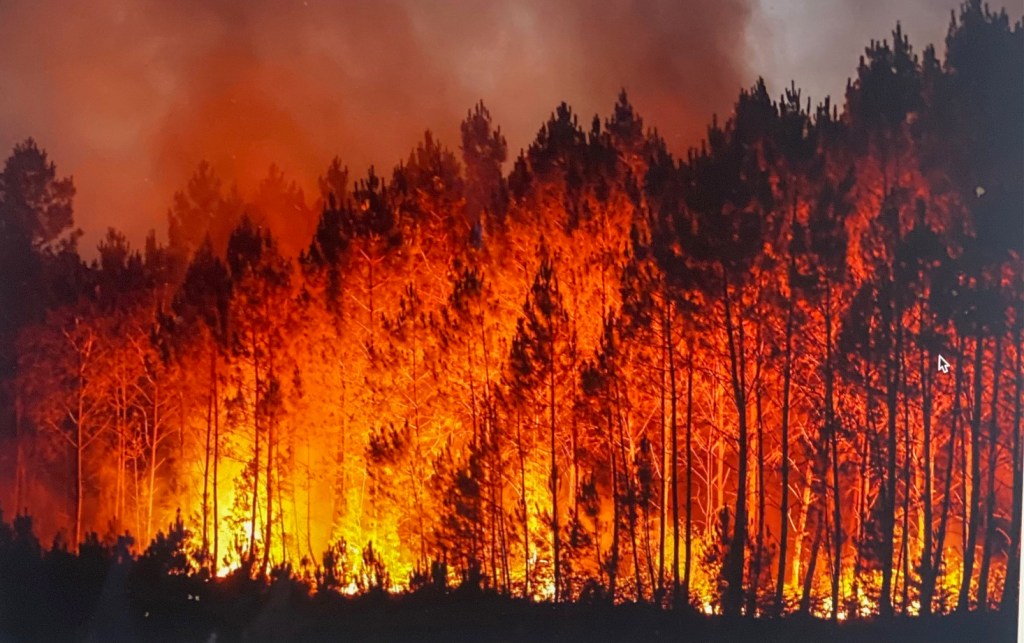
A dozen years or so after Sunday School, I saw worlds—or at least woods— go up in flames. I worked for the U.S. Forest Service on a regional Hotshot Crew based in McCall, Idaho. (The term “hotshot” describes those who work on the hottest part of a forest fire.) Looking back, it was hot, dangerous, and grueling work, and my lungs carry the scars from those fires.

But at the same time, I loved the physical challenge. (Hey, I was 20!) And there’s been nothing in my life like the thrill of watching a forest fire racing through the tops of trees. It was frightening, but at the same time enthralling. 

I also learned that despite Smoky the Bear’s telling me, “Only you can prevent forest fires!” (What a burden to put on kids!) most of the fires I fought were caused by lightning strikes and that the occasional fire was actually good for the forest. When flames consume organic matter, nutrients are released back into the soil. Fires can thin the canopy allowing more sunlight to reach the forest floor, encouraging the growth of native species and eliminating invasive weeds. Fires can promote species diversity. (Some species, such as the karner blue butterfly and the wood lily depend on fire to survive.) Fires can improve habitats for wildlife by reducing dead vegetation and stimulating new growth, which can provide food and cover.

During my first marriage, I used to help my then father-in-law burn brush in the winter. It was an all-day activity. We gathered all the limbs and underbrush we’d cleared during the year from around his house, piled them on a couple of old tires filled with gasoline and set it ablaze. I was still in good physical shape, and I enjoyed the exercise. But I experienced another aspect of fire as well. Poking at the burning brush in the gathering darkness, gazing into the flickering shadows cast by the fire on the surrounding snow, I sensed my ice age ancestors dancing around the flames which protected them from wild animals and the cold. 

A couple of weeks ago, Mary Lee and I watched two fireflies sparking the summer night. A little research told me that fireflies produce light in special organs in their abdomens to find mates. When a female sees a male making a signal, she flashes back. Then the two reciprocally signal as the male flies down to her. If everything goes right, they mate.

All I could think of was the Bob Seeger song, “They got the fire down below.”

Another kind of fire I remember.

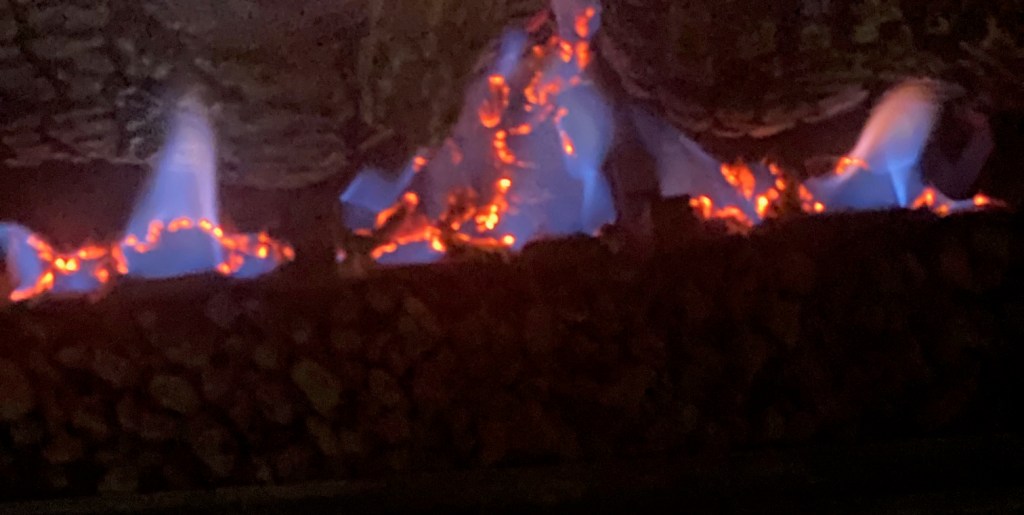
Now, it’s been sixty years since I’ve seen a live forest fire, let alone fought one, and probably forty since I’ve burned a pile of brush. I’m tired out after an hour in the garden. Often these days, a romantic evening is playing Scrabble or Canasta until 9:00 p.m. But I’m still drawn to fire: I can spend hours staring at the flames in our fireplace. 

I’ve also become more aware of what I think of as the fire of Presence, represented, I think, in the Bible’s Old Testament by the burning bush that drew the attention of Moses and in the New Testament by the Holy Spirit descending upon Jesus’s followers as “Divided tongues, as of fire….” 

One of my old spiritual directors used to tell a story from the Desert Fathers in which a young monk said to his teacher, “Abba, as far as I can, I say my little office, I fast a little, I pray and meditate, I live in peace as far as I can, I purify my thoughts. What else can I do?” 

His teacher stood up and stretched his hands toward heaven. His fingers became like ten lamps of fire. And he said to him, “If you will, you can become all flame.”

So far, the closest I’ve come to experiencing this fire happened during the last two months of my daughter’s life. After spending the day in the hospital by Laurie’s bedside, I’d go each afternoon to the hospital chapel. I was almost always the only person there. Upon entering, I’d light two pillar candles on the altar, sit in the front row of chairs, and stare between the candles through a large round window looking out over the river. After a while, the candles would sometimes seem to glow more brightly, their light dancing. The flames would come together, enfolded by the stained glass around the window. Then, I too would become enfolded in a fiery feeling of being scoured of fear and anger and shame, which allowed me to face the next day.

These days, as I sit by our fireplace, it’s hard not to identify with the dying flames. But I realize even glowing embers can still, like forest fires and fiery brush piles, like altar candles in a hospital chapel, purge away what is false, promote new growth, light someone’s way in this burning world.

            May it be so.

# #

Another G… D…. Learning Experience

Henry Fonda as Norman Thayer lost in the woods behind his house.

#

It started when I left my phone behind. 

I’ve always known that my phone provides many of the same comforts cigarettes used to. My phone fits easily into my pocket so it’s handy. It gives me something to do with my hands if I’m nervous or bored. If I’m waiting for someone, I can check on how the Red Sox did, or when I need to use a bathroom, I can do something besides look out the window, assuming there is a window, and if there isn’t, I don’t care because I’m checking my email on my phone. 

But until now I’ve never realized how, like cigarettes, psychologically addictive a phone can be. All that weekend, I felt tense, anxious.

Now, the reason I suffered for an entire weekend was that Mary Lee and I spent it in Vermont celebrating my sister-in-law Anne’s birthday. I couldn’t very well say, “I left my phone in our bedroom. Would you excuse me while I drive four hours back home so I can see how many ‘likes’ my last post got on Facebook?”

And for those of you who don’t live in New England, the reason it takes four hours to go 160 miles, as the crow flies, from Maine to Vermont is that you can’t go by crow. The most direct route cuts through western Maine and central New Hampshire—a narrow two-lane road through small towns and past lakes and cabins and antique shops and combination hardware stores/greenhouses/ice cream parlors—and takes two hours longer than the quickest route which is to first drive south for 85 miles then west for 31 miles, then north for 69 miles, then west again until you get lost. 

 And you will get lost, because while the first 185 miles are doable if your car has a GPS and you follow the signs, once you get to Vermont, you’re driving through small towns and along one lane dirt roads through mountains that baffle even the best GPS systems. At least, you do if you want to get to my sister-in-law’s place.

View from Anne’s porch.

But although I left my phone behind and got lost for a bit that weekend, I remained reasonably calm. It was a nice day and Vermont was beautiful. As I often do (hence these blogs) I tried to think of the trip as a pilgrimage, this one honoring my past. I lived in Vermont for four years and my first teaching job was actually in the town just down the mountain from Anne’s. The wide, shallow streams paralleling the roads, the cow pastures under the green hills, the sweeping vistas were worth dead ending in a driveway. Especially when the nice lady there gave us directions to Anne’s, saying, “You couldn’t follow the damn GPS even if it worked… not unless you have a Humvee and a chainsaw.”

Still, while we had a lovely weekend celebrating my sister-in-law’s birthday, the anxiety of smart phone withdrawal grew. It was like I wasn’t me anymore—a feeling that metastasized when I tried show Mary Lee the first apartment I ever lived in. It was as if someone had moved the street to a completely different part of town. 

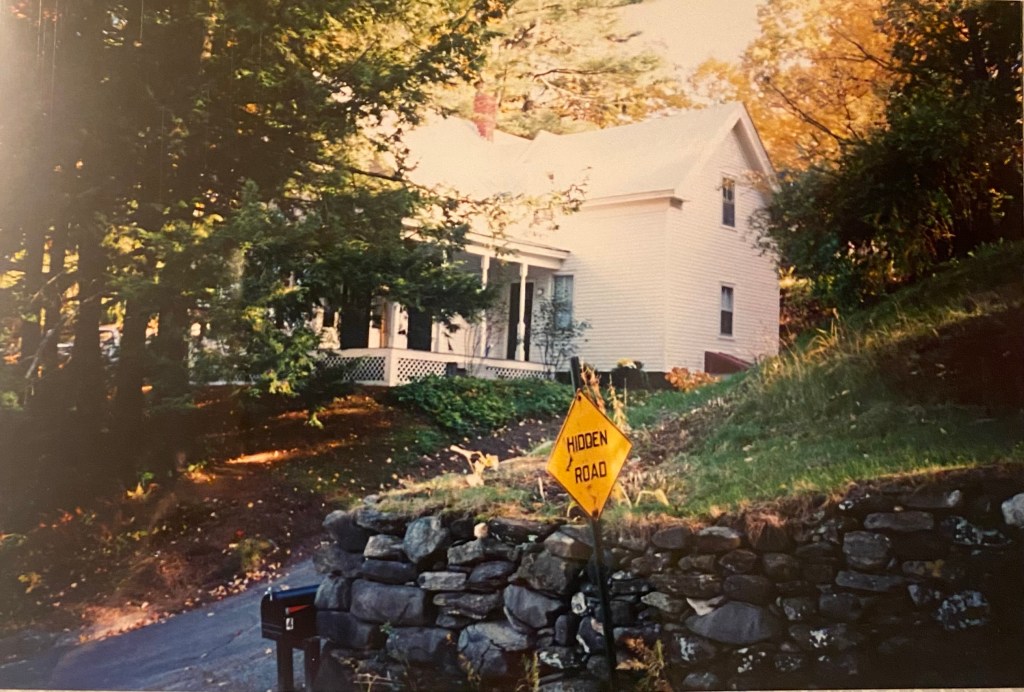
It certainly was hidden. (I lived on the second floor.)

By the time we headed back to Maine, I was feeling unhinged and uncertain. To regain my manly sense of mastery (at least that’s the only reason I can think of) I decided I didn’t need any help from any GPS getting from Anne’s to the paved road to the interstate to the Maine Turnpike to home, thank you very much.

Setting the car radio on “50’s Gold,” I drove south on the interstate, missing the exit for New Hampshire and Maine, and continuing for another ten miles before I turned around and headed north. After an hour of ignoring Mary Lee’s suggestion that it might be time to find out where we were, I pulled off the interstate and plugged our home address into the GPS, which informed us that we were almost fifty miles north of where we should be. Surrendering to that damn voice (which I swear was snickering)— “In one half-mile, prepare to turn left… turn left in 100 yards…turn left”—we eventually came to that cow path I talked about earlier through New Hampshire and Maine, the one that got us home two hours later than we would have if I’d used the GPS the way I should have. By that time, my hands were shaking, my stomach was in knots, and my head was pounding. Even the familiar roads near home looked strange and forbidding. 

At one point on that interminable drive home, we drove by Squam Lake, where the movie On Golden Pond was filmed, and since then, I’ve been thinking about Henry Fonda’s 80-year-old character getting lost picking strawberries in a place he’d been going to for years, stumbling through the forest, become more and more disoriented, more and more frightened. 

And I ask myself: Is that who I’m becoming?

I’m trying not to panic. I tell myself that as I’ve become 80, I’ve been focused on my physical diminishments, and maybe God of my not Understanding is telling me it’s time to prepare for the mental changes ahead—that I should think of that weekend as—to use a 12-step term—another “Goddamned learning experience.”

I’ve just read David Shields’s book, The Thing About Life is That One Day You’ll Be Dead. Normal geriatrics, he says, don’t have poorer memories, but it does take us longer to retrieve those memories. We’re more susceptible to distractions, have trouble coordinating multiple tasks, and suffer decreased attention spans. In simple duties and common situations, we’re fine, but when stress is added (loss of a smart phone, for example) we often struggle. “Perhaps,” Shields writes, “this is why some older people, finding it harder to cope, tend to start searching for comfort rather than excitement.”

I’m tempted, but I’m not ready. Instead, I’m going to send my ego to the store for a quart of milk and do what Mary Lee does and make a checklist for when I travel: 

Underwear?    Check. 

Pills?               Check.

Phone?            Check. 

And at the top of the list, I’m going to write: 

Don’t assume you know where you’re going. 

Ask for help.

Actually, that sounds like pretty good advice for any pilgrimage.

# #

13 Ways of Looking at a Door

1

For Christmas one year, Mary Lee gave me a wooden wall hanging called “Doors of Yarmouth,” to remind me of the Maine town in which I lived for so many years. These are doors to old houses that have had careful tending (not to mention extensive and expensive remodeling). The doors come in a variety of colors. Most feature types of cross—sometimes called Christian—paneling. Three are plain wood with long hinges and latches. There are a couple of double doors and one shutter door. Some doors have glass windows, others are framed by small windows, shutters, cornices, lattice work, or flower vines. There’s a gothic arch over one door, a wooden fan over another, and several Greek canopies held up by pillars. All in all, they reveal how Yarmouth has changed from the working-class community I grew up in to the suburbia by the sea it is today. 

2

A little research on the web tells me that doors were conceived in ancient Egypt around 3000 B.C.E. but another site says that archeologists in Zurich Switzerland discovered an oak door possibly dating to 3063 B.C.E. Long before that, at least according to the Bible, Noah put a door in the ark. One assumes a pretty big one. (I’m curious how it opened and closed.)

3

 From the beginning, doors have had more than the utilitarian purpose of protection from nasty weather or people. They’ve identified the occupations of those living in the dwelling and served as marks of power and status. According to the Bible, when King Solomon built his great temple to show God’s power and prestige, he made doors of olivewood, covered with carvings of cherubim, palm trees, and open flowers, which he overlaid with gold. While technically not a door, I suppose, novelist Stephen King’s two iconic wrought-iron gates embellished with bats, a three-headed dragon and spider-like motifs have become a pilgrimage destination for King fans from all over the world.

4

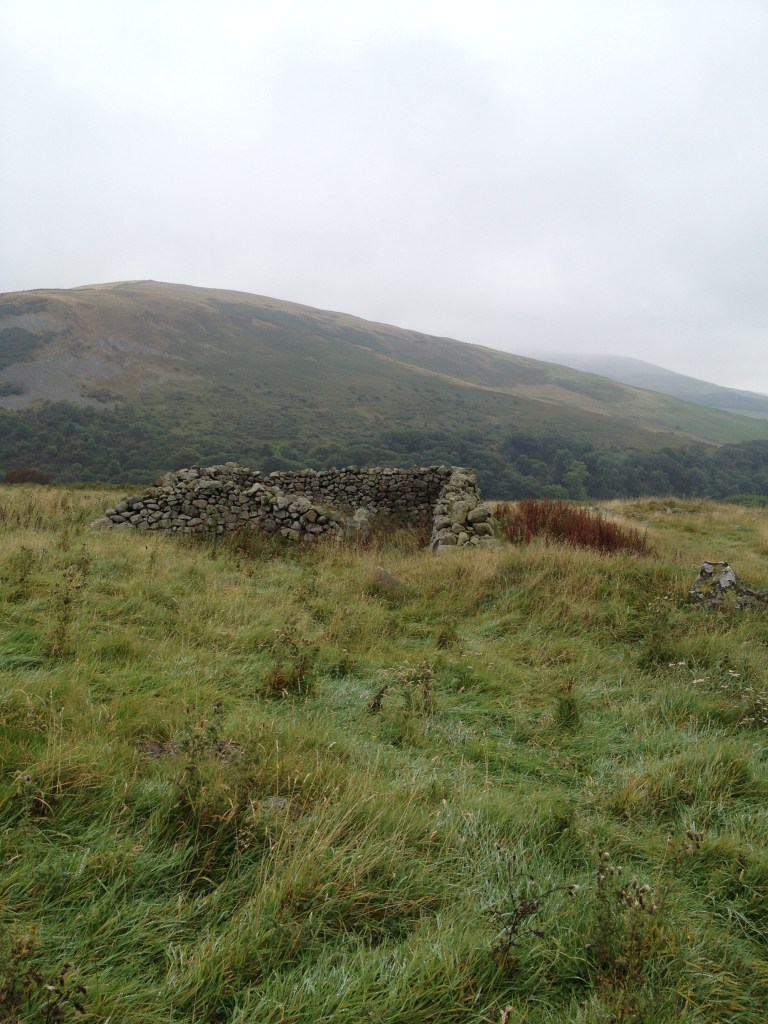
Speaking of pilgrimages, when Mary Lee and I were walking St. Cuthbert’s Way between Scotland and England, we passed a sheepfold, a circular wall of stones with an entrance, which for centuries, served as a place for shepherds to herd sheep at night for protection against predators such as wolves. To keep the sheep in and the wolves out, the shepherd would lie down across the entrance, becoming, as it were, a human door. 

5

Jesus uses this image of the shepherd protecting his flock by becoming a door when he refers to himself as “the gate,” who “lays down his life for the sheep.” Which may be why cross or Christian paneled doors are so prevalent in New England (all the units in our Housing Development have them, inside and out). When my wife Mary Lee—who is a Deacon in the Episcopal Church and a lover of icons—was teaching the in a local high school, she wanted to put up an icon in her classroom but realized it wouldn’t be appropriate in a public school, so she hung a large print of a door on her back wall where she could see it when she taught. It was a great comfort, especially with certain classes. 

6

 Besides Jesus, the Bible refers to other kinds of gatekeepers: those appointed to control who came and left the city through the gates. Thus, the term “gatekeeper” has come to mean a person who controls access, someone in authority who acts as an arbiter of quality or legitimacy, or someone who blocks you from speaking with a decision-maker. Gatekeepers access who is “in” or “out.” I’ve had a few of those in my life, athletic coaches, teachers, whom I’ve had to please in order to succeed. I suppose, as a teacher myself, I’ve also been a gatekeeper. 

7

I’ve also let others become gatekeepers, to whom I gave away authority, surrendered, as it were, the keys to doors I could have opened for myself. Growing up in an alcoholic family once limited my choices when I faced a decision to “What will the neighbors think?” to quote my mother. Through working an Al Anon program and learning to put the focus on me instead of on the me I thought you thought I was, I’ve found keys to open doors I never knew existed.

8

Some of those early Egyptian doors symbolized entrance to the afterlife. Doors can represent transition, confinement, new opportunities. Doors can be metaphors for the choices we make. We learn early on in life that we can walk through some doors and not others. As a WASP male, I know that I have more doors available to me than women, people of color, people of other religions. My destiny has been shaped by the doors I’ve walked through.

9

Or doors that have closed behind me. For a while, Mary Lee volunteered as a chaplain at the local prison. One Christmas, I helped her with a service. My clearest memory is of going through a series of doors and hearing the loud, definitive clang as each door closed behind me. I’ve had a few of those definitive door closings in my life: the death of my daughter, a divorce decree, a couple of retirement parties. Most of the time, however, I find that doors close behind me without my noticing. One reason I took early retirement from teaching high school English was that I saw too many colleagues still standing in front of their classes, even though, emotionally, they’d shut the door on their students years earlier. One of the things I dislike about the geriatric life is that doors keep silently closing, until suddenly I realize, I can’t do this anymore! Can’t climb that mountain, can’t reach that note, can’t eat that food, can’t…

10

On the other hand: My Quaker friends say that sometimes a door needs to close before another can open. That’s certainly been the case with me. I had to close the door on a forest management program before I could open the door to what’s been for me a fulfilling teaching career. I had to retire from public education before I started writing. After my daughter died, I had to lose every image of God I’d ever had before I encountered the Grace of God of my not Understanding.  

11

In late 1960’s, I listened to a rock group, The Doors, who named themselves after the title of Aldous Huxley’s book, The Doors of Perception, in which he reflects on his psychedelic experiences. Huxley himself had based his title on a line in English poet William Blake’s The Marriage of Heaven and Hell: “If the doors of perception were cleansed, everything would appear to man as it is: infinite.”

12

These days I’m trying to clean the doors of my perception through contemplative practices such as meditation, going on more retreats, walking meditation, contemplative reading, sessions with my Feldenkrais teacher, journaling, music, working on my listening, writing these blogs, and of course, making more pilgrimages, even if they’re only to the compost pile. 

13

And I’m not done opening new doors. I’m hoping I have a few longer trips left ahead of me. Speaking of trips, I note that interest in psychedelic drugs is again increasing, thanks to books like Michael Pollen’s book How to Change your Mind.Indeed, I have a 92-year-old friend who’s seriously considering a guided psychedelic experience. That’s another possible door. 

And, of course, there’s the Big Door ahead of me. That, too, will be quite a trip, I suspect. 

#

Weeding

#

It’s 4:30 in the afternoon and the temperature is still over 80°. A breeze blows from the southwest, making the air feel even hotter. Black flies swarm around my floppy hat as I crawl through the dirt, weeding pumpkin plants. Every few minutes I need to lean back and stretch my aching back. My hand is cramping.

And I’m as happy as a clam at high tide.

From the swamp on the other side of the road by our community garden, sparrows and cardinals chirp and whistle. I listen and drop back to my hands and knees to pull up small bunches of crab grass, pigweed, and plantain. I’ll let the milkweed grow for the butterflies which should be here soon.

I’m not entirely sure I know why I enjoy weeding. I never used to. When I was in high school, working summers in a market garden, weeding was the worst job there was. I’d start out bending over, then drop to my hands and knees, then to my elbows, then to one side, and the next thing I knew I’d be asleep.

But now, far less agile and able than I was at seventeen, there’s something satisfying about seeing a weedless garden. Unlike grandparenting or writing or even playing my banjo—all things I enjoy—I can see immediate results. I really don’t have a lot of control over how many pumpkins I’ll get this fall. That’s up to how much rain and sun we get and whether animals chew things up. But I can control the weeds.

At least if I get them early. Once weeds take root, they take over, sending roots deep into the soil, so that when I pull the weed, the root remains, sending up new weeds, sometimes the next day, and I don’t have the strength anymore to wrestle them out of the ground. Then, my self-satisfaction turns to self-deprecation: Why didn’t you get those damn things earlier? You’re a failure as a gardener, just as you’re a failure at everything else.

So not only is it important to weed the landscape in which I move, I need to weed the landscape in which I think—those weedy thoughts that clutter the garden of my mind.

 While I have a lot of trouble with many parts of the Bible, I’m continually drawn to the parables of Jesus, and in two them, Jesus talks about weeds. In the Parable of the Sower, a farmer is sowing seeds. Some seeds fall on rocky soil, some on weedy soil, and some on good soil. The first seeds don’t grow on rock, the second seeds come up but are choked by thorns, while in the good soil, the seeds produce abundantly.

As Jesus explains, the sower represents someone sowing the word of God. Some who listen are like those who hear the word joyously but can’t take it in and grow from it because they “have no root,” as one of the gospels puts it.  Then there are those who hear the word, grow a bit, but then “the cares of the world and the deceitfulness of riches and the desires for other things enter in and choke the word, and it proves unfruitful.”

That me. How many times have I choked on “cares” and “desires for other things”! The Old Farmer’s Almanac lists 13 common weeds in Maine. I can easily come up with at least that many cares and desires that have choked my ability to become like those in the parable who “hear the word and accept it and bear fruit, thirtyfold and sixtyfold and a hundredfold”: from my sense that nothing I do is ever good enough to my judgmentalism of myself and others to my need for control and an even greater need for the approval of others to my passive-aggressive sarcasm to my perfectionism to…

I think that’s why, for me, any kind of spiritual growth has involved subtraction rather than addition. Whether it’s through meditation, Feldenkrais exercises, or working the 12-steps, I’m weeding rather than planting—trying to remove what 12-steppers call “defects of character.”

But, as 12-steppers know, we can’t do this ourselves. Step Six says, “Were entirely ready to have God remove all these defects in character,” and Step Seven says, “Humbly asked God to remove our shortcomings.”

Which gets me to the other parable Jesus tells, the parable of the wheat and the weeds.

In this story, a man plants wheat seed in his field. That night, while everyone is asleep, the man’s enemy plants weeds among the wheat (which, I guess did happen in those days). Later, when the wheat grows, so do the weeds. Then the man’s servants come to him and say, “Do you want us to go and pull up the weeds?” He answers, “No, because when you pull up the weeds, you might also pull up the wheat. Let the weeds and the wheat grow together until the harvest time. At the harvest time I will tell the workers first, to gather the weeds and tie them together to be burned, and then to gather the wheat and bring it to my barn.”

I like the parable. What I don’t like is the interpretation of it attributed to Jesus. The man who planted the good seed in the field is supposed to be Jesus, and the field is the world. The good seed are the people in God’s kingdom, and the weeds are the people who belong to the “Evil One.” The enemy who planted the bad seed is the devil. The harvest is the end of time, and the workers who gather are God’s angels. At the end of time, Jesus will send his angels, and they will find the people who cause sin and all those who do evil, take those people out of his kingdom and throw them into the place of fire. Then the “good” people will be taken into the kingdom of God.

This interpretation of separating “good” people from “bad” and condemning those bad folk to eternal hell fire not only seems contrary to Jesus’s other teaching about loving your enemy and his compassion for tax collectors, prostitutes, and other sinners, but also—it seems to me—cultivates self-righteous and judgmental behavior about who’s “good” and who’s “bad,” which, as I’ve already said, are some of the weeds in my interior garden.

So, for me, what the parable promises is that at some point—possibly at my death, possibly in some afterlife— those weeds that I struggle with, that I’ve let get out of control for the past 80 years, will be removed, and that what remains will be something pure and shining like wheat in the sun. (Or pumpkins in the field.)

In the meantime, I’m trying to pull out the newer weeds, asking myself the following questions:

—What seeds have I planted for the future?

—What recent weeds—complacency, smugness, procrastination, and the like—have taken hold and need to be pulled out for these seeds to grow and produce?

Now weeds I’m happy to send to “the place of fire.”

# #

Leaving “the Little Lightless Caverns”

#

I waste too much time in the little lightless caverns of my own mind.”

—Christian Wiman

#

            My first wife used to say to me, “Rick, you think too much.”

            It pains me to say it, but she was right. I can turn anything into a problem to be solved: what I want for breakfast, what clothes I want to wear for the day (I’m retired, for godssake, who cares what I wear?), where I want to go for a morning walk, whether I want to go first to the grocery store and then to the hardware store (well, the grocery store is closer and if I get delayed there, I can always wait until tomorrow to do the hardware store) or go first to the hardware story and then to the grocery store (but because the grocery store is closer, I need to get the refrigerated items home before they spoil).

            So that by lunchtime I’m tired out (and then do I want a nap or should I read?).

            Minor stuff, I know, but as I look back at my life, I see that overthinking has caused me and those around me serious problems. Part of the reason I almost flunked out of college was because I waffled about not only what career path to follow, but also whether I wanted to join a fraternity, ask Ginny out or Pat, hang out with jocks or artsy types, take a year off.

            In later years, I agonized over if I should get married, go to graduate school, take a college or a high school teaching job, join a church (what denomination?), join the Rotary, or tell my first wife I was unhappy in our marriage.

            After my daughter died, my mind became a prison. When all my efforts to understand why a previously healthy and happy 18-year-old should suddenly die from a rare cancer—radon in our water supply, McDonald’s cutting down rain forests, accident, fate, God wanting “another angel in heaven,”(all reasons people gave me)—failed, I decided I had to be the one to blame, either because Laurie’s mother and I divorced or because we didn’t divorce soon enough. For several years, the only relief I could find was through alcohol and anger, both of which threatened not only my life but the lives of those close to me.

            As I’ve written before in these blogs, I credit meditation with first helping me see the destructive nature of thoughts and to unload much of my anger and shame—give it to God, as one of my first mentors suggested.

But meditation can become its own “little lightless cavern,” as poet Christian Wiman calls his mind: a place to escape an argument or a fear or a resentment by retreating into old patterns of thinking. (What will I have for breakfast, what shall I wear today…)

            So, what else has helped?

            Seeing myself as the Geriatric Pilgrim has become more than a literary conceit. Looking at life as a pilgrimage has taught me to be curious, to look for surprises, to live without planning every single detail, to put myself in uncomfortable situations (even if it’s just going for a walk and having no destination or closing my eyes before grabbing a shirt to wear for the day). I’ve learned to embrace the unknown—including a Higher Power totally outside my understanding, and to look for evidence of that Higher Power—what I would call grace—all around me.

            A pilgrimage always involves some type of movement, whether it’s walking Saint Cuthbert’s Way or walking downtown. Despite having grown up playing sports, I’ve never paid more attention than I do these days to movement. Yes, regular exercise has long been known to improve and maintain key aspects of cognitive function such as attention, learning, and memory, but neuroscientist Daniel Wolpert posits that our brains evolved, not to think or feel, but to produce adaptable and complex movements. He points out that it’s a lot easier to create a computer that thinks than to create a computer which can move anything like we do. (If you’d like to learn more see https://www.ted.com/talks/daniel_wolpert_the_real_reason_for_brains.)

For the last year and a half, I’ve been practicing the Feldenkrais Method of exercise therapy, learning to reorganize connections between the brain and body, which has improved both the way I move and the way I think, helping me pay less attention to my mind and more attention to my heart and my gut—my instincts.

            The slogans of Al Anon, the 12-step program for families and friends of alcoholics, have become my roadmap on this pilgrimage out of the caverns of my mind. When I first started attending meetings and saw slogans set out on the floor, I thought, “God, how simplistic!” Another example of how thinking can mislead me. Try following a few of these slogans and see how simple they are. To give just one example, let’s look at “One Day at a Time.”

            What’s so hard about that? Well, for someone like me—and, I find, many people who’ve grown up in alcoholic families, who continually try to anticipate and resolve every problem they think they may encounter, attempting to make decisions on information they don’t have—it’s damn hard. Instead of responding to what’s in front of me, both the challenges and the gifts that come my way, I’m obsessing about all the possibilities (most of them bad) that might befall me, even though, looking back over the almost 80 years of my life, I can say that not once did any of this preparation spare me a single moment of pain. In fact, it just lengthened my suffering.

            Still, at my age, it’s hard for me not to think about—which in my case means understand, anticipant, awfulize—my death. It was helpful this week to hear a podcast in which Ariel Burger, protégé and friend of Holocaust survivor and Nobel Peace Prize recipient Elie Wiesel, talk about Wiesel’s teaching that there are no answers to life’s big questions, only responses.

            So, I’m trying to respond to these questions by breaking them into small daily tasks. Instead of trying to answer the question, how can my grandchildren survive in a world that seems to be hurtling toward destruction, I focus what I can do with them today. If I’m worried about the Supreme Court or the swelling in my jaw, what can I do about either one today? Call my senator? Pop into the walk-in clinic (which I did this weekend. It’s “an obstructed parotid gland”)? Then it’s time to go for a walk, pick up a banjo, write a poem or a blog. Get out of my head.

            In other words, as one of the AA’s oldest slogans puts it, “Move a muscle, change a thought.”

            And leave a little lightless cavern.

# #