The Old Lesson

~

71 years old,

lungs aflame,

lower back throbbing,

I rest on my hiking poles

halfway up 

still another hill 

at an iron gate

amid gorse and nettles, 

trying to pick 

out the path rising 

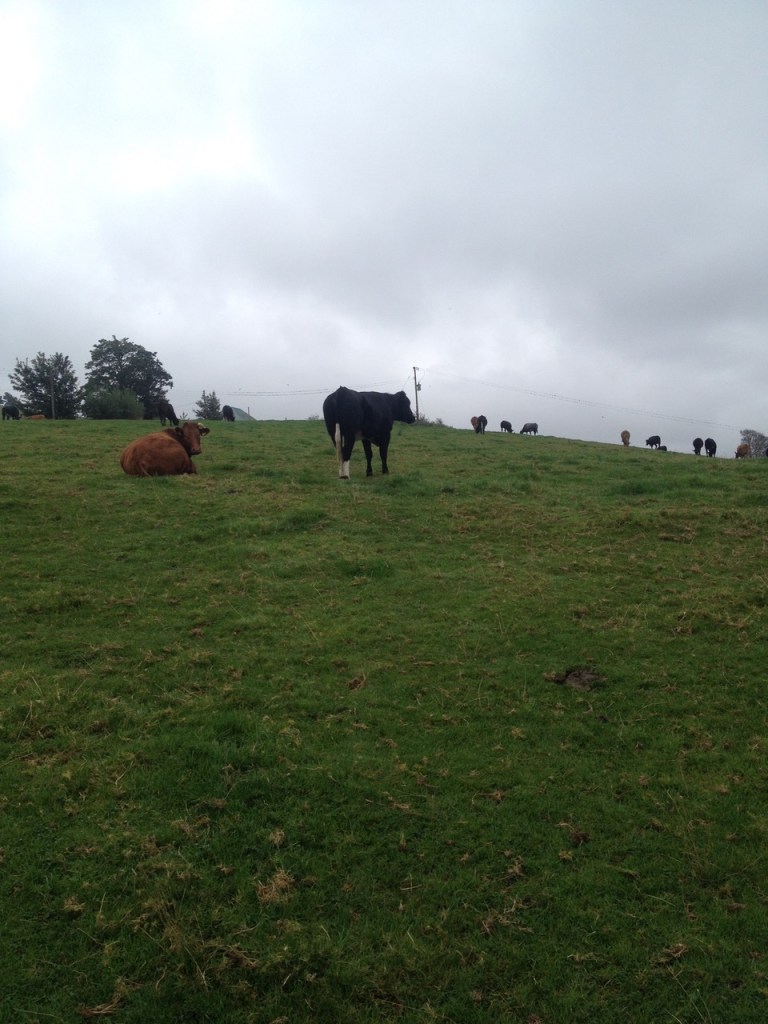
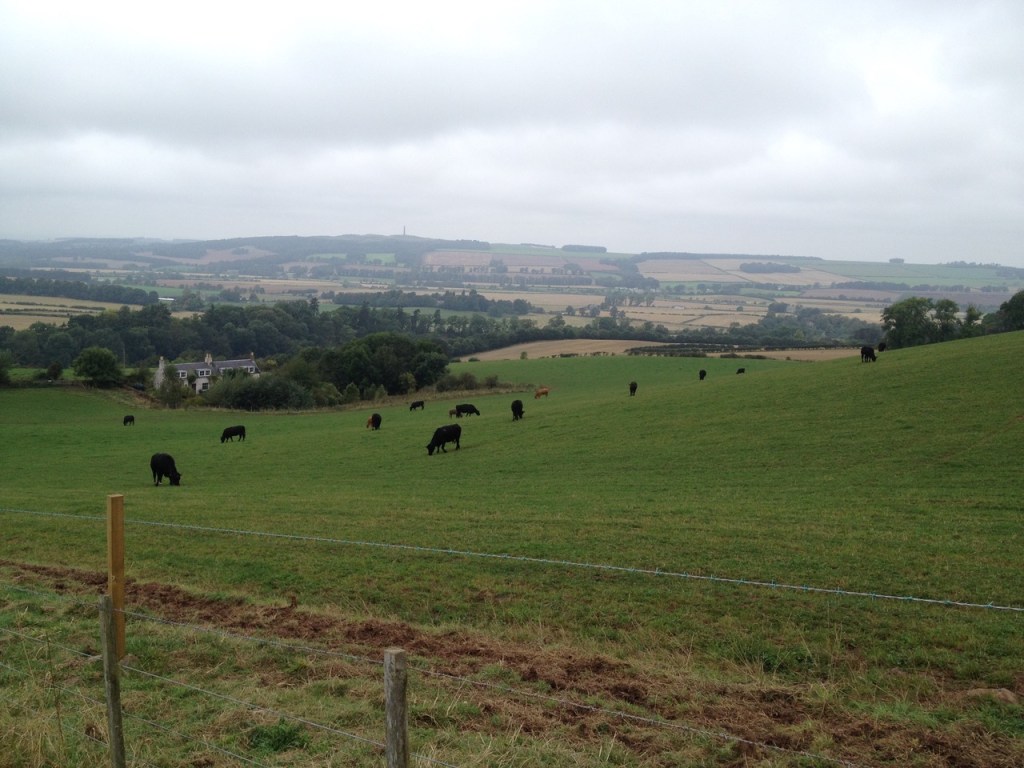
through a herd

of cows grazing on 

gangrenous grass between me 

and another gate 

and the trail that 

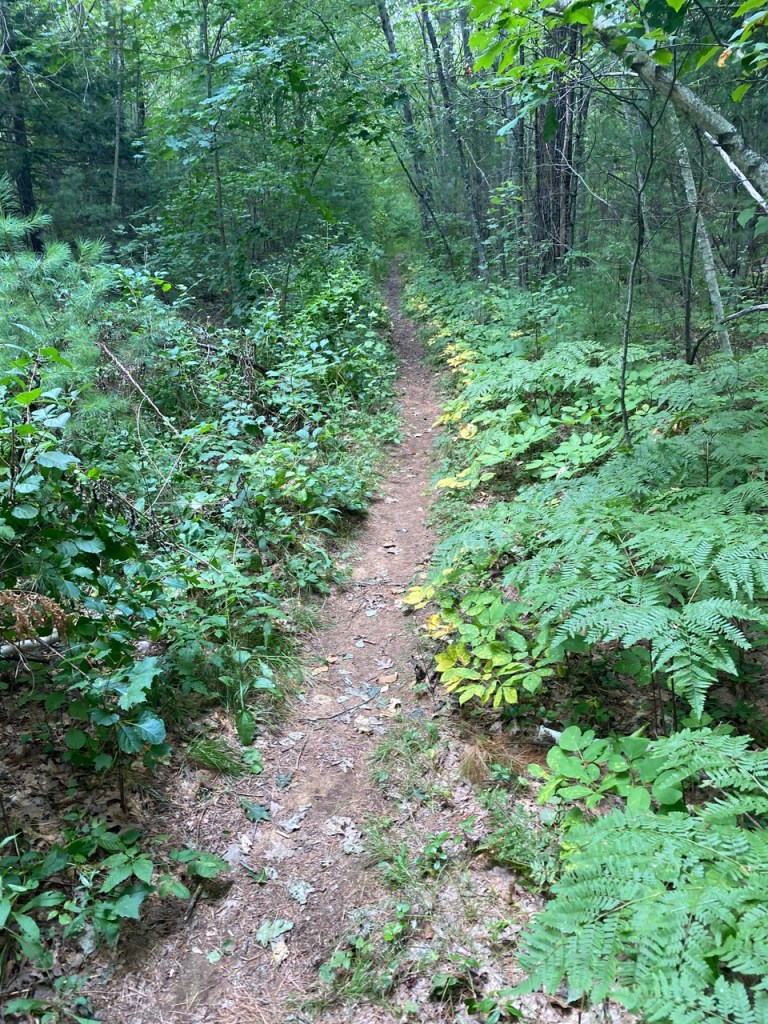
winds through woods

to tonight’s B&B

and the joy of a hot bath.

~

The gate clangs as 

I trudge into the herd,

which parts before me 

like the red sea

except for one

brown and white cow,

legs tucked beneath her,

who stares at me 

impassively,

before lifting her haunches, 

and dropping a steamy 

pile on the path

already strewn with

“chips,” “dung,” 

“flaps,” “muffins,” 

“patties,” “pies” —

choose your euphemism.

            ~

The pasture’s a mine field.

 I zig, zag, circle, 

back-track, hop—

marching thirty yards

to advance ten.

Fog mists my glasses.

Sweat soaks my shirt.

The air smells of decay.

At this rate,

I’ll still be 

hiking after dark.

Panic attacks like

a squad of minges.

            ~

Then, like an aging general 

roused from his nap

to lead me once more 

into battle against 

my old foe, Avoidance, 

comes the prayer: 

            ~

God, grant me the serenity

to accept those things

I cannot change …

            ~

I keep to the path, 

hear the squish,

feel my boots slide, 

raise my eyes 

to silver clouds

billowing over a line

of ancient trees,

glimpse red sandstone,

            ~

the courage to change

the things I can …

            ~

squish, slog, slide,

watch a brown hare

scamper to a stone wall

adorning the hill

like a necklace,

            ~

And the wisdom

to know the difference. 

            ~

Now at the gate

to freedom,

I bow to the sky,

having learned 

yet again

that to get to joy

you often have

to walk through shit.

            ~          

(after David Whyte’s The Old Interior Angel)

Joy

#

Oh, there were early inklings: 

the feel of my bat sending the ball over the left-field fence, 

speeding in a convertible over the one-lane wooden bridge at 60 m.p.h. 

watching the sun set behind Wyoming’s Grand Tetons—

strange times when I somehow escaped the carefully cultivated confines of my mind. 

But with no idea what those moments meant, I forgot them. 

Only after the Great Loss, 

And years of slogging 

through missing keys and sleepless nights, 

of being terrified strife would strike again, 

of sarcasm, swearing, pounding the walls, 

of regrets for what I had and hadn’t done, 

of downcast eyes and hunched shoulders, 

of tears during saccharine movies

and sobbing on anniversaries,

came the song: 

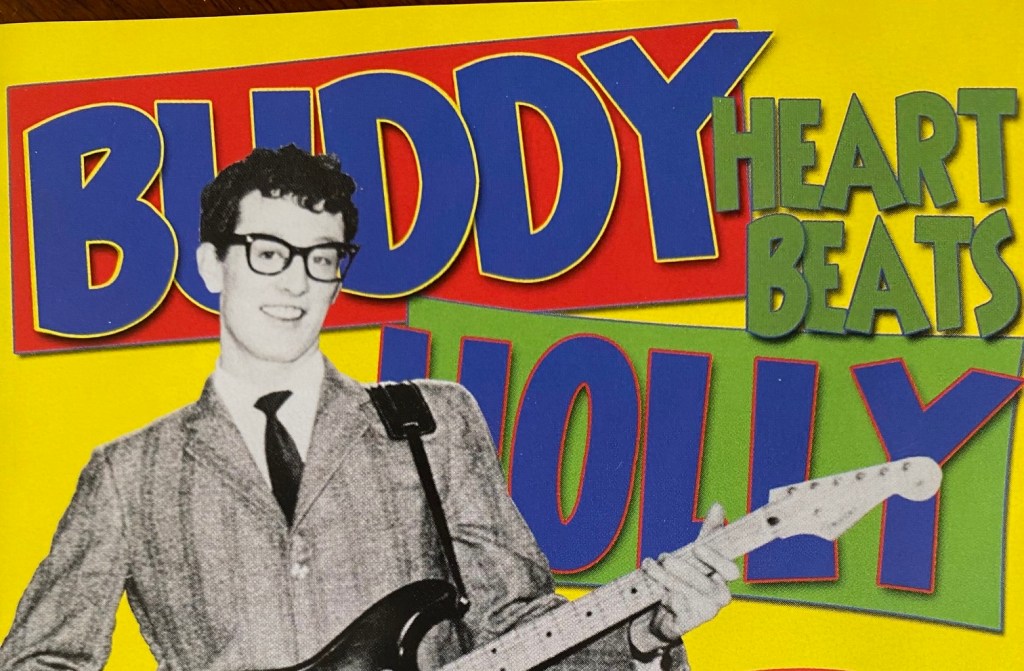
Buddy Holly on the car radio after a really bad day.

First humming along, then softly singing, 

then louder, louder, until at the top of my lungs: 

“It’s so easy to fall in love!”

Broken open,

releasing embarrassment, lethargy, fear, anger, guilt, shame, and sorrow.

Later, I realized how foolish I must have looked to other motorists. 

But I didn’t care. There was no going back.

No retreat. No surrender. 

No forgetting such a gift.

##

Sonnet for the new Year

The hemlocks in the hollow all have toes

That curve and claw down into rocky ground

To keep them anchored when the north wind blows,

And waters rise as heavy rains come down.

But overhead, these trees sway in the gale,

Dancing a jig to nature’s stormy song,

As if in celebration while winds wail,

Of their sure faith no tumult can last long.

Great lesson, that, especially this year

When God knows what strange winds will blow ‘round me:

Grasp on to love, trees say, instead of fear;

But sway, be supple, let adversity

First rev and race and then run out of gas.

Keep faith, my soul, that this as well shall pass.

#

On Hope: an Admonition

#

Stop confusing it with expectation.

You’re going to be disappointed,

resentful, angry, pissed off at God

because the cancer didn’t disappear,

you didn’t get that new job you wanted,

Hurricane Hattie flooded your basement.

#

(Write this down: Don’t hope for anything

you can see, hear, touch, smell, or taste.)

#

And even if you do get to come home

from the hospital a day early,

or the car coming right at you swerves

away at the last saving second,

or your friend’s stock tip pays off enough

to finance an Aruba vacation,

please, please, please don’t proclaim to the world

how God in His goodness answered your prayers.

You’re only setting yourself up for

future resentment, not to mention

guilt and shame for having somehow displeased

His Royal Holy Hood.

#

Instead, divest, dismantle, ditch, doff, dump

expectations, anticipations, wishes.

Take a deep breath, and go for a walk

along that path you’ve been walking all

your life. Don’t worry about what’s ahead

Here be dragons, right?—

but have a seat on this old tree stump.

Take more deep breaths, turn, look back

at all those times when, despite all your

mistakes, your blindness to injustice,

your embracing each Seven Deadly Sin

as if your happiness depended on it

while breaking all Ten Commandments

like you were making a hash omelet,

times when, despite your screwed-up family,

the hereditary overbite,

hip dysplasia, and weak heart,

times when despite the ugly divorce,

your daughter’s even uglier death,

all those goddamn operations,

the loss of lung capacity and libido,

you love the woman you wake up next to,

you sing to Sirius FM’s ‘Fifties Gold,’

you savor your morning hot chocolate,

you look forward to lunch with old classmates,

you feed the birds, play the banjo, plant

a garden, enjoy Wordle and Brit Box,

worshiping in silence, dabbling in poetry,

watching the grandchildren grow up.

#

Hope is not about getting what you want,

it’s about seeing what you already have,

the force that makes life worth living,

that same power that is pushing new growth

from this dead tree stump you’re sitting on.

#

Now, go get those dragons!

The Snows of Christmas Past

#

After years of counseling and going to meetings, remembering Christmas when I was a kid now feels like peering through my frosted window at a soft and steady snow covering up dead leaves, discarded pumpkins, and broken branches under the diseased hemlocks beside the house.

My family’s disease was alcoholism. Mom’s memories of her drunken father passed out on Christmas Day, her shame at not being able to bring friends home, Dad’s bitter memories of Christmases in a Home for Wayward Boys and in the Army during WWII, his sense of being victimized by a social system he saw based on greed—feelings he tried to wash away with a pint of Old Crow—the arrival each Christmas of my mother’s mother, Nanny C, a large bitter woman whose acid tongue could peel paint, permeated our house during the holidays like their cigarette smoke.

In the weeks before Christmas, I’d hear Dad’s grumpy voice through the register in the floor of the bathroom asking where the hell were they going to get the money and Mom’s brittle reply they were just going to have to find a way; her children weren’t going to have the shitty Christmases she did. And I’d know it was up to me to make sure the holidays were happy. So that Christmas morning when Dad groaned because his head hurt, and Mom and Nanny perched on the edge of their chairs hovering like crows on telephone poles watching my younger brother and sister and me open our presents, and I ripped off Christmas wrapping to find a rainbow-colored wool hat that only a girl would wear, I said, “Oh, I love this. Thank you!” 

Ah, but here come the snows of nostalgia, which, I’ve discovered, is not all bad, especially when it brings memories of wading up to my knees in in the white stuff to help my father cut a tree, the smell of fresh fir as Mom and Dad set up the tree on the porch, decorating it with ornaments I still have 70 years later, popping corn and stringing it on the tree, smelling Nanny C’s fudge and Mom’s cookies and bread, and hearing my grandmother playing carols on our piano.

Or of walking home from sledding in the 5:00 p.m. darkness, carrying my Flexible Flyer past the drug store and the hardware store, their neon lights shimmering, casting shadows on the snow banks, past the big white Georgian houses on Main Street with their candles in the windows, then down Bridge Street, seeing my house and our lighted tree on the back porch, and feeling the Christmas excitement when the possibilities of happiness were as many as the stars in the frozen sky.

Or of helping my father, who moon-lighted as sexton in our church, get ready for the Christmas service by picking up last week’s bulletins from the Sanctuary, alone in this great empty space, the whistling of my corduroy pants as I walked echoing in a great and holy silence, and somehow feeling safe—held, enfolded by a Great Presence.

Then Christmas day: giggling in bed with Jaye and Roger, as we wait for 6:00 a.m. when we can wake the grownups, not knowing that Nanny C is in the next room listening to us with tears of joy running down her face—“Oh, you kids are so good, God bless you!” Christmas dinners of turkey, mashed potatoes, gravy, stuffing, homemade bread, and cranberry sauce (which is what I ate. Let the grownups eat the squash and turnips and beans), followed by Mom’s pumpkin, apple, and blueberry pies topped with Sealtest Ice Cream. In the afternoon, Dad slept off his hangover on the couch, Nanny went back to the piano and she and Mom sang “White Christmas,” “The Christmas Song,” “I’ll be Home for Christmas,” while I played with my new model airplane or helped my brother or sister put together their farm or showed them how to play the new Parcheesi game or took my new skates (but, gee, I forgot my new hat) which Mom and Dad had bought on time to the town rink behind the movie theater or went up to my room to read the book I’d received: maybe Treasure Island, Tom Sawyer, Herb Kent West Point Fullback, a Hardy Boy’s mystery, or Zane Gray.

On Christmas night I went to bed with a plate of cookies and a glass of milk, turning on the radio to my favorite programs, most of which were having Christmas specials: Jack Benny exclaiming after having spent the last thirty minutes buying the cheapest gifts he could find, “Good night, everyone, and merry Christmas!” George Burns telling his wife, “Say good night, Gracie,” and her reply, “Good night, Gracie, and Merry Christmas,” and of course, a version of Dicken’s “Christmas Carol,” probably starring Lionel Barrymore. I ate, finished my milk, and crawled completely under the covers with the cookie crumbs, following Scrooge on his journey from “Bah, humbug!” to “God bless us, everyone!”

 While outside the window, at least in my memory, snow fell in great white, silent flakes.

My sister, Jaye, circa 1954, with her new poodle skirt, doll, and whatever it is on her wrist.

# #

Family Triptych

Weilburg

Traveling 3500 miles to a town in Germany

smaller than the one in Maine where I live—

no tours, no souvenir shops, 

no one speaking English except back at the hotel, 

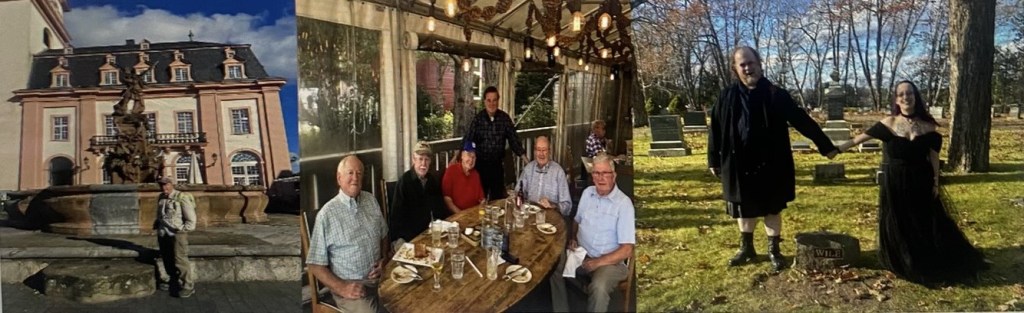
I stand by Neptune’s Fountain 

in Market Square beneath the God of the Sea 

thrusting his trident into the head of some leviathan, 

my lungs still burning from climbing the hill to get here, 

trying to imagine 25-year-old Johann Frederich Weil 

wandering the square 

before leaving for Halifax, Nova Scotia, 

lured by the British Government’s offer 

of free passage, free land, & a year of free rations, 

knowing from Ancestry.com 

his descendants will anglicize the name & populate places 

like Wile’s Lake, Wileville, & Wiles Road, 

until the turn of the 20th Century 

when Lyman & Lester Wile 

leave Canada for a shoe factory 

in Marlboro, Massachusetts 

where Lyman will marry Edith Conrey 

& sire my father who 

because his mother left Lyman when Dad was 4 years old

(apparently because of spousal abuse) 

didn’t give a shit about his father or his family. 

Then Johann dissolves—

if he was ever here in the first place—

into the salmon & cream-colored two-story buildings, 

round-arched arcades, & a matching-colored four-story Italianate castle 

as my wife and I join the half-dozen folks in leather & wool 

sipping beer & coffee at outdoor tables by a small restaurant. 

Still, walking back to the hotel 

looking down the hill 

at the Lahn River, a small waterfall, an old stone bridge, 

I think of the hill I grew up on, the bridge below my house 

over a similar river by a similar waterfall, 

& I feel a weird calm, 

connected by currents beyond my ken.

The Royal River Grill

Walking into a restaurant 

with large windows looking out on the harbor 

& soft lights meant to look like candles, 

I see Buzz & Chuck & Ted sitting at a long oak table. 

A shiver of both anxiety & eagerness 

& the next thing I know it’s 1953, 

when this building was the site of the Stinson Sardine packing plant 

& I’m ten years old & in fourth grade 

& I’m going to my first meeting of Mike’nBuzzie’s Gang 

at Mike’s house just up the hill from here, 

because earlier that afternoon 

when it had been my turn to stay after school 

to erase blackboards, 

as soon as Mrs. Croudis left for the teachers’ room, 

Buzzie’s brother Craig ran into the classroom. 

“We’re getting a gang together 

for an apple fight with the uptown kids! 

Big meeting at Mike’s house! Let’s go!”

Dropping the eraser, I ran out the door—

the first time in my life I’d ever disobeyed one of my teachers. 

But for the first time in my life I didn’t care. 

A timid kid, raised in a family 

where a miasma of alcoholic anger & anxiety 

hung over us like the fumes 

from the neighboring paper company,

I’d lie awake mornings before school 

afraid of the day ahead, 

of having my arm twisted or my face washed with dirty snow 

by sixth graders like Mike’nBuzzie,

and now they want me to join them! 

Never mind that the apple fight with the uptown kids never happened, 

or that Mike now has Parkinson’s & stays home 

& that Buzz & Chuck & Ted & I, and later, Allie & John, 

have little in common these days 

except our L.L. Bean khakis & plaid shirts. 

I laugh & reminisce. 

At home. 

Still part of the gang.

The Cemetery

Under gnarled & broken maple trees, 

I walk around my family cemetery plot, 

taking pictures of the wedding—

of the bride, who stands 5 feet 

& maybe weighs 100 pounds, 

her upper chest tattooed with angels, 

her dyed magenta hair, & flowing black gown, 

& the groom, my stepson, 

probably 6’4” & 270, 

black lipstick & kilt, red-haired & bearded, 

standing in front of the family stone, 

originally part of the cellar of my mother’s grandfather’s house, 

while my second wife, 

an ordained Deacon in the Episcopal Church, 

performs the ceremony. 

My stepson’s two daughters stand as ring bearers 

near the memorial stone for my daughter, 

who died at 18. 

My wife’s ex-husband & his wife 

stand between my grandmother’s granite stone 

& the memorial stone for Nanny’s ex-husband. 

Not far from my great-grandfather & great-grandmother’s marble stone, 

my stepson’s nonbinary stepson from his first marriage 

& their partner also take pictures. 

The bride’s parents view the proceedings 

in front of my mother’s bronze marker 

between my father’s & my stepfather’s bronze markers 

while my second wife’s sister, her daughter & son-in-law 

watch both the wedding and a grandson 

climbing the near-by gravestones 

of my barber, my favorite teacher, 

a classmate killed in Viet Nam,  

& my little league baseball coach—

all of whom, I imagine, 

rolling over in horror at this spectacle 

of everyone dressed in black, 

everyone smiling, 

one big happy family.

#
First Friend


Behold, I give unto you power to tread on serpents and scorpions, and over all the power of the enemy: and nothing shall by any means hurt you. —Luke 10:19

Staring at my 3 a.m. fears—A burning planet, a demented president-elect, disease, death—I think of you for the first time in years: first friend, neighbor, bodyguard, mentor, and, although three years older than I, my classmate from fifth through seventh grade.

Thick black hair and an Elvis sneer, Kirk Douglas dimple in your chin, sleeves rolled up as far as they’d go to show those growing muscles, your dark eyes often flashed anger at the world, but also amusement and compassion for the pudgy, awkward kid who worshipped the ground under your motorcycle boots.

Buddy Fitts, Freddy Gallant, Bucky Lapoint—none of the playground bullies—dared trip me, twist my arm, scrub my face with snow, because they knew they’d have to fight you first. And you were tough: sauntering up Bridge Street coatless in a ten-degree storm, snow clinging to your hair like chainmail on the Black Knight, carving your name on your veiny forearm with a Gillette Blue Blade.

In class, you never raised hell, never passed in a paper, just sat in the back seat looking cool until you turned sixteen and could legally split the joint. You cut CAROL into your upper arm and went to work in the cotton mill.

Playing basketball, fumbling with the buttons on Daisey’s sweater, I hardly knew you’d left. Never saw you much afterwards. Heard you and Lapoint started a paving business.

Home from college, I once walked by your house. You hadn’t grown since grade school but your tattoo was cool—a tiger’s head spanning your boney back as you banged away on a rusty Chevy. We grunted greetings. I forgot you.

At our 50th high school reunion, your cousin Roland said you lived in Tennessee, belonged to some Pentecostal church that prays with poisonous snakes to show God’s power over evil.

This dark morning, my friend, I think of how you protected me, wish you were here to keep me safe from the serpents slithering around me.

# #

How are You?

Watercolor by Laurie L. Wile

#

Well, despite the more or less constant pain in my lower back

and the burn of bursitis in both hips,

and not withstanding my apprehension about that new smell in the garage

and the housing development going in where I like to walk in the woods, 

and despite the fear that my grandchildren will live in a Fourth Reich

while this world turns to burnt toast,

and regardless of worrying about having a stroke which will paralyze the left side of my 

body so that I drool down one side of my mouth and lose control of my bowels,

and in spite of my nagging fear that there’s really nothing but darkness after death,

and the even greater fear that I will be reincarnated and have to learn all those goddamned

            things I’ve had to learn all over again,

I would say I’m grateful to be here. 

Thank you for asking.

Welcome, November

#

As readers of this blog know, my daughter Laurie died at the age of 18 from a rare cancer. In November, seven months after the cancer was first diagnosed, she went into Eastern Maine Medical Center. Living 120 miles away, I took a leave of absence from my teaching job and moved into a Ronald McDonald House where I spent the next two months with my daughter until she died on December 23.

Since then, each November as the days grow darker and colder, I can feel my body chemistry change. I’ve coped in many ways, but the most helpful has been through writing. It’s no accident that the first Geriatric Pilgrim blog appeared in November 2015.

#

Sonnet for November

Novembers, I would drive my daughter past

Men in blaze-orange caps, crouched on a hill,

Their 30-30’s sighted, set to kill

Most anything, just so the gun would blast.

My heart began to flutter, then beat fast

As we drove by them—silent, savage, still—

And I could feel the air around us chill.

I’d think, how long, dear God, will this month last?

But I’ve since learned of other ways to die,

And russet hills now fill with memories:

Her gentle, kind, abbreviated life.

These days, I treasure the November sky

Which broadens once the leaves drop from the trees.

November wind is clean, a whetted knife.

#

Darkness

Now darkness begins:

light dimming after lunch,

long shadows on the lawn.

I curse the old lady

crossing the street

in front of my car,

lose gloves,

feel the familiar kick

to the heart. 

You’d think after all these years

I’d be over it,

but it’s always different…

this darkness…

Gone the murky numbness,

the black rages,

no more the dim corridors

of “if only” and “what if,”

lit up by Johnny Walker.

Now, who knows what waits 

in the darkness ?

Another old friend’s Christmas card

to bring me tears?

More recurrent dreams of stumbling

through stony landscapes?

Another season of bingeing bad TV?

Still, the waning light 

is clean and clear,

the view scoured of chewed leaves, 

dead flowers, black flies.

And sometimes, just sometimes,

Love enfolds my fears,

and I hear Laurie whisper, 

“Dad, let the thoughts go.

Let darkness begin.”

Wild Willy


Phone curtesy of Wikipedia Commons

                        1.

Around the time this log cabin 

sold moccasins I’d see

Wild Willy Crockett 

on the corner 

with Pea Soup, Spider, and the Goose.

Taller than the others,

he stood with knees rigid, 

pigeon-toed, gazing 

up and down the street,

searching for someone with a car,

a summer chick on the make,

or Crazy Benny,

who’d buy him beer.

Balanced on a line 

between cool and caricature:

the shiny D.A.

French-inhaling Camels,

rocking with Dee Dee Dinah, 

whose tits stuck out 

of her sweater like oil funnels,

chugging three beers before the game 

and coming off the bench 

to score six straight points,

graduating high school with his pants

on backwards.

            2.

Now the log cabin 

sells organic and new-age produce, 

and Willy Crockett stands 

at the corner of tofu and prunes.

Fifty pounds heavier, 

still tall.

Wears a toupee 

that looks like roadkill,

carries a cell phone 

clipped to an alligator belt.

Assistant manager 

at the local hardware store, 

divorced from Dee Dee, 

He tells me he belongs 

to the Church of the New Kingdom.

Says the old days are long gone

—Praise the Lord!

Toes pointed in, 

he cradles his yellow basket 

of flax oil and sulfur supplement,

gazes at displays 

of crystal pyramids,

Himalayan incense,

and Navajo dreamcatchers,

still searching…