~
His life these days is like walking a trail,
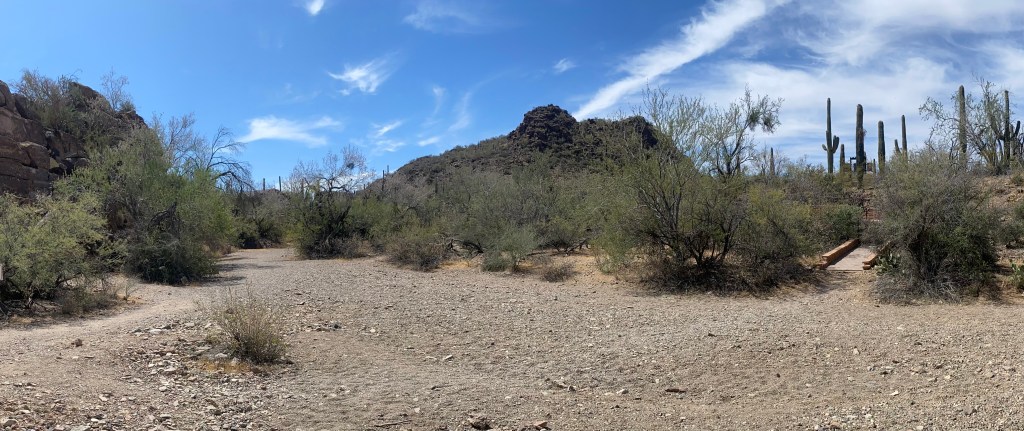
maybe that wash* in Arizona when
he was on retreat, when on one side of
him were the Stations of the Cross and on
the other side the picture rocks that give
the wash its name: 1500-year-old
petroglyphs by the Hohokam farming
people of the Sonoran Desert.
~
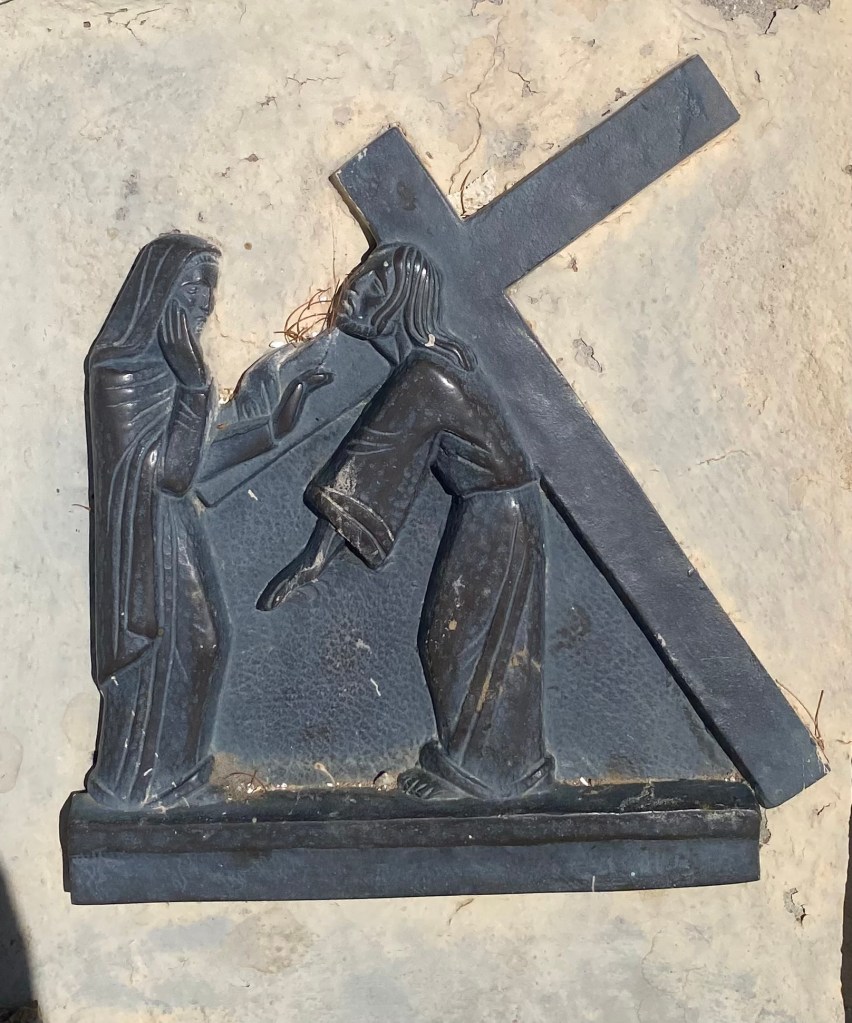
On one side, 14 etchings in metal
depict Jesus’s progression to his
death: scourging and the crown of thorns, falling
under the cross’s weight, piercing, thirst, and
humiliation, abandonment by
friends, followers, even God, death. And
he thinks of the violence and cruelty
of the empire in which he lives against
the materially poor and the sick
and the marginalized, his feeling that
God has abandoned the country he loves,
his own pains in places he never knew
he had; indignities; lashings of fear;
the cross he carries of his family’s
disease; the piercing loss of his daughter.
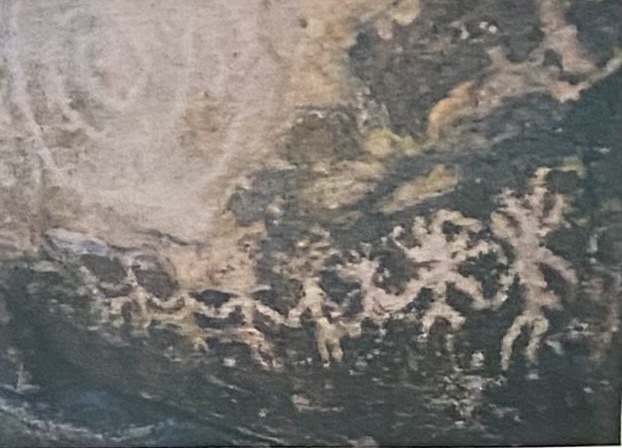
On the other side, petroglyphs show the
the sun’s progression during the summer
solstice: swirls and spirals and strange designs,
images of dancing people, deer and
antelope, alien-looking creatures
(you don’t suppose…), and something that looks like
a picture of an atom, but which might
depict life’s interconnected circle.
He thinks of the kind and kinds of people
he’s met in traveling from coast to coast,
this country’s mountains, deserts, and rivers,
of the smell of the dirt in his garden,
dancing with his wife, watching grandchildren
grow up, his church men’s group, his circle of
friends, his joy in writing a good poem.
He recalls walking between the two sides
of the wash, hearing what might have been a
cacophony or what might have been a
choir of quails, doves, finches, cactus wrens,
flickers, thrashers, cardinals, fly catchers,
pyrrhuloxia, verdins…and he hears
the sounds of his life: voices of parents
who, despite their own horrible childhoods,
made of themselves a living sacrifice
for their children, echoes of the friends he’s
lost, and of the friends he still has, some of
them going back to childhood, the teachers
he disappointed and the teachers who
were there when he needed them, the students
he failed, and those he inspired, the sounds
of the tortured last breaths of his daughter,
and the glorious voice of the woman
he loves as she reads the Sunday Gospel.
~
He remembers the Arizona sky
which canopied both sides of the wash,
feeling the paradox that is his life
enfolded by Something—The Holy Spirit,
The Tao, The Great Spirit, Jesus, Buddha,
Jehovah, Allah, Brahmin, The God of
My Not Understanding—he doesn’t care
about names, he’s grateful to be here and
eager to see what’s around that next bend.
~~
*a wash is a dry, low, sandy riverbed that only carries water during rare rain events. It’s often called an arroyo.
 The Geriatric Pilgrim: Traveling the Landscape of Faith and Grief
Thanks for sharing your perspective on your life experiences. Your poem is relatable and insightful. 🙂
LikeLiked by 1 person
Happy Birthday dear Rick,
You join 2 very special men in my life that are tauruses too! A husband and brother on April 23rd…I love knowing you are right in there with them..your ruminations are always powerful to read and this one is no different..just an amazing poem..you bring your heartbreaks and joys together in a very meaningful way..both are honored..we missed you on Friday..I hope all is well with you..sending birthday love, Peace
LikeLiked by 1 person
Thnx, Peace. As you can probably tell, we were on the Arizona retreat which produced this poem. Hope to (virtually) see you soon!
LikeLike
OH YES!
LikeLiked by 1 person
You’re right of course. Life’s dichotomies, they can lift you up or drag you down but if you have the right perspective, they make you appreciate what’s round the corner even more. And what you have in the now all the more precious. (So says the book of Ecclesiastes as you probably know!)
LikeLiked by 1 person
I know it, but I seldom do it. That’s where the practicing comes in.
LikeLiked by 1 person
🙂
LikeLike
Hi Rick, I enjoyed the distance you get when writing in the third person. Great details! C Emily
LikeLiked by 1 person
Happy 83rd Birthday. I missed seeing this post earlier somehow, and I’m glad I caught it, because I so look forward to your writings. And this one – so relevant, so wonderful, captures this birthday so well. Thank you for your words.
LikeLiked by 1 person
Hey, I’ll take a compliment any time!
Stay well,
Rick
LikeLike