Broomstick Season

~

The trees that can have given up their leaves—

the reds and golds you see in magazines,

(though dry and chewed and rotting with black mold)—

standing outlined against the sky: broom sticks

whose branches seem about to sweep the clouds.

~

Hard not to recall those who died this month:

a grandmother, father, mother-in-law,

Thanksgivings when their absence filled our plates.

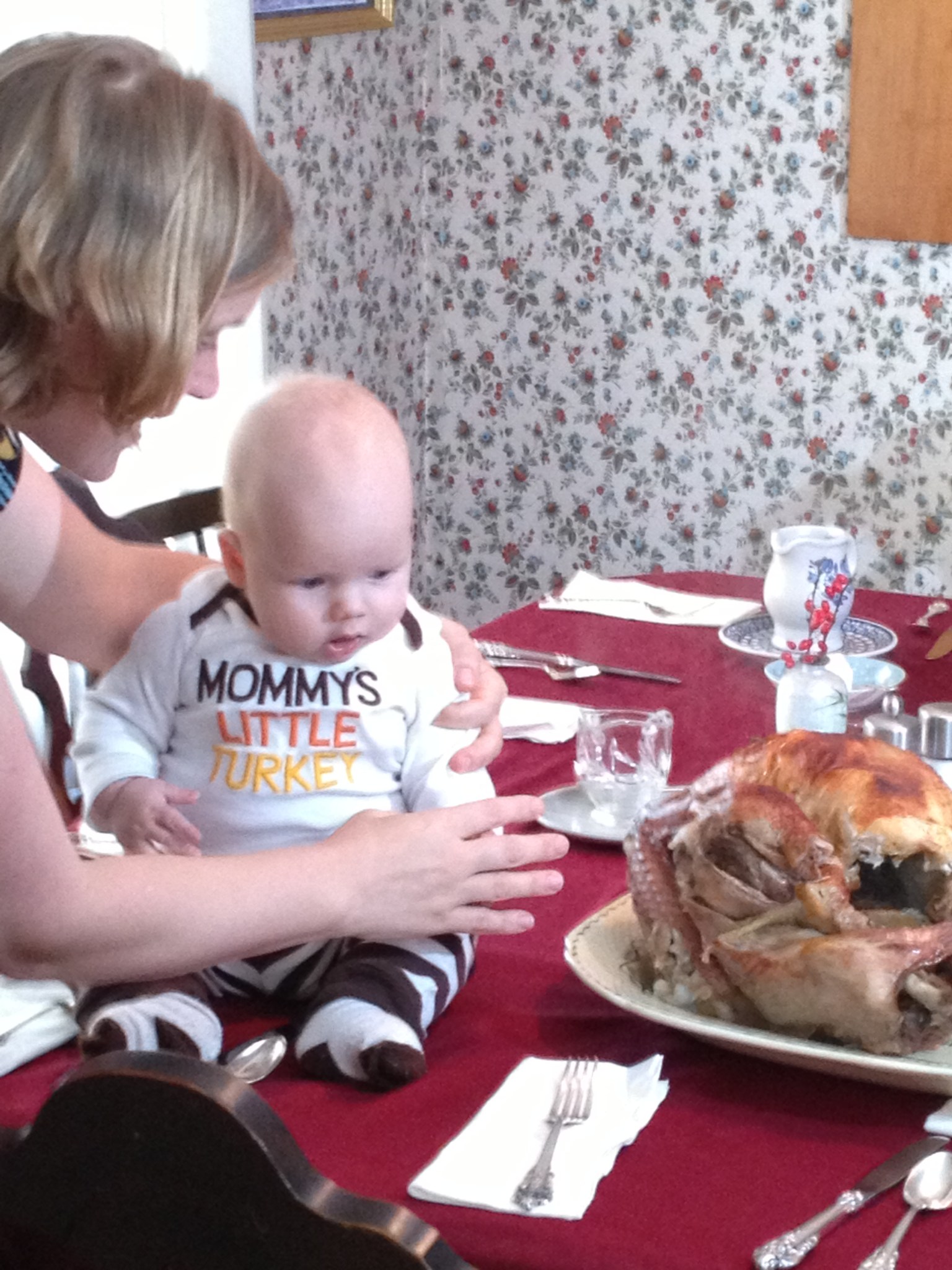
The Ronald McDonald House Thanksgiving

of turkey, fear, anxiety, and tears,

as my wife and her sons saw my daughter

for what we all knew would be the last time.

~

Well into the November of my life,

I mourn the green and teeming dreams I had,

The gaudy colored leaves of happiness,

chewed by anger and blackened by misdeeds.

Now naked of ambition, strength, shame, guilt,

but rooted in the rocky soil of Grace,

supported by my friends and families,

I raise my bony, brittle arms to sweep

away remorse, and cry in gratitude:

Thank you, thank you, and thank you, for it all.

~ ~

Thank God for Another Chance

~ ~

Thank God for another chance to fold a fitted sheet,

another chance to butcher a banjo tune,

another chance to win at Wordle.

~

Thank God for another chance to make a perfect cup of hot chocolate,

another chance to discover the perfect hot sauce,

another chance to pick the perfect pen.

~

Thank God for another chance to stroll in springtime through a carpet of pink lady slippers,

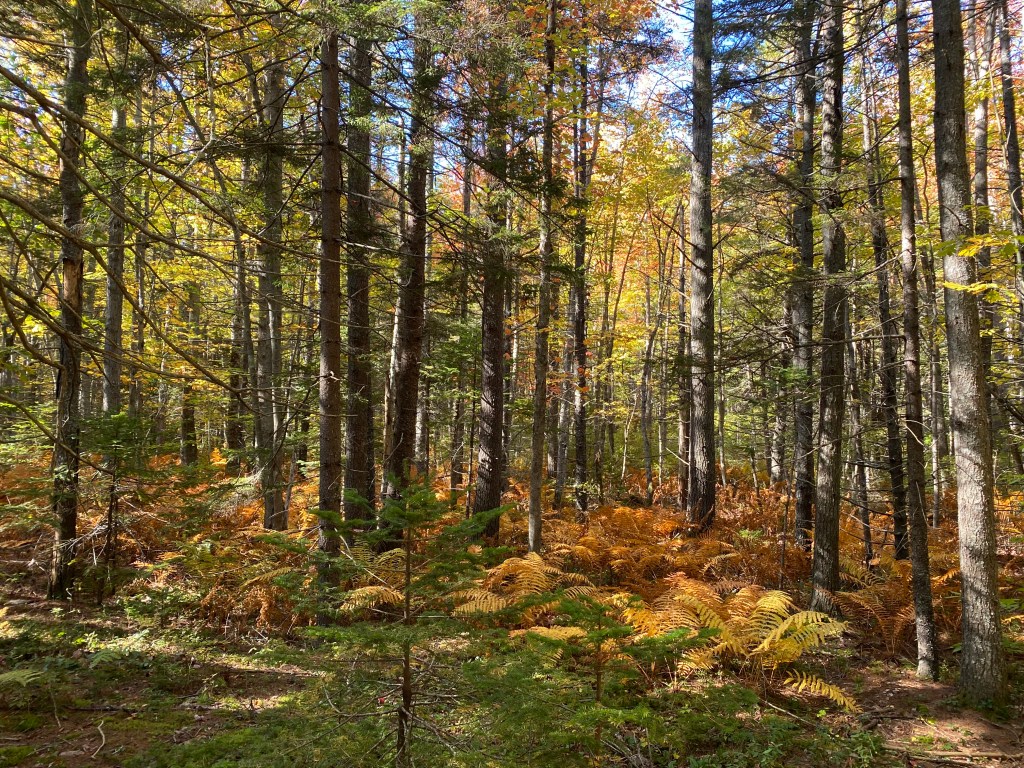
another chance to walk in autumn through golden bracken and red maple trees,

another chance to snowshoe in winter across a snow-covered pond.

~

Thank God for another chance to slow dance with my wife in front of the fire on a winter night 

to Patsy Cline singing “Sweet Dreams,”

another chance to admire my granddaughter casting a blood worm

into the Androscoggin River on a summer afternoon,

another chance to decorate our Christmas tree with five generations’ worth of 

ornaments. 

~

Thank God for another chance to shed the ten pounds I’ve never been able to lose,

another chance to read “Lord of the Rings” for the umpteenth time,

another chance to write a poem that just might actually be one.

~

Thank God for another chance to keep my mouth shut when I don’t have anything to say,

another chance to learn how to take a compliment without trying to convince you 

I don’t deserve it,

another chance to stop trying to figure out who I think you think I ought to be.

~

Thank God for another chance to say, “I was wrong,”

another chance to say, “I love you,”

another chance to say, “Thank you.”

~ ~

Wading

~

The setting sun lays down a carpet on the bay.

A school of clouds across the skyline floats

over humpbacked islands of pointed firs.

Closer to shore, three skiffs face out to sea,

and closer still, silhouetted

against the light, my wife wades, 

legs cut off at the knee by undulating waters,

back straight, arms out to the side for balance

(always important as we get older),

testing each step, her face turned to the sea,

while on this shore of tide pools and broken shells,

I, who find the water too cold,

the stones too sharp for my old feet, 

lean against a barnacle-encrusted rock

watching, wading in gratitude.

~

Scotty

Thnx to Scotty’s daughter, Jeanie, for the photo

~

Served as Tail Twister of the Lions Club.

He liked his scotch and Camel cigarettes.

Cheered our team at high school basketball games.

Oh, and by the way, he was my pastor,

who, when he ascended to the pulpit,

his black cassock haloed by white candles,

showed me that even short men with bald spots

can be—if only for an hour—holy.

~

Sitting above me in his purple chair

he would sometimes just slightly turn his head,

look down at my family sitting in

the right front pew and give us all a wink.

God, I learned from Scotty, looks after us

with a neighborly twinkle in his eye.

~

Nevertheless

Watercolor by Laurie L. Wile

~ ~

I’ve always known I’d never get

whatever it is I wanted.

No way, I’ve felt, do I deserve 

my desires—I’m just not worthy.

Nevertheless, my life’s been good.

~

(Of course, I’ve never known just what

I’ve wanted until somebody

told me just what I ought to want,

good co-dependent that I am.

Nevertheless, my life’s been good.)

~

There’s so much that I’ve never done,

and much that I’ve done I failed at;

places I never went to, and

places I never really saw.

Nevertheless, my life’s been good.

~

Often, I’ve been a hollow man,

trying to stuff his emptiness

with all manner of addictions

(the list’s banal, embarrassing).

Nevertheless, my life’s been good.

~

The faces of the people that

I’ve ignored, hurt, disappointed,

abandoned, disdained, or abused

haunt me in the wee small hours. 

Nevertheless, my life’s been good.

~

Now diminished by old age to

a funhouse mirror of myself,

I sense Death looking at his watch,

impatient, counting down the time.

Nevertheless, my life’s been good.

Through all of it, I have been loved.

~ ~

On Hope: an Admonition

#

Stop confusing it with expectation.

You’re going to be disappointed,

resentful, angry, pissed off at God

because the cancer didn’t disappear,

you didn’t get that new job you wanted,

Hurricane Hattie flooded your basement.

#

(Write this down: Don’t hope for anything

you can see, hear, touch, smell, or taste.)

#

And even if you do get to come home

from the hospital a day early,

or the car coming right at you swerves

away at the last saving second,

or your friend’s stock tip pays off enough

to finance an Aruba vacation,

please, please, please don’t proclaim to the world

how God in His goodness answered your prayers.

You’re only setting yourself up for

future resentment, not to mention

guilt and shame for having somehow displeased

His Royal Holy Hood.

#

Instead, divest, dismantle, ditch, doff, dump

expectations, anticipations, wishes.

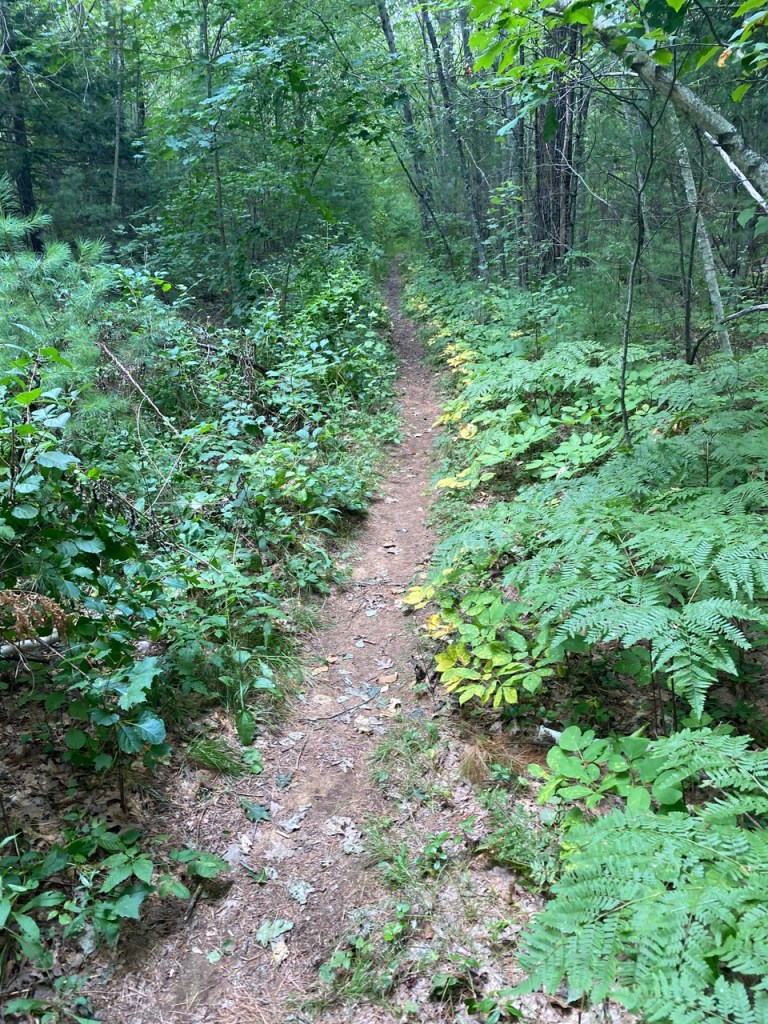
Take a deep breath, and go for a walk

along that path you’ve been walking all

your life. Don’t worry about what’s ahead

Here be dragons, right?—

but have a seat on this old tree stump.

Take more deep breaths, turn, look back

at all those times when, despite all your

mistakes, your blindness to injustice,

your embracing each Seven Deadly Sin

as if your happiness depended on it

while breaking all Ten Commandments

like you were making a hash omelet,

times when, despite your screwed-up family,

the hereditary overbite,

hip dysplasia, and weak heart,

times when despite the ugly divorce,

your daughter’s even uglier death,

all those goddamn operations,

the loss of lung capacity and libido,

you love the woman you wake up next to,

you sing to Sirius FM’s ‘Fifties Gold,’

you savor your morning hot chocolate,

you look forward to lunch with old classmates,

you feed the birds, play the banjo, plant

a garden, enjoy Wordle and Brit Box,

worshiping in silence, dabbling in poetry,

watching the grandchildren grow up.

#

Hope is not about getting what you want,

it’s about seeing what you already have,

the force that makes life worth living,

that same power that is pushing new growth

from this dead tree stump you’re sitting on.

#

Now, go get those dragons!
Welcome, November

#

As readers of this blog know, my daughter Laurie died at the age of 18 from a rare cancer. In November, seven months after the cancer was first diagnosed, she went into Eastern Maine Medical Center. Living 120 miles away, I took a leave of absence from my teaching job and moved into a Ronald McDonald House where I spent the next two months with my daughter until she died on December 23.

Since then, each November as the days grow darker and colder, I can feel my body chemistry change. I’ve coped in many ways, but the most helpful has been through writing. It’s no accident that the first Geriatric Pilgrim blog appeared in November 2015.

#

Sonnet for November

Novembers, I would drive my daughter past

Men in blaze-orange caps, crouched on a hill,

Their 30-30’s sighted, set to kill

Most anything, just so the gun would blast.

My heart began to flutter, then beat fast

As we drove by them—silent, savage, still—

And I could feel the air around us chill.

I’d think, how long, dear God, will this month last?

But I’ve since learned of other ways to die,

And russet hills now fill with memories:

Her gentle, kind, abbreviated life.

These days, I treasure the November sky

Which broadens once the leaves drop from the trees.

November wind is clean, a whetted knife.

#

Darkness

Now darkness begins:

light dimming after lunch,

long shadows on the lawn.

I curse the old lady

crossing the street

in front of my car,

lose gloves,

feel the familiar kick

to the heart. 

You’d think after all these years

I’d be over it,

but it’s always different…

this darkness…

Gone the murky numbness,

the black rages,

no more the dim corridors

of “if only” and “what if,”

lit up by Johnny Walker.

Now, who knows what waits 

in the darkness ?

Another old friend’s Christmas card

to bring me tears?

More recurrent dreams of stumbling

through stony landscapes?

Another season of bingeing bad TV?

Still, the waning light 

is clean and clear,

the view scoured of chewed leaves, 

dead flowers, black flies.

And sometimes, just sometimes,

Love enfolds my fears,

and I hear Laurie whisper, 

“Dad, let the thoughts go.

Let darkness begin.”

Walking at Sunset

 fullsizeoutput_1756

#

After a wonderful but hectic Thanksgiving, Mary Lee and I spent a weekend on retreat at the Episcopal monastery of Society of Saint John the Evangelist in Cambridge, Massachusetts, a place we’ve been coming to for twenty-five years in search of silence and slow time. On Saturday afternoon, because the sun sets in this part of the world around 4:00 p.m., I decided to catch the last daylight and take a walk before Evening Prayer.

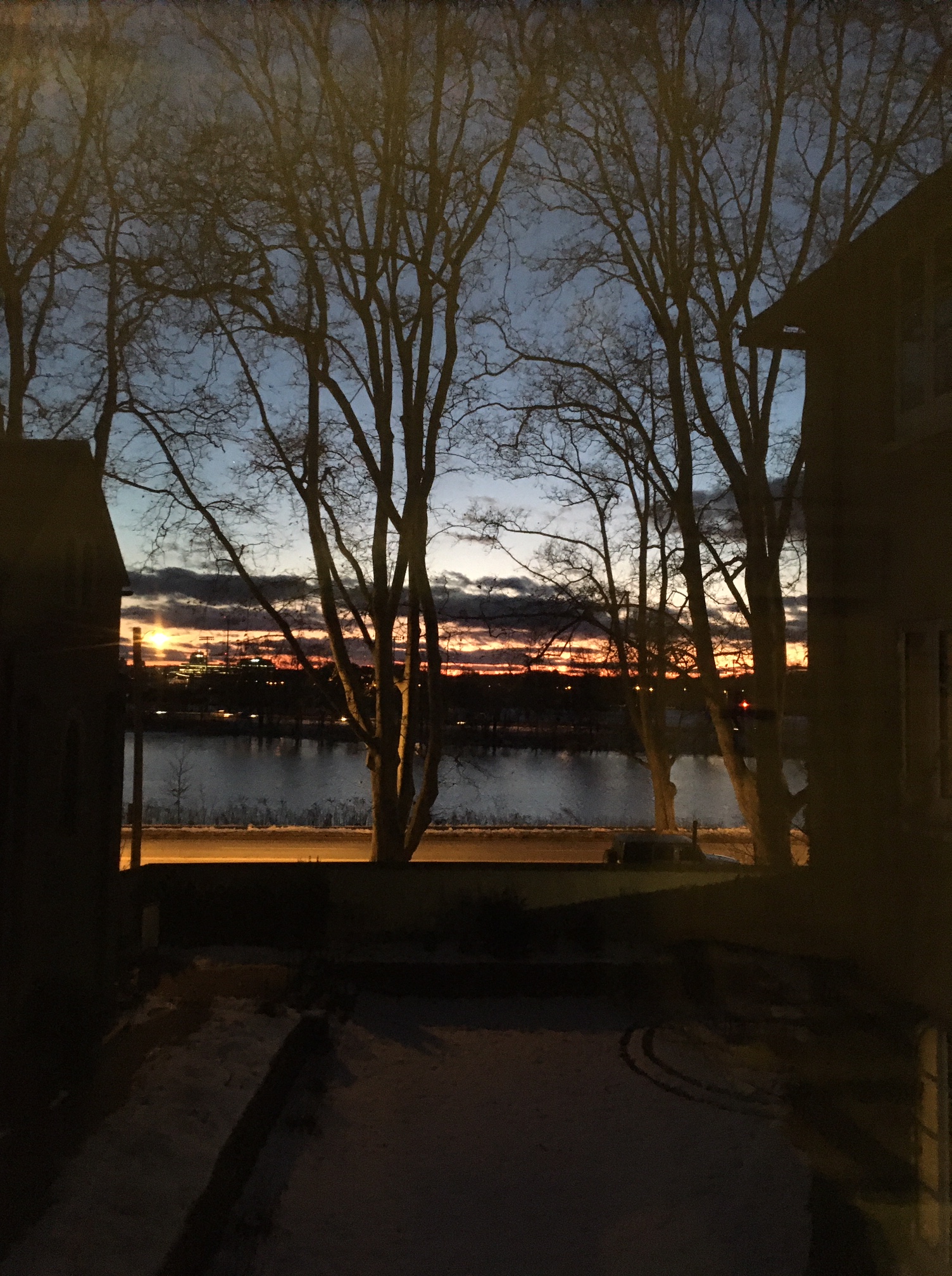
As I left the monastery, the sun was buttering tiers of purple clouds over the Boston skyline. I jay-walked across Memorial Drive, turned right, and joined the joggers, walkers, and cyclists on the path along the Charles River—a mix of races I don’t see in Maine, some talking into microphones and headsets, others conversing with one another, possibly in Chinese.

After about a quarter of a mile, I passed the Riverside Boat Club. I turned left to cross the Eliot Bridge, pulling up the collar of my coat against a raw wind coming down the river. The late afternoon sun and clouds reflected in the rippling waters of the Charles, the lengthening shadows of the sycamores, and the dank, November wind all churned up memories of another wind coming down another river thirty years earlier. I saw myself walking back from the Eastern Maine Medical Center to the Ronald McDonald House after spending the day watching my eighteen-year-old daughter die a little more from the cancer ravaging her body. I recalled the Christmas tree sellers in their vans and pick-up trucks in Cascade Park at the bottom of the hill across from the Penobscot River and how Christmas seemed at the time like some horrible joke played on the human race by a sadistic god promising peace on earth, good will to all, and then inflicting more war, poverty, disease, and death on us suffering buggers.

Now, however, I realized as I turned left after the bridge and started walking along Storrow Drive, that although I could still vividly picture details from my walk back from the hospital—the seagulls circling over the river, the mansard roofs on the houses—I could no longer feel the anger, confusion, and shame that once consumed me. Thanks to prayer and meditation and spiritual direction—much of which happened at the SSJE monastery—I’ve had joy as well as pain since Laurie’s death. Last summer I had heart surgery which has given me renewed hope that I may be around to watch my grandchildren grow up.

#

The sun dropped, gilding the tops of buildings on my right. The clouds became red and gray. Just outside a patch of skim ice near the shore of the river, a dozen geese floated tranquilly, while on the other side of me, rush hour traffic hurdled by. Horns honked.

The geese reminded me of my father-in-law, George, who used to urge his employees to work like ducks on the water: calm and serene on the surface, paddling like hell underneath. He was the one who introduced me to this walk around the Charles; he made it almost every day. One of the most gracious men I’ve ever known, he and his wife Elaine retired to Cambridge to an apartment just three doors down from the monastery, which made it that much easier for Mary Lee and me to become part of the SSJE community.

Hearing the whooshing traffic, I recalled that George used to carry a plastic bag with him when he walked here, collecting what he called “street glass,” bits of broken head and tail lights from the innumerable accidents caused by Massachusetts drivers along Memorial and Storrow Drives. By the time Elaine died and George left 985 Memorial Drive for a retirement community in Lexington, he’d collected enough colored glass and plastic to fill I don’t know how many glass jars, which reposed on bookcases and windowsills all over the apartment.

Looking across the river back at Memorial Drive, I imagined Elaine, standing in front of her window, holding her glass of gin, watching the sunset behind me before heading back to the kitchen to finish preparing another of her gourmet dinners. She used to rate sunsets; I thought she might give this one a “7” or an “8.” So I made it a “7.5.”

When she died, her service was held in the monastery, and I remembered the Brothers’ chanting, and the reception back at the apartment, monks mingling with the family of academics, doctors, and journalists I married into. When George remarried, four years later, it was in the monastery, as was his funeral ten years after that.

fullsizeoutput_1755
The SSJE Monastery from across the Charles River

#

Crossing the Weeks Foot Bridge in front of Harvard’s Leverett and Dunster Houses, I realized what an important part the monastery and the Brothers have played in my life for the last twenty-five years. I walked back Memorial Drive, past Winthrop and Eliot Houses, through John F. Kennedy Park, recalling my spiritual directors who guided me along the rocky road of grief—showed me that I couldn’t keep thinking of Laurie as some photograph in an old album, that if I actually believed in this thing called resurrection,  I needed to father an ongoing relationship with her, think of her as being somehow present, here and now.  And indeed, the first time after her death when I felt her touch was as I sat at a desk in one of the guest rooms of the monastery.

I thought about how my retreats and pilgrimages intertwine, like the design on the Celtic cross tattooed on my forearm. Yes, I go to the monastery on retreat to withdraw from what Jesus and St. Paul call “the world,” but I’m also making a pilgrimage to answer a call, draw near the sacred, find a source of healing, and pay homage to those I think of as the saints in my life: Laurie, George, Elaine, the Brothers who have died, like Brother Eldridge, who helped me see that like the Father in the Parable of the Prodigal Son, I can wait in continual hope for my child, sending out my love in the confidence that she’ll receive it, or Brother John, my first spiritual director, who told me, “No, I can’t help you cut down on your drinking, but if you decide you want to quit, I’ll do everything I can to help you.” Or those Brothers who continue to buoy me, like Brother Curtis, the first monk I ever talked to here, and Brother James, whom I’ve watched lose hair, put on thirty pounds, and become Brother Superior at SSJE.

IMG_4217

#

By the time I opened the gate and entered the monastery courtyard, the sun had disappeared; inky layers of clouds, however, were still striated with gold. Streetlights glowed and lambent windows in the apartments along Memorial Drive looked warm and urbane. The illuminated cross in front of the door to the guest house welcomed me home. Although I’d been gone less than an hour and had walked maybe two miles, it felt like a much longer journey.

IMG_4377

# #


Of Luck and Grace

The_First_Thanksgiving_cph.3g04961
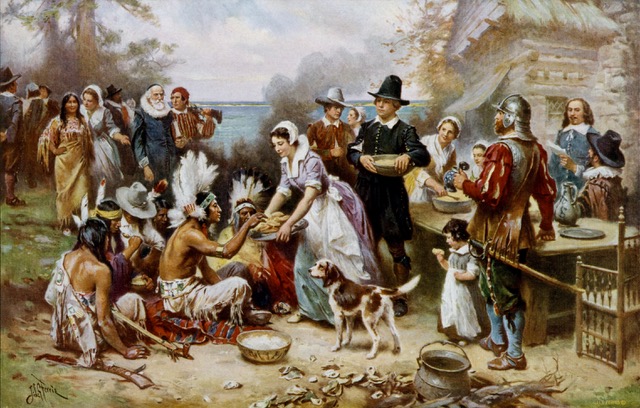
The First Thanksgiving, 1621—J.L.G. Ferris/The Foundation Press, Inc./Library of Congress

#

The first time I ever heard about “pilgrims” was as a kid learning about some people by that name who sailed to America to have Thanksgiving dinner. Later, I learned it was a little more complicated than that—that these people were actually “Separatists” who had broken from the Church of England and come to this country by way of Holland in search of religious freedom. But they thought of themselves as pilgrims (the first child born in the Plymouth Colony was named “Peregrine,” which means pilgrim), travelers on a journey to find a home where they could worship the God of their understanding. The name stuck.

My sister tells me that she, my brother, and I are the descendants of John and Priscilla Alden and George and Mary Soule, couples who came over on the Mayflower, which may account for why I think of myself as a pilgrim and why Thanksgiving is my favorite holiday of the year. It’s a day to be with family and to give thanks.

This year, however, besides counting blessings, I’ve also been thinking a lot about luck.

Last spring, when I happened to mention to my family doctor during a routine follow-up to an earlier procedure that I was getting more and more out of breath, he told me to get a stress test and get it soon. Which I did and which led to an arterial catheterization which led to by-pass surgery. Now, I feel great. I have more energy than I’ve had in years.

I want to thank God for my good fortune, feel that I’ve been blessed. Except: as anyone who’s read this blog knows, the pivotal point in my life was the death of my eighteen-year-old daughter in 1988. Laurie didn’t smoke, didn’t drink, didn’t even eat meat. Still, she was the victim of Primitive Neuroectodermal Tumor, a rare and virulent cancer that when it strikes, usually attacks much younger children.

So how can I thank God for my life, while letting God off the hook for Laurie’s death?

Since my surgery in July, two men whom I’d known fairly well dropped dead from the same type of blocked left main artery that I had. Both men were active; both seemed healthy; neither was overweight; both died while exercising. Why am I still alive and they’re not?

I’m reminded of the evening of September 11, 2001, when our church held a meeting for all those who wanted to respond to the bombings of the twin towers and of the pentagon. At one point, a woman—let’s call her Agnes—rose and said that her son had been working that day in the South Tower, but that he was safe. “I want to take this opportunity to thank God for protecting my son four times.” Agnes said. “God showed him the way down the stairs. He moved him out of the way of fallen debris twice. He provided my boy with a private boat to offer him a ride across the river to Hoboken. I’m so grateful!”

I was happy for the woman. I was sure her son was a great guy. But I asked myself then and I ask myself now: why did God save him and let 7,000 other people die?

So although I want to thank God for my being able to be sitting here tapping out this blog instead of moldering in an urn under the snow in our family’s cemetery plot, I have to think that I was lucky, just as my daughter was unlucky enough to carry the wrong combination of inherited DNA to make her susceptible to the cancer than killed her.

Does this mean I’m not grateful this Thanksgiving? That I don’t think my Higher Power affects my life? That I’m not blessed?

Absolutely not.

As I think about how “unlucky” I was when Laurie died, and how “lucky” I am now, I find a common thread. In both instances I’ve seen, as I usually don’t, just how precious, how holy life is. I’ve never enjoyed the autumn foliage as much as I have this year. I don’t even mind (much) standing in line at the grocery checkout line.

I’m also aware, even though it’s hard to articulate, of a growing sense that this life is always being renewed, even reborn. That what I, as a Christian, call resurrection didn’t just happen once to one person, but happens to all of us many times. Someone said to me the other day that I looked like a new man. Well, in some ways, I am. I have a new heart.

Getting that new heart was at times painful; still, it was nothing like thirty years ago, when Laurie’s death broke me open. But although that hurt in ways I hope I’ll never have to feel again, her death also opened me to receive love and joy that I’d never experienced before in my closed off, child-of-alcoholic, New England male life. And it’s this experience that I’m guessing we’ve all had sometime in our lives—where from somewhere we get the strength not only to carry on but also to laugh and sing when by rights we ought to give up and die—that I give thanks for.

Which I think is the difference between luck and Grace. Luck depends on circumstances. Grace, on the other hand, is there for everyone all the time.

So I’m looking forward to Thanksgiving. This, despite sorrowful memories of my father, one of my grandmothers, and my mother-in-law all dying during the week of Thanksgiving, and a painful recollection of a Thanksgiving at the Ronald McDonald House after which Laurie’s two stepbrothers saw her for the last time. Or maybe those deaths actually help make the celebration more joyous. That when Mary Lee’s children and their families and her sister and sometimes her family come, we are surrounded by what St. Paul calls “Clouds of Witness.”

That these loved ones died, that my daughter-in-law is about to undergo surgery for cancer, and that one of my grandchildren is emotionally scarred from having been abused by her pre-school teacher is probably a matter of bad luck. That for the most part our families have the health and the means to come to our house for Thanksgiving and that Mary Lee and I feel well enough and are financially secure enough to host them is probably a matter of good luck. But that we are able to celebrate, to laugh, to cry, to love together is, I believe, a matter of Grace.

When I was finishing this blog, Mary Lee sent me a daily reading for November 22, 2019 (the anniversary of John F. Kennedy’s assassination, appropriately enough) from a website called gratefulness.org.

Grief and gratitude are kindred souls, each pointing to the beauty of what is transient and given to us by grace.—Patricia Campbell Carlson

Yup. Happy Thanksgiving, y’all.

IMG_0343
Another Thanksgiving, a few years later…

# #