Behold, I give unto you power to tread on serpents and scorpions, and over all the power of the enemy: and nothing shall by any means hurt you.—Luke 10:19
Staring at my 3 a.m. fears—A burning planet, a demented president-elect, disease, death—I think of you for the first time in years: first friend, neighbor, bodyguard, mentor, and, although three years older than I, my classmate from fifth through seventh grade.
Thick black hair and an Elvis sneer, Kirk Douglas dimple in your chin, sleeves rolled up as far as they’d go to show those growing muscles, your dark eyes often flashed anger at the world, but also amusement and compassion for the pudgy, awkward kid who worshipped the ground under your motorcycle boots.
Buddy Fitts, Freddy Gallant, Bucky Lapoint—none of the playground bullies—dared trip me, twist my arm, scrub my face with snow, because they knew they’d have to fight you first. And you were tough: sauntering up Bridge Street coatless in a ten-degree storm, snow clinging to your hair like chainmail on the Black Knight, carving your name on your veiny forearm with a Gillette Blue Blade.
In class, you never raised hell, never passed in a paper, just sat in the back seat looking cool until you turned sixteen and could legally split the joint. You cut CAROL into your upper arm and went to work in the cotton mill.
Playing basketball, fumbling with the buttons on Daisey’s sweater, I hardly knew you’d left. Never saw you much afterwards. Heard you and Lapoint started a paving business.
Home from college, I once walked by your house. You hadn’t grown since grade school but your tattoo was cool—a tiger’s head spanning your boney back as you banged away on a rusty Chevy. We grunted greetings. I forgot you.
At our 50th high school reunion, your cousin Roland said you lived in Tennessee, belonged to some Pentecostal church that prays with poisonous snakes to show God’s power over evil.
This dark morning, my friend, I think of how you protected me, wish you were here to keep me safe from the serpents slithering around me.
As readers of this blog know, my daughter Laurie died at the age of 18 from a rare cancer. In November, seven months after the cancer was first diagnosed, she went into Eastern Maine Medical Center. Living 120 miles away, I took a leave of absence from my teaching job and moved into a Ronald McDonald House where I spent the next two months with my daughter until she died on December 23.
Since then, each November as the days grow darker and colder, I can feel my body chemistry change. I’ve coped in many ways, but the most helpful has been through writing. It’s no accident that the first Geriatric Pilgrim blog appeared in November 2015.
#
Sonnet for November
Novembers, I would drive my daughter past
Men in blaze-orange caps, crouched on a hill,
Their 30-30’s sighted, set to kill
Most anything, just so the gun would blast.
My heart began to flutter, then beat fast
As we drove by them—silent, savage, still—
And I could feel the air around us chill.
I’d think, how long, dear God, will this month last?
But I’ve since learned of other ways to die,
And russet hills now fill with memories:
Her gentle, kind, abbreviated life.
These days, I treasure the November sky
Which broadens once the leaves drop from the trees.
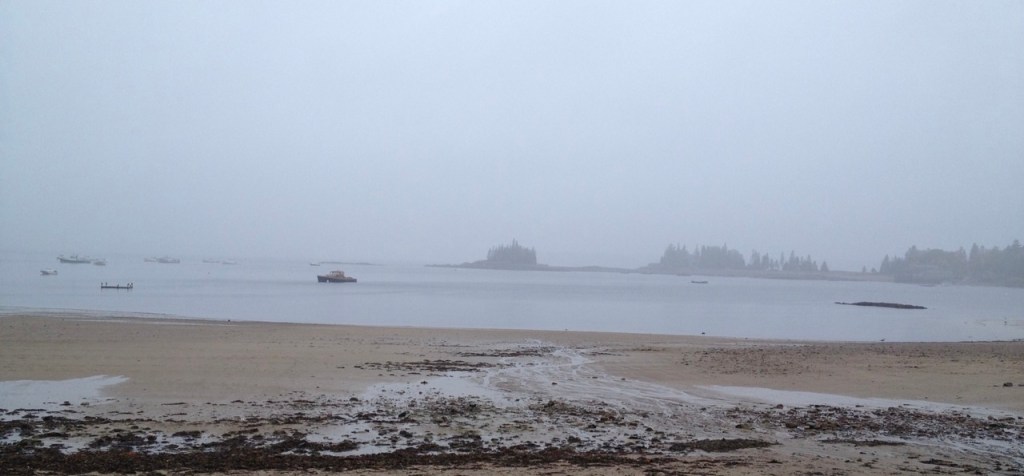
The beach just down the hill from where I used to live in my “other life.”
#
6:45 a.m. Driving up the turnpike from Brunswick to Bangor, headed down east to Mount Desert Island, I’m apprehensive. I’m returning to what I’ve always called my “other life”: different marriage, different house, different job, different hobbies, different self. A self, quite frankly, I’ve never liked very much.
But I’ve received an invitation to attend the 50th high school reunion of the Mount Desert Island Class of 1974. For many of these students, I was their English teacher as well as senior class advisor. And while I have, at best, mixed feelings about this other life, I enjoyed teaching at MDIHS and have continued to be in contact with some of these former students. I’d really like to see them.
My name tag at the reunion.
The reunion is tomorrow, but besides an invitation to the reunion, I’ve been asked to talk about my book, The Geriatric Pilgrim: Tales from the Journey at a gathering—which I figure will mostly be former students— in Bar Harbor a few hours from now. So, while I watch the leaves change color as I drive north, I try to figure out what I’m going to say.
I know I’ll start by saying the most important thing I learned in writing The Geriatric Pilgrim was that the physical pilgrimages Mary Lee and I made to places like Iona, Big Sur and the redwoods, Nova Scotia, Israel, Africa, and Turkey have shown me that any journey—including the one we make as we age (and these former students are now all pushing 70. Good God!)—can be a pilgrimage. Especially if looked at with curiosity and openness, as explorations to discover new facets of ourselves, seeking surprises rather than security, looking for evidence of and trusting in a power greater than ourselves.
Then, I think, Okay, if any journey can be a pilgrimage, that means this trip back into my other life is a pilgrimage. How?
When Mary Lee (who is sitting beside me, looking at a map of Maine—she loves those big unfolding maps that take up half the front seat) have gone on a pilgrimage, we often talk about what new insights we’re bringing back with us which we can use in the future. So, what lessons did I learn during the seventeen years I spent at MDIHS that have stayed with me?
Well, I’ve always said that those years were the best teaching years of my life. I’ve taught in other schools, some with more impressive teachers, some with smarter students, some with better sports programs, a wider variety of extracurricular activities, more opportunities for materially or intellectually challenged students. But what made MDIHS different was that, despite the annual arguments about the budget and the tensions about dress codes and what was being taught, the parents, the school board, the administration, the faculty, and the students all agreed on one thing: MDIHS was a good school. And because we all thought it was a good school, it was—winning national awards for excellence.
MDIHS in the early years. My room was the closest on the end.
Making a pit stop at the rest area outside of Bangor, I realize how I frame the reality of my life determines how I see that reality, which in turn determines how I live that reality. Thinking we had a good school, I went to work each day excited and proud to be there (okay, not every day, but I can honestly say, most days) which made me work harder, which made me a better teacher and the students better students. Fifty years later, when I can think of my aging not as a problem, but as an opportunity for growth, I’m less anxious about what I can no longer do and more curious about finding new things I can do, more grateful for those things, which makes me more pleasant to be around.
Back in the car, however, turning on to Route 1A and heading for the coast, I ask: if MDIHS was such a great place to teach, why did I leave, and in the middle of the school year? What’s the lesson there?
It probably begins with that guy I used to be—the one I’ve never liked. Come to think of it, he didn’t like himself either. Despite the accolades (one state evaluator said my Advanced Placement English class rivaled the one at Phillips Exeter), I was not a happy camper. I’d created this persona—loud sports coats, matching ties and pocket handkerchiefs, green ink corrections symbols and sarcastic comments in the margins of papers, pictures of sixty-four famous authors glaring down from the walls—which began to feel like a body bag.
Soon after waking up one morning gasping for breath as if someone had their hands around my throat, I resigned. In the middle of the school year. Moved out of my house, divorced my wife, married another woman, and moved 120 miles away to teach not AP seniors but freshman juvenile delinquents (one of whom as far as I know is still in prison for murder).
And I think the reason I’ve never liked that guy in my other life is that I’ve always thought he was a fraud. But thinking about it, I honestly liked my job, and I wanted to honor my profession by looking and acting my best. I recall reading in David Whyte’s book, Work as a Pilgrimage of Identity, something to the effect that the things which once served us can imprison us if we remain with them too long.
Which, as I think about it, is also true as I age. I can’t hold onto those activities, that self-image, those beliefs that once sustained me. When I think about making a new pilgrimage, I can’t plan—or I shouldn’t, anyway or I’m going to be disappointed, either that or die—to hike the Appalachian Trail or climb Mount Katahdin, but I can continue the journey toward what I might, for lack of a better word, call my true self. A journey, I realize, that began when I left Mount Desert Island, maybe even before.
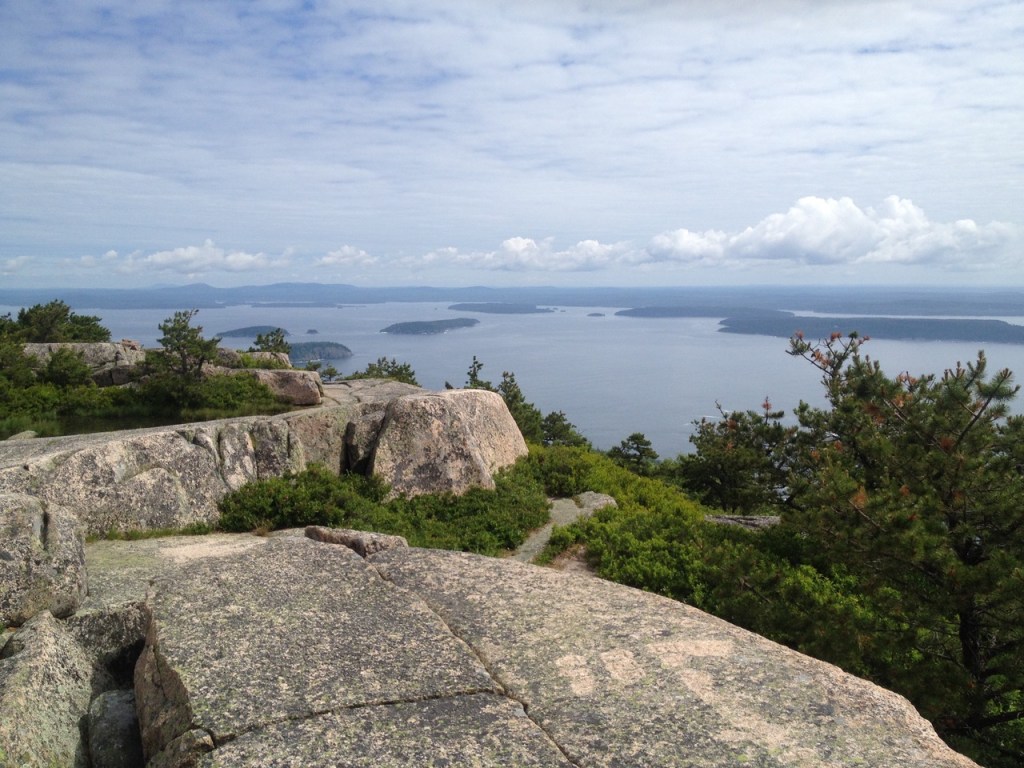
Speaking of which, I can now see MDI on the horizon, its rocky silhouette reminding me that this is one of the most beautiful places on earth. I remember, especially in those days when most of the tourists went home after Labor Day, how many afternoons and weekends I spent walking the trails and beaches there. And I realize that those walks were the beginning of what I call —somewhat euphemistically perhaps—my spiritual journey. Sitting on the top of one of the mountains, looking out over the neighboring islands, I experienced not only the inchoate presence of a Higher Power, but also a vague sense that everything belongs.
I needed help interpreting these experiences. Which led me to religion. When I first began teaching on the island, I hadn’t been in a church since I was married in one, and by the time I left seventeen years later, I was not only a member of a church but a member of the Board of Deacons. I sang in the church choir. I advised a church youth group.
It dawns on me that without Mount Desert Island, there’d be no Geriatric Pilgrim.
I also see that I have no “other lives,” only this one—one that has been unfolding, like one of Mary Lee’s maps, from the beginning until now and will keep unfolding (I’m guessing; I’m curious to find out) after my earthly death.
Wow! Now, if I can just remember to talk about some of this an hour from now…
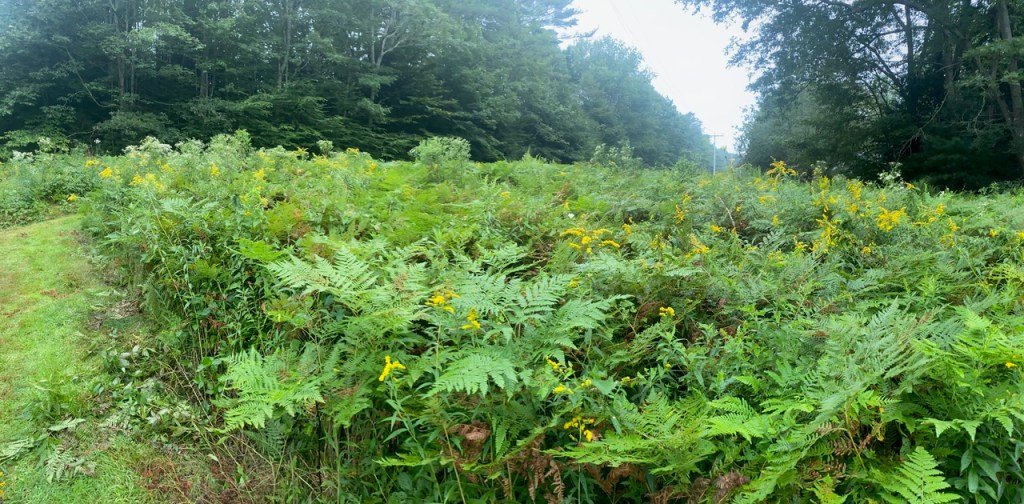
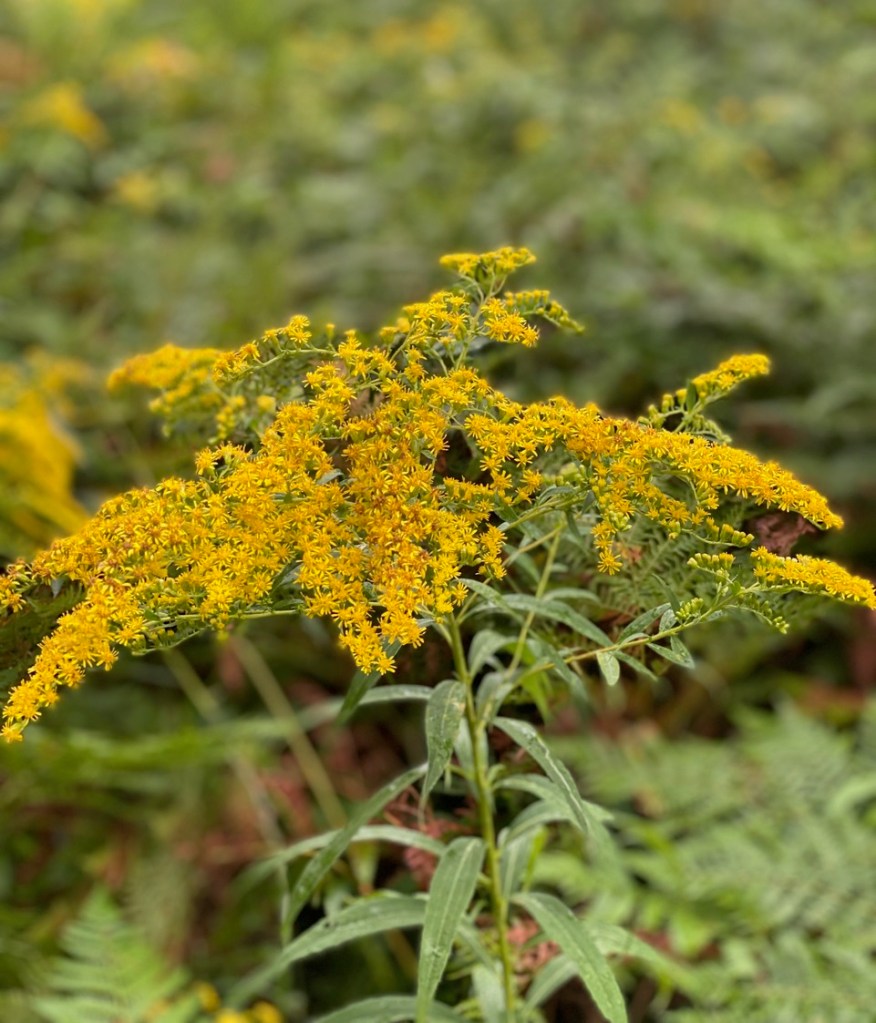
I’m walking the grass loop around our housing development. Under the power line toward the community garden, I pass through what is now a shoulder-high host of Queen Anne’s Lace, golden rod, milk weed, bracken, and many other plants I can’t name. The flies swarm. The sweet songs of the cardinals and tufted titmouses (titmice?) have given way to the screeching of blue jays and crows. Monarch butterflies flit from flower to flower. The air smells ripe. Shadows crawl like the incoming tide over the landscape. Summer is ending.
And I feel myself coming alive. Beginning again.
The reason is simple. For seventy-five years—as a student, as a teacher—the golden rod, the lengthening shadows, the Monarchs, have meant the beginning of another school year. More than New Year’s Eve, more than the first warm day of the year, this is the time when, at some deep cellular level, I can feel myself waking up, ready to start anew.
It’s a good feeling. At my age, it’s easier to focus on endings than beginnings. I now celebrate—if that’s the right word—more birthdays of the dead than of the living: my grandparents, my parents, my daughter, my first wife, close friends. Ended are my long hikes, long distant driving, lifting anything over forty pounds, staying up after midnight, jumping into bed with my wife after a sexy movie (jumping anywhere, for that matter), five-course meals, Cuban cigars, Laphroaig Scotch… the list grows longer each year.
But as T.S. Eliot wrote, “In the end is my beginning.” (Hey, I’m an old English lit teacher, I remember stuff like that.) You can’t begin something until something else ends. School can’t start until summer ends (Yeah, I know, there’s summer school, but I’m trying to make an analogy. Don’t confuse me with technicalities.) It took the end of a disastrous year of studying forestry in college for me to begin my studies in English (which is why I’m quoting T.S. Eliot and not The Journal of Forestry.) It took the end of an unhappy 20-year marriage for me to begin a happy going-on-forty-year one. It took the end of a career in public education for me to go back to school for an MFA, write a couple of books, a bunch of essays, and going on nine years’ worth of blog posts.
So, what will I begin this year? Well, Mary Lee and I have a couple of trips planned (knock on wood: last year, we had three planned and they were all canceled). I will scrape and repaint my front door and clean out the garage.
But the biggest change I want to make is with The Geriatric Pilgrim.
When I began these blogs, I was fascinated by the idea of pilgrimage: how a pilgrimage differs from a vacation, or from going on a retreat, or from study programs (what I called “edu-cations”). Besides traveling to retreat houses and other spiritual sites in the United States, Canada, the British Isles, Israel, Turkey, and Africa, I collected pages of definitions of pilgrimage and of common characteristics of pilgrimages. I read a raft of books about various pilgrimages people had made.
Along the way, I became intrigued by my fascination with pilgrims and pilgrimages. What was in it for me?
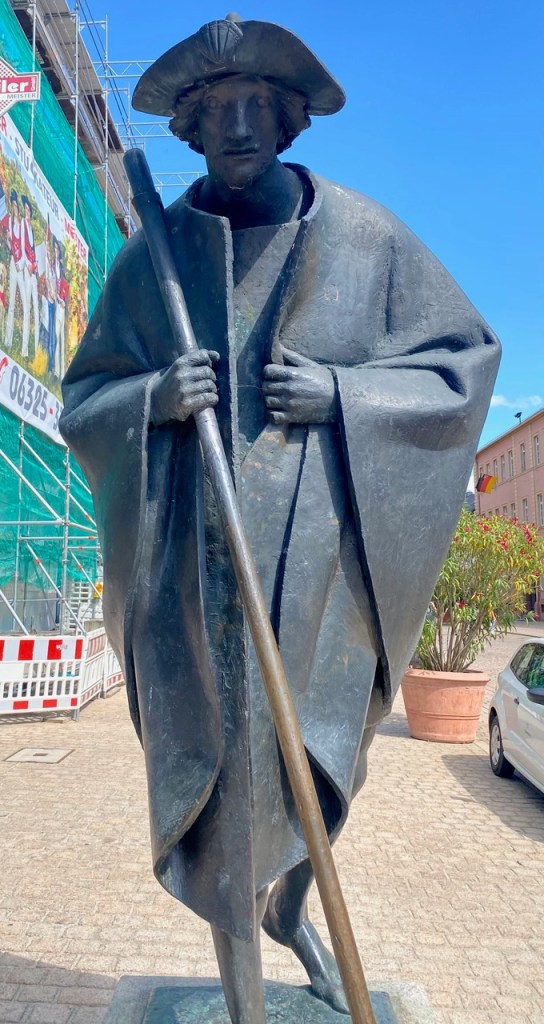
Stature of a “Jakobspilger,” or St. James’s pilgrim: Speyer, Germany
Well, probably the main thing at the time was the idea that pilgrims are often searching for a source of healing. As you know if you’ve read these blogs, I was looking for healing after the death of my eighteen-year-old daughter from a rare cancer. And I found writing about the various pilgrimages Mary Lee and I had made even more healing than the pilgrimages themselves.
Gradually, I began to realize that pilgrimage is a frame of mind—an attitude of curiosity, detachment, wonder. It’s “traveling light,” as one writer says, of risk, of living in liminal space—leaving one location but not yet arriving at another—of exploration, the end of which, to quote T.S. Eliot again, “Will be to arrive where we started/And know the place for the first time.”
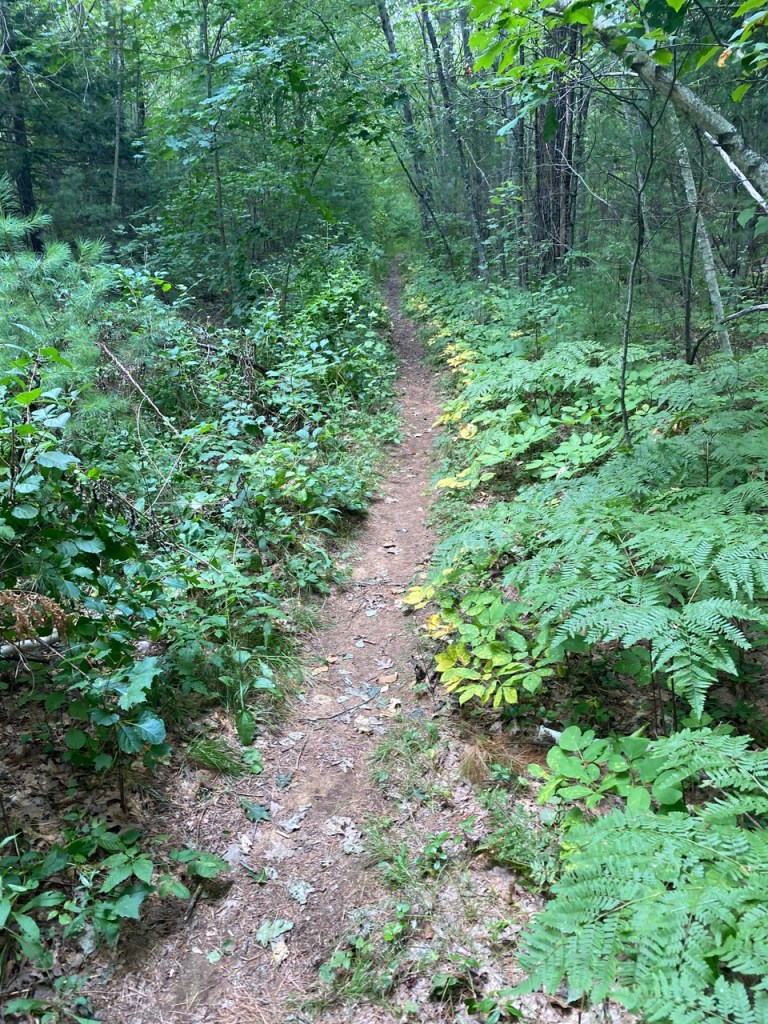
Since COVID arrived, with all its restrictions on travel, followed by my 80th birthday, with its expanded waistline and diminished abilities, my blogs have focused more on applying the lessons of pilgrimage to my current life of walks in the neighboring woods, planting peas, tomatoes, and pumpkins in our community garden, and of exploring the twelve steps of my Al Anon program. This, too, has been healing.
But now I find myself no longer as interested in finding new ways to describe my pilgrimage, as I am in describing and exploring in more depth the landscape through which I’m traveling, a landscape that is always changing, sometimes in ways that please me—autumn color is just around the corner, the grandchildren are growing—sometimes in ways that piss me off or frighten me—the start of my favorite woods walk has been clear-cut, I’m finding it difficult to sing without coughing.
Writing about these joys and sorrows, I find I’m writing more poetry. I’ve just finished an on-line workshop for poets, and one of the highlights of my week is another on-line group of poets from all over the country, where we share our favorite poetry as well as poems we’ve written. I’m now subjecting my longtime writing group here in town to my poems.
So, I’m going to be posting more poetry here in these blogs as well as other experiments—prose poems, flash fiction and nonfiction—trying to look more closely at the physical and emotional landscapes through which I’m now traveling.
The way I see it, my pilgrimage continues, but the lens through which I’m seeing it and the voice in which I’m describing it is changing.
I’m excited to see where this journey will take me.
And hoping you’ll continue to join me.
So, let part of my life end, and another begin.
As Quakers say, when one door closes another opens.
I’m aware of how old I am when I recall that one of my chores when I was kid was to lug old newspapers, magazines, cards and letters, anything paper, out to the old oil barrel in the back yard and burn them. No curbside pickup in those days. (Hell, our town didn’t even have curbs.) It was not a job I liked. Sometimes, I burned myself; sometimes my fingers went numb in the cold; sometimes it took me two or three or more kitchen matches to get a fire started, depending on the wind, which sometimes blew acrid smoke in my eyes.
In those days, fire was a physical force to be endured, and I was more than a little afraid of it.
Sunday School didn’t help. Mrs. Raines warned that if I wasn’t good and didn’t do my chores, I might go to Hell, which was a place of fire and brimstone (I didn’t know what brimstone was, but I was pretty sure it burned)—words I often recall when I think of the fires around me these days: the ecocide of our planet, the continued threat of nuclear annihilation, riots on our streets, countless false messiahs fanning the flames of our differences.
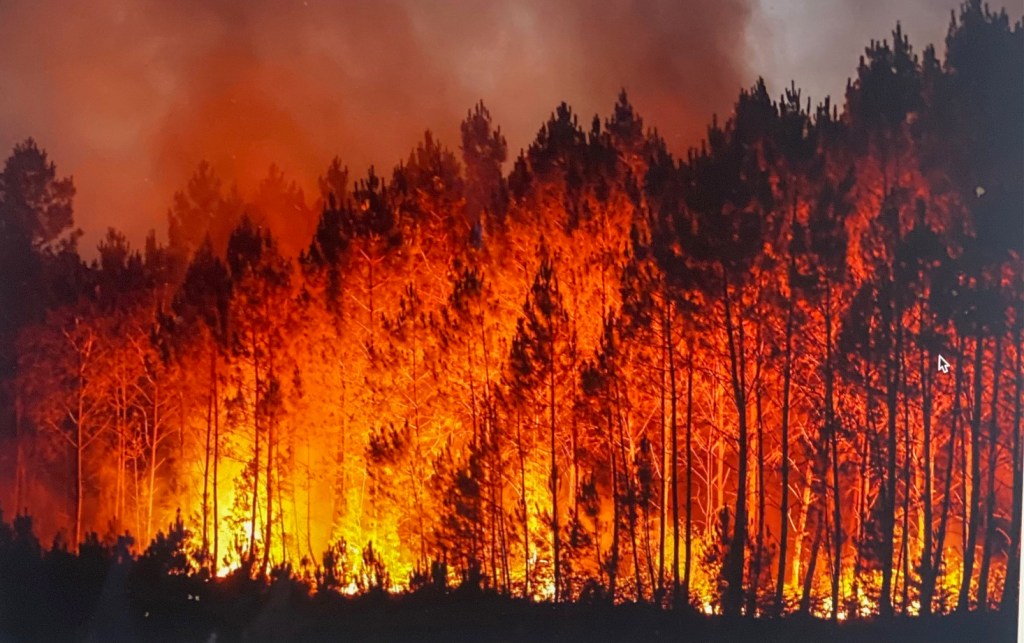
A dozen years or so after Sunday School, I saw worlds—or at least woods— go up in flames. I worked for the U.S. Forest Service on a regional Hotshot Crew based in McCall, Idaho. (The term “hotshot” describes those who work on the hottest part of a forest fire.) Looking back, it was hot, dangerous, and grueling work, and my lungs carry the scars from those fires.
But at the same time, I loved the physical challenge. (Hey, I was 20!) And there’s been nothing in my life like the thrill of watching a forest fire racing through the tops of trees. It was frightening, but at the same time enthralling.
I also learned that despite Smoky the Bear’s telling me, “Only you can prevent forest fires!” (What a burden to put on kids!) most of the fires I fought were caused by lightning strikes and that the occasional fire was actually good for the forest. When flames consume organic matter, nutrients are released back into the soil. Fires can thin the canopy allowing more sunlight to reach the forest floor, encouraging the growth of native species and eliminating invasive weeds. Fires can promote species diversity. (Some species, such as the karner blue butterfly and the wood lily depend on fire to survive.) Fires can improve habitats for wildlife by reducing dead vegetation and stimulating new growth, which can provide food and cover.
During my first marriage, I used to help my then father-in-law burn brush in the winter. It was an all-day activity. We gathered all the limbs and underbrush we’d cleared during the year from around his house, piled them on a couple of old tires filled with gasoline and set it ablaze. I was still in good physical shape, and I enjoyed the exercise. But I experienced another aspect of fire as well. Poking at the burning brush in the gathering darkness, gazing into the flickering shadows cast by the fire on the surrounding snow, I sensed my ice age ancestors dancing around the flames which protected them from wild animals and the cold.
A couple of weeks ago, Mary Lee and I watched two fireflies sparking the summer night. A little research told me that fireflies produce light in special organs in their abdomens to find mates. When a female sees a male making a signal, she flashes back. Then the two reciprocally signal as the male flies down to her. If everything goes right, they mate.
All I could think of was the Bob Seeger song, “They got the fire down below.”
Another kind of fire I remember.
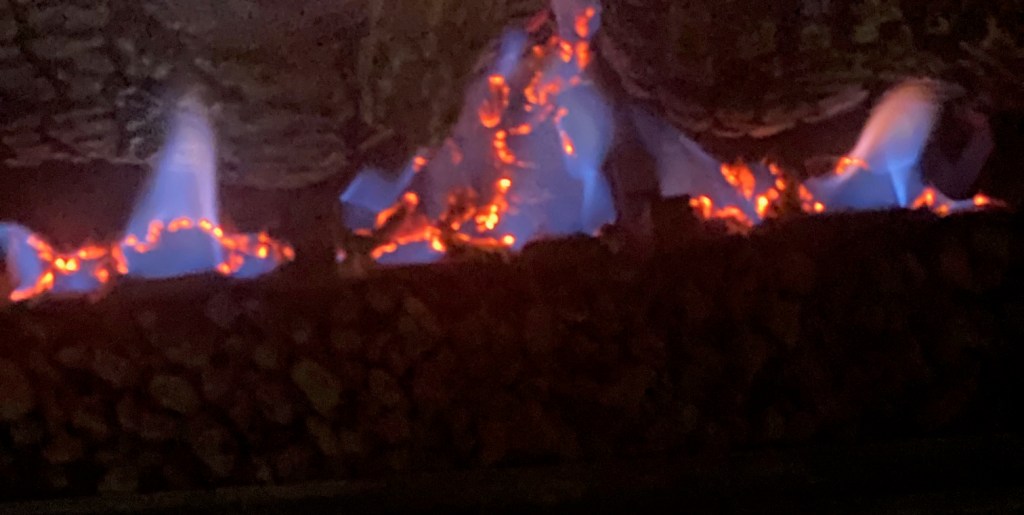
Now, it’s been sixty years since I’ve seen a live forest fire, let alone fought one, and probably forty since I’ve burned a pile of brush. I’m tired out after an hour in the garden. Often these days, a romantic evening is playing Scrabble or Canasta until 9:00 p.m. But I’m still drawn to fire: I can spend hours staring at the flames in our fireplace.
I’ve also become more aware of what I think of as the fire of Presence, represented, I think, in the Bible’s Old Testament by the burning bush that drew the attention of Moses and in the New Testament by the Holy Spirit descending upon Jesus’s followers as “Divided tongues, as of fire….”
One of my old spiritual directors used to tell a story from the Desert Fathers in which a young monk said to his teacher, “Abba, as far as I can, I say my little office, I fast a little, I pray and meditate, I live in peace as far as I can, I purify my thoughts. What else can I do?”
His teacher stood up and stretched his hands toward heaven. His fingers became like ten lamps of fire. And he said to him, “If you will, you can become all flame.”
So far, the closest I’ve come to experiencing this fire happened during the last two months of my daughter’s life. After spending the day in the hospital by Laurie’s bedside, I’d go each afternoon to the hospital chapel. I was almost always the only person there. Upon entering, I’d light two pillar candles on the altar, sit in the front row of chairs, and stare between the candles through a large round window looking out over the river. After a while, the candles would sometimes seem to glow more brightly, their light dancing. The flames would come together, enfolded by the stained glass around the window. Then, I too would become enfolded in a fiery feeling of being scoured of fear and anger and shame, which allowed me to face the next day.
These days, as I sit by our fireplace, it’s hard not to identify with the dying flames. But I realize even glowing embers can still, like forest fires and fiery brush piles, like altar candles in a hospital chapel, purge away what is false, promote new growth, light someone’s way in this burning world.











 The Geriatric Pilgrim: Traveling the Landscape of Faith and Grief