Duende:…[T]he “bitter root” of human existence, what Lorca referred to as “the pain that has no explanation” … and the source of much great art.—Christopher Maurer
◊
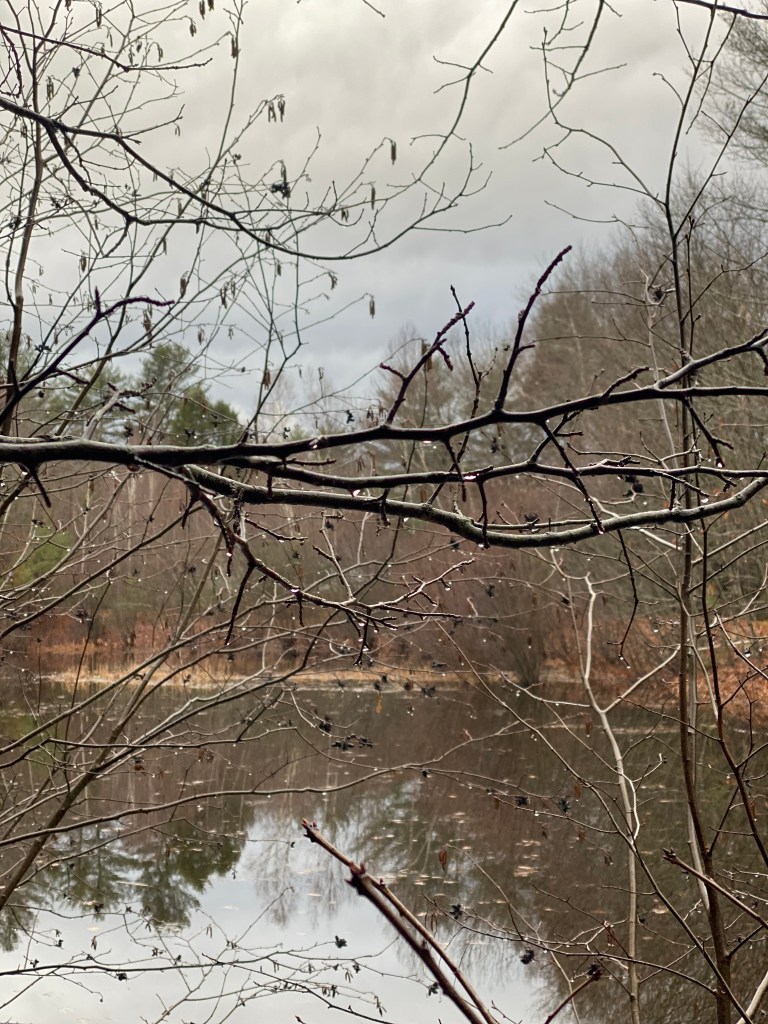
After the rain, the trees are weeping,
tears glistening in the setting sun.
And suddenly
◊
I feel the fierce force flowing through my veins
along with the red cells and white cells and platelets,
to and from the heart (the center of grief, I heard somewhere).
◊
I wail once more my family’s demise:
my father’s frightened eyes, my mother’s waxy hands,
my daughter’s last labored breaths.
´◊
I recoil as if for the first time at
old failures, sins, embarrassments, what-ifs
that float before me like dead fish.
◊
I watch my friends diminish—
cancer, Parkinson’s, heart problems, Alzheimer’s—
I shave an old man’s face.
◊
This week, I’ll pray, write a poem, plant flowers in the family cemetery, meet friends,
take grandchildren for ice cream, work in my garden, make love to my wife,
tenacity momentarily victorious.
◊
Still, coursing through my triumphs like a deep and dark river,
demolishing and nourishing as it surges to the sea,
Behold, I give unto you power to tread on serpents and scorpions, and over all the power of the enemy: and nothing shall by any means hurt you.—Luke 10:19
Staring at my 3 a.m. fears—A burning planet, a demented president-elect, disease, death—I think of you for the first time in years: first friend, neighbor, bodyguard, mentor, and, although three years older than I, my classmate from fifth through seventh grade.
Thick black hair and an Elvis sneer, Kirk Douglas dimple in your chin, sleeves rolled up as far as they’d go to show those growing muscles, your dark eyes often flashed anger at the world, but also amusement and compassion for the pudgy, awkward kid who worshipped the ground under your motorcycle boots.
Buddy Fitts, Freddy Gallant, Bucky Lapoint—none of the playground bullies—dared trip me, twist my arm, scrub my face with snow, because they knew they’d have to fight you first. And you were tough: sauntering up Bridge Street coatless in a ten-degree storm, snow clinging to your hair like chainmail on the Black Knight, carving your name on your veiny forearm with a Gillette Blue Blade.
In class, you never raised hell, never passed in a paper, just sat in the back seat looking cool until you turned sixteen and could legally split the joint. You cut CAROL into your upper arm and went to work in the cotton mill.
Playing basketball, fumbling with the buttons on Daisey’s sweater, I hardly knew you’d left. Never saw you much afterwards. Heard you and Lapoint started a paving business.
Home from college, I once walked by your house. You hadn’t grown since grade school but your tattoo was cool—a tiger’s head spanning your boney back as you banged away on a rusty Chevy. We grunted greetings. I forgot you.
At our 50th high school reunion, your cousin Roland said you lived in Tennessee, belonged to some Pentecostal church that prays with poisonous snakes to show God’s power over evil.
This dark morning, my friend, I think of how you protected me, wish you were here to keep me safe from the serpents slithering around me.
Henry Fonda as Norman Thayer lost in the woods behind his house.
#
It started when I left my phone behind.
I’ve always known that my phone provides many of the same comforts cigarettes used to. My phone fits easily into my pocket so it’s handy. It gives me something to do with my hands if I’m nervous or bored. If I’m waiting for someone, I can check on how the Red Sox did, or when I need to use a bathroom, I can do something besides look out the window, assuming there is a window, and if there isn’t, I don’t care because I’m checking my email on my phone.
But until now I’ve never realized how, like cigarettes, psychologically addictive a phone can be. All that weekend, I felt tense, anxious.
Now, the reason I suffered for an entire weekend was that Mary Lee and I spent it in Vermont celebrating my sister-in-law Anne’s birthday. I couldn’t very well say, “I left my phone in our bedroom. Would you excuse me while I drive four hours back home so I can see how many ‘likes’ my last post got on Facebook?”
And for those of you who don’t live in New England, the reason it takes four hours to go 160 miles, as the crow flies, from Maine to Vermont is that you can’t go by crow. The most direct route cuts through western Maine and central New Hampshire—a narrow two-lane road through small towns and past lakes and cabins and antique shops and combination hardware stores/greenhouses/ice cream parlors—and takes two hours longer than the quickest route which is to first drive south for 85 miles then west for 31 miles, then north for 69 miles, then west again until you get lost.
And you will get lost, because while the first 185 miles are doable if your car has a GPS and you follow the signs, once you get to Vermont, you’re driving through small towns and along one lane dirt roads through mountains that baffle even the best GPS systems. At least, you do if you want to get to my sister-in-law’s place.
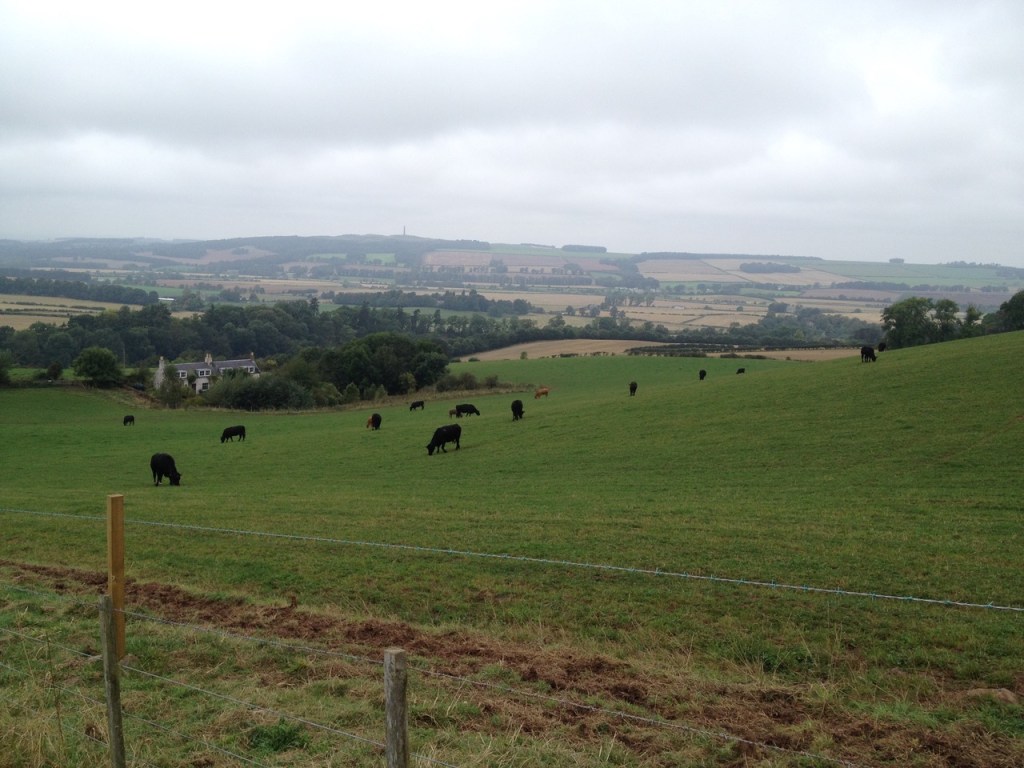
View from Anne’s porch.
But although I left my phone behind and got lost for a bit that weekend, I remained reasonably calm. It was a nice day and Vermont was beautiful. As I often do (hence these blogs) I tried to think of the trip as a pilgrimage, this one honoring my past. I lived in Vermont for four years and my first teaching job was actually in the town just down the mountain from Anne’s. The wide, shallow streams paralleling the roads, the cow pastures under the green hills, the sweeping vistas were worth dead ending in a driveway. Especially when the nice lady there gave us directions to Anne’s, saying, “You couldn’t follow the damn GPS even if it worked… not unless you have a Humvee and a chainsaw.”
Still, while we had a lovely weekend celebrating my sister-in-law’s birthday, the anxiety of smart phone withdrawal grew. It was like I wasn’t me anymore—a feeling that metastasized when I tried show Mary Lee the first apartment I ever lived in. It was as if someone had moved the street to a completely different part of town.
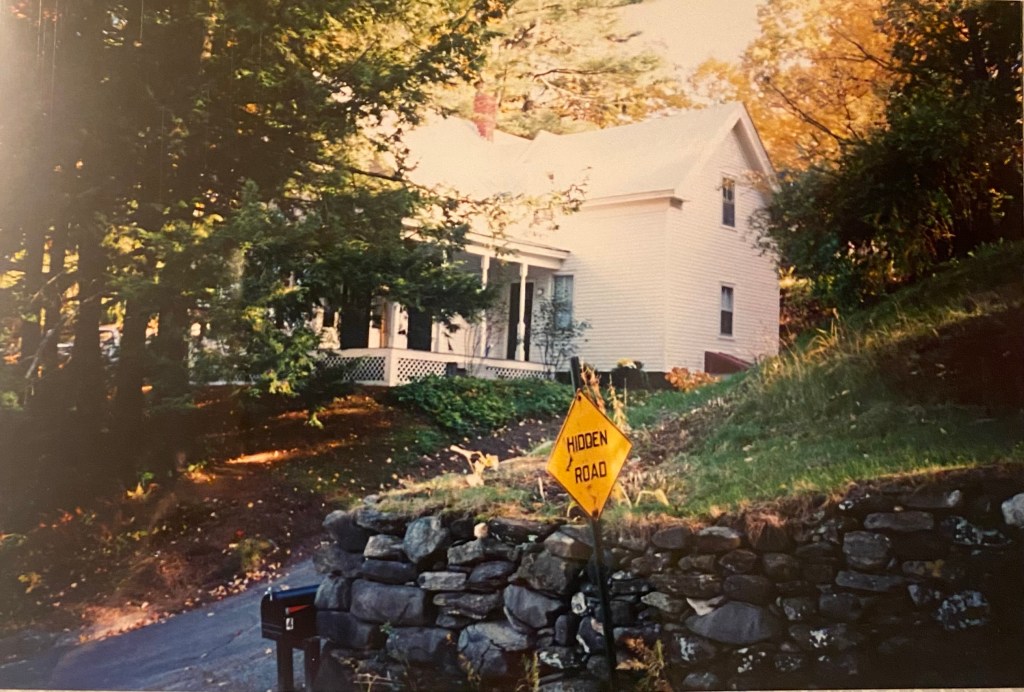
It certainly was hidden. (I lived on the second floor.)
By the time we headed back to Maine, I was feeling unhinged and uncertain. To regain my manly sense of mastery (at least that’s the only reason I can think of) I decided I didn’t need any help from any GPS getting from Anne’s to the paved road to the interstate to the Maine Turnpike to home, thank you very much.
Setting the car radio on “50’s Gold,” I drove south on the interstate, missing the exit for New Hampshire and Maine, and continuing for another ten miles before I turned around and headed north. After an hour of ignoring Mary Lee’s suggestion that it might be time to find out where we were, I pulled off the interstate and plugged our home address into the GPS, which informed us that we were almost fifty miles north of where we should be. Surrendering to that damn voice (which I swear was snickering)— “In one half-mile, prepare to turn left… turn left in 100 yards…turn left”—we eventually came to that cow path I talked about earlier through New Hampshire and Maine, the one that got us home two hours later than we would have if I’d used the GPS the way I should have. By that time, my hands were shaking, my stomach was in knots, and my head was pounding. Even the familiar roads near home looked strange and forbidding.
At one point on that interminable drive home, we drove by Squam Lake, where the movie On Golden Pond was filmed, and since then, I’ve been thinking about Henry Fonda’s 80-year-old character getting lost picking strawberries in a place he’d been going to for years, stumbling through the forest, become more and more disoriented, more and more frightened.
And I ask myself: Is that who I’m becoming?
I’m trying not to panic. I tell myself that as I’ve become 80, I’ve been focused on my physical diminishments, and maybe God of my not Understanding is telling me it’s time to prepare for the mental changes ahead—that I should think of that weekend as—to use a 12-step term—another “Goddamned learning experience.”
I’ve just read David Shields’s book, The Thing About Life is That One Day You’ll Be Dead. Normal geriatrics, he says, don’t have poorer memories, but it does take us longer to retrieve those memories. We’re more susceptible to distractions, have trouble coordinating multiple tasks, and suffer decreased attention spans. In simple duties and common situations, we’re fine, but when stress is added (loss of a smart phone, for example) we often struggle. “Perhaps,” Shields writes, “this is why some older people, finding it harder to cope, tend to start searching for comfort rather than excitement.”
I’m tempted, but I’m not ready. Instead, I’m going to send my ego to the store for a quart of milk and do what Mary Lee does and make a checklist for when I travel:
Underwear? Check.
Pills? Check.
Phone? Check.
And at the top of the list, I’m going to write:
Don’t assume you know where you’re going.
Ask for help.
Actually, that sounds like pretty good advice for any pilgrimage.
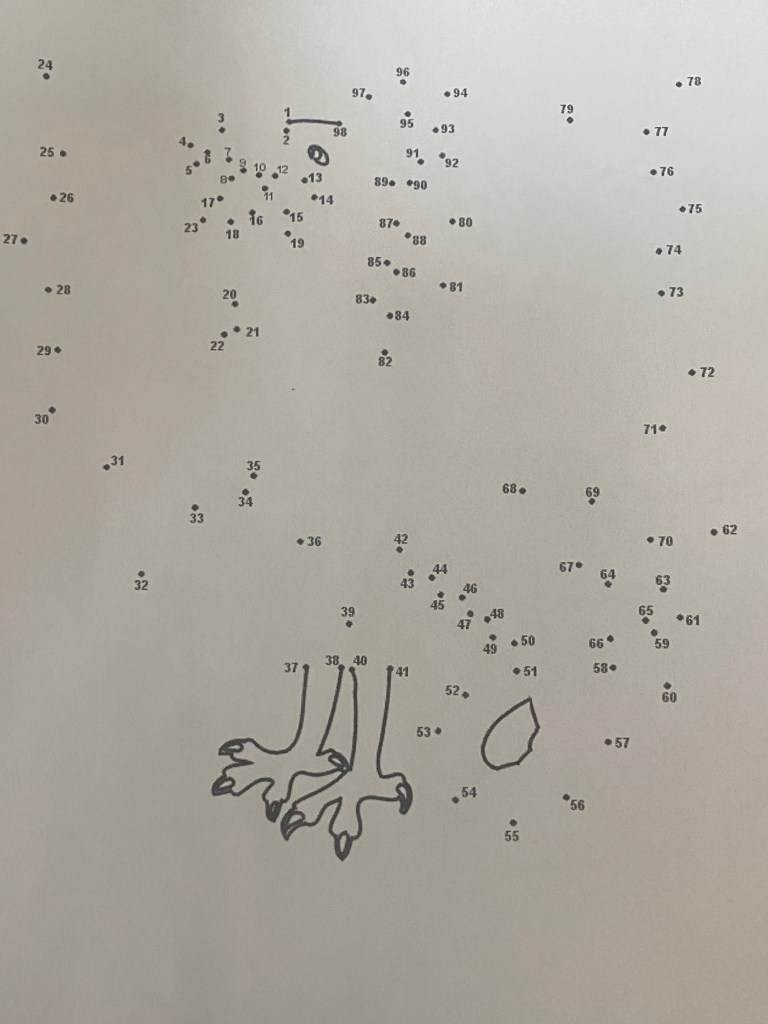
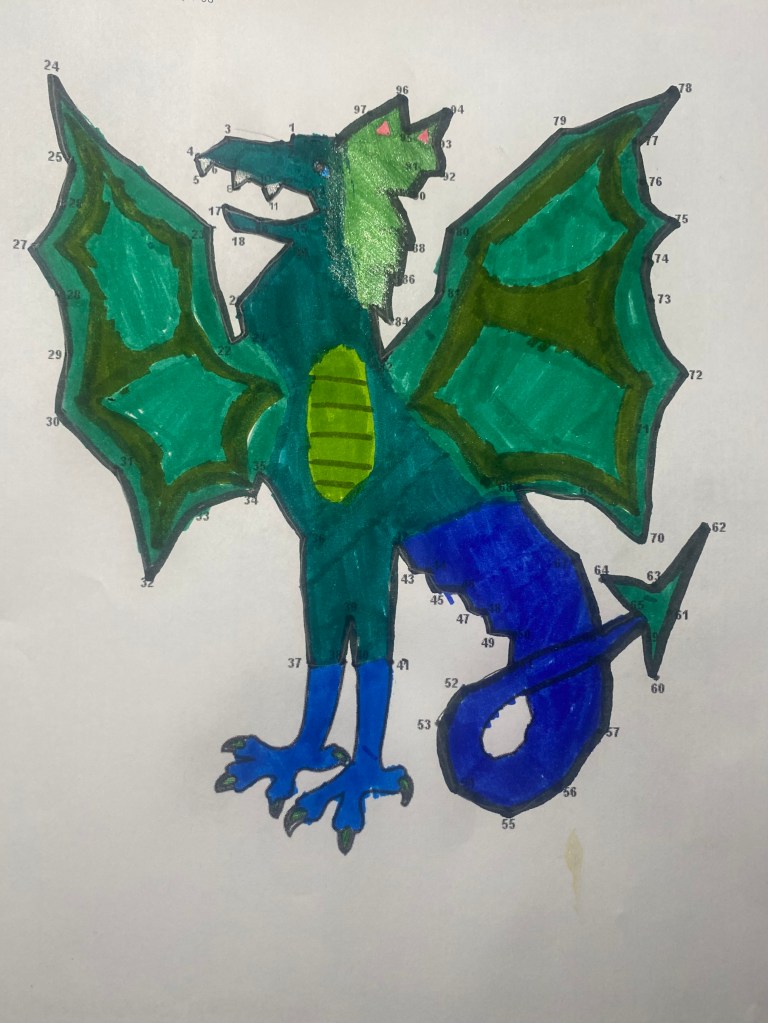
As a kid, some three-quarters of a century ago, I loved to “Follow the Dots.” You know, those puzzles where at first, you see nothing but a confusing morass of tiny spots, like black ants on the page, but if you connect these dots by the numbers, a cat or dog or giraffe or flower appears, as if by magic. Then, you can color it and have a lovely picture. (Or at least Mom said mine was lovely.)
And I still love following and connecting dots. It’s one reason I love poetry and admire those writers who draw connections I’ve never seen before. Everything I read about physics and the discoveries about our universe, everything I read about spirituality, everything I’ve learned about health, all say that everything is connected; what we need to do is connect the dots.
“Connection is why we’re here,” says researcher/storyteller Brene Brown in a TED talk I recently watched. Then Brown went on to talk about our problems with connecting, problems caused by our fear of appearing vulnerable, our need for control and certainty, and most important, our shame. Because we don’t feel we’re worthy of connecting with others, we don’t try.
Well, that made me sit up and take notice. I’ve often said that shame has been the driving force of my life. Thanks to almost a dozen years working my Al Anon program, I’ve learned shame is part of growing up in a family riddled with generations of alcoholism, along with burying feelings, fearing confrontation, learning to hide behind personas, perfectionism, judgmentalism, and people-pleasing. Twelve-step literature calls these traits “character defects.” I think of them as survival mechanisms. Either way, they’ve kept me from connecting to other people.
As Marie Howe’s writes in her poem “The Affliction”:
When I walked across a room I saw myself walking
as if I were someone else,
…
as if I were in a movie.
It’s what I thought you saw when you looked at me.
So when I looked at you, I didn’t see you
I saw the me I thought you saw, as if I were someone else.
This was (and can still be) me, walking into a room, convinced everyone is staring at me, first in judgment, then in disdain. I’ll run my tongue over my teeth to make sure there’s nothing stuck between them, check my fly to see if it’s zipped. Still, I’m sure people are deriding me for being the failure I know I am.
At no time was this truer than after I became a high school English teacher. Every time a student laughed, or whispered, or stared at me, I was convinced I was the subject of their ridicule. (And finding out I was known as Wiley Coyote didn’t help.)
So I created the persona of MRWILE. During the ever-more-casual 1970s, I dressed in flashy sport coats, bell-bottoms, with matching ties and pocket handkerchiefs. I spent weekends in my classroom changing bulletin boards, papering the walls with posters, and growing geraniums and begonias on the windowsills. At school, I used sarcasm and difficult reading assignments to control behavior, while at home I filled the margins of student essays with correction symbols and caustic comments—“Huh?” “What on earth does this mean?”
Outside of school I attempted to encase myself in the same veneer of respectability. I smoked a pipe. I bought a white cape cod house with green shutters in a housing development. I put up a white picket fence and planted rose bushes. I joined the church choir, the church Board of Deacons, and the Rotary Club.
MRWILE
While MRWILE helped me gain some of the respect I craved, this persona killed my first marriage and almost killed me. I was never home, and when I was, I was never present. I began waking in the night, sweating, and panting for breath, suffocating, after nightmares of being tarred and feathered and ridden out of town on a rail.
What saved me was THE LIGHTBULB.
As I recall, I was teaching a class about a particular piece of literature. (Maybe a Shakespearean sonnet?) So that my students could understand the imagery, I was trying to connect the poet’s situation to theirs. Suddenly, I saw a face light up in understanding, as if I’d flipped a switch in the kid’s head. I remember feeling a corresponding charge, a release, that I’ve since said, felt right up there with sex.
I’m serious. In that moment, and in the other moments since then that have kept me teaching long after I threw out the ties and matching pocket handkerchiefs, when I taught everyone from thirteen-year-olds with learning disabilities to students with combined College Board scores of 1600 to college seniors working on honors theses to homeless veterans with PTSD to Al Anon sponsees, as in sex, I’ve somehow connected with someone at a deeper level—a reciprocal give and take that goes far beyond “Oh, aren’t I a wonderful teacher!” Both teaching and sex have been means by which I have experienced real—maybe “pure” is a better word—relationship.
If you don’t get this, I understand (when I talk about how exciting teaching can be, some people look at me as if I were extoling the taste of ground glass), but I will always remember the evening I talked about my lightbulb experiences to a teacher from Colorado when we were both reading essays for the College Board in New Jersey. She did understand. We began writing to each other. I found I could be open and vulnerable with her, and that for her, I could give up my secure and respectable life, leave the white cape and the picket fence and my advanced placement students in the middle of a school year for a three-room, 2nd floor apartment, and four classes of potential juvenile delinquents who’d driven their previous teacher to early retirement.
And in the almost forty years since then, together we’ve faced the death of a child, financial uncertainty, several career shifts, and now, the diminishments and indignities of old age.
As I tell the folks in my writing groups these days, I write to discover what I didn’t know I knew. Writing this blog, I’ve discovered that while shame has been one driving force in my life, my desire for connection has been another one, probably beginning with those days I spent connecting dots in puzzle books. And that when—I have to think it’s through Grace—I have connected not only to but also with my metaphorical dots, it’s resulted in a beautiful picture.
And should any of this should connect with you, dear reader, that would be pretty nice, too.
Thank you to my granddaughter Anastasia for connecting the dots and coloring the picture far better than I could
Perhaps it’s because I turned 80 this year. Maybe it’s because this summer has been hot and muggy. Whatever the reason, I’ve found myself more aware lately of my vulnerability. Walking in the woods these days requires changing into insect-resistant clothing because of ticks; on walks, working in the garden, I need to be sure to bring water with me or I get weak and dizzy; after heart surgery, I need to keep checking my fancy watch to make sure my heart rate doesn’t get much over 120 bpm. I’m tripping more often and have removed several rugs from our house. Earlier this year, I fell in my garden and only by grace/luck/whatever did I miss cracking my head on a rock by about 6 inches. And on a recent hot day, I was mulching my pumpkins, felt weak, saw that my heart rate was 145, sat down, and couldn’t get up. Fortunately, I had my water, and was finally able to get home after a half-hour or so (whereupon I had a 1½ hour nap).
I don’t like being this vulnerable, probably because I’ve spent a lot of my life trying to avoid showing vulnerability. As a boy in a small New England town in the 1950’s, I learned vulnerability was for sissies. Never ask for help; never let anyone see you cry. In high school, I learned success, whether on the basketball court or getting Suzie’s bra off, was a matter of will power. Mind over matter.
But these days, I find that what I mind doesn’t seem to matter. Which is why I’ve made a pilgrimage through the internet in search of something good to feel about vulnerability. At first, I didn’t have much luck. If you google the word “vulnerable,” most of the definitions have negative connotations: “capable of or susceptible to being attacked, damaged, or hurt; open to moral attack, criticism, temptation, etc.”
Still, looking up “Articles on Vulnerability,” I found advocates. Researcher and storyteller Dr. Brene Brown writes, “vulnerability is the core, the heart, the center, of meaningful human experiences.” Others write that vulnerability allows us to be authentic. It can bring a sense of closeness and fulfillment. It can bring about more honesty, more trust. Brene Brown again: “Vulnerability is the birthplace of innovation, creativity, and change.”
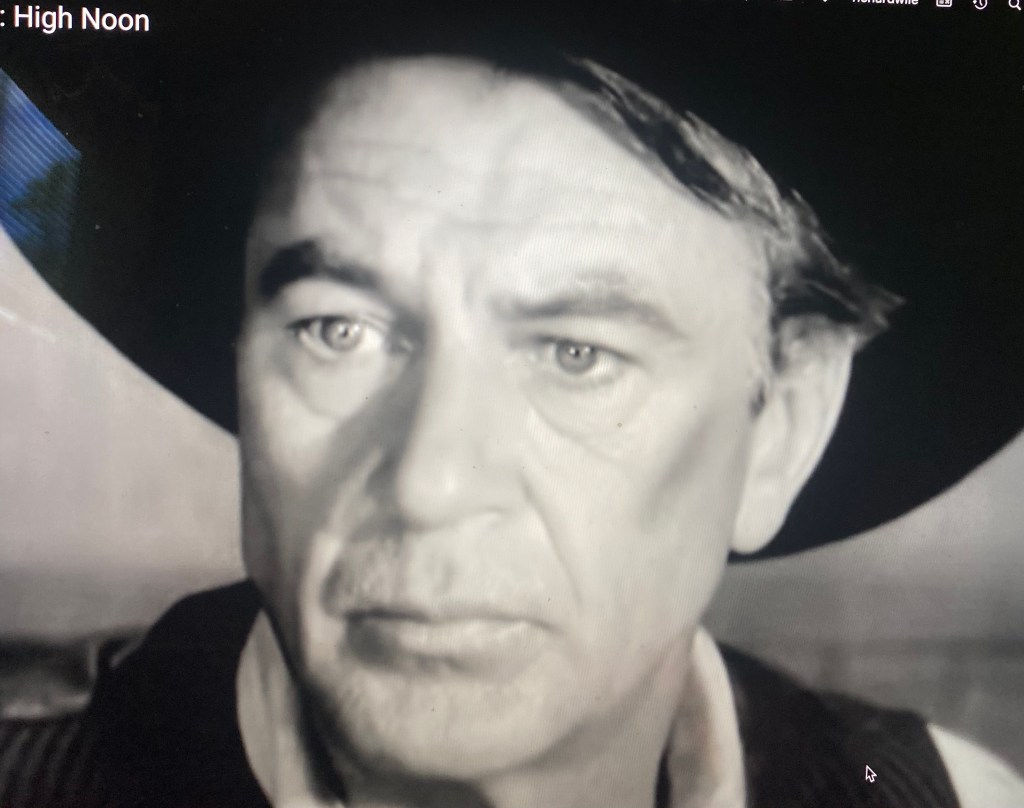
As synchronicity would have it, as I was reading about vulnerability, I was finishing the book, High Noon: The Hollywood Blacklist and the Making of an American Classic by Glenn Frankel. Which led me to watch for probably the tenth time, the movie on which the book was based. In case you’ve forgotten the plot, former marshal Will Kane (Gary Cooper) is preparing to leave the small town of Hadleyville, New Mexico, with his new bride, Amy (Grace Kelly), when he learns that local criminal Frank Miller has been set free and is coming to seek revenge on Kane for turning him in. When the marshal tries to recruit deputies to fight Miller, he finds the town’s people have turned cowardly. His wife, a Quaker opposed to violence, doesn’t understand why her new husband feels he must stay, so she decides to leave town. When the time comes for a showdown, Kane must face Miller and his three cronies alone.
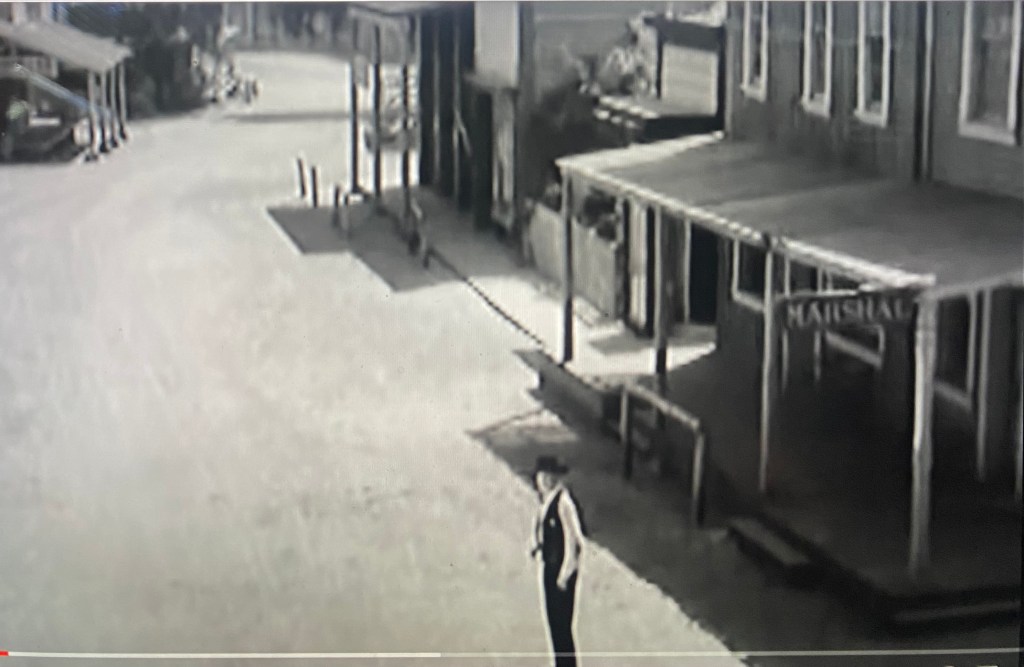
This time, when I watched the film, I was aware of how the writer, Carl Foreman (who was being investigated for having been a Communist and who saw himself forsaken by people he thought were his friends), and the director emphasize Kane’s vulnerability. Through closeups of an aging Gary Cooper’s face, we see his fear, and scene after scene of overhead camera shots of his walking alone up and down what looks to be a deserted town show his smallness. Meanwhile, Tex Ritter is singing: “Do not forsake me, O my darlin’.”
Well, his darlin’ doesn’t. Amy comes back to help Will kill those nasty bad guys, and, after throwing his marshal’s badge at the yellow-bellied citizens of Hadleyville, Will rides off with his wife into the afternoon sunlight.
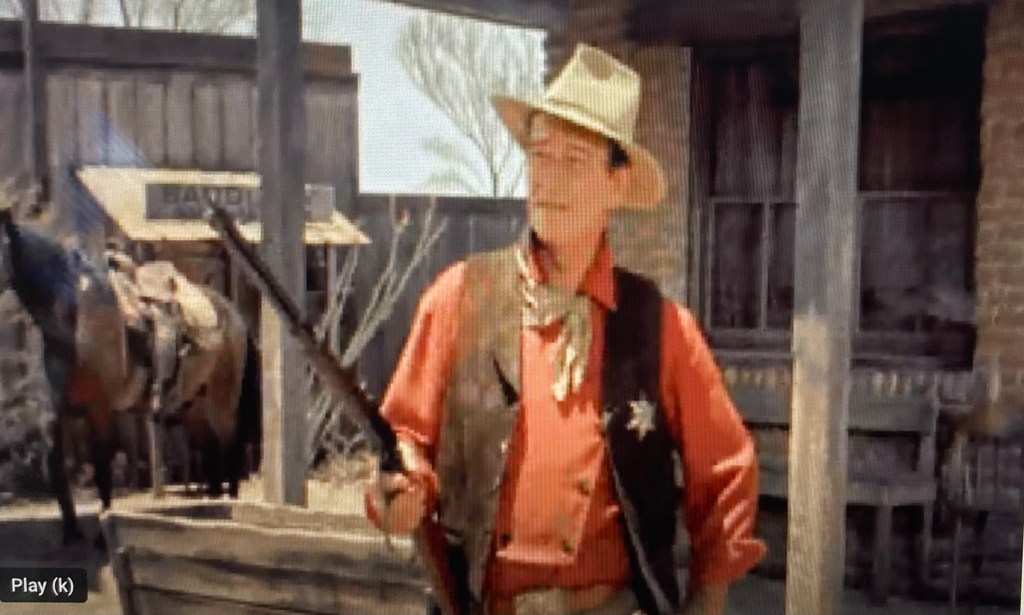
But although law and order triumphs in the end, the movie apparently infuriated traditionalists, like movie hero John Wayne and director Howard Hawkes, who said he didn’t “think a good sheriff was going to go running around town like a chicken with his head cut off asking for help.” So, Hawkes and Wayne made the western, Rio Bravo. In this movie, gunslinger Joe Burdette kills a man in a saloon, and Sheriff John T. Chance (John Wayne) arrests him. Before long, Burdette’s brother, Nathan, comes around, threatening that he and his men are going to bust his brother out of jail. Chance decides to make a stand. Does he ask the townsfolk for help? No way. “They’ll only get hurt,” John Wayne growls.
John T. facing the bad guys.
Meanwhile, unlike Will Kane’s wife, Chance’s love interest (Angie Dickenson), refuses to leave town. As the time for the showdown nears, she tells Big John, “You better run along and do your job.”
The message here seems to be that real men don’t need to ask for help; they inspire loyalty. Other reinforcements arrive: Dude, the town drunk, an old cripple named Stumpy, and a baby-faced cowboy, Colorado Ryan. Rather than showing fear as they await the arrival of the bad guys, they sit in the sheriff’s office making wise cracks and singing songs. After winning the inevitable shootout, they all stay in town to sing and crack more jokes with the lovable town’s folk.
In the face of danger, real men don’t ask for help, the movie proclaims. Real men don’t show fear. Real men sing and tell jokes.
Maybe it’s a sign of the times (my times, anyway), but I admire Will Kane, who overcomes his age, his fear, and his despair to uphold his principles, more than I admire John T. Chance who doesn’t seem to have a vulnerable bone in his body. I realize that thirty-five years ago, after my daughter Laurie died, still thinking that will power solves all problems, I tried to avoid asking for help, and how the resulting anger almost tore me apart, until, exhausted, I finally surrendered my will to a god I didn’t really believe in. Only then was I able to feel relief, and eventually even experience moments of joy, an emotion I’d never felt before in my life because I’d been too concerned with not being vulnerable.
Brene Brown and others go so far as to say that vulnerability is a sign of courage and strength. I can see that. To be vulnerable, I need to have a strong sense of self. I have to be honest about what I can and I can’t do, and I have to be honest with others, even if it means being rejected. I need to stop trying to prove myself. I must own my past mistakes, make amends to others, and move on. I have to be able to face difficult emotions, especially these days, about my diminishments, dying, and death. I must continue to ask for help and accept it.
And I damn-sure need to wait until cooler weather to mulch pumpkins.







 The Geriatric Pilgrim: Traveling the Landscape of Faith and Grief