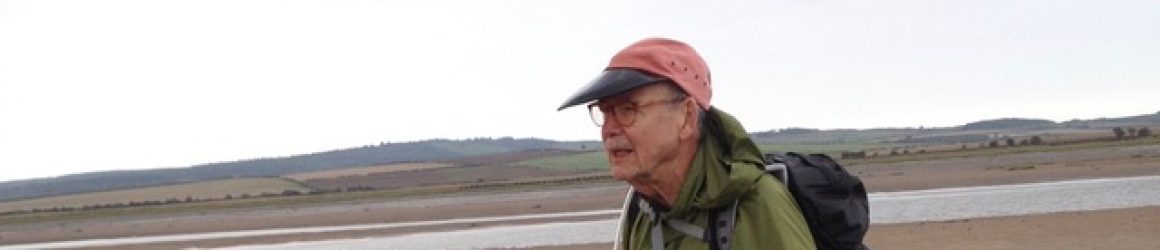
Since 70

img_3167

#

I spent months living in dread of turning 70, because then I would be officially “old”—over the hill, past my prime, debilitated, enfeebled, ad infinitum. Well, four months shy of turning 76, I can honestly say being 70 isn’t bad, not bad at all.

Now, I’ve been lucky. No chronic disease to live with, no financial burdens. Mary Lee is well, and her sons and their wives have no major problems other than the common difficulties in raising a family and holding a job these days. The grandchildren are (usually) a delight.

My 70s, of course, have brought about physical changes that are pretty depressing. It seems as if every shower I find a new mole or lipoma to worry about. The hair in my ears grows faster than the hair on my head. My waist is expanding. I’m longer in the tooth and shorter in the leg. (For years I taught T.S. Eliot’s “Love Song of J. Alfred Prufrock” and never understood the line, “I shall wear the bottoms of my trousers rolled.”) I can recall the lyrics to almost every popular song from 1957-65, but I can’t remember the names of the two women who’ve lived across the street for five years. I spend a half-hour a day hunting for something.

Over the last five years, I’ve become more aware of Newton’s Law of Inertia: an object at rest stays at rest and an object in motion stays in motion. It takes me twenty minutes of exercise when I get up in the morning for me to be able to move without hurting. Probably because of the exercise, however, my chronic back pain is less than it has been in years. Beginning a new piece of writing is like hiking through mudflats in hip boots, yet the ensuing drafts are more fun than they used to be. I like to walk, but now the first ten minutes or so, my lungs burn and I have trouble getting enough breath. Then, they clear out and I’m good to go, which often means walking too far because I don’t feel like stopping (it’s not like I have a job or anything to get to). Consequently, I’m stiffer and sorer when I get up the next day to do those exercises.

A bigger problem is that I don’t seem to be able to stop talking after I’ve run out of things to say. My father-in-law used to speak of being in his “anecdotage.” I understand. I have all these great stories that I know you’re just dying to hear, stories that will amuse, educate, and inspire you. So why are your eyes glazing over?

My tastes have changed. I eat less meat than I used to and more chocolate. I’ve grown fond of oatmeal, kale, and certain kinds of seaweed, and less interested in lettuce, potatoes—especially fries—and baked beans. Not always, but usually—and I’m still having trouble believing this—I’d rather have salmon than lobster, tuna steak than fried clams.

Two years ago, when we bought a car with satellite radio, I couldn’t wait to find the 50’s and 60’s music channels. That lasted about a month (If, for my sins, I go to Hell, “Itsy Bitsy Yellow Polka Dot Bikini” will play nonstop.) I tried “Elvis Radio” for about four hours, and “The Beatles Channel” for maybe two. I listened to a blue-grass station for a while, and then several country and western ones. Now, I’m almost always listening to a jazz or classical station. It’s not that I’ve necessarily grown more sophisticated—I play a banjo for heaven’s sake—the music just seems fresher and more varied.

Ever since my family bought its first television in 1953, I’ve watched televised sports, but now I can’t watch anything on the tube except for a championship game featuring some New England team. I’ve had it with the incessant number of commercials advertising products I don’t understand at a volume twice as loud as the programing. It was bad enough when sports became huge businesses, but now they’ve become politicized as well. I’m sorry, I watch sports to forget about what’s happening to this country. I’ll sit in the stands at a local college or high school game, if you don’t mind.

Something else I never expected: I’m learning to accept, even value, my increasing powerlessness. I’m not talking now only of my physical condition. Five years ago, I entered a 12-step program. Step One states, “We admitted we were powerless over alcohol and that our lives had become unmanageable.” Everyone I’ve ever talked to in the program says that this is the hardest step of all. Admitting powerlessness runs counter to everything I, and I think most Americans grew up learning.

Like most of you, I expect, I was raised to be self-sufficient—“master of my fate… captain of my soul,” to quote one of my high school reading assignments . As an adult, I loved hear Frank Sinatra or Elvis sing,

For what is a man, what has he got?

If not himself, then he has naught

To say the things he truly feels

and not the words of one who kneels.

The record shows I took the blows

and did it my way.

But when I began reading about adult children of alcoholics, I learned how many of us were raised to be masters of not only our own fate but also the fate of the rest of our families. For example, I somehow always knew as a child that I was responsible for making sure that Christmas was a happy time of year, especially for my parents, neither of whom growing up had had happy holidays. I took that sense of responsibility for making others happy with me when I left home and started my own families, so that for seventy years, my Christmases were never as merry as I thought they should be, and it was my fault.

This burden of responsibility became even more oppressive after my daughter died on December 23, 1988. All parents feel guilt when their child dies, but my background as a child of alcoholism magnified it. I’ve written in these blogs several times about feeling my body chemistry change after Thanksgiving and the weight of the next weeks grow heavier and heavier.

Perhaps because of my physical diminishments, however, I’m finding that I have no choice but realize my increasing powerlessness in all facets of life. As my mother said to me when she was about the age I am now, “I used to think life was a case of mind over matter; now I find that what I mind doesn’t matter.”

Yet when I’ve been able to admit my powerlessness, I’ve experienced a wonderful sense of freedom. I can say “no” to causes and activities in which I used to feel I ought to participate, but that I had neither the skills nor the real interest in doing. The last few Thanksgivings, hosting twenty people all younger than I, I finally started putting some of them to work.

And this November I asked myself if my body chemistry was about to change, or was I just opening the same dog-eared horror story of how my daughter died. Laurie loved Christmas. She certainly never wanted me moping about or yelling at motorists on the highway. What would happen, I wondered, if I closed this book and took each day for what it was (or wasn’t).

After the holidays, I’m now trying to view the rest of the year not as something to master, but as something to accept. I’ve got a long way to go. You don’t unlearn something you’ve been doing for 70 years in five years. But when I can let go of this idea that the world depends upon me to keep it turning, I can see that everything I have—my health, my family— everything I am—including being a grieving parent— is gift.

Yes, I shed some tears on December 23rd. I also had a wonderful holiday season. I hope you did, too.

mcb_0081
Just one reason my Christmas was merry.

# #


Being in Tanzania

IMG_3894

#

I traveled to Tanzania with no expectations. My reason for going was to accompany my wife, for whom Africa had been a dream since she was in grade school. Yet, when I returned two weeks later, I felt I’d been on one of the most spiritually significant pilgrimages of my life. Whether or not I’ll say this five years from now remains to be seen, but right now, I’m reflecting on my exterior and interior journeys.

What keeps coming back to me is a comment our guide, Abel, made the morning he drove Mary Lee and me to the Serengeti Plains. We’d begun to see tall, red-robed people herding hump-backed cattle on the hills. He told us these were Africa’s iconic Masai, the semi-nomadic tribe who live in Kenya and Tanzania, continuing their age-old customs, persisting in speaking their own language, in spite of both governments’ instituted programs to encourage them to assimilate into the general culture.

“I like the Masai,” Abel said. “They are proud just to be.”

Since then, I’ve become aware of how hard it is for me to feel that way. Oh, I can remember when I was proud to be a varsity basketball player; when I was (and am) proud to be a teacher; proud to be a parent and grandparent; proud to be an American. But proud just to be? The idea has always been as foreign to me as a Masai diet of blood and curdled milk. I was raised always to consider, “What will the neighbors think?” To get my worth from how others perceive me.

The problem is that I make assumptions about how others see me, which has led to a lifetime of anxiety and resentments. With no idea who I was after I stopped playing basketball, I went into a depression that lasted almost four years. Even after thirty years of teaching, I considered myself an abysmal failure as a human being if I had a bad class. When my daughter died from cancer, convinced people saw me as a poor parent who couldn’t look after his child, my pride in being a father turned to shame. In Africa, I found myself embarrassed to admit to being from the United States for fear of being seen as a supporter of the policies of our current government.

And as the morning continued, and I got used to seeing the Masai and the motorcycles and the open fires and the outdoor furniture stores beside the road on our long drive to the Serengeti, my mind reverted to playing the same old home movies it always does when it wanders. I’m back in high school, changing the outcome of the state basketball championship game, winning by 20 points this time instead of losing by that much. I’m arguing today’s politics with some of those same teammates whose views now differ 180 degrees from mine, destroying their feeble arguments with my brilliant sarcasm. I’m dying of lung cancer, stomach cancer, melanoma, cancer of the esophagus, or Parkinson’s Disease. I’m making plans to change my life when I get back from this trip, eating more fruits and vegetables, giving up cheese and chocolate, losing ten pounds, growing another beard, maybe getting another tattoo. All of which, I see now, are just more examples of getting my identity from what I imagine other people think of me.

#

But after lunch, we entered the Serengeti— miles and miles of lion-brown plains dotted with feathery trees under a vast sky. Abel raised the roof of his Land Cruiser. Mary Lee and I stood and began to see animals: gazelles and antelope at first, then the occasional ostrich and wart hog. In the distance, a road seemed to move until we came closer and saw that it was a large herd of cape buffalo chugging across the landscape. On a large boulder, a lion gazed into the distance.

fullsizeoutput_156d

Slowly, my mind started to shift its focus, still returning, however, between animals, to those old illusions and assumptions.

Until, in the late afternoon, we saw a circle of land cruisers around an Acacia Tree. Pulling in, I could make out a female lion sleeping on a limb. At first, peering through the same sarcastic lens through which I often see things, I found the scene ridiculous—a half-dozen vehicles, at least that many telephoto lenses and maybe twenty people, all watching one lion trying to sleep? Then Abel gave me his binoculars and I watched the lion stretching and contracting her front legs. She swished her tail, arched her back, and moved higher into the tree. Onyx-colored eyes glanced at me dispassionately. She yawned, revealing a large tongue and sharp teeth. Behind her, the air seemed to glow golden and great clouds towered.

When I handed the binoculars back to Abel, most of the other land cruisers had left. I realized I had no idea how long I’d been looking at the lion. Suddenly (a word that’s easy for me to overuse, but in this case it really was sudden) I felt a feeling of peace, of “evenness,” of lightness, followed by a sense of gratitude—Wow! I just got to see that. Thank you!

The feeling didn’t last of course, but over the next week it did return and last longer: lying in our tent at night, listening to the hyenas’ r-r-r-upe, r-r-r-rip, and the heavy breathing of what we found out later were two old male buffalo who liked to wander the grounds; the sight of over a hundred hippopotamuses wedged together like sausages in a river; herds of twenty to fifty elephants parading down to another river to drink and splash and roll in the mud; a cheetah and her two cubs prowling through the grass; seven giraffe standing silhouetted on a ridge; the strange baobab trees, a prehistoric species that predates both mankind and the splitting of the continents over 200 million years ago, whose branches look like roots, and whose gnarled bark has been worn by wind and rain and millennia of elephants using them for scratching posts.

fullsizeoutput_15c0

Now I wonder if what happened was that I was, simply, being. If I set aside the old baggage I usually carry around, so that I became more open with no preconceived ideas of what I thought I needed to prove to someone else. It’s not so much that I lost the sense of who I was, it’s that I became more of who I was: in union with a much larger whole, not just a bunch of weird looking animals, but an energy, a spirit, if you will, running through animals, trees, grass, sky, clouds, Abel, Mary Lee, and me.  I may not have been “proud just to be,” but I certainly was grateful.

#

Even if you don’t journey to honor a saint or to see a holy place, I think any trip can become a pilgrimage when the exterior journey triggers an interior one. Brother David Vryhof of the Society of Saint John the Evangelist recently wrote: “A pilgrimage typically involves three experiences: leaving something, gaining something, and struggling with something.” I’m hoping I left some of my defensive, passive-aggressive sarcasm behind. I know the peace and lightness I experienced continues; I notice more. I’m thinking less about who or what I am and more about that I am.

The struggle is to try to maintain this sense of just being now that I’m back dealing with jet lag that lasted a week, the cough that I brought back that won’t go away (I know it’s probably not lung cancer, but…) the season’s first snow storms, obligations, and the memories that metastasize this time of year of my daughter’s last months in the hospital and her death two days before Christmas. I’m trying to think of being in Tanzania not as some abnormal “blip” outside of the reality of my usual assumptions and illusions, but as a step toward experiencing the greater reality I’ve occasionally glimpsed, and with it, gratitude for the life I have, and the serenity of not caring what the hell the neighbors think.

IMG_4090

# #