Physical Therapies

PT After Heart Surgery

#

A few weeks ago, after seeing a doctor about increased soreness in her knee, my wife Mary Lee began a new regimen of physical therapy: quad stretches, hamstring stretches, mini squats, wall sits, looped elastic band hip extensions. These to go with exercises she’s been doing for years to restore movement to her right shoulder. (I like the one where her hands look like frightened spiders scampering up the wall, and another one where she uses a can of Great Northern beans.)

Because I’ve been doing various daily exercises since back surgery in 1977, mornings at the Wile residence resound with creaking bones, tendons rubbing on cartilage, occasional grunts punctuated by yawns and a “meow” or two from our cat, who has taken on the role of personal trainer.

“Faster! Move it, move it!”

Our bedroom looks a bit like Rick’s Sporting Goods, with two sizes of exercise mats, two sizes of weights (in addition to the can of beans), rubber stretch bands, and folding chairs. A treadmill resides in the guest bedroom across the hall. 

Physical therapy after my back fusion was deceptively simple: walk ten miles a day for three months. Every day. Sun, rain, snow, sleet, hail. And since I was operated on at the end of December, I walked through it all. Sometimes in the same day. But you know, I grew to love those walks (Well, Route One got a little boring but at least it was clear after a snowstorm), and I kept walking—maybe not ten miles every day, but often five or six. 

Twenty years later, after bi-lateral hip surgery, my physical therapy involved water exercises; walking back and forth for 30-45 minutes in the shallow end of a pool, pool dumb bells, and gloves that made me look and feel like Aqua-Man. But it worked. On a trip to Florida to visit my parents over school vacation, two months after the surgery, Mary Lee pushed me through Newark Airport in a wheelchair to get to our connecting flight. On our return a week later, after spending most of my time walking the swimming pool, I strode through the same airport feeling like Hercules Unchained. 

That led to yoga, tai-chi, back to walking, this time with my hiking poles that I named Waldo & Henry (To learn why, go to https://geriatricpilgrim.com/2020/02/07/waldo-and-henry/), which led to the hikes and pilgrimages that became the blog you’re reading.

Flash ahead another twenty years: open heart surgery, and more physical therapy at a rehabilitation center, where three times a week for six weeks, I taped on my heart monitor, rode a stationary bike, walked a treadmill, and lifted weights. When the program ended, I bought the treadmill that sits in the guest bedroom (great for watching TED talks, but I still miss those cute nurses at ReHab) and the weights that I use instead of cans of Great Northern Beans.

I don’t do the Kettlebell Squat Swings

But I’m falling apart more quickly these days. Over the last two years I’ve added breathing exercises to help my “moderate” COPD, more stretches to help with the bursitis that seems to have camped out next to both my bionic hips, daily exercises at the computer to ward off Carpel Tunnel and something called Ulna Nerve Entrapment, and weekly sessions with a Feldenkrais instructor.

As Thomas Jefferson said, the price of freedom is eternal vigilance. Or in the words of my old PCP, move it or lose it.

#

Before Mary Lee and I begin our morning grunting, stretching, creaking, and moaning, we sit in contemplative prayer for twenty minutes, a practice I’ve maintained since my daughter died 35 years ago, when, after raging at God for several years, I decided I needed to listen to what God had to say back. This listening—with my whole body, with all my senses—is what I continue to try to do. As I think about it, this, too, is a kind of physical therapy. 
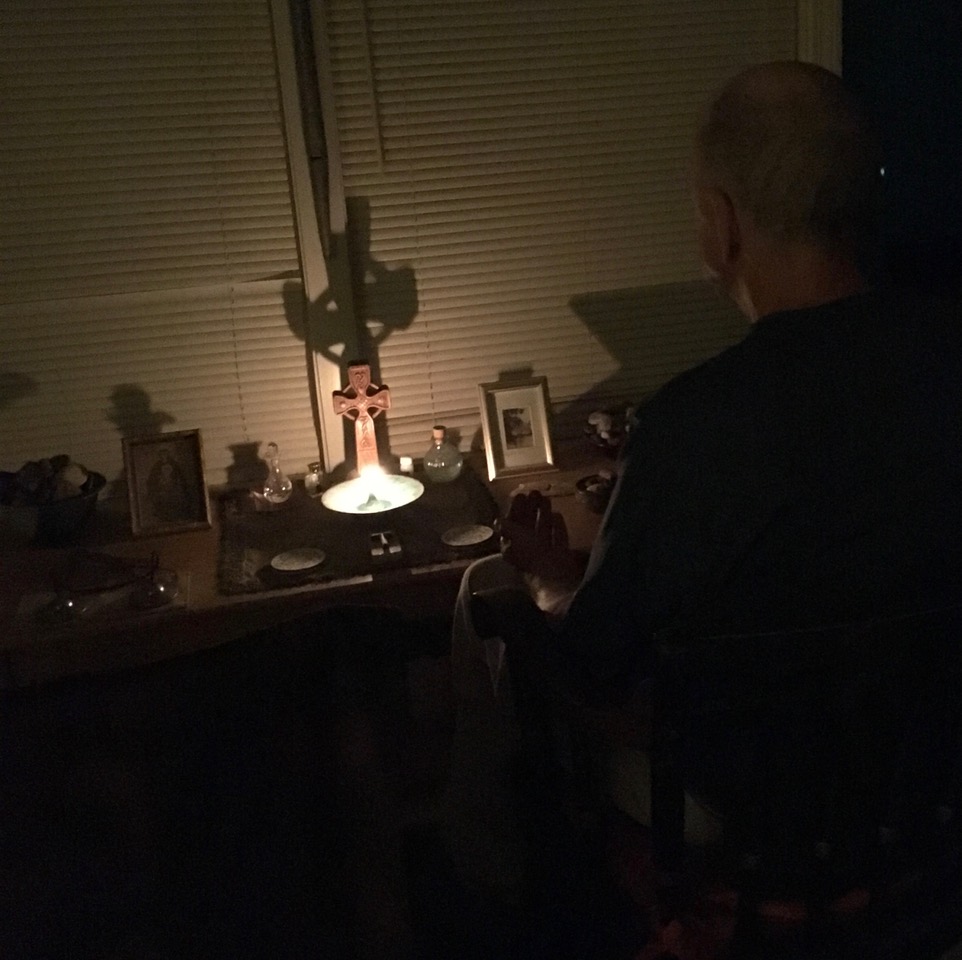
Starting the day

I’m reading a lot these days about quantum physics and spirituality. As I understand it, quantum physics posits that the universe is conscious, if by “conscious,” one means a system that can communicate or process information and then use this information to organize itself (which is what all those protons, neutrons, and electrons that make up the atoms that make up all matter do). So, mind and body aren’t two separate things but rather two aspects of the same cosmic material. 

Modern writers about spirituality, such as Richard Rohr, Diana Butler Bass, Phillip Clayton, and Ilia Delio, seem to me to propose that this cosmic material, this “consciousness” that resides within me as well as around me, is the incarnational presence of God. So that in meditation, I am trying, as I am when I do my stretches and lift my weights, to reestablish pathways, strengthen relationship with what 12-steppers call a Higher Power. 

Besides meditation, I do other exercises to strengthen my spiritual muscles. My Feldenkrais sessions, focusing on integrating eyes, head, shoulders, ribs, pelvis, legs, and feet to facilitate ease of movement, remind me that one of the great spiritual lessons is that everything is connected. And that my job—my “exercise,” if you will—is to recognize and facilitate these connections.(And for more about the importance of connecting, go to https://geriatricpilgrim.com/2024/02/01/connecting-the-dots/)

One of my character defects that keeps me from connecting is trying to control everything and everybody. So, at the suggestion of my Al Anon sponsor, I’ve been taking Waldo and Henry for walks without having a destination. When I first started doing this, I felt lost. I walked in circles. But as I persisted, I discovered roads in the neighborhood and paths in the woods I’d never noticed before. Which is leading me to try to approach other activities, such as meetings, book readings, and potential confrontations with family and acquaintances with the same curiosity, trying to surrender presumptions, looking for the sacred in situations I’ve always avoided and spiritual teachers in people I’ve always disliked.

Probably more than anything else, it’s the physical act of writing which connects me with the Sacred. The only way I can even begin to understand concepts such as quantum physics and the ideas of those spiritual writers I’ve mentioned is to first put the ideas down in my own words on a yellow legal pad with my bold-ink pen. I can write second/ third/ fourth/ ad infinitum drafts of my blogs on a computer. I can edit on a computer. But first I need to work those pen and paper muscles.

Of course, the ultimate integration of mind and body (and what I’ve been working my pen and paper muscles on for the last eight-plus years) is the pilgrimage. Last week, a friend sent me a recent article in The Guardian about the increasing numbers of people making pilgrimages. (In the early 1980s, for example, the number of people who walked the Camino de Santiago—the most famous of all pilgrimages—was in the low hundreds; last year, the number was 446,000.) I’m delighted that people are finding that this combination of physical and spiritual activity can be healthy, healing, and holy.

It sure is for me.
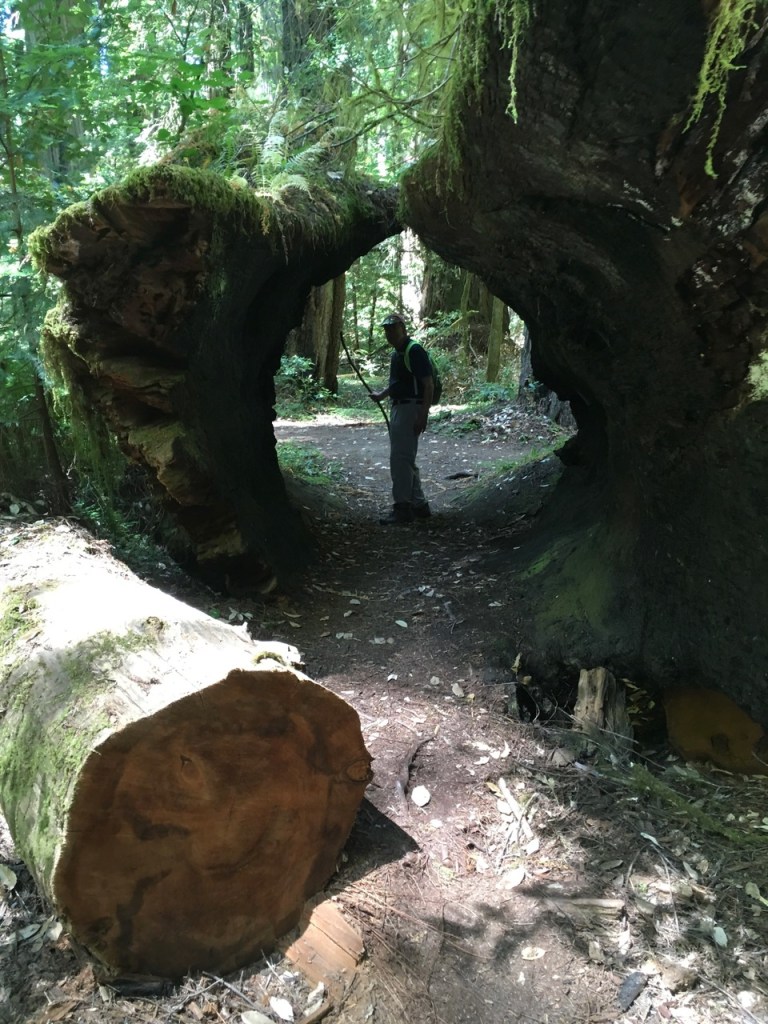
In a California red wood forest

# #

13 Ways of Looking at a Door

1

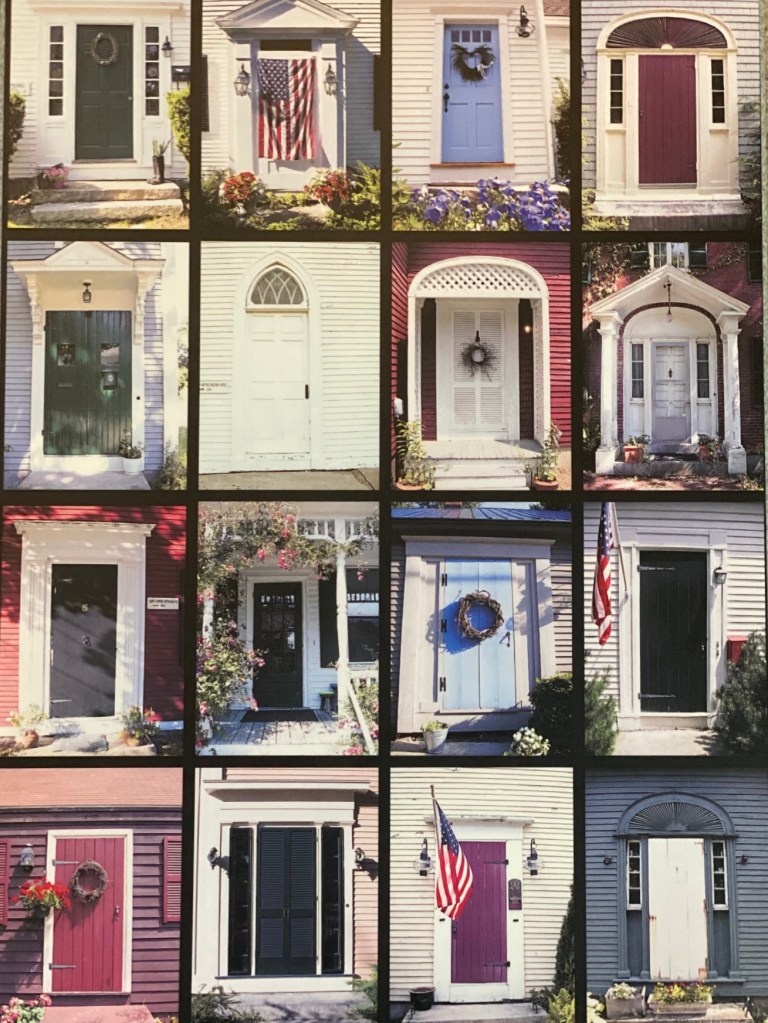
For Christmas one year, Mary Lee gave me a wooden wall hanging called “Doors of Yarmouth,” to remind me of the Maine town in which I lived for so many years. These are doors to old houses that have had careful tending (not to mention extensive and expensive remodeling). The doors come in a variety of colors. Most feature types of cross—sometimes called Christian—paneling. Three are plain wood with long hinges and latches. There are a couple of double doors and one shutter door. Some doors have glass windows, others are framed by small windows, shutters, cornices, lattice work, or flower vines. There’s a gothic arch over one door, a wooden fan over another, and several Greek canopies held up by pillars. All in all, they reveal how Yarmouth has changed from the working-class community I grew up in to the suburbia by the sea it is today. 

2

A little research on the web tells me that doors were conceived in ancient Egypt around 3000 B.C.E. but another site says that archeologists in Zurich Switzerland discovered an oak door possibly dating to 3063 B.C.E. Long before that, at least according to the Bible, Noah put a door in the ark. One assumes a pretty big one. (I’m curious how it opened and closed.)

3

 From the beginning, doors have had more than the utilitarian purpose of protection from nasty weather or people. They’ve identified the occupations of those living in the dwelling and served as marks of power and status. According to the Bible, when King Solomon built his great temple to show God’s power and prestige, he made doors of olivewood, covered with carvings of cherubim, palm trees, and open flowers, which he overlaid with gold. While technically not a door, I suppose, novelist Stephen King’s two iconic wrought-iron gates embellished with bats, a three-headed dragon and spider-like motifs have become a pilgrimage destination for King fans from all over the world.

4

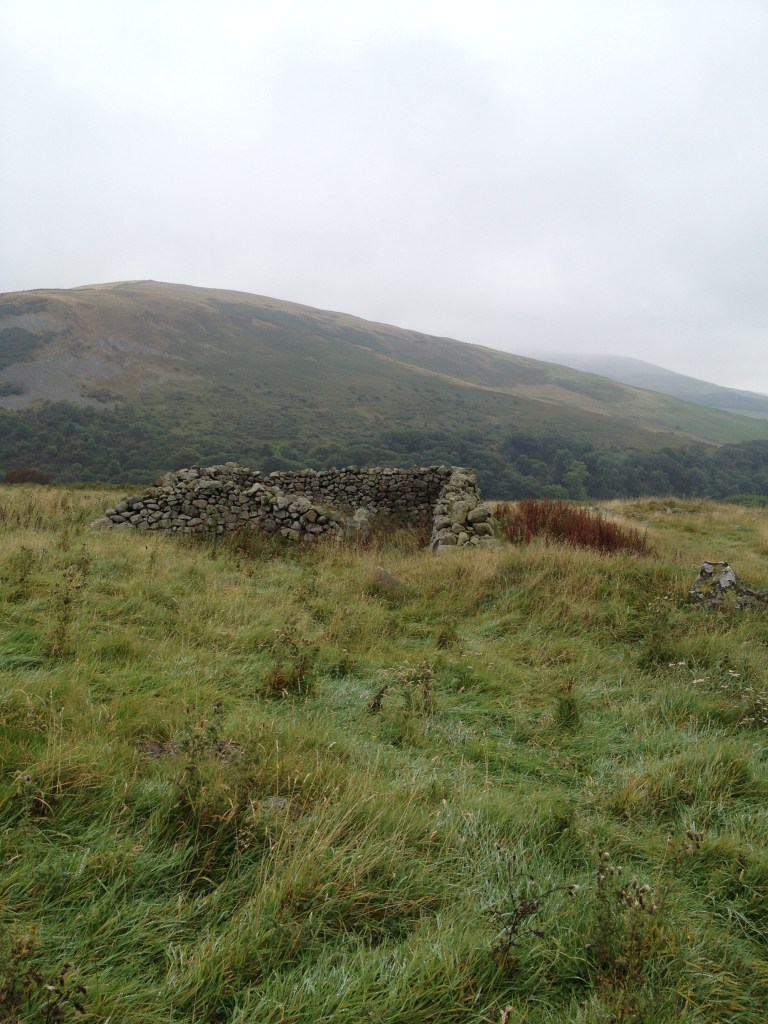
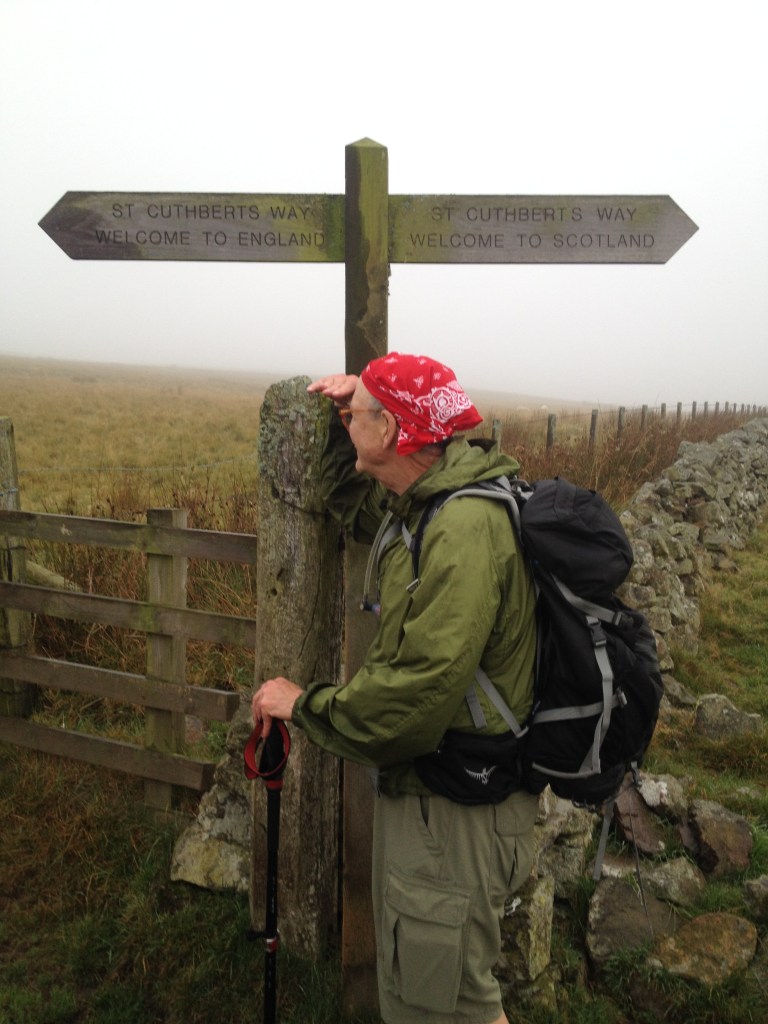
Speaking of pilgrimages, when Mary Lee and I were walking St. Cuthbert’s Way between Scotland and England, we passed a sheepfold, a circular wall of stones with an entrance, which for centuries, served as a place for shepherds to herd sheep at night for protection against predators such as wolves. To keep the sheep in and the wolves out, the shepherd would lie down across the entrance, becoming, as it were, a human door. 

5

Jesus uses this image of the shepherd protecting his flock by becoming a door when he refers to himself as “the gate,” who “lays down his life for the sheep.” Which may be why cross or Christian paneled doors are so prevalent in New England (all the units in our Housing Development have them, inside and out). When my wife Mary Lee—who is a Deacon in the Episcopal Church and a lover of icons—was teaching the in a local high school, she wanted to put up an icon in her classroom but realized it wouldn’t be appropriate in a public school, so she hung a large print of a door on her back wall where she could see it when she taught. It was a great comfort, especially with certain classes. 

6

 Besides Jesus, the Bible refers to other kinds of gatekeepers: those appointed to control who came and left the city through the gates. Thus, the term “gatekeeper” has come to mean a person who controls access, someone in authority who acts as an arbiter of quality or legitimacy, or someone who blocks you from speaking with a decision-maker. Gatekeepers access who is “in” or “out.” I’ve had a few of those in my life, athletic coaches, teachers, whom I’ve had to please in order to succeed. I suppose, as a teacher myself, I’ve also been a gatekeeper. 

7

I’ve also let others become gatekeepers, to whom I gave away authority, surrendered, as it were, the keys to doors I could have opened for myself. Growing up in an alcoholic family once limited my choices when I faced a decision to “What will the neighbors think?” to quote my mother. Through working an Al Anon program and learning to put the focus on me instead of on the me I thought you thought I was, I’ve found keys to open doors I never knew existed.

8

Some of those early Egyptian doors symbolized entrance to the afterlife. Doors can represent transition, confinement, new opportunities. Doors can be metaphors for the choices we make. We learn early on in life that we can walk through some doors and not others. As a WASP male, I know that I have more doors available to me than women, people of color, people of other religions. My destiny has been shaped by the doors I’ve walked through.

9

Or doors that have closed behind me. For a while, Mary Lee volunteered as a chaplain at the local prison. One Christmas, I helped her with a service. My clearest memory is of going through a series of doors and hearing the loud, definitive clang as each door closed behind me. I’ve had a few of those definitive door closings in my life: the death of my daughter, a divorce decree, a couple of retirement parties. Most of the time, however, I find that doors close behind me without my noticing. One reason I took early retirement from teaching high school English was that I saw too many colleagues still standing in front of their classes, even though, emotionally, they’d shut the door on their students years earlier. One of the things I dislike about the geriatric life is that doors keep silently closing, until suddenly I realize, I can’t do this anymore! Can’t climb that mountain, can’t reach that note, can’t eat that food, can’t…

10

On the other hand: My Quaker friends say that sometimes a door needs to close before another can open. That’s certainly been the case with me. I had to close the door on a forest management program before I could open the door to what’s been for me a fulfilling teaching career. I had to retire from public education before I started writing. After my daughter died, I had to lose every image of God I’d ever had before I encountered the Grace of God of my not Understanding.  

11

In late 1960’s, I listened to a rock group, The Doors, who named themselves after the title of Aldous Huxley’s book, The Doors of Perception, in which he reflects on his psychedelic experiences. Huxley himself had based his title on a line in English poet William Blake’s The Marriage of Heaven and Hell: “If the doors of perception were cleansed, everything would appear to man as it is: infinite.”

12

These days I’m trying to clean the doors of my perception through contemplative practices such as meditation, going on more retreats, walking meditation, contemplative reading, sessions with my Feldenkrais teacher, journaling, music, working on my listening, writing these blogs, and of course, making more pilgrimages, even if they’re only to the compost pile. 

13

And I’m not done opening new doors. I’m hoping I have a few longer trips left ahead of me. Speaking of trips, I note that interest in psychedelic drugs is again increasing, thanks to books like Michael Pollen’s book How to Change your Mind.Indeed, I have a 92-year-old friend who’s seriously considering a guided psychedelic experience. That’s another possible door. 

And, of course, there’s the Big Door ahead of me. That, too, will be quite a trip, I suspect. 

#

Weeding

#

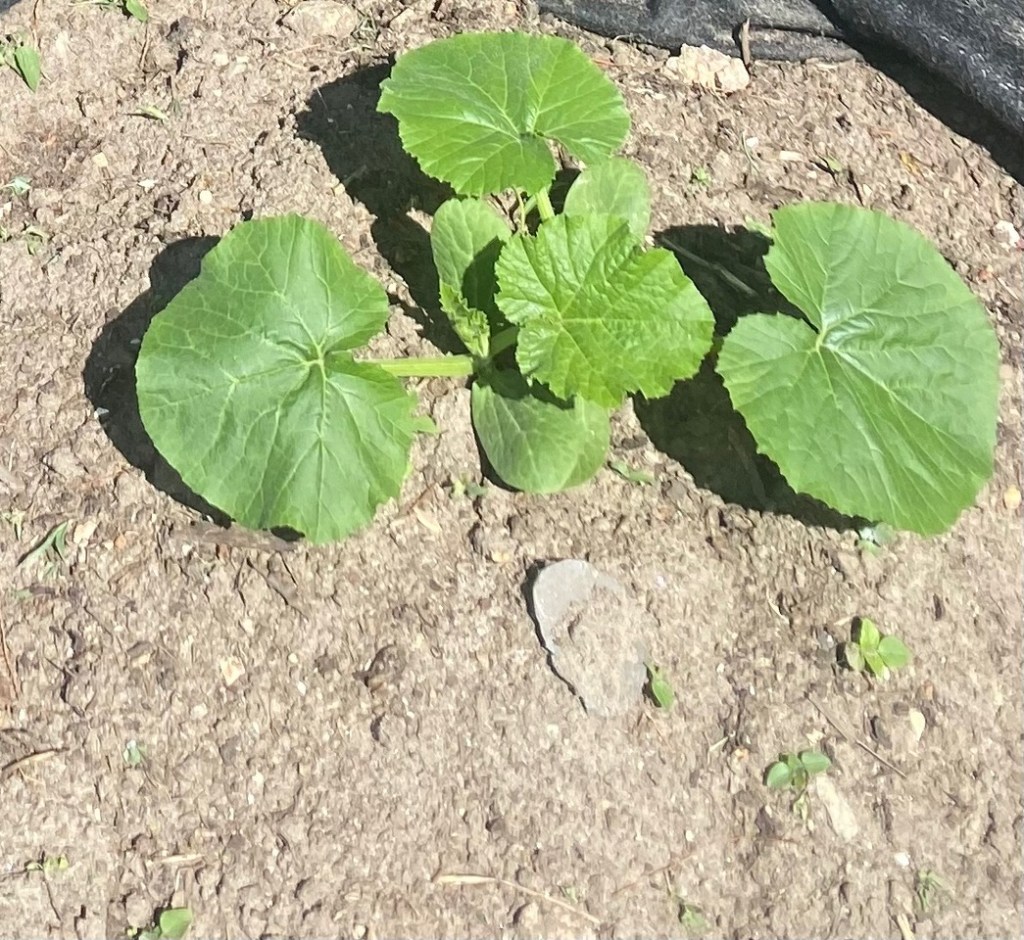
It’s 4:30 in the afternoon and the temperature is still over 80°. A breeze blows from the southwest, making the air feel even hotter. Black flies swarm around my floppy hat as I crawl through the dirt, weeding pumpkin plants. Every few minutes I need to lean back and stretch my aching back. My hand is cramping.

And I’m as happy as a clam at high tide.

From the swamp on the other side of the road by our community garden, sparrows and cardinals chirp and whistle. I listen and drop back to my hands and knees to pull up small bunches of crab grass, pigweed, and plantain. I’ll let the milkweed grow for the butterflies which should be here soon.

I’m not entirely sure I know why I enjoy weeding. I never used to. When I was in high school, working summers in a market garden, weeding was the worst job there was. I’d start out bending over, then drop to my hands and knees, then to my elbows, then to one side, and the next thing I knew I’d be asleep.

But now, far less agile and able than I was at seventeen, there’s something satisfying about seeing a weedless garden. Unlike grandparenting or writing or even playing my banjo—all things I enjoy—I can see immediate results. I really don’t have a lot of control over how many pumpkins I’ll get this fall. That’s up to how much rain and sun we get and whether animals chew things up. But I can control the weeds.

At least if I get them early. Once weeds take root, they take over, sending roots deep into the soil, so that when I pull the weed, the root remains, sending up new weeds, sometimes the next day, and I don’t have the strength anymore to wrestle them out of the ground. Then, my self-satisfaction turns to self-deprecation: Why didn’t you get those damn things earlier? You’re a failure as a gardener, just as you’re a failure at everything else.

So not only is it important to weed the landscape in which I move, I need to weed the landscape in which I think—those weedy thoughts that clutter the garden of my mind.

 While I have a lot of trouble with many parts of the Bible, I’m continually drawn to the parables of Jesus, and in two them, Jesus talks about weeds. In the Parable of the Sower, a farmer is sowing seeds. Some seeds fall on rocky soil, some on weedy soil, and some on good soil. The first seeds don’t grow on rock, the second seeds come up but are choked by thorns, while in the good soil, the seeds produce abundantly.

As Jesus explains, the sower represents someone sowing the word of God. Some who listen are like those who hear the word joyously but can’t take it in and grow from it because they “have no root,” as one of the gospels puts it.  Then there are those who hear the word, grow a bit, but then “the cares of the world and the deceitfulness of riches and the desires for other things enter in and choke the word, and it proves unfruitful.”

That me. How many times have I choked on “cares” and “desires for other things”! The Old Farmer’s Almanac lists 13 common weeds in Maine. I can easily come up with at least that many cares and desires that have choked my ability to become like those in the parable who “hear the word and accept it and bear fruit, thirtyfold and sixtyfold and a hundredfold”: from my sense that nothing I do is ever good enough to my judgmentalism of myself and others to my need for control and an even greater need for the approval of others to my passive-aggressive sarcasm to my perfectionism to…

I think that’s why, for me, any kind of spiritual growth has involved subtraction rather than addition. Whether it’s through meditation, Feldenkrais exercises, or working the 12-steps, I’m weeding rather than planting—trying to remove what 12-steppers call “defects of character.”

But, as 12-steppers know, we can’t do this ourselves. Step Six says, “Were entirely ready to have God remove all these defects in character,” and Step Seven says, “Humbly asked God to remove our shortcomings.”

Which gets me to the other parable Jesus tells, the parable of the wheat and the weeds.

In this story, a man plants wheat seed in his field. That night, while everyone is asleep, the man’s enemy plants weeds among the wheat (which, I guess did happen in those days). Later, when the wheat grows, so do the weeds. Then the man’s servants come to him and say, “Do you want us to go and pull up the weeds?” He answers, “No, because when you pull up the weeds, you might also pull up the wheat. Let the weeds and the wheat grow together until the harvest time. At the harvest time I will tell the workers first, to gather the weeds and tie them together to be burned, and then to gather the wheat and bring it to my barn.”

I like the parable. What I don’t like is the interpretation of it attributed to Jesus. The man who planted the good seed in the field is supposed to be Jesus, and the field is the world. The good seed are the people in God’s kingdom, and the weeds are the people who belong to the “Evil One.” The enemy who planted the bad seed is the devil. The harvest is the end of time, and the workers who gather are God’s angels. At the end of time, Jesus will send his angels, and they will find the people who cause sin and all those who do evil, take those people out of his kingdom and throw them into the place of fire. Then the “good” people will be taken into the kingdom of God.

This interpretation of separating “good” people from “bad” and condemning those bad folk to eternal hell fire not only seems contrary to Jesus’s other teaching about loving your enemy and his compassion for tax collectors, prostitutes, and other sinners, but also—it seems to me—cultivates self-righteous and judgmental behavior about who’s “good” and who’s “bad,” which, as I’ve already said, are some of the weeds in my interior garden.

So, for me, what the parable promises is that at some point—possibly at my death, possibly in some afterlife— those weeds that I struggle with, that I’ve let get out of control for the past 80 years, will be removed, and that what remains will be something pure and shining like wheat in the sun. (Or pumpkins in the field.)

In the meantime, I’m trying to pull out the newer weeds, asking myself the following questions:

—What seeds have I planted for the future?

—What recent weeds—complacency, smugness, procrastination, and the like—have taken hold and need to be pulled out for these seeds to grow and produce?

Now weeds I’m happy to send to “the place of fire.”

# #

Leaving “the Little Lightless Caverns”

#

I waste too much time in the little lightless caverns of my own mind.”

—Christian Wiman

#

            My first wife used to say to me, “Rick, you think too much.”

            It pains me to say it, but she was right. I can turn anything into a problem to be solved: what I want for breakfast, what clothes I want to wear for the day (I’m retired, for godssake, who cares what I wear?), where I want to go for a morning walk, whether I want to go first to the grocery store and then to the hardware store (well, the grocery store is closer and if I get delayed there, I can always wait until tomorrow to do the hardware store) or go first to the hardware story and then to the grocery store (but because the grocery store is closer, I need to get the refrigerated items home before they spoil).

            So that by lunchtime I’m tired out (and then do I want a nap or should I read?).

            Minor stuff, I know, but as I look back at my life, I see that overthinking has caused me and those around me serious problems. Part of the reason I almost flunked out of college was because I waffled about not only what career path to follow, but also whether I wanted to join a fraternity, ask Ginny out or Pat, hang out with jocks or artsy types, take a year off.

            In later years, I agonized over if I should get married, go to graduate school, take a college or a high school teaching job, join a church (what denomination?), join the Rotary, or tell my first wife I was unhappy in our marriage.

            After my daughter died, my mind became a prison. When all my efforts to understand why a previously healthy and happy 18-year-old should suddenly die from a rare cancer—radon in our water supply, McDonald’s cutting down rain forests, accident, fate, God wanting “another angel in heaven,”(all reasons people gave me)—failed, I decided I had to be the one to blame, either because Laurie’s mother and I divorced or because we didn’t divorce soon enough. For several years, the only relief I could find was through alcohol and anger, both of which threatened not only my life but the lives of those close to me.

            As I’ve written before in these blogs, I credit meditation with first helping me see the destructive nature of thoughts and to unload much of my anger and shame—give it to God, as one of my first mentors suggested.

But meditation can become its own “little lightless cavern,” as poet Christian Wiman calls his mind: a place to escape an argument or a fear or a resentment by retreating into old patterns of thinking. (What will I have for breakfast, what shall I wear today…)

            So, what else has helped?

            Seeing myself as the Geriatric Pilgrim has become more than a literary conceit. Looking at life as a pilgrimage has taught me to be curious, to look for surprises, to live without planning every single detail, to put myself in uncomfortable situations (even if it’s just going for a walk and having no destination or closing my eyes before grabbing a shirt to wear for the day). I’ve learned to embrace the unknown—including a Higher Power totally outside my understanding, and to look for evidence of that Higher Power—what I would call grace—all around me.

            A pilgrimage always involves some type of movement, whether it’s walking Saint Cuthbert’s Way or walking downtown. Despite having grown up playing sports, I’ve never paid more attention than I do these days to movement. Yes, regular exercise has long been known to improve and maintain key aspects of cognitive function such as attention, learning, and memory, but neuroscientist Daniel Wolpert posits that our brains evolved, not to think or feel, but to produce adaptable and complex movements. He points out that it’s a lot easier to create a computer that thinks than to create a computer which can move anything like we do. (If you’d like to learn more see https://www.ted.com/talks/daniel_wolpert_the_real_reason_for_brains.)

For the last year and a half, I’ve been practicing the Feldenkrais Method of exercise therapy, learning to reorganize connections between the brain and body, which has improved both the way I move and the way I think, helping me pay less attention to my mind and more attention to my heart and my gut—my instincts.

            The slogans of Al Anon, the 12-step program for families and friends of alcoholics, have become my roadmap on this pilgrimage out of the caverns of my mind. When I first started attending meetings and saw slogans set out on the floor, I thought, “God, how simplistic!” Another example of how thinking can mislead me. Try following a few of these slogans and see how simple they are. To give just one example, let’s look at “One Day at a Time.”

            What’s so hard about that? Well, for someone like me—and, I find, many people who’ve grown up in alcoholic families, who continually try to anticipate and resolve every problem they think they may encounter, attempting to make decisions on information they don’t have—it’s damn hard. Instead of responding to what’s in front of me, both the challenges and the gifts that come my way, I’m obsessing about all the possibilities (most of them bad) that might befall me, even though, looking back over the almost 80 years of my life, I can say that not once did any of this preparation spare me a single moment of pain. In fact, it just lengthened my suffering.

            Still, at my age, it’s hard for me not to think about—which in my case means understand, anticipant, awfulize—my death. It was helpful this week to hear a podcast in which Ariel Burger, protégé and friend of Holocaust survivor and Nobel Peace Prize recipient Elie Wiesel, talk about Wiesel’s teaching that there are no answers to life’s big questions, only responses.

            So, I’m trying to respond to these questions by breaking them into small daily tasks. Instead of trying to answer the question, how can my grandchildren survive in a world that seems to be hurtling toward destruction, I focus what I can do with them today. If I’m worried about the Supreme Court or the swelling in my jaw, what can I do about either one today? Call my senator? Pop into the walk-in clinic (which I did this weekend. It’s “an obstructed parotid gland”)? Then it’s time to go for a walk, pick up a banjo, write a poem or a blog. Get out of my head.

            In other words, as one of the AA’s oldest slogans puts it, “Move a muscle, change a thought.”

            And leave a little lightless cavern.

# #