It’s Saturday, January 28, 1956, and I’m twelve years old sitting comfortably with my family watching “The Dorsey Brothers Stage Show” on TV. Tonight, however, instead of the usual big band number, a young singer with the strange name of Elvis Presley comes on stage in a black shirt and white tie. He’s got shiny hair, sideburns, and a wise-ass smirk on his face. Beating on a white guitar, he half-moans, half-yells, “Shake, Rattle, and Roll” and wiggles his hips.
“Good God! What the hell is that?” says my father.
I love it.
#
A couple of weeks ago, I was reading a blog by Paul Cannon, an Anglican priest in Australia, called “Songs Lift my Soul,” (http://pvcann.com/2018/04/15/songs-lift-my-soul/). That same week, two of my Facebook friends posted the names of their ten favorite musical albums. I started thinking about the importance of music to my earthly pilgrimage and wondering just what it is that makes music so important to so many of us.
#
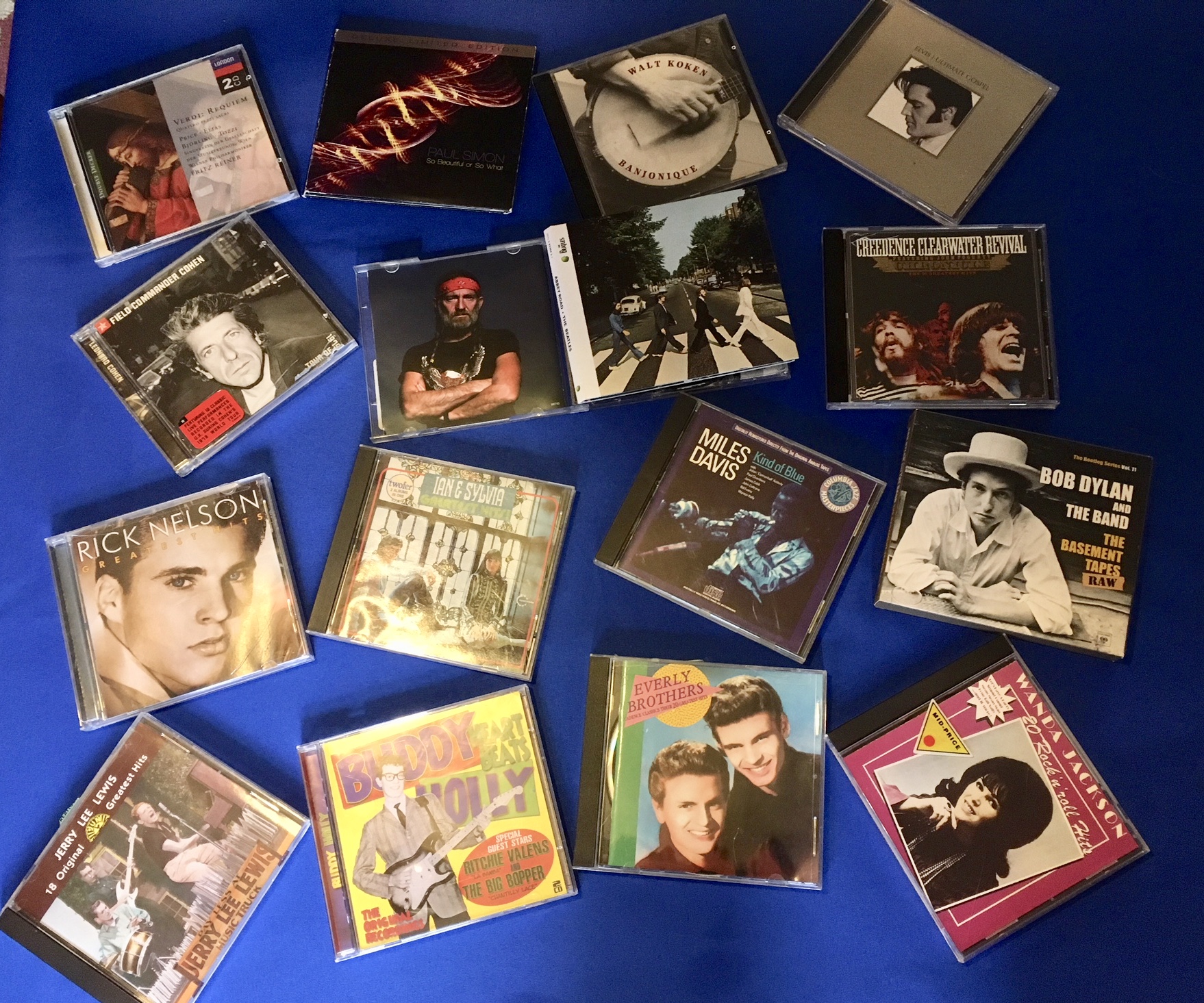
In high school, I worshipped Elvis and his disciples: Buddy Holly, Chuck Berry, Carl Perkins, Fats Domino, Roy Orbison, Jerry Lee Lewis, Little Richard, Ricky Nelson, Brenda Lee, Wanda Jackson, The Everly Brothers, and Ray Charles. In college I listened to the jazz of Dave Brubeck, Miles Davis, and George Shearing, as well as the folk songs of Bob Dylan, Joan Baez, and Odetta. Rock ‘n roll, jazz, and folk music tapped into my longing for romance and freedom—my need to rebel against the small- town Maine culture I’d grown up in—while at the same time remaining safely wrapped in a security blanket of likeminded peers. In other words, I could be independent and dependent at the same time.
But almost overnight, it seems now, my love of music went from being about the promise of the future to nostalgia for the past. Perhaps because I’m just a little too old to be a Baby Boomer or because growing up in an alcoholic family made me diffident and fearful, I, for all intents and purposes, opted out of the rebellious 60s, choosing the security of marriage and a steady teaching job. For me the Beatles were about how much they reminded me of the rhythm and blues of early Elvis. I never cared for their psychedelic stuff, but I did like the rawness of the last albums, which, along with what became known in the 70s as Outlaw Music—Waylon Jennings, Willie Nelson, Kris Kristofferson, Johnny Cash, Jerry Reed—had that sense of romance and rebellion I remembered from my teenage years.
When I think of the music from the 80s and 90s, I think of my daughter Laurie. I listened to her tapes of Bruce Springsteen, Billy Joel, Paul Simon, Tracy Chapman, Suzanne Vega, and Joan Armatrading not only with my ears, but hers—heard the promise, the passion for change. Laurie was also a self-proclaimed “flower child,” and after I’d divorced and remarried, her interest in the Grateful Dead, Pete Seeger, and the electric Bob Dylan made me feel as if I had finally entered the 60s.
When Laurie died in 1988, everything changed, including my musical tastes. I became obsessed with the requiems of Mozart, Brahms, Verdi, and Britten. I saw how grief can be given a structure, and I later used some of that structure for my novel, Requiem in Stones. My interest in spirituality led me to Elvis’s gospel music and the songs of Leonard Cohen, who along with Bob Dylan and Paul Simon continue to guide me as I age.
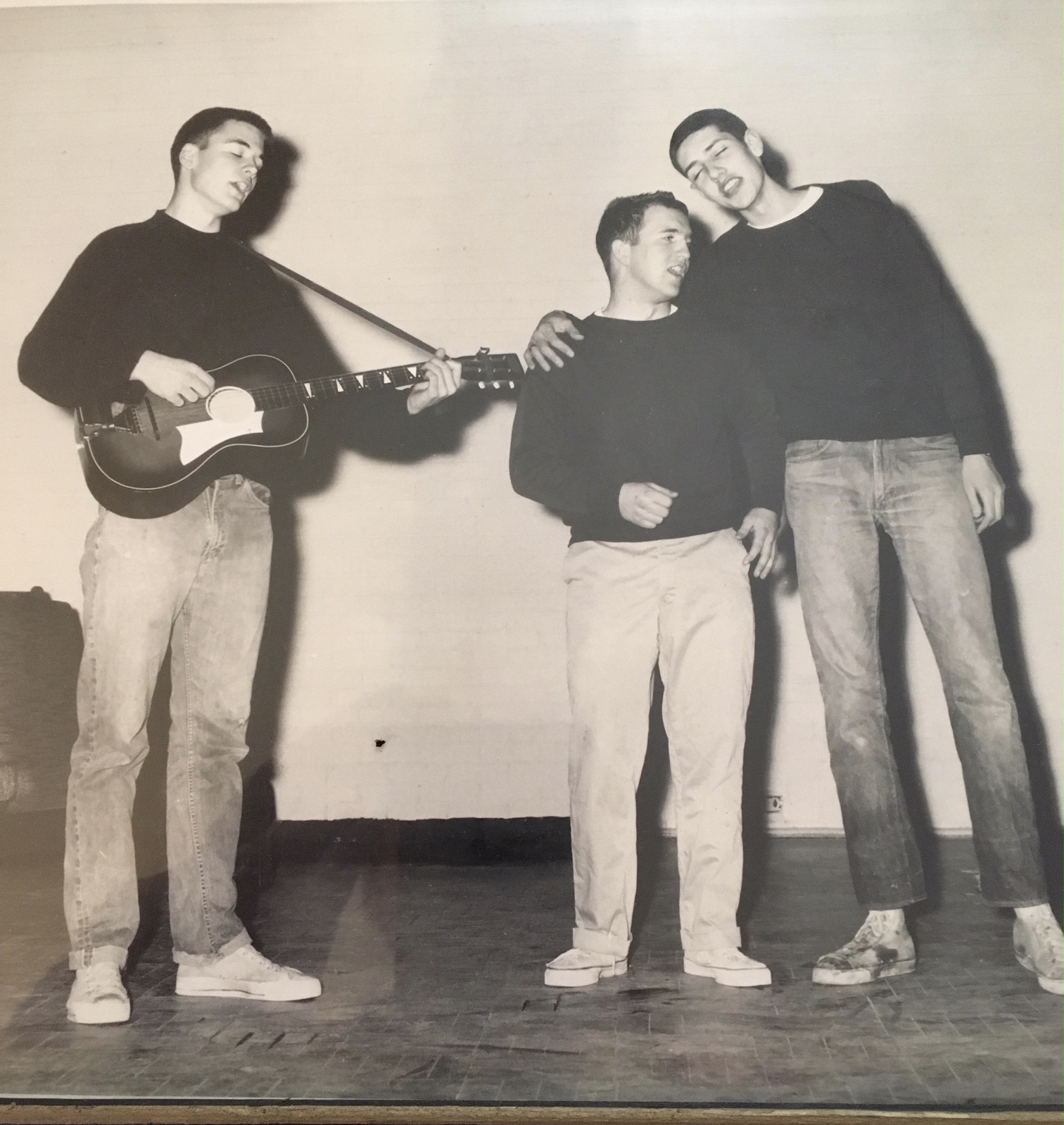
I also became more interested in playing music. In my early high school years, even as I’d followed Elvis, I’d also played trombone in a Dixieland band “The Ivy Leaguers.” Later in high school, I’d swapped my trombone for a guitar because of the Kingston Trio, who introduced me to folk songs. I became a member of the “The Fish Factory Trio”:
During my first teaching job in Woodstock, Vermont, I played guitar and sang Ian and Sylvia songs with “The Faculty Three.” After Laurie’s death I took up the banjo (see https://geriatricpilgrim.com/2016/07/25/joy-and-the-banjo/), the instrument of black slaves and impoverished whites, a sound of sorrow and longing, yet at the same time, joy and gutsiness.
#
One reason I don’t think I could exist without music is that both listening to and playing music let me escape for a time what Hamlet called “the slings and arrows of outrageous fortune.” Or, put another way, music takes me out of what some of the writers I read call my “small,” or “false” self, leaving behind those anxieties to which I’m usually addicted. At the same time, I actually become more myself. Playing in an old-time string band, I am one of a group of musicians, all playing the same song, and yet, my part is individual; in fact, without the others playing their parts, my part makes no sense. I learn that I am the most authentic me only in relationship to others—what Courage to Change: One Day at a Time in AlAnon, calls “unity in diversity.”
And it’s this synthesis that helps me better understand that while spirituality is discovered in solitude, it is fulfilled in community. “Union differentiates,” wrote priest, philosopher, and paleologist Pierre Teilhard de Chardin. We find our true “personhood,” he said, only by uniting with others.
#
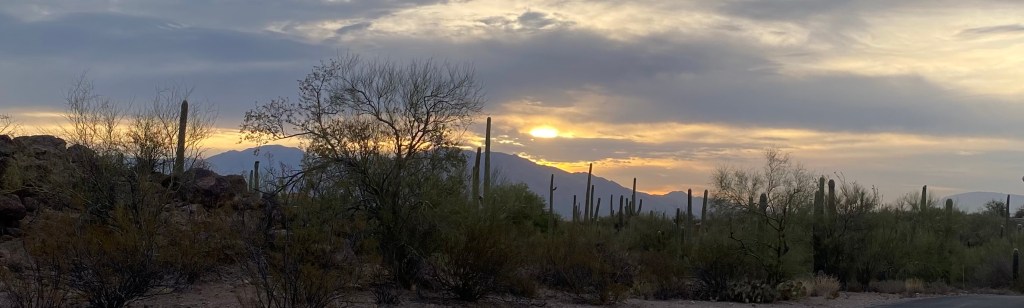
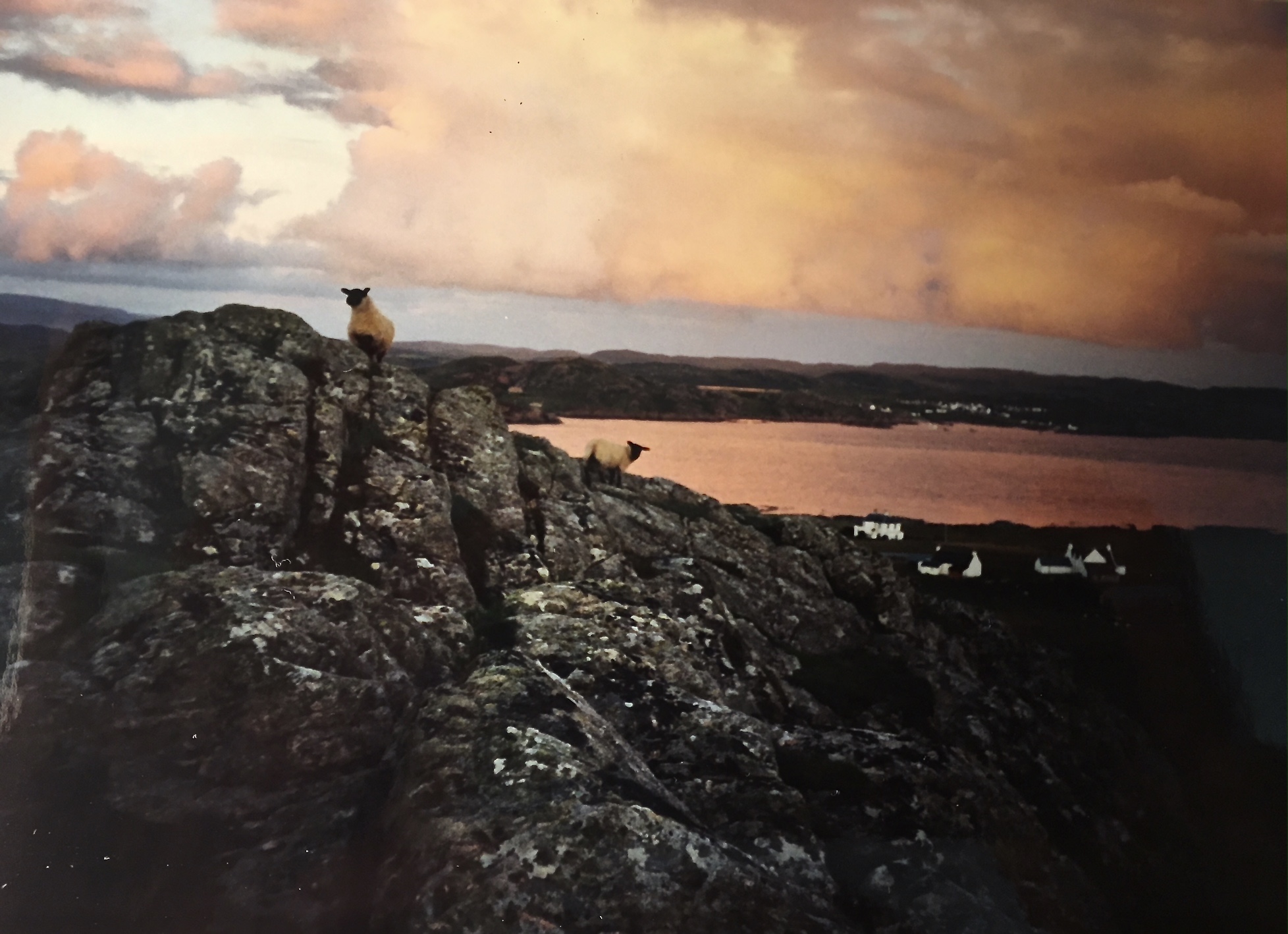
But I wonder if music’s almost universal appeal doesn’t go even deeper. As I was writing this blog, I decided to take a break and go for a walk in the woods behind my house. Perhaps because of what I’d been writing, I found myself aware of the music around me—the birds’ various songs; the wind through the trees. I thought of the music from some of my pilgrimages through the years: the Sanctus of sheep bleating at sunset on the island of Iona in Scotland, the dies irae of coyotes’ wailing in Arizona, and the Kyrie eleison of rain and wind through the branches of trees outside my hermitage at Emery House in Massachusetts.
Feeling my feet tramping through the leaves, I thought of how I have always been drawn to the rhythms of music (which is why I like the later Paul Simon more than the earlier Paul Simon), and how music connects us—well, me at least—to the earth through its tempos: the ebb and flow of tides, the pulsating whistle of the cardinal, the percussion of rain on the roof. In contemplative prayer, I feel the rhythm of my breathing, which sometimes becomes part of a much larger breathing, almost as if someone or something is breathing in me.
#
These days I’m often found, as my wife says, “down the rabbit hole” of You Tube. I look at old videos of my early rock ‘n roll idols—Oh, hey, here’s Fats Domino singing with Ricky Nelson!—reliving my life’s ups and downs. I watch clips from old-time music festivals and artists like John Hartford and Dom Flemons, slowing the videos down as I try to learn “new” old-time tunes. And then, I might watch a lecture by Richard Rohr, Thomas Keating, or Cynthia Bourgeault on spirituality.
They aren’t as different from one other as you might think.



 The Geriatric Pilgrim: Traveling the Landscape of Faith and Grief