
#
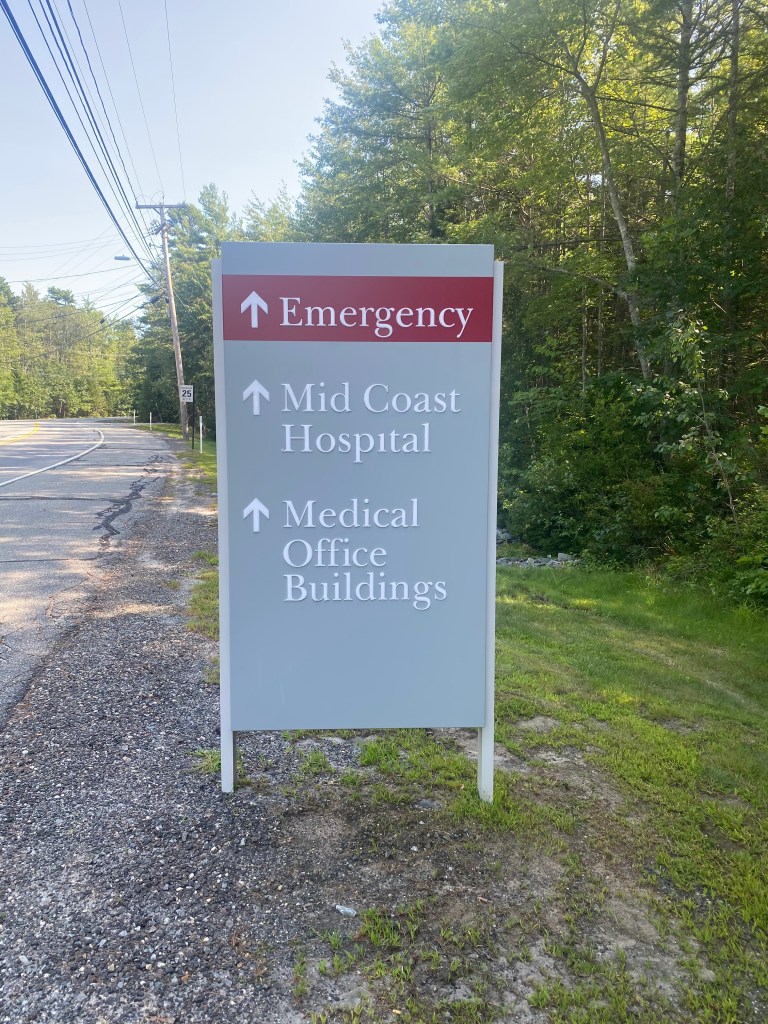
Recently, I took a trip to my local hospital for some minor surgery. As I was recovering, I started thinking (As my first wife used to say, “Rick, you think too much”) that as much as I like to say I’m in good health, I’ve spent a lot of my life preparing for, going to, and recovering from one hospital visit or another. And yet I, who’ve been trying to show in these blogs for almost eight years that any journey can be pilgrimage, have never really thought of my hospitalizations as pilgrimages.
Why not?
At first glance, the two trips look very much alike. Let’s look at some of the characteristics of a pilgrimage I’ve talked about over the years and see how they compare to making a trip to the hospital.
The call to healing. This is a no-brainer, right? I go to the hospital to be healed. From major stays for a back fusion, two hip replacements, one hip “revision,” one open-heart surgery, four (as of last week) hernia repairs, to quick trips to the Emergency Room for having run my arm through a washing machine wringer, almost cutting the tip of my finger off with a double-edged razor blade, and having our twenty-year old cat sink one of his four remaining teeth into an artery in my arm, I need healing from arthritis, heart disease, clumsiness, and stupidity.
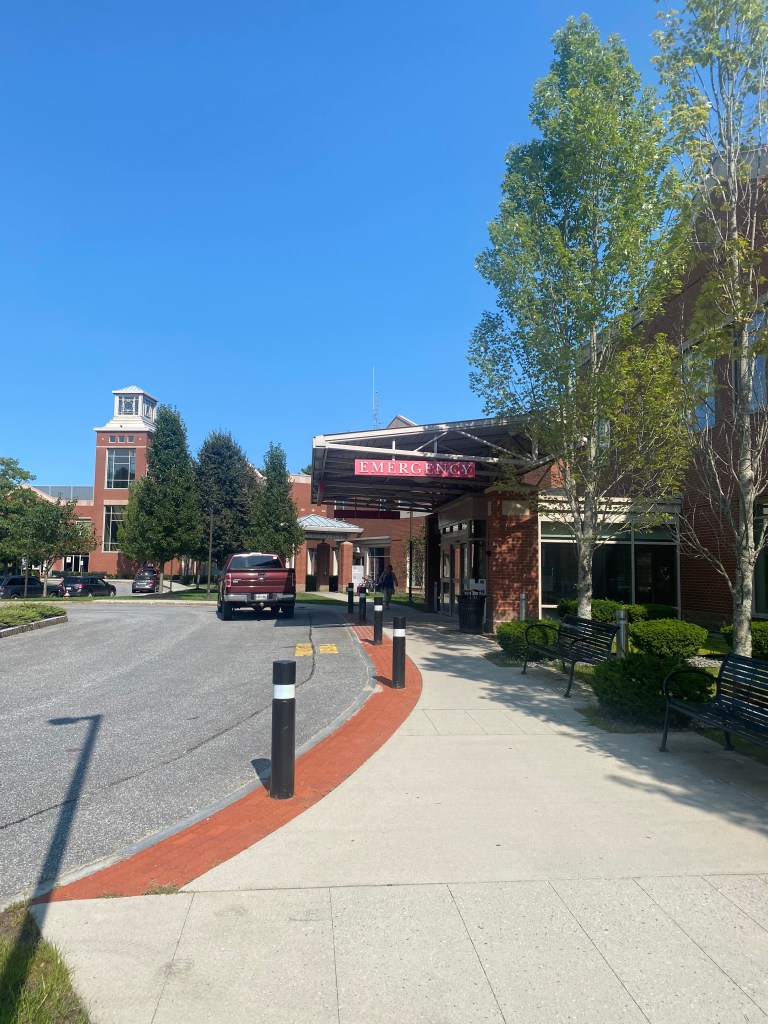
Preparation. Just as I need to read up on where I’m going on a pilgrimage so that I know what clothes to bring, what currency to have with me, what customs I’ll need to follow, when I go to the hospital, I’ll probably have to stop eating twelve to twenty-four hours ahead of time, have my insurance cards with me, leave my valuables behind, and make sure I have someone to drive me home..
Crossing a threshold into another country. Entering through the revolving doors of the hospital, I enter what seems like a foreign country, where the natives speak a different language and wear strange clothing. They are relaxed, at home, joking with each other, while we visitors speak in hushed tones and glance around nervously.
Being in liminal space. Just as on a pilgrimage, when I’ve left home but haven’t yet arrived at Iona, the Holy Sepulchral in Jerusalem, the Holy Island of Lindisfarne, or City Lights Bookstore in San Francisco, in the hospital, I’m no longer suffering from a bad back, aching hips, a blocked artery, or a bulging hernia, but I’m also not fully awake, still sore, still unable to walk, still unable to move my bowels so I can go home.
Finding your own way by following the path of others. When I go on a pilgrimage, I am following the footsteps of thousands of pilgrims who have gone before me, yet I still must find the path, as I’ve struggled many times to do. Likewise, I’m sure all my doctors have performed many surgeries before mine (at least I hope so), but for me, all the operations are new and strange. I can’t rely on other people’s reactions to help me with mine. After my heart surgery, I didn’t want anything to eat for days; on his first day, my roommate ordered a lobster roll and French fries. Even I react differently at different times. My experience after my second hip surgery was far worse that after my first hip surgery only a week earlier.
Experiencing discomfort. Another no-brainer. When I go to the hospital, I expect pain. Even with this last minor surgery, it took three tries for the nurse to get a needle for the anesthesia into my arm and three days for me to get the anesthesia out of my system. Don’t get me going about having to walk 10 miles a day in February and March after my back surgery. (And if you want to read about my heart surgery, check out an earlier blog: https://geriatricpilgrim.com/2019/08/)
Beginning again. Pilgrims talk about cultivating “beginners’ mind”—learning to see with new eyes. In hospitals, beginning again means learning how to breathe again, as in after my heart surgery, or walk again, as after back and hip surgery.
Being vulnerable. If both the traditional pilgrimage and the hospitalization have taught me one thing, it’s that I am not in control. Rick the pilgrim is at the mercy of the weather, the people I encounter, and the situations that arise. Rick the patient is at the mercy of doctors, nurses, technicians, roommates, and his own body. The minute I gave Mary Lee my wallet, watch, and phone the other day, I gave up control. And nothing says vulnerable like a hospital johnny. Talk about feeling defenseless!
Coming home with new eyes. Just as I read the Bible with new eyes after being in Israel, my various surgeries have made me look at my body in a new light. I’m far more aware of how what happens in one part of my body affects other parts, and how closely connected my mind and body are.
So why have I never thought of my various hospitalizations as pilgrimages?
Simply because, for me, the pilgrimage needs to have a spiritual element. As one of my spiritual directors used to ask me after I’d updated him on my month, “Where’s God in all of this?”
Let’s go back and touch upon those characteristics of pilgrimage I’ve just been talking about. When I’ve experienced a “call to healing,” it’s been a call to “healing” in the original sense of the word: to be whole. And I can’t be whole unless all those other characteristics—the preparation, crossing a threshold, liminality, and so forth—are as much about an interior journey as an exterior one. For me, any interior journey involves traveling with what I call “God of my Not Understanding.”
And I confess that God of my Not Understanding has largely been absent during my hospitalizations. My experience with hospitals is that they are clean, efficient, sterile, square, and noisy. The lighting is artificial and despite efforts to duplicate the outside world through paintings and sculptures, nature seems far away.
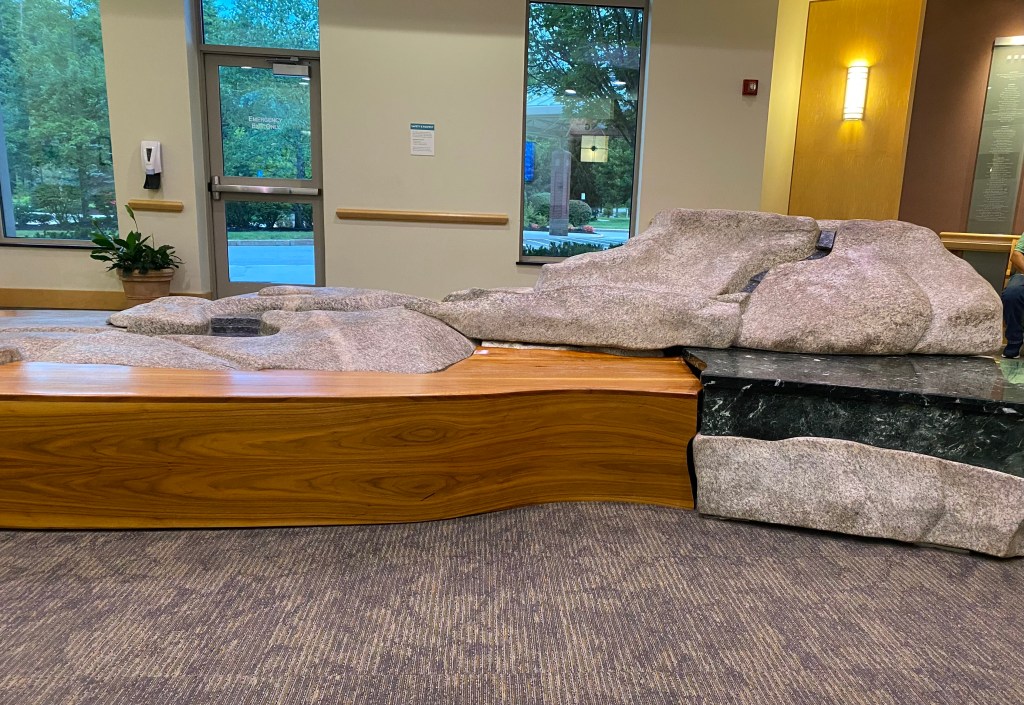
Many hospitals have chapels, and I remain thankful for the one at the Eastern Maine Medical Center in Bangor, Maine, where I spent so much time when my daughter was dying of cancer. But those are for visitors, not patients. Hospitals have chaplains, but they’re stretched thin. The only chaplain I ever encountered was after I’d been in the hospital for two weeks.
I shouldn’t complain. Up until a hundred years ago or so, I’d have been confined by arthritis to a wheelchair by the age of fifty, and dead of what used to be called “severe indigestion” in my sixties. I’m grateful for those clean, efficient, and sterile operating rooms, and for all those nurses, doctors, and anesthesiologists who worked so hard to help me recover.
So, perhaps holding on to and cultivating that gratitude is what I need to do to turn even minor surgery into a pilgrimage?
Mmmm. I hadn’t thought of that before. Maybe any journey can be a pilgrimage after all.

# #
 The Geriatric Pilgrim: Traveling the Landscape of Faith and Grief
The washing machine wringer, huh! I’ve had many hospital stays and have learned gratitude in the midst of misery. Recovering from the worst one, still in the hospital, still suffering, I experienced an awareness that God was there with me, even though I couldn’t even pray.
I enjoyed your book (and reviewed it), and the idea of “thin places.” I wonder whether I experienced something like that here at home. While combing through casualty reports about the three young uncles who never came home from WWII, I had the winsome perception that they were watching from heaven, taking note of what I’d finally discovered.
LikeLiked by 2 people
You remember washing machine wringers? Not many people do these days. I’ve experienced my daughter’s presence many times, but again, never in hospitals. I think I’m just too self-absorbed. Anyway, thank you for the Amazon Review!
LikeLiked by 1 person
Sure, I was born two days before D-Day! We even had a car with a city horn and a country horn–a C-39 (1939 Chevy, bought used right after I was born).
LikeLiked by 1 person
My heart aches for your body’s tough trek through life and the loss of your daughter. I admire your stalwart faith, your gratitude, and your strength.
LikeLiked by 1 person
Full of hard-won insight, as always, Rick.
LikeLiked by 1 person
What a wise perspective! Every step we take in this life, in faith, is a pilgrimage towards God.
LikeLike