The Inner Pilgrimage of Centering Prayer

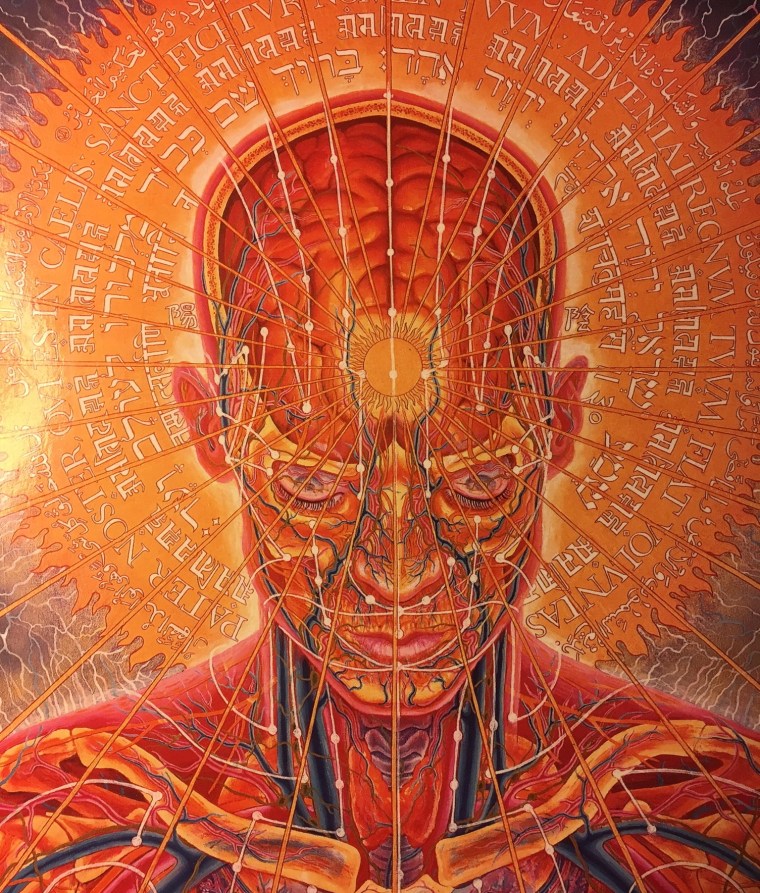
I("Praying," by Alex Gray, Oil on canvas, 1984)
(“Praying,” by Alex Gray, Oil on canvas, 1984)

#

“I felt the need of a great pilgrimage so I sat still for three days.”—Hafiz

#

As I’ve mentioned in an earlier blog (“Retreating,” November 30, 2015) some year and a half after my daughter Laurie’s death, I attended a program at my church called “Meditation as Part of the Christian Tradition.” That night I was introduced to Centering Prayer, a form of Christian meditation, and soon began a journey that’s been part of my life ever since—one winding through an interior landscape complete with mountains, valleys, deserts, seas, and cities.

For those of you who aren’t familiar with Centering Prayer, it differs from many other types of meditation in that the practice is “intentive,” rather than “attentive.” Instead of focusing on a word or various breathing techniques, you find a simple word such as ‘Abba,’ ‘God,’ or ‘Love’ to signify your intention to surrender to God, but don’t focus on it; you merely use the word as a pointer away from all the thoughts which will rush into your head. The idea is to sit, relax, and watch those thoughts pass by. When you find yourself (as you will, again and again and again) becoming attached to one of those thoughts, you use your sacred word to help you let that thought go.

Of course, this is a lot easier to describe than do. What’s kept me going, I think, is Centering Prayer’s emphasis on letting go, known in some Christian circles as kenosis, or self-emptying. Cynthia Bourgeault, Richard Rohr, and others tell us is that kenosis was what Jesus was trying to teach us. They quote Paul in Philippians: Jesus “emptied himself, taking the form of a slave ….”

Over the past twenty-four years, Centering Prayer’s embodiment of kenosis— self-emptying—has helped me travel grief’s rocky terrain, while letting go of the insidious false selves that want to trip me up along the way.

What do I mean by false selves? Father Thomas Keating, one of the early proponents of Centering Prayer, defines the false self as the self-image we develop in early childhood to cope with emotional trauma, and to satisfy our instinctual needs for survival, affection, and control. My experience is that even as adults, we continue to create false selves, especially in times of turmoil. After an emotional trauma such as the loss of a child, we grieving parents struggle to live with our pain. Out of our need for survival, we create a self-image that will help us pick up the pieces of our lives and go on. The problem is that this false self winds up exacerbating the pain. At least it has in my case.

In my efforts to make sense of Laurie’s death, to answer the question of why my up-until-now healthy, happy, beautiful, compassionate, intelligent, eighteen-year-old daughter had to die, I created an image of myself as Sinner. Having grown up in a religious background, and since I had divorced Laurie’s mother two years before our daughter’s diagnosis in order to marry another woman, I concocted a drama about a man who sells his child’s life to the Devil in order to satisfy his own lustful desires. I continued to embellish the narrative until I’d convinced myself that I had murdered my daughter, just as if I’d put a gun to her head and pulled the trigger.

At the same time, however, there was part of me that kept telling myself, “Don’t be foolish. Millions of fathers are divorced from the mother of their children and the children grow up perfectly fine.”

So that when I first began to practice Centering Prayer, I kept trying—unsuccessfully—to let go of my self-image as Sinner. Then, after three years or so, I found myself one day letting go not of my image of myself as murderer, but of censoring the thought—letting myself admit, “Okay, I will always feel that at some level, I killed my child.” It was if a two hundred pound rock had lifted from my shoulders. I learned that once I accepted the thought, it lost its power.

After letting go of my sense of self as Sinner, however, I encountered the second—and harder to destroy—false self: that of Bereaved Parent. What makes this self-image so hard to let go of is that parents who’ve lost children are bereft, suddenly isolated from most of our friends and colleagues. No one who has not lost a child has any idea what the pain is like, and frankly, no one wants to know. Add the fact that grief totally absorbs each person involved in it, and we find ourselves isolated even from others who are grieving.

What can happen is that we become comfortable with this self-image and begin to cling to it. After all, our grief is our link to our child, and letting go of the grief can feel like letting go of our child all over again. Suffering begins to define who we think we are. All the while, however, grief continues to eat away at us like a cancer.

Eight years after Laurie’s death, after several years of relative serenity, I found myself once again angry, guilty, often in tears. At a Lenten retreat, when my wife shared a poem she’d written about grief, I sat, enraged that she had written about MY story. Centering Prayer practice became like sitting at the edge of a black abyss, enveloped in a cold fog. Sometimes, I rose from meditation with tightness pushing at my temples; sometimes I got up shaking with cold.

Then, on Easter Sunday, I listened to a sermon focusing on the women at the empty tomb in Mark’s Gospel:

So they went out and fled from the tomb, for terror and amazement had seized them, and they said nothing to anyone, for they were afraid.

The priest focused on the fear that keeps many of us from entering into the joy of Easter, the fear of what the resurrection means to our understanding of the way the world works, to our security, even if it’s the security of our own suffering. An icy snake slithered across my neck and shoulders. Had I become secure, I wondered, possibly even happy in my vision of myself as Grieving Parent? Did I want my daughter only as memories pasted on the pages of a scrapbook? Did I want to keep the stone rolled in front of her tomb? I realized that if I were serious about my Christian faith, I needed to stop dwelling on old memories of my daughter, and trust that she too had become resurrected as a living, growing presence. I needed to let go of my vision of myself as Grieving Parent.

I’m not sure I’ve completely let go of that false self, but when I do, I find that I am hearing my daughter’s voice in my ear, feeling her hand in mine. She tells me that while death may end a life, it doesn’t end a relationship, a relationship, which, ironically, grows by letting go.

My various pilgrimages to retreat houses and other holy sites are, for me, manifestations of an inner journey. Each helps me understand the other. Each hopefully keeps me learning, growing, and moving towards my true self—what Keating calls the self as the image of God, “manifested in our uniqueness.” But each is also helping me let go: I’ve never yet been on a pilgrimage when I wasn’t humbled, wasn’t forced to let go of my inflated self-image.

As I age, as I’m forced to let go of my health and my height, my friends and my memory, as I contemplate having to let go of my life, I figure that’s pretty good practice.

Image 2

# #

Looking Back at Big Sur

If you look closely, you can see the New Camaldoli Monastery in Big Sur. It was never that clear when I was there.


#

“…we look back, with thanksgiving, in order to look forward. We cannot stand still. God is always calling us on to larger life.”

—Br. Geoffrey Tristram, Society of Saint John the Evangelist, “Brother, Give Us a Word,” June 6, 2016

#

One of the neat things about writing this blog is that I get to go back and reread old journals. If I’m doubly fortunate, I can see how far I’ve come—psychologically, spiritually—sort of like standing on a bluff looking back at the trail you’ve been traveling, realizing you can see a lot further than you once could. This week I’ve been looking back at my journal for August 7-12, 2005, when my wife Mary Lee, my brother Roger, and I stayed at the New Camaldoli Hermitage in Big Sur, California, some 1300 feet up into the Santa Lucia Mountains, overlooking the Pacific Ocean.

The first thing I notice is how often I write about the fog that lay over the ocean for almost all of the time we were there. We almost never saw water, only a bank of clouds that I kept trying to describe: a “blanket of white foam,” “a soufflé,” “like something from a dry ice machine,” “beaten egg whites,” “shaving cream,” “a snow field,” “a white carpet”—I’m not sure I ever did find the right words. During the day, I sat on my hermitage patio and looked down at the clouds, feeling like God looking down at an uncreated firmament. At sunset, the clouds rushed up the ravine, turning pink in the sunset before enveloping the hermitage in a dense, but somehow comforting, fog. One day, I quoted T.S. Eliot—“Only the divine stands firm/ the rest is smoke.” (“Or,” I added, “fog.”)

I think I took the Eliot quote from a book I read while I was at Big Sur. Paul Elie’s The Life You Save may be Your Own: an American Pilgrimage compares and contrasts the religious journeys of four American writers: Flannery O’Connor, Walker Percy, Thomas Merton, and Dorothy Day. Until I reread my notes, I’d forgotten quite how long the image of being on a pilgrimage has been part of my personal mythology—those stories I tell myself about myself.

And I never included Elie’s definition of pilgrimage with all the other definitions I’ve collected over the years. For the author, the pattern of his four subjects’ pilgrimages is “the journey to first hand experience.” Which helps me see the difference between those journeys I’ve been on when I’ve felt like a pilgrim, and those when I’ve felt like a tourist: when I’ve been a participant in an experience versus when I’ve been an observer of someone else’s experience.

#

I see that on August 10, I went to a “Collato,” which was a study with the Brothers at the New Camaldoli monastery of the following Sunday’s scripture readings. The gospel reading was Matthew 15: 21-28. A woman from Canaan—and thus, a non-Jew—comes to Jesus and asks him to heal her daughter, who is being tormented by a demon. Jesus tells her that he was sent only to “the lost sheep of Israel,” going on to say (somewhat cruelly, it seemed to me then and seems to me now), “It is not fair to take the children’s food and throw it to the dogs.” The woman replies, “Yes, Lord, yet even the dogs eat the crumbs that fall from their master’s table.” Apparently impressed, Jesus says, “Woman, great is your faith! Let it be done for you as you wish.” And as Matthew writes, “…her daughter was healed instantly.”

The discussion that followed was, I write, “heady.” The gathering of Brothers and guests referred to other passages of scripture, Biblical commentaries, even, my notes say, Jungian psychology. The big issue for the Brothers seemed to be if the woman really changed Jesus’ mind or whether he was testing her faith, which led to discussion of how divine Jesus was and how human.

I recall being bored with all the talk. The day before, August 9, had been my daughter Laurie’s birthday. She would have been thirty-five. She had been dead for seventeen years, almost as long as she’d been alive, and the story made me envious that the woman’s child had been not only healed but healed “instantly.” I remembered Laurie’s months of suffering from radiation, chemotherapy, her intense physical and emotional pain. Before I knew what I was doing, I became a participant in the discussion instead of an observer. “Do you realize,” I said, “how hard this story is for people whose children are suffering from disease, addiction, and mental illness, not to mention parents who’ve lost children? All this story does is imply that if we had more faith, our children would get better. I don’t need any more guilt, thank you very much.”

My journal notes that none of the Brothers seemed to want to deal with my question, but that one of the other people there, a pastor from San Francisco, stopped me later and said I’d given him the basis for his sermon the following Sunday. (I’m sorry now I didn’t think to ask him to send me a copy of what he’d said.)

What strikes me today, however, is that these stories of Jesus’ healing, of raising children from the dead, no longer make me angry. I don’t know when it happened, but sometime within the last eleven years (Laurie’s forty-sixth birthday is coming up this summer. Good Lord!), I started to think of the healing stories in the Bible as moral lessons, not necessarily historical facts—as dramatizations of a larger Truth: God heals our children, and us, for that matter. The healing may not take place in this lifetime, but it will come. And faith, I now believe, lies in believing, accepting, waiting.

Am I still angry that my child suffered? That she died before she’d ever really lived? Absolutely. But somewhere along my “journey to first hand experience,” this anger seems to have been enveloped, sort of like the white clouds of fog that climbed the ravine from the ocean to the monastery at Big Sur every night, wrapped now in a blanket of—dare I say it?—love.

Image 3

# #

Baseball as Pilgrimage

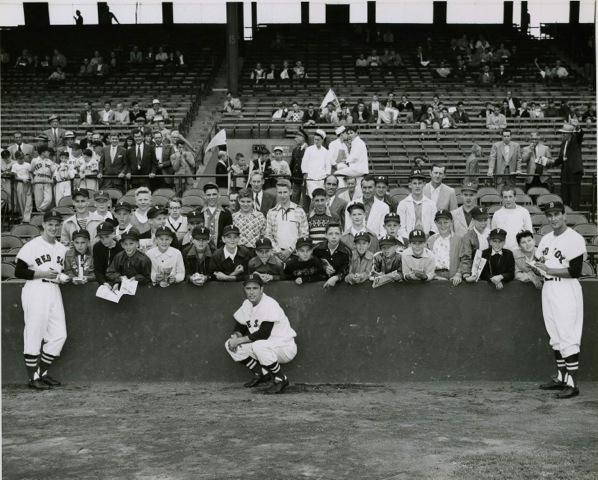
I'm the third kid on the right, front row, beside Harry Agganis
Fenway Park, 1954: I’m the third kid from the right, front row, beside Harry Agganis

#

Every year, millions of people make a pilgrimage to see their favorite baseball team. I’m sure most of them don’t think of taking in a ball game as pilgrimage, but as with all pilgrimages, going to a game often at some level involves making a journey that is both physical and spiritual, taking risks, paying homage, and searching for a source of healing and renewal.

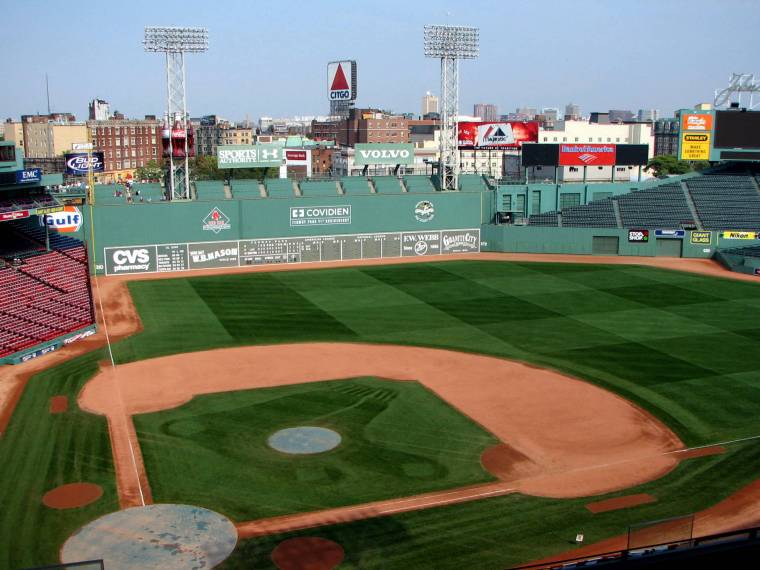
It’s possible, then, that the first pilgrimage I ever took was to Fenway Park in 1954 to see the Red Sox play the Detroit Tigers. I remember the ride to and from Boston was interminable, Fenway Park was huge, Red Sox first baseman Harry Agganis (who would die a year later of a pulmonary embolism) looked like a god, and I ate lobster at a restaurant on the ride back, courtesy of my little league coach, a saint named Frank Knight (who would live to be 103).

I was reminded of my early love of baseball a few weeks ago when I started reading Dingers: The 101 Most Memorable Home Runs in Baseball History, by Joshua Shifrin and Tommy Shea. I’ve had the good fortune to have shared coffee and conversation with Tommy Shea, who was a reporter for the Springfield (Massachusetts) Republican for forty years, including six years covering the Red Sox, and whose very being exudes the joy I once felt about the game. (Nobody’s perfect, however; Tommy is a Yankees fan.)

#

 I hit two dingers in my baseball career. The first, in little league, cleared the fence and almost hit my family’s car. The second, when I was in what was then called junior high school, disappeared into the fog blowing in off Cape Elizabeth, Maine, but since there was no fence, I had to run it out. I run like a wheelbarrow, so I barely beat the throw home. Still, I thought I had won our team the game, until Ronnie Bancroft, the Cape third baseman, tagged me after I’d crossed the plate, and the umpire called me out. “Sorry, son,” he said, “but your foot missed third base by a good two feet.” (For those of you who don’t know much about baseball, the runner must touch every bag before touching home plate.)

So much for my making it into Shifrin’s and Shea’s book.

But one of the home runs that did make it into the book—Shifrin and Shea rank it as the fifth most memorable home run in baseball history—is Kirk Gibson’s game winning home run in the 1988 World Series against Hall of Fame relief pitcher, Dennis Eckersley. In fact, Dingers features on its cover what has become an iconic picture (so iconic that I can’t find one to post that’s not copyrighted) of Gibson, hand raised over his head in victory.

I remember Gibson’s homerun even more than I remember my own. His took place on the October weekend when my wife Mary Lee and I were visiting my eighteen-year-old daughter Laurie in Ellsworth, Maine. That spring, Laurie had been diagnosed with Primitive Neuroectodermal Tumor, a virulent cancer. Over the summer, chemotherapy and radiation had shrunk the tumor and we were hopeful, but in September, while she was walking a beach, her leg collapsed under her, and since that time, the only way she could walk was with a walker. In continual pain, my daughter was trying to remain positive, living at home with her mother, working on various art projects and designing placemats for a new restaurant in town, but she was discouraged and afraid, often dissolving in tears as she talked with me on the phone. To give both Laurie and my ex-wife a break, Mary Lee and I drove up for the weekend, rented a motel room, and took Laurie to stay with us.

On Saturday afternoon, we drove around Hancock County looking at foliage until a freak snowstorm sent us back to our motel. That evening we went to the new restaurant that featured Laurie’s placemats, but my daughter’s leg pain grew so bad that we couldn’t finish our meal. Mary Lee and I had to carry her out to the car.

Back at the motel, Laurie lay down on our bed, closed her eyes, and, I thought, fell asleep. I turned on the television just in time to see Gibson, of Los Angeles Dodgers, who hadn’t been in the game because of a severely strained hamstring in one leg and a bad knee in the other, come to the plate as a pinch hitter. The Dodgers were behind the Oakland Athletics by one run in the bottom of the ninth inning. They had a man on first base, but there were two outs. With a count of three balls and two strikes, Gibson, with what Shifrin and Shea describe as “an awkward upper body swipe,” hit his home run. As he limped around the bases, pumping his fist, and one talking head after another extolled his courage in the face of pain, I heard Laurie say to Mary Lee, who lay beside her on the bed, “I know this cancer might—probably will—kill me, but hopefully not for years. I need to make the most of whatever time I’ve got left.”

I looked at my daughter, her bright red bandanna and matching socks, her eyes sunken, her face drawn by pain. Those assholes on TV have no idea what courage is, I thought bitterly.

#

And there’s part of me that still feels that way. I’m certainly not the first person to complain about how we have glorified beyond reason sports and deified grown people playing games. But like pilgrimage, sports—and I would say especially baseball—is a way to encapsulate the human journey in a few hours. We fans travel to what one of my favorite movies calls our “Field of Dreams,” and the players themselves try to get, as we all do, “Home,” where, as James Earl Jones says in the movie, “… what once was good … will be again.”

Home is where my daughter went less than three months after Gibson’s dramatic “dinger.” Now that I’m in my seventies, it helps to see myself rounding third base (making sure to touch it this time), heading to join her.

Fenway_Park02

# #


Finding Thomas Merton

IMG_2312

I come out of the woods and cross Monk’s Road to another road that says “No Trespassing.” I’ll bet this is it, I think, and decide I’ll be damned if I’m going to travel two thousand miles not to see the hermitage of Thomas Merton, the closest thing to a hero I’ve had since John F. Kennedy.

When my wife, Mary Lee, first introduced me to Merton’s writings, I knew some of his story—cosmopolitan young man and promising writer leaves New York, enters the monastery here at Gethsemane and becomes a Trappist monk—but I didn’t understand much of what he wrote. Then, when my daughter was lying in the hospital, dying from cancer, I hated what I thought I did understand. I remember one night at the Ronald McDonald House reading from New Seeds of Contemplation—“All sorrow, hardship, difficulty, pain, unhappiness, and ultimately death itself can be traced to rebellion against God’s love for us”—and throwing the goddamned book across the room.

Ten years later, however, as I recovered from bilateral hip surgery, I read Merton’s autobiography, The Seven Storey Mountain. This came at a time when I was starting to feel that after thirty years in public education, it was time for me to do something else. But what? Merton showed me that I should start living the life I wanted to, and trust that God would reveal some way to make it work. So I began writing—took a summer workshop, joined a writing group—became more active in my church, started going on spiritual retreats. And it worked: I retired from public school teaching, found a part-time job as a writing assistant at a nearby college and worked on my writing, which soon became tied to my discovery of contemplative prayer, where Merton became my guide through books such as Conjectures of a Guilty Bystander, The Secular Journals, Selected Poems, Wisdom of the Desert, Raids on the Unspeakable, Zen and the Birds of Appetite. I even reread New Seeds of Contemplation.

Now, I’ve made a pilgrimage to Gethsemane Abbey because I’m again struggling, both with my writing and with the rest of my life. After years of working on a memoir about the death of my daughter and my resulting faith journey, I’ve realized I still don’t have the perspective to analyze the years since Laurie’s death that a good memoir requires. I’ve decided to turn the memoir into a novel, in the hopes of distancing myself from the events as I change them to suit the arc of the story. But someone whose opinion I value wondered recently if I’m not stuck in the past, unable to let go of Laurie’s memory and my grief; and I’m worried that he might be right—that I’m wasting both my time and God’s with my writing instead of doing something more active, such as teaching a class at the state prison, doing more pastoral care, working in the soup kitchen or with Compassionate Friends.

So far, this pilgrimage hasn’t helped me find any answers. Ever since Mary Lee and I have been at Gethsemane, I’ve felt like an outsider, a tourist instead of a pilgrim. As a non-Catholic, I haven’t been able to take communion. Merton’s hermitage, where he wrote so many of his books, is, I’m told, off limits to visitors. Late September in Kentucky is hot. The air smells charred. Leaves are chewed and full of holes, tinged with brown or black. In the afternoon, storm clouds mass over the burnt-brown hills like an army preparing to attack.

My only consolation has been reading in Merton’s journals about how often here at Gethsemane, he, too, felt like an outsider, how often he questioned his life, whether he ought to be writing, even whether he ought to be a monk.

Then, yesterday afternoon, as I sat under a tree beside the cemetery of white crosses where Merton is buried, I read a journal entry in which he writes about how he’d found his “deepest self” through a “creative consent to God.”

I’m not sure what that means, but this morning I’ve been on “A Walk to the Statues,” along a stone walkway leading to a field, past a lake, and up some wooden stairs to a path through the woods, where I passed a variety of statues—some modern, some traditional—of cherubs, monks, and a variety of Madonnas.

IMG_2284

Turning a corner, I saw two statues depicting Jesus and three of his disciples in the Garden of Gethsemane. (And if you’d like to see and read more about these statues, see my earlier blog, “Locked in the Garden of Gethsemane.) At first—probably because of my mood over the last few days—I identified with Jesus’s feeling despised and forsaken. But then I saw on a rock, a bronze plaque explaining that sculptor Walker Hancock created these two statues in memory of Jonathan Daniels, an Episcopal divinity student who was martyred in Alabama in 1965.

Suddenly, I remembered the end of poet Gregory Orr’s memoir The Blessing, when eighteen-year-old Gregory, still suffering the trauma of having accidently killed his brother in a hunting accident, beholds artist David Smith’s almost three hundred sculptures arrayed in long rows across a field, and sees in them the human spirit rising up, trying to transcend the limitations of our mortal, human bodies and at the same time trying to celebrate them; and how Orr realized that language, too, can transcend death by giving it shape. Poetry, Orr wrote in another essay, “sustains us in crises…[as] “…an expression of your experience with disorder and your need for order.”

And I realized that by giving shape to my grief, my writing was helping me stay alive: that I couldn’t not write. What might or might not happen to anything I wrote afterwards wasn’t up to me. Jesus’s words from that night in the Garden of Gethsemane came back to me, “Yet not my will, but yours be done.”

Maybe, I thought, this is the kind of “creative consent” Merton was talking about in his journal.

Which made me feel better, and which has prompted me to follow this forbidden road behind Gethsemane Abbey, figuring I can plead ignorance—“Oh, am I trespassing? I didn’t see the sign”—if anyone comes along.

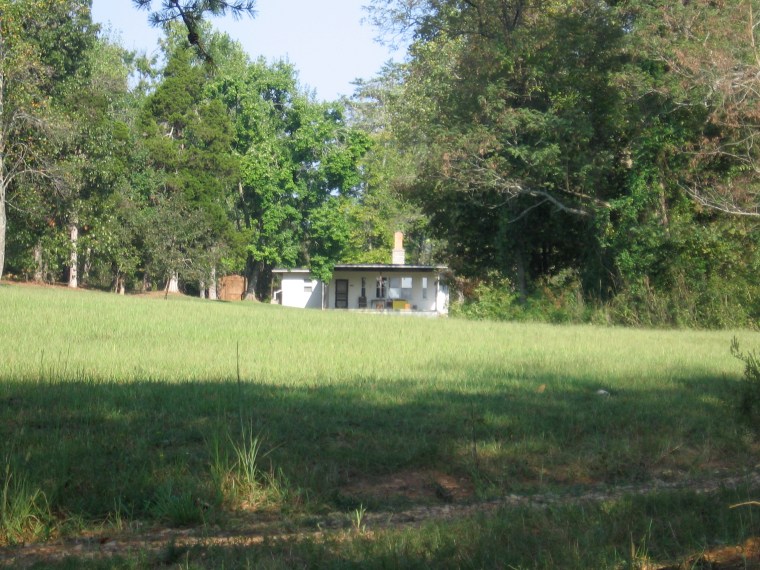
I come to another turn off, this one marked “Monastic Enclosure.” I decide not to push my luck and keep going until I come to a power line. I follow it and then double back through the woods to a clearing. Yes! I recognize from photographs that I am indeed looking at Merton’s hermitage. Wiping the sweat from my eyes, I take a picture.

IMG_2298

I turn to see the fields and the barn and the monastery grounds that he wrote about from where he saw them—memories I will take home with me both for the strength and solace to continue writing and for the serenity to accept whatever happens to it.

I head back to the power line. I suppose I should pray, Forgive me my trespasses, but I’m not very sorry. Somehow, in finding Merton’s hermitage, I’ve found something in myself.


# #


Inside a Self-Directed Retreat

IMG_2026

#

Let me get this straight—you’ve come to another crossroads. Okay, it’s more like a rotary, with about four different directions you can go with your life. And you can’t make up your mind so you go round and round. You carefully consider each turn off, each option, but they all look equally desirable or undesirable depending on the time of day. You stare at the scenery, pulling on your lower lip. Round and round and round.

You decide to stop and get away from it all, so you go on retreat to a hermitage in the New England countryside, close to nature. But what do you discover? Nature can’t seem to make up his/her/its mind either. It’s April. The sky wavers between dark clouds and bright sun. Driving here, you stop at a light and watch somebody wearing a down parka pulled over his or her head walk past a guy wearing shorts and a T-shirt.

You reach the hermitage and it’s the same ambivalence. The fields are green; the trees are bare and brown. Looking into the woods, all you see are dead leaves, while beside your porch, yellow daffodils wave in the wind. The first night you walk along a tidal river. Standing on a bridge, you look to your right and the river is full, reflections of trees etched on the water. Turning to your left, you see the water drained away, leaving mud, broken tree limbs, and more dead leaves.

The next day is worse. Most of the day is hot—94 degrees according to the thermometer outside the main guest house—with a southwest wind that must have blown directly from Arizona. Until suddenly, in late afternoon, the wind suddenly shifts to the east and picks up, bending the spruce trees and churning the river into white caps, and you’re shivering and trying to find a sweatshirt. The sky darkens and for about ten minutes, a cold rain falls. Then the wind dies, the sun returns, and it’s spring again.

None of which helps you make up your mind.

Let’s walk by the river on this carpet of dead leaves. See, sticking up through all that brown—green shoots. Kick some of those leaves aside and what do you find: more green. Has it ever occurred to you that Nature is not indecisive? That what you are witnessing is the evolution of winter into spring, a process that doesn’t happen in any kind of linear progression, but which ebbs and flows like that tidal river in front of you. Look up. Into the trees. See? Today’s heat has brought out the leaves in the birch trees, like tiny green butterflies fluttering on the branches.

It’s April. It’s the Easter season. In Sabbatical Journey, Henri Nouwen writes:


The resurrection stories reveal the always-present tension between coming and leaving, intimacy and distance, holding and letting go, at-homeness and mission, presence and absence. We face that tension every day. It puts us on the journey to the full realization of the promise given to us.


Have you considered that on this journey—this pilgrimage, as you like to call it—we are always in the process of becoming? That we’re always facing decisions, one rotary after another? That there is always tension? The promise of Easter is that you are loved, no matter what you decide: “and lo, I am with you always; even to the end of the age.”

Look, you’re not going to reach a decision about what to do with your life here on this retreat, but you might realize that what seems like inaction and indecision is actually a time of germination and growth. Your decision will come, as surely as the leaves will burst from the branches of the maple trees around you.

In the meantime, look at those trees along the river outlined against the sunset. See how their fine, bare branches fan out like a net one might cast into the sky, perhaps in hope of catching a few stars. Watch the blue sky turn to gray and the pink clouds darken to red. Listen to the chorus of birds. Look at how the houses on the opposite shore send chalk-lines of light across the river. See the new moon.

IMG_1609


# #

Healed Doesn’t Mean Cured

Image 1

Pilgrimage is … an act of devotion to find a source of healing ….”

—Phillip Cousineau, The Art of the Pilgrimage,

#

Right after my parents bought our first television set in 1953, our family watched everything from test patterns to evangelist Oral Roberts sitting in a tent healing people’s various medical misfortunes—you name it: tuberculosis, speech impediments, polio (“Praise God, Billy Ray, I can feel the stiffness leaving your little foot!”). Since my father was skeptical (What he said was that the show was a crock of shit), I too doubted the healing power of the prayer.

But I never felt strongly against the idea that faith can cure disease and other afflictions until my eighteen-year-old daughter was diagnosed with cancer. The object of my most intense anger was not TV evangelism, but the alternative health industry. I recall sitting by Laurie’s bedside in the hospital, reading ads to her from a glossy magazine she subscribed to for Royal Jelly, Ayurvedic Ginseng, and macrobiotic hair care, “Refreshing Summer Seaweeds,” “Non-toxic Alternatives to Mercury Fillings,” and “Curing Infertility through Chinese Medicine.”

One afternoon, she wanted me to read an article titled “Alternative Cures for Cancer.” The gist of the article was that rather than “deadly chemicals and mind-altering drugs” (I remember those words), the best way to cure cancer is with a healthy, positive self-image built on faith and love. I think the article posited that eighty to ninety percent of all cancer is preventable.

When I finished reading, I heard a thick voice slurred by morphine: “I’ve tried … to be positive … but I guess I’m just not strong enough … I wish I weren’t such a wimp.”

Her words still haunt me. Bad enough that my daughter had to die, but for her to feel that it was somehow her fault because she didn’t have enough faith fills me with rage. Over the twenty-eight years years since Laurie’s death, I have walked out of a teacher workshop on “Wellness” in order to write angry letters to my principal and superintendant on the dangers of trying to teach what I saw as unrealistic expectations. I have seethed at Biblical stories of Jesus bringing some people back to life, while others die. And I remember grinding my teeth after 9/11 when a parishioner at the church I attend publically thanked God for saving her son who worked in one of the twin towers.

“What about the other 7000 who died?” I muttered to my wife. “What did God have against them?”

My attitude began to change, however, after Mary Lee and I attended a healing service on the Island of Iona, in Scotland. The pastor began by saying that we need to remember that healing doesn’t mean curing. The word “heal,” he said, comes from the word “whole,” and he believed that God’s purpose for us all is a life of wholeness. The healing service, he said, was not about changing God, but about learning to trust God, even as we don’t know when or how or what kind of healing will happen.

Gradually—very gradually—I’ve begun to understand his distinction. For example, when Mary Lee and I started training for our pilgrimage along Saint Cuthbert’s Way, the sixty-two mile hike from Melrose, Scotland to the island of Lindisfarne off the Northumberland coast, we both experienced back, hip, hamstring, calf, ankle, and foot pain. I have two artificial hips. The latest CT scan of my back has revealed severe narrowing of the lower thoracic disks, “vacuum disc phenomena,” severe narrowing of L2-L3 disc, “degenerative hypertrophic bone,” “mild compression, mild spinal stenosis, ossification,[and] lower lumbar facet degenerative disease.” I’m not sure what all that means, but I do know I’m four inches shorter than I was in high school. Mary Lee has had her right foot completely reconstructed. One of her shoulders is higher than the other because of scoliosis, and she has suffered from allergies and thyroid trouble.

And you know what? After walking the 62 miles of Saint Cuthbert’s Way, we still hurt. Neither my back nor Mary Lee’s miraculously straightened. My wife’s allergies didn’t go away. No amount of walking could cure the fatal disease of being human.

And yet, we returned from our pilgrimage feeling more than the rejuvenation one feels when returning from a vacation, or even from most of our retreats. We’ve bought bicycles, we’ve climbed some mountains, and recently taken up snowshoeing. I’ve tried to incorporate the walking meditation I practiced along St. Cuthbert’s Way not only into my daily walks around town but also into washing dishes, vacuuming the house, and sitting through this election’s political mud-slinging.

I think distinguishing between being cured and being healed is even more important when talking about grief. Over the years, a number of people have asked me if the pain of losing Laurie has become less. My answer lately is that my grief isn’t any less, but it’s less important. I still cry when I think of my daughter, I’m still angry at God for creating a world in which innocent children suffer and die, and I still feel irrationally responsible for her death, either because of what I did or what I didn’t do.

But at the same time, I am no longer consumed by anguish. I no longer base my identity on being Grieving Parent. My sadness, anger, and guilt have become enveloped, maybe even embraced, by something larger. I am more whole now than I probably have ever been, even if I’m not cured of wanting to watch my daughter become an adult, of talking to her on the phone, or of seeing her interact with my grandchildren, maybe even with children of her own.

Hell, I’m not cured of wishing I were 6’2” again.

IMG_1359

# #


Locked in the Garden of Gethsemane

Image


They went to a place called Gethsemane; and he said to his disciples, “Sit here while I pray.” He took with him Peter and James and John…. And he said to them, “I am deeply grieved, even to death; remain here, and keep awake.” And going a little farther, he threw himself on the ground and prayed that, if it were possible, the hour might pass from him. …. He came and found them sleeping … for their eyes were very heavy; and they did not know what to say to him. (Mark 14: 32-40. NSV)

#

“I come to the garden alone

While the dew is still on the roses

And the voice I hear falling on my ear

The Son of God discloses.”

The singers, a tour from some place like the Second Baptist Church of Wayward, Georgia, stood just inside the filigreed iron gate set in a wall of cream-colored stone on the side of the Mount of Olives. Trying to be unobtrusive, my wife and I walked by them, down a row of olive trees to a bench, where we sat and looked across the Kidron Valley at the Old City.

I listened to the distant voices—“And He walks with me, and He talks with me”—and to the birds singing, watched the sun play upon the leaves of ancient olives trees looking as if they’d been carved from stone and on cedar trees pointed toward the sky. Overhead, the sky was cloudless blue and it wasn’t yet hot. Mary Lee and I talked for a while about the purple flowers growing around the cedars (clematis, maybe?) and then simply sat savoring the silence. This, the part of the Garden of Gethsemane across the road from the Church of the Agony, was the first peaceful place we’d been since we’d arrived in Jerusalem two days earlier.

The folks from Georgia left, leaving us the only people there, and I don’t know how long we sat—maybe twenty minutes—before we got up to leave. We hadn’t yet been to the church across the road and we were planning on hiking to the top of the Mount of Olives and the Church of the Ascension.

But when we reached the gates, they were locked.

I remember thinking, “‘Locked in the Garden of Gethsemane,’ what a great title for a poem!” I may have even laughed. I wasn’t really worried; another tour would be by shortly (There’s always another tour coming by in Jerusalem). So Mary Lee and I found another bench, and I tried to imagine what I might write. I thought about the death of my daughter ten years earlier from cancer, about how I’d locked myself away in a den to drink myself into oblivion, about the way some of the people I called friends disappeared from my life when I needed them most, about how I’d felt like Handel’s Messiah, “despised and rejected … a man of sorrows and acquainted with grief.” But I kept humming “In the Garden,” and enjoying the view of golden domes across the valley, the music of birds, the smell of cedars, and the feel of sun. After fifteen minutes or so, the gate opened for a tour of Spanish nuns.

That day I felt no sense of suffering, no feeling of betrayal. All I recall is a little heartburn, some sweat as the day began to heat up, and sense of failure, not for getting locked in, but for feeling like a tourist and not a pilgrim. I couldn’t make the experience—the history, the holiness—part of me. I was an outsider, an onlooker, there in body but not in spirit.

#

IMG_2287

In the woods across the road from Gethsemane Abbey in Kentucky is Walker Hancock’s sculpture of Jesus and the three disciples in that garden from which the Trappist monastery takes its name. As you walk along the path through the woods, you first encounter Hancock’s depiction of Peter, James, and John sleeping on some stones, hands folded or stretched out peacefully, their bodies curled up comfortably, their faces smooth and serene. You have to walk further—possibly around a corner, I don’t remember—before you behold Jesus, kneeling on a stone, his head thrown back, his hands over his face, his body wrenched backward as if he were a bow waiting for an arrow. Standing in front of this larger than life figure, you can see tension pulling at his chest and throat.

IMG_2289

            Looking today at the photographs I took ten years ago, I note the distance—both physical and emotional—between the disciples and Jesus. I think of the morning I was locked in the Garden of Gethsemane, and I find myself sympathetic to Peter, James, and John. Like them, I could not grasp the significance of what was around me.

And it also strikes me that the years after my daughter died, when I felt alone, betrayed by friends and family and colleagues, reveal the vast chasm that exists between those who grieve and those around them.

Grief is the most isolating of all experiences. At least it has been in my life, both when I’ve grieved and when I’ve tried to comfort someone in grief. Even if I know what it is to lose a child, when I’ve been called upon to support another grieving parent, I remain, as Mark tells us Peter, James, and John were, not knowing what to say. Even if I’ve experienced what it feels like to suffer deeply, when I know someone else is suffering, my first response is to curl up and close my eyes.

All I’ve learned over the last twenty-plus years is the importance of at least physically narrowing the gap between the person grieving and myself. To paraphrase Woody Allen, 80 % of compassion is just showing up—staying awake, listening, and trusting that the gates will eventually become unlocked.

# #


Hiking Towards Humility

Image 1


Every spiritual tradition I know of says that the greatest obstacle between God and me is my ego. The Bible warns of what happened to Adam and Eve after the serpent tempted them into believing that they could become like God simply by eating a certain fruit. (A little, come to think of it, like the guru I just read who tells me I can live practically forever if I drink a glass of kale juice every morning.) Ralph Waldo Emerson called egotism a disease. Thomas Merton wrote that we tend to worship the ego instead of God, while the Dalai Lama says that ego is the number one enemy of compassion. An acronym for ego—“Easing God Out”— is included in the Alcoholics’ Anonymous Handbook.

So what do I do to stop listening to my ego, become more humble, start focusing on God? A woman in the spiritual writing group I facilitate has begun a book on incorporating the Zen Buddhist principal of “wabi sabi”—which she describes as “the celebration of the incomplete, impermanent, and imperfect”—into her pottery-making and into her life as a way to counter her competitive perfectionism, her ego.

Hiking also works.

For example, my wife and I are walking St. Cuthbert’s Way, the 62-mile hike from Melrose on the Scottish Border to the island of Lindisfarne off the Northumberland Coast, and I’m admiring views, trying to achieve a walking meditation (“Breathe through your feet … move your attention slowly to your ankles, the calf muscles, the thighs … relax … now focus on the chakras … feel the wind, the sun, the way your clothes touch your skin … become one with your surroundings …”), and then ahead of me is one of those damn hills. Jaws clench. Hands tighten around hiking poles. Head goes down. I’m seventeen years old, diving for a loose ball in the 1961 State Basketball Championship; I’m twenty-one, arm-wrestling a smoke jumper after a few beers; I’m forty, hefting a boulder out of my new garden. I can do this! I charge up the hill. Until about halfway up, my chest is pounding, my lungs are burning, I can’t see from the sweat in my eyes, and I have to stop or die.

Or, later into the hike, I’m trying to become Emerson’s Transparent Eye-ball: becoming nothing; seeing all. I hear voices growing louder and clearer as two hikers catch up with us. It was okay on Maine’s Bold Coast to be overtaken by twenty-year-old anorexics in microfiber, but not in the UK by 75-year-old women in wool hats bounding by us while talking about a new chowder recipe. I try to quicken my pace, become irritated at Mary Lee for stopping to look at the wildflowers, and then, as the women go by us saying, “Cheerio, lovely day for a ramble.” I paste on a smile while my pride hangs its head in shame.

I know—I knew it then—I was being ridiculous, but as my wife and I walked on, I started to make sense out of something I’d never understood before, something more serious: how embarrassing grief can be. Embarrassment explains why, after my eighteen-year-old daughter Laurie died of cancer, I refused to put her obituary in the local paper. I told my family, upset by my decision, that nobody knew Laurie in this part of the state, but the real reason was because I imagined former classmates looking up from their newspapers and Cheerios and saying, “Too bad about old Ricky. He always was a loser.” For years, I answered the question, “How many children do you have?” by saying that I had two stepsons, before trying to change the subject. I didn’t want to embarrass anyone, I told myself. No, the truth was I didn’t want to feel embarrassed myself. I’m still not sure I fully understand where this embarrassment came from, but I think it had to do with feeling like a failure as a father for not being able to keep my daughter alive. In other words, ego.

Some three days into walking St. Cuthbert’s Way, I began to experience discomfort in one of my Achilles tendons. Of course, I obsessed—“Will I rupture it? Need to be helicoptered out of here?” I finally realized, however, that every time I’d charged up one of those hills, I wound up waiting for Mary Lee, putting all of my weight on that ankle, cooling it off prior to heating it up again. It also dawned on me (if you can call something that takes you three days to recognize a “dawn”) that we weren’t going to get to our next stop any faster than the slower of us could go. So I slowed to a steadier pace, practiced my walking meditation, noticed more birds and flowers and trees, gave my best “Jolly fine day” the next day when the same two goddamned women bounced by us on the trail again, and still made better time.

I wish getting over the embarrassment of grieving were that easy.  I do feel, however, that the slowing down and paying attention I’ve learned in contemplative prayer has helped, watching my feelings and not trying to judge them—“I shouldn’t be feeling: (pick one) a. embarrassed; b. sad; c. angry; d. all of the above”—and realizing that the most egotistical thing I can do is think I can stop being egotistical through my own efforts.

But it’s hard, especially perhaps for us adult children of alcoholics. One of the slogans I often sit in front of once a week is “Let go and Let God.” I find that easier said than done. I’ll sit with some obsessive thought, thinking, “Let go … Let go … Let it go … LET GO … LET IT GO, GODDAMN IT!”

Recently, I’ve found it more beneficial not to think in terms of letting go, but of surrendering. Tucked into the blotter on my desk these days is a poem, “The Man Watching,” by Rainer Maria Rilke and translated by Robert Bly, which ends, “This is how …[one] grows: by being defeated, decisively, by constantly greater beings.”

Like one of those hills along St. Cuthbert’s Way.

IMG_1283

# #


Don’t Ask Why, Just Ask For Help

IMG_1946_1

The Desert House of Prayer

Cortaro, Arizona

April 22, 1999

Sitting in the chapel, watching through the large window behind the altar as sun rises over saw-toothed mountains, splashing light over cactus—prickly pear, cholla, barrel, a saguaro—as well as sage, creosote, and mesquite bushes. The air is full of doves, cardinals and pyrrhuloxia, wrens, thrushes, and house finches. Just outside the window, a scrawny rabbit hops out of some sagebrush and down a path toward the guesthouses.

I’ve left Maine’s mud season behind, but not my ongoing anxieties. Last night, as the wind rattled windows and coyotes howled like elementary kids on a playground, I continued wrestling with God, with Jesus, and with what I should do with my life after leaving the high school classroom—all compounded by yesterday’s news from Colorado.

I suppose the lesson here is that even on retreat you can’t escape the world. I’d gone for a walk through the Saguaro National Park, hiking along washes through red cliffs sentineled with saguaro, expecting any minute to run into John Wayne leading a cavalry troop singing “She Wore a Yellow Ribbon,” returning from my reverie to find Mary Lee in tears as she told me of the shooting of 25 high school students by two of their classmates. Violating my resolution to avoid reading the newspaper while on retreat, I read of the horror show that was Columbine, imagining the scene—the baggy pants, the hats worn backwards—seeing I don’t know how many students I’ve had over the past thirty years, either dead or wounded or pulling the trigger.

This morning, unable to sleep, I’ve come to the chapel to sit in front of the butcher block altar and the candles in their wrought-iron holders, and wait for 7:00 a.m. and morning prayer and to look out the window and wait for some kind of answer, some kind of serenity.

The sun has crept over the mountains, setting the top of the giant saguaro aglow. All of a sudden I’m not looking at a cactus in the desert, but at a birch tree swaying in the wind, and I’m sitting in front of another altar, staring through another window, this one overlooking the Penobscot River in Bangor, Maine.

I haven’t spent a lot of time with my daughter this week. Oh, she’s been here, sort of like the sky overhead, but, two thousand miles away from home, wrestling with this other stuff, I haven’t paid much attention to her. Now, however, I think of the November day a month or so before she died, when I discovered the chapel in the Eastern Maine Medical Center.

It had been a particularly ugly day in Room 436. Laurie developed a fever of 102°, Mary Lee’s latest letter complained about bouncing a check, I’d argued with Laurie’s mother, who wanted me to complain to our daughter’s primary physician about one of the nurses.

When I left Laurie and my ex-wife to go back to the Ronald McDonald House, I took the elevator as usual, but, still upset about the day, got off on the wrong floor. Just as I realized my mistake, I found myself in front of a door marked with a small brass sign: “Chapel.” I didn’t know the hospital had one. Tentatively I turned the doorknob and walked in. The first thing I saw was a large round window framed by brown, gold, blue, and red glass behind the altar, looking out over the river. Along the riverbanks, a large birch tree metronomed in the wind. I felt as if I were looking at an animated stained glass window.

I lit two pillar candles on the altar, sat down in the front row of chairs, and stared out the window at the rushing water. This room seems so quiet, I thought. Even in Laurie’s single room at the end of the hall, there was always a steady undercurrent of noise from machines or voices in the hall or near-by TV sets. Here, there was only the beating of my heart and the word “Why?” pounding in my head. Why couldn’t anything be done to make my daughter more comfortable? Why did she have to get sick in the first place? Why was she dying?

I stared into the circle of stained glass. The window blurred. Wet flakes of snow lathered the glass, turning the circle white, scouring me to bone. The candles on either side of the altar seemed to glow more brightly, their light dancing. As I watched, the flames seemed to come together, enfolded by the stained glass around the white window. Then, I too become enfolded and from somewhere I heard the words, “Don’t ask why, just ask for help.”

At first, I didn’t realize what I’d heard. When I did, I became angry. Okay, help, I thought. Help me make sense of this mess. Help me understand the reason for Laurie’s pain and why she’s going to die before she’s ever really lived.

But I couldn’t take my eyes from the candles. From somewhere in the ceiling fresh air cooled my face. I felt my body loosen. The stained glass seemed to keep drawing first my angry words and then all of me into its embrace.

“Don’t ask why, just ask for help.” The words didn’t come from a “voice” and they didn’t come as any kind of sudden epiphany—just a gentle, insistent, ever deepening understanding, as if the words had always been there, but that only now, in the silence of the chapel, could I hear them.

My sense of peace, of course, didn’t last. When I returned to the hospital that evening, Laurie was vomiting dark green bile, and although I began stopping regularly at the chapel after that, I didn’t think much about the words I’d heard until after my daughter died.

And it’s not until now, over ten years later in Arizona that I realize that “don’t ask why, just ask for help” is the only response I know of to the death of a child, whether from cancer or from a bullet. I think of all the help I’ve received over the past ten years—from counselors, from clergy, from spiritual directors, from friends and family, especially Mary Lee, who may have kept me alive. And I wonder if it’s not time for me to start thinking about trying to help others. God knows I don’t have much advice, but maybe just telling my story and listening to others is enough.

So while I haven’t been able to leave the past behind, perhaps leaving home and coming here has given me a new perspective on that past—a new way to respond to it. I look again out the window at the giant saguaro cactus, standing with its arms upraised, as if in prayer or praise. Sometime this week, I learned that these cacti, which often live to be a hundred and fifty, even two hundred years old, don’t start growing arms until they’re sixty. Next week I’ll be 56.

I’ve got time.

IMG_0069

# #


No Matter how much you Prepare, You’ll Never be Ready

IMG_1245

#

My wife and I first started talking about going on some kind of walking pilgrimage after seeing the movie, The Way, in which Martin Sheen’s character walks the El Camino de Santiago from the Pyrenees through the interior of northern Spain to Santiago de Compostela in honor of his son, who’d died making that pilgrimage. Reading about the 500 miles of the Camino, however, convinced us that it was nothing two people dancing around 70 were ready for, so we began looking at other pilgrimages, eventually finding St. Cuthbert’s Way, a 62-mile hike from Melrose on the Scottish Border, where one of the early English church’s most revered saints started his religious life in 650AD, to the Holy Island of Lindisfarne off the Northumberland Coast of England, where he served as both prior and bishop.

For the next six months, Mary Lee and I prepared. We booked our flights to and from Edinburgh. We researched travel companies who reserve B&B’s, transport luggage, provide information about where to stay each day and what to see, recommend where to eat in the evening. We watched every You Tube video there was on St. Cuthbert’s Way. I read ten books on pilgrimages, hiking trips, or St. Cuthbert. (Bibliography available upon request.) We increased our walking from one to four miles a day, with eight to fourteen mile walks on the weekends. Because the last two miles of St. Cuthbert’s Way are traditionally walked barefoot at low tide across to Holy Island, we walked Maine’s beaches carrying our shoes around our necks like amulets against injuries which I was afraid might keep us from going. ( I took out travel insurance, just in case.)

All of which led to multiple trips to L.L. Bean for walking sticks, backpacks, water bladders, a compass, a pedometer, two hiking skirts for Mary Lee, a fleece jacket for me, microfiber underwear and a half dozen pairs of socks for each of us. I went to a podiatrist, who looked at my high arches and prescribed custom orthotics. I had my annual physical, my annual eye-exam, and my semi-annual dentist visit to make sure I was prepared.

Prepared, yes, ready, no. Our first surprise came the night before we started hiking. Nothing I read told us that when Melrose Abbey closes, nobody checks to see if there’s anyone still on the grounds before locking the gates, so that in order to leave, Mary Lee and I had to clamber up a stone wall and hoist ourselves over a wrought iron fence designed by Vlad the Impaler.

And do you think we could find the beginning of St. Cuthbert’s Way? Not until we’d walked by it three times. No one tells you that the start of the Way, marked on a sign with words about the size of the bottom row of print on my eye exam chart, is through an alley, past two trash bins, and down a cement walk. It’s only after you make a left and walk a muddy path around a hill that you find the 133 wooden steps that mark the real beginning of the pilgrimage.

If 133 steps sounds like a lot, they were only the beginning of our climb up the Eildon Hills. Nothing I read, nothing I saw, prepared me for the up-and-down nature of St. Cuthbert’s Way. To be honest, there’s nothing really high (Wideopen Hill, at 1208 feet, is the highest point) or sheer, or steep, unless you’re from southern Maine, where we call a 485-foot pimple on the face of the landscape Bradbury Mountain. I would estimate that we spent about two-thirds of our walk either going up or coming down. Our legs were fine; our wind was not.

The guidebooks, the videos, don’t talk about shit. Many show bucolic photographs of sheep and cows dotting the countryside, but none show them standing and defecating on your path. Once we had to walk through a dozen young bulls, and while they all moved out of our way, what they deposited did not.

IMG_1260

 On the other hand, nothing I saw or read prepared me for the beauty of gorse bushes in the fog, their spiky branches laced with dew-covered spider webs, the huge oaks and sycamores and maple and beech trees whose gnarled roots and branches look like something out of J.R.R. Tolkien, a flock of white geese splashing in the River Teviot, the ruins of three lovely abbeys and a castle, the smell of wild garlic, the sight of feral goats, the views from Wideopen Hill and the Cheviots, acres of purple heather, the cool eeriness of St. Cuthbert’s Cave, our first glimpse of the ocean, the wild sound of seals as we walked across the sands to Lindisfarne.

#

I should have known that no matter how much you prepare, you’ll never be ready. I’d had plenty of time to prepare for the death of my eighteen-year-old daughter, but I sure as hell wasn’t ready for what came next. Three months after Laurie was diagnosed in March with Primitive Neuroectodermal Turmor (PNET), the doctors at Dana Farber were clear that her chances of survival were slim. When, after radiation and chemotherapy, cancer reappeared in her pelvis in September, those chances dropped to nothing. Her mother and I spent the next three months preparing for her death. The day after Laurie died, I recall telling one of the nurses that I’d already done my grieving, and now it was time to start living again.

Talk about bullshit. Nothing I had done, felt, or imagined made me ready for the next (as I write) twenty-seven years: the anger, the guilt, the tears, the terror, the demolition of everything I’d ever believed about life, the universe, and everything.

Even after all these years, I can feel my body chemistry change around Halloween and a weight lift off my shoulders after Christmas. And I can prepare for that. What I am never ready for is how I will react each year. Some years I try to sleep for two months; some years I write suicidal short stories; some years angry letters to the editor or to people who piss me off. This past year, after my cranky back’s being almost pain-free for a year or more, it throbbed and burned until December 24th, the day after the anniversary of Laurie’s death. After Christmas, the pain was gone.

At the same time, nothing in those months by Laurie’s side in the hospital prepared me for the way she entered, first, my dreams, then, my waking life. Her voice in my ear (“Look at that, Dad!) as the sun rose over the island of Lindisfarne. Her hand on my shoulder as Mary Lee and I sat on the side of Wideopen Hill eating our cheese and pickle sandwiches. The joy that I continue to get from her on-going presence. Since Laurie died, I have never felt so godforsaken and broken. I have also never been so grateful and joyous.

Of course, it’s important to prepare—who am I to argue with the Boy Scouts?—but as walking St. Cuthbert’s Way reminded me: the best way to prepare for any pilgrimage is to be ready for surprises.

IMG_1316

# #